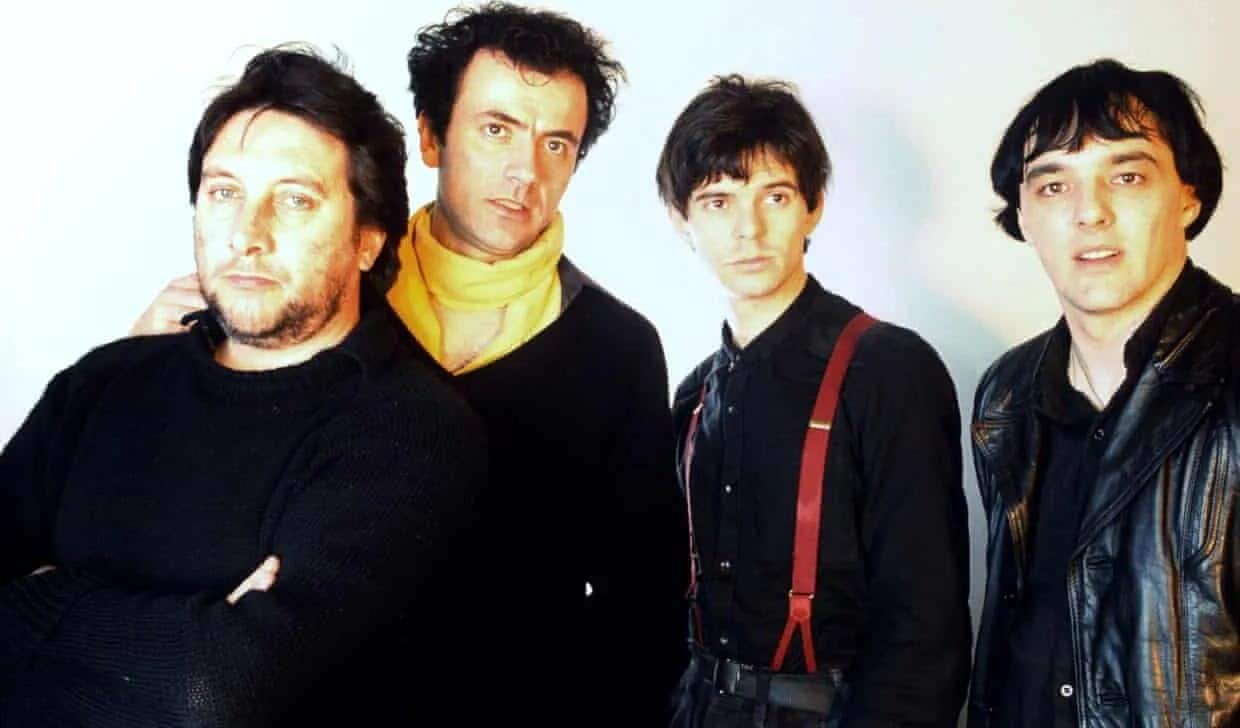
The Stranglers emerged as a provocative and influential force in the late 1970s British punk and new wave scene, known for their edgy sound, dark lyrics, and rebellious attitude. Formed in 1974 in Guildford, England, the band initially embraced punk’s DIY ethos but quickly distinguished themselves with their unique blend of punk, new wave, and rock influences.
Led by the distinctive vocals and bass work of Jean-Jacques Burnel, The Stranglers carved out their own sonic territory, characterized by aggressive guitar riffs, driving rhythms, and atmospheric keyboards. Their music often delved into themes of alienation, urban decay, and social commentary, reflecting the tumultuous political and cultural landscape of the time.
The Stranglers achieved commercial success with hits like “Golden Brown,” “No More Heroes,” and “Peaches,” which showcased their knack for crafting catchy hooks and infectious melodies amidst their gritty, hard-hitting sound. Despite lineup changes over the years, the band’s distinctive sound and uncompromising attitude have remained constants throughout their career.
With a career spanning over four decades, The Stranglers have left an indelible mark on the music world, influencing countless artists across genres. Their enduring legacy as pioneers of punk and new wave continues to resonate with fans old and new, solidifying their place as one of Britain’s most iconic and enduring bands.
1. Duchess
“Duchess” is a compelling track by The Stranglers, released in 1979 as a single from their album “The Raven.” This song showcases the band’s unique blend of punk, new wave, and rock influences, characterized by its catchy melodies, dynamic instrumentation, and thought-provoking lyrics.
With its infectious chorus and driving rhythm, “Duchess” captivates listeners from the start. The song’s upbeat tempo and energetic guitar riffs create a sense of urgency and excitement, while its melodic hooks make it instantly memorable.
Lyrically, “Duchess” explores themes of power, desire, and manipulation, with lead singer Hugh Cornwell delivering cryptic yet evocative verses that leave room for interpretation. The song’s enigmatic lyrics, coupled with its infectious groove, give it a sense of intrigue and depth that sets it apart from typical punk rock fare.
“Duchess” was a commercial success for The Stranglers, reaching the top 20 on the UK Singles Chart and earning critical acclaim for its infectious energy and catchy songwriting. Decades after its release, the song remains a fan favorite and a standout track in The Stranglers’ extensive discography, showcasing their talent for crafting memorable and compelling music that stands the test of time.
2. Golden Brown
“Golden Brown” is an iconic song by The Stranglers, released in 1981 as a single from their album “La Folie.” This track is distinguished by its mesmerizing melody, evocative lyrics, and unique blend of rock, pop, and baroque influences.
At its core, “Golden Brown” features a hypnotic harpsichord riff, played by keyboardist Dave Greenfield, which provides the song with its distinctive sound. Combined with intricate basslines, melodic guitar work, and understated percussion, the music creates a lush and atmospheric backdrop for the song’s lyrical themes.
Lyrically, “Golden Brown” is enigmatic and poetic, with lead singer Hugh Cornwell’s cryptic verses alluding to themes of nostalgia, longing, and temptation. The imagery evoked by the lyrics, coupled with the song’s seductive melody, conjures a sense of melancholy beauty that resonates with listeners.
Despite its unconventional structure and esoteric lyrics, “Golden Brown” became one of The Stranglers’ biggest hits, reaching the top of the UK Singles Chart and earning widespread acclaim from critics and fans alike. Its enduring popularity has solidified its status as a classic of 1980s alternative rock, and it remains a beloved staple of The Stranglers’ live performances to this day.
3. European Female
“European Female” is a song by the English rock band The Stranglers, released in 1983 as a single from their album “Feline.” The song was written by the band’s guitarist and vocalist, Hugh Cornwell, and it showcases The Stranglers’ distinctive blend of punk rock and new wave influences.
“European Female” is characterized by its pulsating rhythm, atmospheric synths, and darkly seductive lyrics. The song’s lyrics explore themes of desire, obsession, and the allure of European culture, with references to iconic landmarks and cities across the continent. Hugh Cornwell’s brooding vocals and the band’s tight instrumentation create a sense of mystery and intensity that captivates the listener.
Upon its release, “European Female” received positive reviews from critics and became a moderate commercial success, reaching the charts in several countries. The song’s sleek production and evocative lyrics helped solidify The Stranglers’ reputation as innovators in the post-punk and new wave music scenes of the 1980s.
“European Female” remains a fan favorite and a standout track in The Stranglers’ discography, celebrated for its darkly atmospheric sound and provocative lyrics. Its blend of rock, punk, and new wave influences continues to resonate with audiences, making it a classic of the era.
4. No More Heroes
“No More Heroes” is a punk rock anthem by the English band The Stranglers, released in 1977 as the title track of their second studio album. Written by the band’s vocalist and guitarist Hugh Cornwell, the song is considered one of their signature tracks and a quintessential piece of the punk rock movement.
“No More Heroes” is characterized by its driving rhythm, aggressive guitar riffs, and confrontational lyrics. The song’s lyrics express a sense of disillusionment and rebellion against societal norms and authority figures, with references to various historical and cultural figures. The chorus, with its defiant declaration of “No more heroes anymore,” reflects the band’s rejection of traditional hero worship and the desire for a more authentic and independent existence.
Upon its release, “No More Heroes” was met with critical acclaim and became a commercial success, reaching the top ten of the UK Singles Chart. The song’s raw energy and rebellious spirit resonated with audiences, solidifying The Stranglers’ reputation as one of the leading bands of the punk rock movement.
“No More Heroes” remains a punk rock classic and a staple of The Stranglers’ live performances. Its powerful message and infectious energy continue to inspire listeners and cement its status as one of the most iconic songs of the era.
5. Nuclear Device
“Nuclear Device” is a compelling track by The Stranglers, featured on their 1979 album “The Raven.” This song encapsulates the band’s distinctive blend of punk rock energy, new wave experimentation, and socio-political commentary.
With its driving rhythm, aggressive guitar riffs, and pulsating bassline, “Nuclear Device” immediately grabs the listener’s attention. The song’s dynamic instrumentation creates a sense of urgency and intensity that mirrors the theme of the lyrics.
Lyrically, “Nuclear Device” explores the anxieties and fears surrounding the Cold War era and the threat of nuclear conflict. Lead singer Hugh Cornwell delivers pointed and provocative verses that critique the political establishment and highlight the dangers of nuclear proliferation.
Despite its serious subject matter, “Nuclear Device” maintains a sense of dark humor and irony, characteristic of The Stranglers’ songwriting style. The band’s irreverent attitude and rebellious spirit shine through in every aspect of the song, from its scathing lyrics to its blistering instrumentation.
“Nuclear Device” showcases The Stranglers’ ability to merge social commentary with infectious rock music, creating a powerful and thought-provoking listening experience. Decades after its release, the song remains a potent reminder of the anxieties of the Cold War era and the enduring relevance of The Stranglers’ music.
6. Bear Cage
“Bear Cage” is a song by the English rock band The Stranglers, released in 1980 as a single from their album “The Gospel According to the Meninblack.” The song was written by the band’s guitarist and vocalist Hugh Cornwell, and it showcases The Stranglers’ distinctive blend of punk rock and new wave influences.
“Bear Cage” is characterized by its driving rhythm, edgy guitar riffs, and provocative lyrics. The song’s lyrics explore themes of confinement, surveillance, and paranoia, with references to political and social issues of the time. The chorus, with its ominous refrain of “Bear cage, bear cage,” reflects the band’s dark and dystopian view of society.
Upon its release, “Bear Cage” received positive reviews from critics and became a moderate commercial success, reaching the charts in several countries. The song’s catchy melody and thought-provoking lyrics helped solidify The Stranglers’ reputation as innovators in the post-punk and new wave music scenes of the 1980s.
“Bear Cage” remains a fan favorite and a standout track in The Stranglers’ discography, celebrated for its darkly atmospheric sound and provocative themes. Its blend of rock, punk, and new wave influences continues to resonate with audiences, making it a classic of the era.
7. Skin Deep
“Skin Deep” is a poignant song by The Stranglers, released in 1984 as the lead single from their album “Aural Sculpture.” The track combines elements of new wave, pop, and rock, showcasing the band’s versatility and musical evolution.
At its core, “Skin Deep” features a melodic and catchy chorus, accompanied by a driving rhythm section and atmospheric synthesizers. The song’s polished production and infectious hooks helped it become one of The Stranglers’ most commercially successful singles, reaching the top three on the UK Singles Chart.
Lyrically, “Skin Deep” explores themes of appearance versus reality, delving into the complexities of human relationships and the masks people wear to conceal their true selves. Lead singer Hugh Cornwell’s introspective lyrics touch on the fragility of self-esteem and the desire for acceptance and validation.
Despite its upbeat tempo and catchy melody, “Skin Deep” has a darker undercurrent that resonates with listeners, making it a standout track in The Stranglers’ discography. Its enduring popularity has solidified its status as a classic of 1980s alternative rock, and it remains a fan favorite at The Stranglers’ live performances.
8. Peaches
“Peaches” is a song by The Stranglers, released in 1977 as a single from their debut album “Rattus Norvegicus.” Written by the band’s keyboardist Dave Greenfield and guitarist/vocalist Hugh Cornwell, the song is one of their most well-known tracks and a staple of their live performances.
“Peaches” is characterized by its catchy melody, driving rhythm, and provocative lyrics. The song’s lyrics describe a surreal and hedonistic encounter with a woman named Peaches, with references to various sexual innuendos and taboo subjects. The chorus, with its infectious repetition of “Peaches,” adds to the song’s memorable and anthemic quality.
Upon its release, “Peaches” received critical acclaim and became a commercial success, reaching the top 10 of the UK Singles Chart. The song’s irreverent lyrics and infectious energy helped solidify The Stranglers’ reputation as one of the leading bands of the punk rock movement.
“Peaches” remains a fan favorite and a defining track in The Stranglers’ discography. Its catchy melody, edgy lyrics, and energetic performance continue to resonate with audiences, making it a classic of the punk rock era.
9. Something Better Change
“Something Better Change” is a spirited anthem by The Stranglers, released in 1977 as a single from their album “No More Heroes.” The song embodies the rebellious spirit and punk rock ethos of the late 1970s, with its energetic instrumentation and defiant lyrics.
With its driving rhythm and infectious guitar riffs, “Something Better Change” immediately grabs the listener’s attention and invites them to join in the rebellion. The song’s upbeat tempo and catchy melody make it a perfect soundtrack for shaking up the status quo and challenging the establishment.
Lyrically, “Something Better Change” expresses frustration with the political and social landscape of the time, calling for action and demanding a brighter future. Lead singer Hugh Cornwell’s impassioned vocals convey a sense of urgency and determination, inspiring listeners to stand up for what they believe in and strive for positive change.
Despite its confrontational lyrics, “Something Better Change” has a universal appeal that resonates with audiences of all ages. Its message of empowerment and hope continues to inspire generations of listeners, making it a timeless classic in The Stranglers’ repertoire.
10. Walk On By
“Walk On By” is a classic song originally recorded by Dionne Warwick in 1964, written by Burt Bacharach and Hal David. It’s known for its lush orchestration, emotive vocals, and poignant lyrics that speak of heartbreak and longing.
The song tells the story of a person who sees their former lover with someone new, and they’re devastated by the sight. Despite the pain, they try to maintain a façade of strength and composure, urging themselves to “walk on by” and not show their true emotions.
“Walk On By” became a huge hit for Dionne Warwick, reaching high positions on various music charts and solidifying her status as a prominent figure in the music industry. Over the years, the song has been covered by numerous artists, including Isaac Hayes, Gloria Gaynor, and The Stranglers, each bringing their own interpretation to this timeless classic.
The allure of “Walk On By” lies in its universal themes of heartache and resilience, as well as its beautiful melody and sophisticated arrangement. It remains a beloved song that continues to resonate with audiences, transcending generations and musical genres.

Edward Tomlin is a frequent contributor to Singers Room. Since 2005, Singersroom has been the voice of R&B around the world. Connect with us via social media below.









