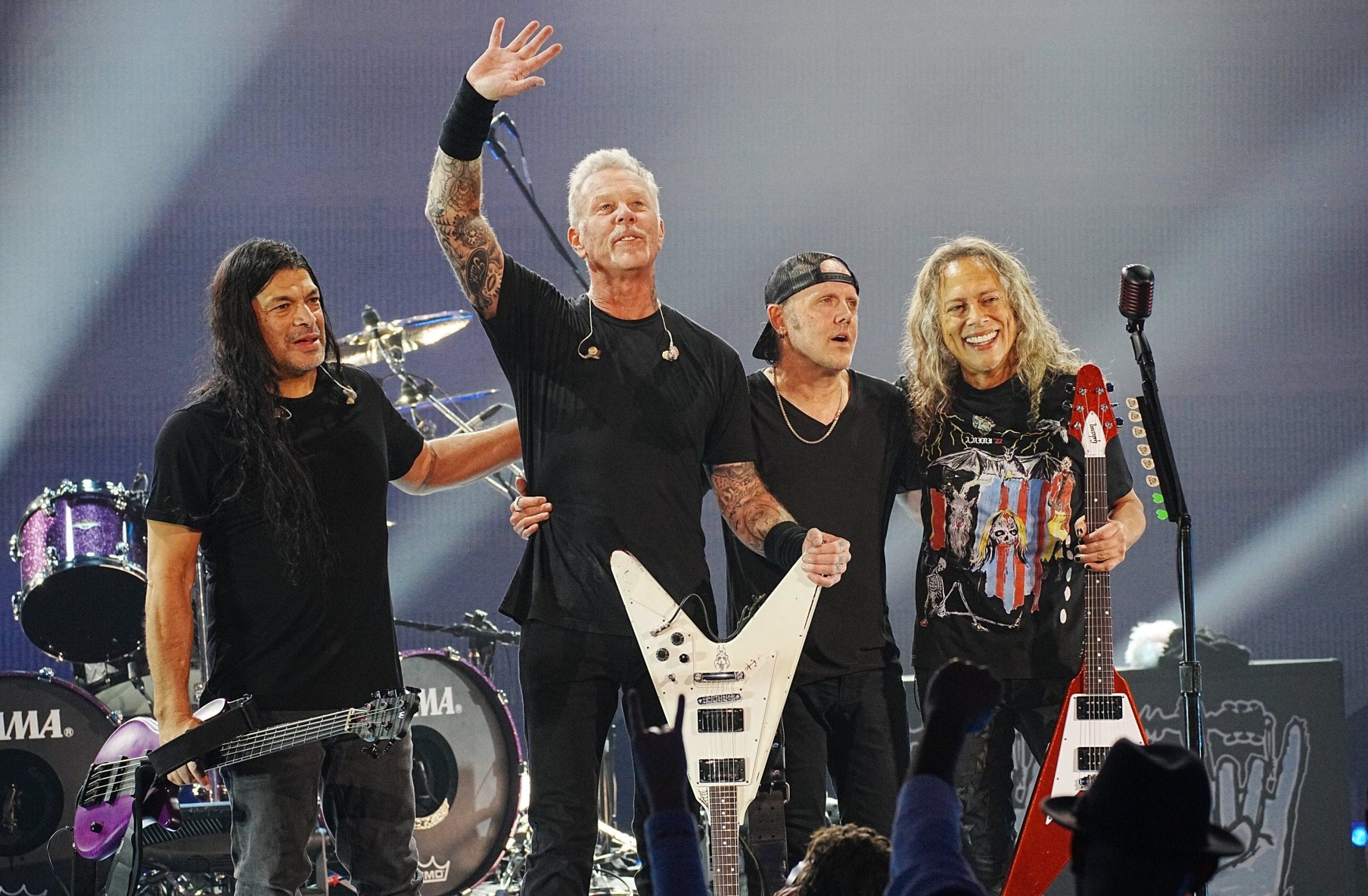
Metallica is one of the most influential and commercially successful heavy metal bands of all time, known for their aggressive sound, intricate compositions, and intense live performances. Formed in Los Angeles in 1981, the band consists of vocalist and rhythm guitarist James Hetfield, drummer Lars Ulrich, lead guitarist Kirk Hammett, and bassist Robert Trujillo.
Metallica’s early albums, such as “Kill ‘Em All” (1983) and “Ride the Lightning” (1984), helped define the thrash metal genre with their blistering riffs, breakneck tempos, and socially conscious lyrics. The band’s breakthrough came with their third album, “Master of Puppets” (1986), widely considered one of the greatest metal albums of all time.
Throughout their career, Metallica has continued to evolve their sound, incorporating elements of hard rock, progressive metal, and even orchestral arrangements. Their self-titled fifth album, commonly known as “The Black Album” (1991), propelled them to mainstream success with hits like “Enter Sandman” and “Nothing Else Matters.”
Metallica’s impact on popular culture and the music industry is immense, earning them numerous awards, including multiple Grammy Awards and induction into the Rock and Roll Hall of Fame in 2009. With over 125 million records sold worldwide, Metallica remains a powerhouse in the world of heavy metal, inspiring generations of musicians and fans with their uncompromising approach to music and performance.
1. One
“One” is a powerful song by the American heavy metal band Metallica, released in 1988 as the third single from their album “…And Justice for All.” The song was written by James Hetfield and Lars Ulrich and is widely regarded as one of Metallica’s greatest and most influential tracks.
“One” is characterized by its dynamic shifts in tempo and mood, blending fast-paced thrash metal sections with slower, melodic passages. The song’s lyrics are based on Dalton Trumbo’s 1939 novel “Johnny Got His Gun,” which depicts the harrowing story of a soldier who becomes a quadruple amputee after being injured in World War I. The song explores themes of war, suffering, and the human cost of conflict, with its powerful lyrics and haunting melodies evoking a sense of despair and anguish.
The accompanying music video for “One” features footage from the 1971 film adaptation of “Johnny Got His Gun,” interspersed with scenes of the band performing. The video further enhances the song’s emotional impact, capturing the stark brutality of war and the devastating consequences it can have on individuals and society.
“One” received critical acclaim upon its release and has since become one of Metallica’s most beloved and enduring songs. Its intense subject matter, intricate composition, and powerful performances have solidified its status as a classic in the heavy metal genre, inspiring countless musicians and resonating with audiences around the world.
2. Master of Puppets
“Master of Puppets” is a seminal song by the American heavy metal band Metallica, released in 1986 as the title track of their third studio album. The song was written by James Hetfield, Lars Ulrich, and Cliff Burton and is widely regarded as one of the greatest metal songs of all time.
“Master of Puppets” is characterized by its complex composition, intricate guitar work, and relentless energy. The song features rapid-fire riffing, blistering solos, and thunderous drumming, showcasing Metallica’s technical prowess and musical innovation. Lyrically, “Master of Puppets” explores themes of control, addiction, and manipulation, with its powerful imagery and evocative storytelling adding depth and intensity to the song.
The song’s iconic chorus, “Master, master, where’s the dreams that I’ve been after?,” has become a rallying cry for fans of heavy metal, while its epic instrumental sections and dynamic shifts in tempo have cemented its status as a classic in the genre. “Master of Puppets” has been covered by numerous artists and featured in various films, television shows, and video games, further solidifying its legacy as a cornerstone of metal music.
Despite its length and complexity, “Master of Puppets” remains a fan favorite and a staple of Metallica’s live performances, captivating audiences with its raw power and emotional resonance.
3. Enter Sandman
“Enter Sandman” is a heavy metal anthem by the American band Metallica, released in 1991 as the opening track of their self-titled album, commonly known as “The Black Album.” The song was written by James Hetfield, Lars Ulrich, and Kirk Hammett, and it quickly became one of Metallica’s most iconic and commercially successful songs.
“Enter Sandman” is characterized by its powerful guitar riff, driving rhythm, and intense energy. The song’s lyrics, penned by Hetfield, depict vivid and sometimes surreal imagery, including themes of nightmares, childhood fears, and the passage from life into death.
With its infectious hooks and aggressive sound, “Enter Sandman” became a massive hit, topping the charts in multiple countries and earning critical acclaim. Its music video, directed by Wayne Isham, features striking visual imagery that complements the song’s dark and foreboding atmosphere.
“Enter Sandman” remains a staple of Metallica’s live performances and a fan favorite, beloved for its raw intensity and timeless appeal. It has solidified its place as one of the most iconic heavy metal songs of all time, inspiring countless bands and leaving a lasting impact on the genre.
4. Fade to Black
“Fade to Black” is a powerful ballad by the American heavy metal band Metallica, released in 1984 as part of their album “Ride the Lightning.” The song was written by James Hetfield, Lars Ulrich, and Kirk Hammett, and it stands out for its emotional intensity and introspective lyrics.
“Fade to Black” begins with a haunting acoustic guitar intro before transitioning into a series of heavy riffs and melodic solos. The song’s lyrics explore themes of despair, loneliness, and contemplation of suicide, with Hetfield’s passionate vocals conveying a sense of vulnerability and anguish.
Despite its dark subject matter, “Fade to Black” resonated deeply with fans and critics alike, earning praise for its musical complexity and emotional depth. It has since become one of Metallica’s most beloved and enduring songs, cherished for its raw honesty and powerful message.
“Fade to Black” remains a staple of Metallica’s live performances and a fan favorite, continuing to captivate audiences with its haunting melody and profound lyrics. It stands as a testament to the band’s songwriting prowess and their ability to create music that transcends genre boundaries and resonates with listeners on a deeply personal level.
5. For Whom the Bell Tolls
“For Whom the Bell Tolls” is an iconic song by the American heavy metal band Metallica, featured on their 1984 album “Ride the Lightning.” The song was inspired by Ernest Hemingway’s novel of the same name, which deals with themes of death, sacrifice, and the futility of war.
The song begins with a haunting bass intro by Cliff Burton, setting a somber tone that builds into a powerful and driving rhythm. James Hetfield’s distinctive guitar riffs and Lars Ulrich’s thunderous drumming contribute to the song’s intense atmosphere. Lyrically, “For Whom the Bell Tolls” reflects on the horrors of warfare and the human toll it exacts, with lines like “Take a look to the sky just before you die, it’s the last time you will.”
The song’s title and lyrics were inspired by a scene in Hemingway’s novel where soldiers are killed by an exploding enemy artillery shell. The tolling of the bells in the song symbolizes the imminent death of the soldiers, adding to the song’s sense of urgency and foreboding.
“For Whom the Bell Tolls” has become one of Metallica’s most enduring and beloved songs, praised for its powerful instrumentation, emotive lyrics, and evocative atmosphere. It remains a staple of the band’s live performances and has solidified its place as a classic in the heavy metal genre.
6. Seek & Destroy
“Seek & Destroy” is a classic thrash metal song by the American band Metallica, featured on their debut studio album, “Kill ‘Em All,” released in 1983. The song was written by James Hetfield and Lars Ulrich, and it has become one of Metallica’s signature tracks, known for its aggressive riffing, frenetic pace, and energetic performance.
“Seek & Destroy” is characterized by its fast tempo, pounding drums, and driving guitar riffs. The song’s lyrics evoke themes of warfare and destruction, with Hetfield’s intense vocals delivering a call to arms for the band’s fans to join in the chaos of the mosh pit.
With its relentless energy and infectious hooks, “Seek & Destroy” quickly became a fan favorite and a staple of Metallica’s live performances. Its anthemic chorus and memorable guitar solos have solidified its status as one of the definitive songs of the thrash metal genre.
“Seek & Destroy” remains a highlight of Metallica’s discography, revered by fans for its raw intensity and uncompromising attitude. It continues to be a mainstay of the band’s setlists, serving as a rallying cry for metalheads around the world to unite and thrash with abandon.
7. Nothing Else Matters
“Nothing Else Matters” is a timeless ballad by the American heavy metal band Metallica, released in 1991 as the third single from their self-titled fifth studio album, commonly known as the “Black Album.” The song was written by lead vocalist and rhythm guitarist James Hetfield and has become one of Metallica’s most iconic and enduring tracks.
“Nothing Else Matters” is characterized by its haunting melody, introspective lyrics, and emotional depth. The song features acoustic guitar arpeggios, layered with orchestral arrangements, creating a rich and atmospheric sound that contrasts with Metallica’s typical heavy metal style. Lyrically, “Nothing Else Matters” explores themes of love, vulnerability, and the importance of personal connection, with James Hetfield expressing a sense of devotion and commitment to a loved one.
The song’s universal appeal and heartfelt sentiment have resonated with audiences around the world, earning it widespread acclaim and recognition. “Nothing Else Matters” has become a staple of Metallica’s live performances and has been covered by numerous artists in various genres. Its enduring popularity and timeless message continue to make it one of Metallica’s most beloved and cherished songs, transcending the boundaries of heavy metal to touch the hearts of listeners across generations.
8. Sad But True
“Sad But True” is a heavy metal song by the American band Metallica, featured on their eponymous fifth studio album, also known as “The Black Album,” released in 1991. The song was written by James Hetfield and Lars Ulrich and has become one of Metallica’s most iconic tracks.
“Sad But True” is characterized by its slow, chugging guitar riffs, pounding drums, and powerful vocals. The song’s lyrics explore themes of inner darkness, self-destruction, and the duality of human nature, with Hetfield’s deep, menacing vocals delivering a sense of ominous intensity.
With its heavy and menacing sound, “Sad But True” stands out as one of the heaviest tracks on “The Black Album.” Its relentless groove and infectious riffing have made it a fan favorite and a staple of Metallica’s live performances.
“Sad But True” has become one of Metallica’s most enduring and beloved songs, celebrated for its raw power and emotional depth. It remains a highlight of the band’s discography, revered by fans and critics alike for its uncompromising attitude and crushing heaviness.
9. The Unforgiven
“The Unforgiven” is a poignant song by the American heavy metal band Metallica, released in 1991 as the second single from their self-titled fifth studio album, commonly known as the “Black Album.” Written by James Hetfield, Lars Ulrich, and Kirk Hammett, the song is renowned for its introspective lyrics and emotive musical composition.
“The Unforgiven” explores themes of inner conflict, self-discovery, and the struggle to break free from societal constraints. The lyrics depict a person grappling with feelings of guilt, regret, and the weight of expectations placed upon them. The song’s title and chorus allude to the protagonist’s sense of being unforgiven by others and themselves, trapped in a cycle of judgment and redemption.
Musically, “The Unforgiven” features a haunting guitar melody, driven by Kirk Hammett’s emotive guitar solos and James Hetfield’s evocative vocals. The song’s dynamic shifts in tempo and intensity add to its emotional impact, building to a powerful climax that resonates with listeners.
“The Unforgiven” received critical acclaim upon its release and has since become one of Metallica’s signature songs. It has been praised for its depth, complexity, and universal themes, cementing its status as a classic in the heavy metal genre. The song’s enduring popularity and enduring relevance continue to captivate audiences, making it a timeless masterpiece in Metallica’s illustrious discography.
10. Welcome Home (Sanitarium)
“Welcome Home (Sanitarium)” is a compelling track by the American heavy metal band Metallica, featured on their third studio album, “Master of Puppets,” released in 1986. The song, written by James Hetfield, Lars Ulrich, and Kirk Hammett, showcases Metallica’s ability to blend intricate melodies with powerful riffing and thought-provoking lyrics.
“Welcome Home (Sanitarium)” begins with a haunting guitar melody that gradually builds in intensity before erupting into a series of thunderous riffs and dynamic rhythms. The song’s lyrics delve into themes of confinement, madness, and the struggle for freedom, drawing inspiration from the novel “One Flew Over the Cuckoo’s Nest” by Ken Kesey.
With its dynamic shifts in tempo and mood, “Welcome Home (Sanitarium)” is a masterclass in composition and arrangement, showcasing Metallica’s musical versatility and artistic ambition. James Hetfield’s emotive vocals add depth and authenticity to the song, conveying a sense of desperation and defiance.
“Welcome Home (Sanitarium)” has become one of Metallica’s most beloved and enduring tracks, cherished by fans for its epic scale and emotional resonance. It remains a highlight of the band’s live performances, captivating audiences with its intensity and complexity.

Edward Tomlin is a frequent contributor to Singers Room. Since 2005, Singersroom has been the voice of R&B around the world. Connect with us via social media below.









