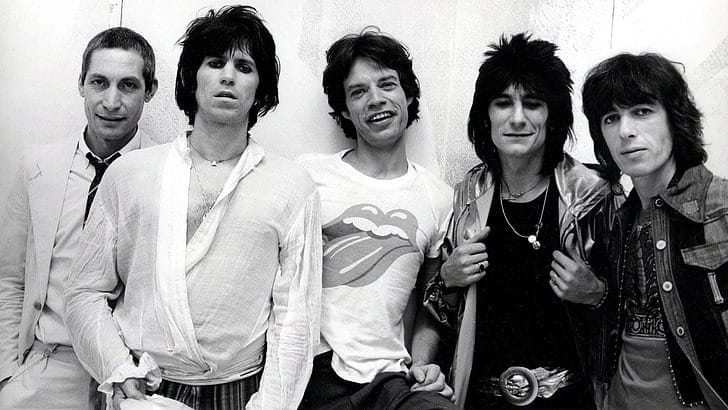
The Rolling Stones, formed in London in 1962, stand as one of the most enduring and influential rock bands in the history of music. Comprising Mick Jagger (vocals), Keith Richards (guitar), Charlie Watts (drums), Ronnie Wood (guitar), and previously Brian Jones (guitar, until 1969) and Bill Wyman (bass, until 1993), the Stones have left an indelible mark on rock ‘n’ roll.
Defined by their rebellious image, bluesy roots, and charismatic stage presence, The Rolling Stones have produced an extensive catalog of iconic hits. Their early blues and R&B-inspired tracks, like “Satisfaction” and “Paint It Black,” evolved into a more diverse sound that spanned rock, country, and even disco.
The longevity of The Rolling Stones is unparalleled, marked by record-breaking tours, acclaimed albums like “Exile on Main St.” and “Sticky Fingers,” and timeless anthems such as “Start Me Up” and “Angie.” Mick Jagger’s charismatic vocals, Keith Richards’ distinctive guitar riffs, and the band’s collective energy contribute to their legendary status.
Inducted into the Rock and Roll Hall of Fame, The Rolling Stones have become cultural icons, embodying the spirit of rock ‘n’ roll rebellion and musical innovation. Their influence has resonated across generations, ensuring that their legacy as one of the greatest rock bands in history remains firmly intact.
1. I Can’t Get No “Satisfaction”
“I Can’t Get No Satisfaction” is one of The Rolling Stones’ most iconic and enduring songs, released in 1965. Written by Mick Jagger and Keith Richards, the track became a global anthem and a symbol of the rebellious spirit of rock and roll during the 1960s.
The song’s instantly recognizable riff, created by Keith Richards, opens with a raw and distinctive guitar sound that became synonymous with the band. Mick Jagger’s lyrics reflect the frustration and dissatisfaction of the younger generation in the face of commercialism and societal expectations. The famous chorus, with Jagger repeatedly singing “I can’t get no satisfaction,” captured the zeitgeist of the time.
“I Can’t Get No Satisfaction” catapulted The Rolling Stones to international stardom and topped charts worldwide. Its rebellious attitude and catchy melody made it a rallying cry for the counterculture movement. The song’s success is enduring, and its riff is often cited as one of the greatest in rock history.
As a cultural touchstone, “Satisfaction” continues to be celebrated for its impact on rock music and its representation of the defiant spirit that defined an era. The song remains a staple in The Rolling Stones’ live performances and a classic in the rock canon.
2. “Gimme Shelter”
“Gimme Shelter” is a powerful and haunting song by The Rolling Stones, released in 1969 as the opening track of their album “Let It Bleed.” The song is notable for its evocative lyrics, emotive vocals, and a sense of urgency that captures the tumultuous spirit of the late 1960s.
The lyrics, written by Mick Jagger, depict a sense of apocalyptic foreboding, reflecting the social and political unrest of the time. The Vietnam War, civil rights struggles, and general societal upheaval are alluded to in the lyrics. Merry Clayton’s haunting vocals, particularly her spine-chilling solo during the climactic moments of the song, add a layer of intensity and emotion.
Musically, “Gimme Shelter” is characterized by its distinctive guitar riff played by Keith Richards and a driving rhythm section provided by Charlie Watts on drums and Bill Wyman on bass. The song’s sense of urgency is enhanced by the use of a female backing choir and a haunting mix of instruments.
“Gimme Shelter” is widely regarded as one of The Rolling Stones’ greatest achievements and a quintessential rock classic. It has been featured in numerous films, TV shows, and commercials, attesting to its enduring cultural impact. The song captures a moment in time and remains a timeless reflection of the social and political climate of the late 1960s.
3. “Sympathy for the Devil”
“Sympathy for the Devil” is a song by The Rolling Stones, written by Mick Jagger and Keith Richards. It was first released on their 1968 album “Beggars Banquet.” The song is known for its distinctive samba rhythm, dark lyrics, and Jagger’s charismatic and theatrical delivery.
The lyrics of “Sympathy for the Devil” are often interpreted as a narrative told from the perspective of Satan, recounting his influence and involvement in various historical events. The song touches on themes of temptation, human nature, and the dark side of human history. Some notable historical events mentioned in the lyrics include the crucifixion of Jesus Christ, the Russian Revolution, and the Kennedy assassinations.
Despite the dark subject matter, the song has become one of The Rolling Stones’ most iconic and enduring tracks. Its fusion of rock, blues, and Latin rhythms, along with its provocative lyrics, has made it a classic in the rock and roll canon. The Rolling Stones have performed “Sympathy for the Devil” in many of their concerts over the years, and it continues to be a fan favorite.
4. “Jumpin’ Jack Flash”
“Jumpin’ Jack Flash” is another iconic song by The Rolling Stones. It was released as a single in 1968 and later included on their album “Through the Past, Darkly (Big Hits Vol. 2).” The song was written by Mick Jagger and Keith Richards.
“Jumpin’ Jack Flash” is known for its energetic and infectious rock and roll sound. The title and chorus refer to a character named Jack Flash, who is described as a personification of a force of nature. The lyrics recount various experiences and challenges faced by Jack Flash.
The distinctive guitar riff at the beginning of the song, played by Richards, is one of the most recognizable in rock history. The combination of Jagger’s dynamic vocal performance and the band’s tight instrumentation contributed to the song’s success.
“Jumpin’ Jack Flash” quickly became one of The Rolling Stones’ signature songs and is considered a classic in the rock genre. It has been covered by various artists and featured in numerous films, TV shows, and commercials over the years.
5. “Ruby Tuesday”
“Ruby Tuesday” is a classic song by The Rolling Stones, released in 1967 as a single and later included on their album “Between the Buttons.” Written by Mick Jagger and Keith Richards, the song is characterized by its melodic beauty, poetic lyrics, and folk-influenced sound.
The lyrics of “Ruby Tuesday” are often interpreted as a contemplation of the transitory nature of life and relationships. The eponymous character, Ruby Tuesday, represents the elusive and ever-changing aspects of existence. Mick Jagger’s vocals convey a sense of longing and reflection, while Keith Richards contributes with intricate guitar work.
Musically, the song features a distinctive recorder part played by Brian Jones, which adds a folk and Renaissance-like quality to the track. The combination of acoustic and electric instrumentation creates a nuanced and atmospheric sound.
“Ruby Tuesday” became a major hit for The Rolling Stones, reaching high positions on the charts. Its enduring popularity is evidenced by its continued presence on classic rock radio and its inclusion in various compilation albums. The song remains a timeless example of The Rolling Stones’ ability to craft emotionally resonant and musically sophisticated compositions.
6. “2000 Light Years From Home”
“2000 Light Years From Home” is a song by The Rolling Stones, appearing on their 1967 album “Their Satanic Majesties Request.” The album marked a departure from the band’s traditional rock and roll sound, exploring psychedelic and experimental elements. “2000 Light Years From Home” is a notable example of this shift in their musical style.
The song features atmospheric and trippy instrumentation, including Mellotron and other effects, creating a dreamy and otherworldly atmosphere. The lyrics, written by Mick Jagger and Keith Richards, evoke a sense of space and distance. The title suggests a great physical and emotional separation, and the lyrics describe the loneliness and alienation of being far away from home.
“2000 Light Years From Home” reflects the influence of psychedelic music that was prevalent in the late 1960s. The album as a whole experimented with different sounds and studio effects, and it has been both praised for its adventurous approach and criticized for departing from The Rolling Stones’ more straightforward rock roots.
While “Their Satanic Majesties Request” was not as commercially successful as some of The Rolling Stones’ other albums, “2000 Light Years From Home” remains a notable and distinctive track in their discography. It showcases the band’s willingness to explore new musical territories during a time of experimentation in the rock music scene.
7. “Paint It, Black”
“Paint It, Black” is a striking and influential song by The Rolling Stones, released in 1966 as a single and later included on their album “Aftermath.” Written by Mick Jagger and Keith Richards, the song stands out for its distinctive sitar riff, brooding atmosphere, and introspective lyrics.
The lyrics of “Paint It, Black” explore themes of darkness, mourning, and introspection. The narrator expresses a desire to paint everything black, symbolizing a state of emotional despair and mourning. Mick Jagger’s vocals capture the intensity and emotional depth of the lyrics, while the use of the sitar, played by Brian Jones, adds an exotic and psychedelic dimension to the song.
Musically, “Paint It, Black” is notable for its unconventional instrumentation, including the sitar and Charlie Watts’ distinctive drum patterns. The song’s incorporation of Eastern influences was innovative for its time, contributing to its unique and memorable sound.
“Paint It, Black” became a chart-topping hit and is often regarded as one of The Rolling Stones’ signature songs. Its impact is evident in its continued popularity, frequent use in films, TV shows, and commercials, and its recognition as a classic in the rock genre. The song’s daring musical experimentation and introspective lyrics make it a standout in The Rolling Stones’ extensive catalog.
8. “The Last Time”
“The Last Time” is a song by The Rolling Stones, released as a single in 1965. It was written by Mick Jagger and Keith Richards, and it became one of their early hits. The song is known for its catchy guitar riff and Jagger’s soulful vocals.
“The Last Time” is often considered significant in The Rolling Stones’ discography because it was the first single written by Jagger and Richards that reached the top of the UK charts. The song’s success helped establish the band as a major force in the British Invasion and contributed to their rising popularity in the United States.
The lyrics of “The Last Time” convey a sense of frustration and disappointment in a relationship. The refrain features the famous line, “This could be the last time, maybe the last time, I don’t know,” emphasizing uncertainty and the possibility of a breakup.
The song has been covered by various artists over the years, but The Rolling Stones’ original version remains a classic example of their early sound, blending rock, blues, and soul influences. “The Last Time” is often remembered as a pivotal moment in the band’s career, setting the stage for their continued success and musical evolution.
9. “It’s Only Rock and Roll”
“It’s Only Rock ‘n Roll (But I Like It)” is a lively and defiant song by The Rolling Stones, released in 1974 as the title track of their album “It’s Only Rock ‘n Roll.” The song encapsulates the band’s rebellious spirit and love for rock and roll.
Written by Mick Jagger and Keith Richards, the lyrics convey a message of resilience and a commitment to enjoying life despite its challenges. The chorus, with its anthemic declaration that “It’s only rock ‘n roll, but I like it,” became a rallying cry for fans and a celebration of the enduring power of music.
Musically, the song features a catchy guitar riff and a dynamic arrangement. The interplay between Keith Richards and Mick Taylor’s guitars, along with Charlie Watts’ steady drumming and Bill Wyman’s bass, creates a driving and infectious rock sound. The saxophone solo by jazz musician David Bowie adds a touch of flair to the track.
“It’s Only Rock ‘n Roll (But I Like It)” became a concert favorite and remains a classic rock anthem. Its message of embracing the simple joys of rock and roll has resonated with audiences over the years, making it a staple in The Rolling Stones’ live performances and a testament to the enduring appeal of their music.
10. “Beast of Burden”
“Beast of Burden” is a song by The Rolling Stones, released on their 1978 album “Some Girls.” The song was written by Mick Jagger and Keith Richards, and it has become one of their well-known and enduring tracks.
“Beast of Burden” features a soulful and bluesy sound, and it’s characterized by its laid-back groove and Jagger’s heartfelt vocals. The lyrics of the song convey a sense of vulnerability and a plea for support in a relationship. The title phrase “beast of burden” is used metaphorically to express the feeling of being weighed down or burdened by responsibilities.
The song has been praised for its emotional depth and the interplay between Jagger’s vocals and Richards’ guitar work. Despite not being released as a single in the United States, “Beast of Burden” has become a fan favorite and is often performed by The Rolling Stones in their concerts.
Over the years, “Beast of Burden” has been covered by various artists and has been featured in movies, TV shows, and commercials. It remains a classic example of The Rolling Stones’ ability to blend rock, blues, and soul influences into a compelling and enduring musical expression.

Edward Tomlin is a frequent contributor to Singers Room. Since 2005, Singersroom has been the voice of R&B around the world. Connect with us via social media below.









