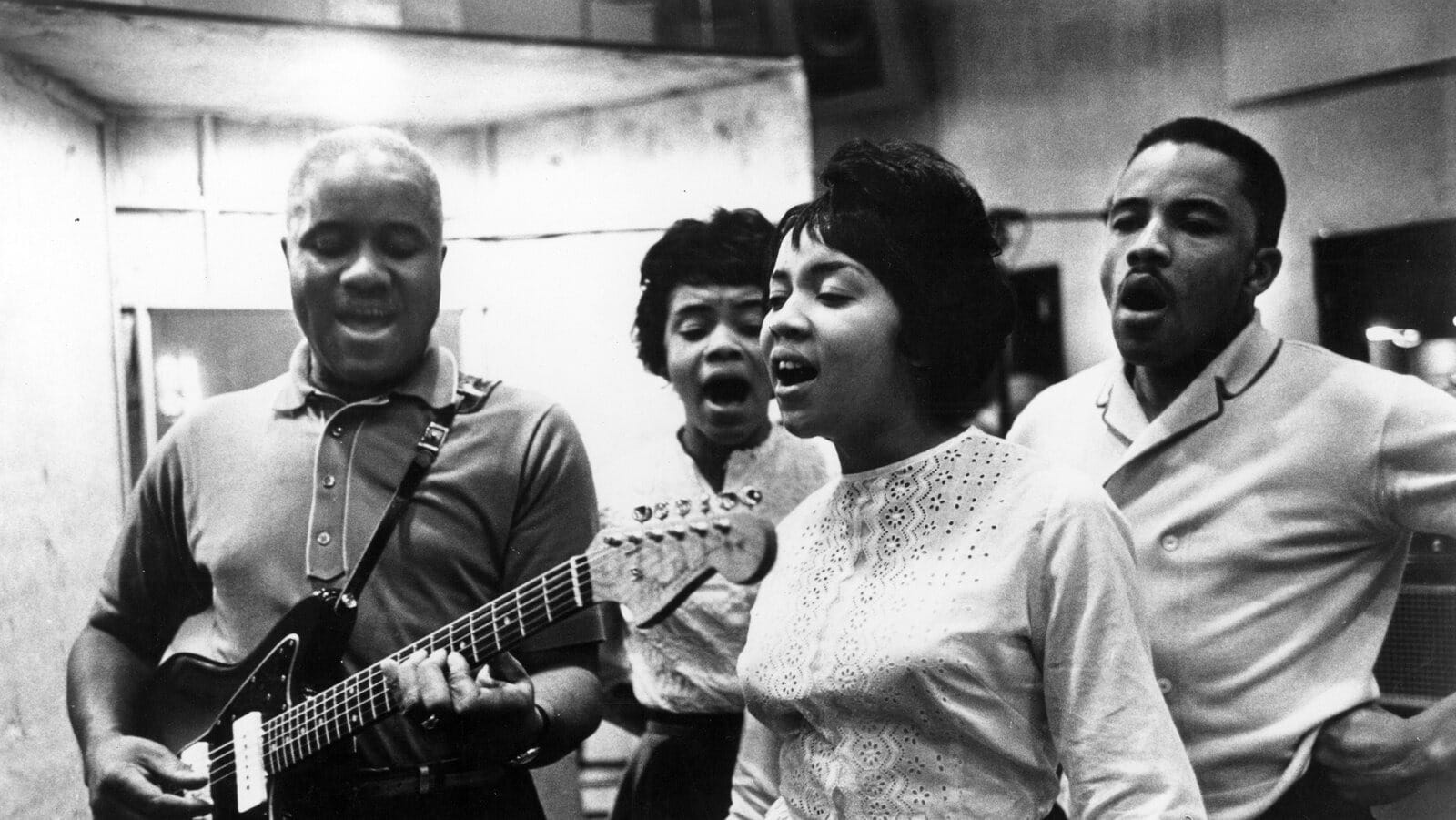
The Staple Singers, a family vocal group hailing from Chicago, achieved iconic status in the realms of gospel, soul, and R&B music. Led by the incomparable Mavis Staples and anchored by the harmonies of her siblings Pervis, Cleotha, and Yvonne, the group left an indelible mark on the music landscape with their powerful, socially conscious, and spiritually infused sound.
Emerging from the gospel circuit in the 1950s, The Staple Singers transitioned to secular music in the ’60s, blending their gospel roots with soulful, socially relevant messages. Pioneering the “message music” genre, they became a significant voice in the Civil Rights Movement, delivering anthems like “Freedom Highway.”
In the ’70s, their collaboration with Curtis Mayfield produced hits like “Let’s Do It Again,” showcasing Mavis Staples’ soul-stirring vocals. Their music seamlessly merged gospel fervor with funk and R&B grooves, creating a unique and infectious style. Songs like “I’ll Take You There” and “Respect Yourself” exemplified their ability to deliver messages of empowerment and positivity through irresistible melodies.
The Staple Singers left an enduring legacy, earning induction into the Rock and Roll Hall of Fame in 1999. Their contributions to music extend beyond entertainment, marking them as cultural influencers who used their harmonies to inspire change and uplift the spirit.
1. I’ll Take You There
“I’ll Take You There” is a song by The Staple Singers, released in 1972. The Staple Singers were an American gospel, soul, and R&B group consisting of Roebuck “Pops” Staples and his children. “I’ll Take You There” became one of their most successful and well-known songs.
The song is characterized by its infectious groove and uplifting gospel-infused melody. Mavis Staples’ powerful and soulful vocals contribute to the track’s energetic and joyous feel. The lyrics convey a message of hope and the promise of a better place, both in a spiritual and earthly sense.
“I’ll Take You There” topped the charts and became a massive hit, crossing over to mainstream success. Its success was not only in the realm of soul and gospel but also in pop and R&B genres. The song’s impact extended beyond its initial release, and it has been covered and sampled by various artists over the years.
The Staple Singers’ “I’ll Take You There” remains a classic in the soul and gospel genres, celebrated for its infectious groove, Mavis Staples’ powerful vocals, and its timeless message of hope and unity.
2. Respect Yourself
“Respect Yourself” is a song by The Staple Singers, released in 1971. The Staple Singers, a family gospel and soul group, had a series of hits that blended gospel, soul, and R&B with social and political messages.
“Respect Yourself” is known for its catchy and rhythmic sound, combining elements of soul and funk. The lyrics convey a message of self-respect and dignity, encouraging listeners to take pride in themselves and their actions. The chorus emphasizes the importance of respecting oneself in order to gain the respect of others.
The song was written by Luther Ingram and Mack Rice, and it became one of The Staple Singers’ signature tracks. “Respect Yourself” reached high positions on the charts and received critical acclaim for its social commentary and infectious sound.
The Staple Singers’ “Respect Yourself” is not only a musical success but also a cultural and social statement, reflecting the band’s commitment to addressing important issues through their music. The song remains influential and is celebrated for its timeless message of self-empowerment and respect.
3. Slippery People
“Slippery People” is a song by the American rock band Talking Heads. It was released in 1983 as part of their album “Speaking in Tongues.” Known for its infectious rhythm, energetic instrumentation, and distinctive lyrics, the song reflects Talking Heads’ innovative approach to new wave and post-punk music.
The lyrics of “Slippery People” were written by Talking Heads’ lead singer, David Byrne. The song’s title and lyrics suggest a theme of elusive or tricky individuals, using metaphorical language to convey a sense of uncertainty and unpredictability in human interactions.
One of the notable features of “Slippery People” is its dynamic and rhythmic arrangement, driven by funky basslines, lively percussion, and the charismatic vocal delivery of David Byrne. The song also became a staple in the band’s live performances, showcasing their ability to create a vibrant and engaging atmosphere on stage.
“Speaking in Tongues” marked a significant shift in Talking Heads’ sound, incorporating more electronic and funk elements. “Slippery People” exemplifies this evolution and has become one of the band’s well-regarded tracks, appreciated for its catchy hooks, rhythmic complexity, and Byrne’s distinctive vocal style. The song’s enduring popularity has contributed to its status as a classic in the post-punk and new wave genres.
4. Touch A Hand, Make A Friend
“Touch a Hand, Make a Friend” is a soulful and uplifting song performed by The Staple Singers. It was released in 1974 as a single and later included on their album “City in the Sky.” The Staple Singers, a family gospel and soul group, were known for their powerful vocal harmonies and socially conscious lyrics.
The lyrics of “Touch a Hand, Make a Friend” convey a positive message about reaching out to others and fostering connections. The idea is that a simple act, like touching someone’s hand, has the potential to create a meaningful and lasting friendship. The song promotes the values of unity, compassion, and the importance of human connection.
Musically, the song features a combination of soul, gospel, and R&B elements, characteristic of The Staple Singers’ style. Mavis Staples’ lead vocals, supported by the harmonies of her siblings, contribute to the song’s warm and soul-stirring quality.
“Touch a Hand, Make a Friend” became a charting success for The Staple Singers and is remembered as one of their signature songs. The track not only showcases their musical talent but also reflects the group’s commitment to spreading messages of love and togetherness through their music.
5. Oh La De Da
“Oh La De Da” is a song by The Staple Singers, released in 1973. The Staple Singers were a family gospel, soul, and R&B group known for their socially conscious lyrics and distinctive sound.
“Oh La De Da” is characterized by its funky and upbeat groove, typical of the Staple Singers’ style. The song’s lyrics touch on themes of perseverance, positivity, and the acknowledgment of life’s challenges. The repetitive and catchy chorus features the phrase “Oh La De Da,” contributing to the song’s infectious and joyous feel.
While “Oh La De Da” may not be as well-known as some of The Staple Singers’ earlier hits, it showcases their ability to infuse messages of hope and resilience into their music. The group’s unique blend of gospel, soul, and funk elements made their songs not only musically appealing but also socially relevant during a time of significant cultural and political change.
6. This World
This World by The Staple Singers was written by Gary William Friedman and Herb Schapiro and was first performed by The Me Nobody Knows Original Cast in 1970.
7. Heavy Makes You Happy (Sha-Na-Boom Boom)
“Heavy Makes You Happy (Sha-Na-Boom Boom)” is a song by the American soul and R&B group The Staple Singers. The song was written by Terry Manning and Homer Banks and released as a single in 1971. It was also included on The Staple Singers’ album “The Staple Swingers.”
The Staple Singers, led by the powerful and soulful vocals of Mavis Staples, were known for their gospel-infused soul music. “Heavy Makes You Happy (Sha-Na-Boom Boom)” is a lively and energetic track that captures the essence of the group’s dynamic sound.
The lyrics of the song celebrate the joy and happiness that comes from dancing and enjoying music. The catchy refrain “Sha-na-boom boom, sha-na-boom boom” adds a playful and rhythmic element to the song, making it a feel-good anthem.
“Heavy Makes You Happy” became a hit for The Staple Singers, reaching the top 30 on the Billboard Hot 100 chart. The song’s infectious groove and Mavis Staples’ soulful delivery contribute to its enduring appeal, making it a classic in the realm of soul and R&B music from the early 1970s.
8. If You’re Ready (Come Go With Me)
“If You’re Ready (Come Go with Me)” is a soulful and upbeat song by The Staple Singers. It was released in 1973 and became one of the group’s notable hits. The song is known for its catchy chorus and positive, inviting lyrics.
The Staple Singers, led by the powerful vocals of Mavis Staples, were renowned for their gospel, soul, and R&B-infused music. “If You’re Ready (Come Go with Me)” features a combination of these genres and carries a message of love, unity, and readiness for a journey together.
The lyrics encourage a sense of togetherness and commitment, inviting the listener to join in on a journey or adventure. The chorus, with the repeated line “If you’re ready, come go with me,” has a joyful and infectious quality.
The song was a chart success, reaching high positions on the Billboard Hot 100 and the R&B charts. Its popularity has endured over the years, and it remains a well-loved classic in the Staple Singers’ discography. The blend of Mavis Staples’ soulful vocals and the uplifting message of the song contributes to its lasting appeal.
9. City in the Sky
“City in the Sky” is a song by The Staple Singers, released in 1974 on their album “City in the Sky.” The Staple Singers, a family gospel, soul, and R&B group, had a string of hits that blended spiritual and social messages with a distinctive musical style.
The song “City in the Sky” features a lush arrangement, combining soulful vocals with elements of funk and gospel. The lyrics convey a message of hope and inspiration, envisioning a utopian city in the sky where there is peace and unity. The Staple Singers often incorporated themes of spirituality, love, and social justice into their music, and “City in the Sky” is no exception.
While “City in the Sky” may not be as widely recognized as some of The Staple Singers’ earlier hits, it is appreciated for its uplifting and positive message, as well as its musical artistry. The Staple Singers’ contributions to gospel, soul, and R&B have left a lasting impact on the music landscape.
10. Let’s Do It Again
“Let’s Do It Again” is a soul and funk song by The Staple Singers, released in 1975. The song was written and produced by Curtis Mayfield, a prominent figure in soul and R&B music. “Let’s Do It Again” served as the title track for the soundtrack of the film of the same name.
The song is characterized by its smooth and seductive groove, featuring the distinctive vocals of Mavis Staples. The lyrics convey a romantic and intimate sentiment, with a message of love and a desire to rekindle the magic of a special moment.
“Let’s Do It Again” became one of The Staple Singers’ biggest hits, topping the charts and earning them a Grammy nomination. The combination of Curtis Mayfield’s production, Mavis Staples’ soulful delivery, and the infectious melody contributed to the song’s success.
The Staple Singers’ rendition of “Let’s Do It Again” remains a classic in the realms of soul and R&B, capturing the essence of the mid-1970s music scene with its smooth and laid-back vibe.

Edward Tomlin is a frequent contributor to Singers Room. Since 2005, Singersroom has been the voice of R&B around the world. Connect with us via social media below.









