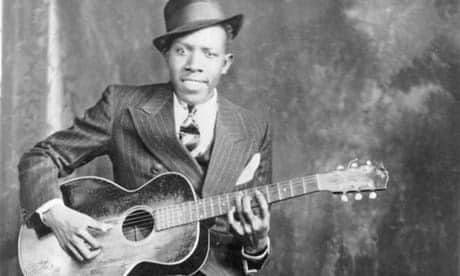
Robert Johnson (1911–1938) was an influential American blues musician and singer-songwriter who, despite a short life, left an enduring impact on the world of music. Born in Hazlehurst, Mississippi, Johnson’s life and career are shrouded in mystery and legend.
Johnson is often regarded as one of the most significant figures in the development of the blues genre. His guitar skills and haunting vocal style set him apart, and his influence can be heard in the work of countless musicians who followed. Notable for his emotive lyrics and intricate guitar playing, Johnson became a pivotal figure in the Mississippi Delta blues scene during the 1930s.
Some of his most well-known songs include “Cross Road Blues,” “Sweet Home Chicago,” and “Hell Hound on My Trail.” Johnson’s contribution to the blues genre has been celebrated for its innovation and emotional depth.
The legend of Robert Johnson is not only about his musical talent but also about the mythical pact he was said to have made with the devil at a crossroads, trading his soul for extraordinary musical abilities. This legend adds an air of mystique to Johnson’s already remarkable story.
Tragically, Robert Johnson’s life was cut short at the age of 27 when he died in 1938 under mysterious circumstances. His limited recorded output has nonetheless left an enduring legacy, and he is often cited as a key influence on subsequent generations of blues, rock, and folk musicians.
1. Cross Road Blues
“Cross Road Blues” is a seminal blues song written and performed by the legendary blues musician Robert Johnson. Johnson recorded the track in 1936 during one of his recording sessions in San Antonio, Texas. It is considered one of his most iconic and influential songs.
The lyrics of “Cross Road Blues” revolve around themes of hardship, destiny, and a sense of being at a crossroads in life. The song’s narrator expresses a feeling of desperation, contemplating whether to continue on the difficult path or to seek a new direction. The crossroads mentioned in the song have become symbolic, often associated with the legend of Robert Johnson making a pact with the devil at a crossroads in exchange for his extraordinary musical abilities.
Musically, “Cross Road Blues” showcases Johnson’s distinctive fingerpicking style on the guitar and his soulful, haunting vocals. The song’s structure and melody have been influential across various genres, particularly in the development of blues and rock music.
While not widely recognized during his lifetime, Robert Johnson’s work gained immense posthumous acclaim, and “Cross Road Blues” stands as a testament to his enduring impact on the blues genre and beyond. The song has been covered by numerous artists, further solidifying its status as a classic in the history of American music.
2. Love in Vain
“Love in Vain” is a classic blues song originally written and recorded by legendary blues musician Robert Johnson in 1937. The song is known for its poignant lyrics and soulful melody, reflecting themes of unrequited love and heartbreak.
In “Love in Vain,” Johnson sings about the pain of lost love and the heartache of a relationship that has come to an end. The title itself suggests a love that is no longer reciprocated, emphasizing the sense of abandonment and sorrow. Johnson’s emotive vocals and masterful guitar playing contribute to the melancholic atmosphere of the song.
The lyrics depict a narrator who is left alone, reflecting on the departure of a lover. The imagery in the song is vivid and poignant, capturing the essence of the blues and the human experience of love and loss.
“Love in Vain” has become a blues standard and has been covered by numerous artists over the years, attesting to its enduring appeal and influence. Notable renditions include those by The Rolling Stones on their 1969 album “Let It Bleed” and Eric Clapton on his “Me and Mr. Johnson” album in 2004. The song stands as a testament to Robert Johnson’s profound impact on the blues genre and his ability to convey deep emotions through his music.
3. I Believe I’ll Dust My Broom
“I Believe I’ll Dust My Broom” is a classic blues song written and performed by Robert Johnson, the influential blues musician of the early 20th century. The song was recorded on November 23, 1936, in San Antonio, Texas, during Johnson’s legendary recording sessions.
“I Believe I’ll Dust My Broom” features Johnson’s distinctive slide guitar playing and his soulful vocals. The lyrics express the theme of heartbreak and the narrator’s decision to leave, often using the metaphor of “dusting the broom” as a symbolic act of departure.
The song has become a blues standard and has been covered by numerous artists over the years. It’s one of Robert Johnson’s most well-known and enduring compositions, showcasing his mastery of the Delta blues style. Johnson’s influence on the blues and rock genres is immeasurable, and his work continues to be celebrated for its emotional depth and musical innovation.
4. Sweet Home Chicago
“Sweet Home Chicago” is a classic blues song that has become a standard in the genre. The song has been covered by various artists over the years, but it is most commonly associated with blues legend Robert Johnson. Johnson recorded the song on November 23, 1936, during his historic recording sessions in San Antonio, Texas.
The lyrics of “Sweet Home Chicago” convey the theme of yearning to return to Chicago, a city with deep roots in the history of blues music. The song has a lively and upbeat tempo, characteristic of the Chicago blues style. It features Johnson’s signature slide guitar playing and his soulful vocals.
“Sweet Home Chicago” has become one of the most iconic blues songs and is often considered a quintessential representation of the genre. The song’s enduring popularity has led to numerous interpretations and covers by blues and rock artists alike. It remains a timeless piece in the rich tapestry of blues music.
5. Hellhound on My Trail
“Hell Hound on My Trail” is a blues song written and recorded by the iconic blues musician Robert Johnson in 1937. The song is one of Johnson’s most renowned and influential compositions, showcasing his distinctive slide guitar playing and haunting vocal delivery.
The lyrics of “Hell Hound on My Trail” are steeped in folklore and blues imagery. The title and the lyrics suggest a sense of impending doom and the feeling of being pursued by a supernatural force, often interpreted metaphorically as the struggles and challenges of life. The theme of facing personal demons and the consequences of one’s actions is recurrent in blues music, and Johnson’s version is a particularly powerful and evocative example.
The eerie and evocative atmosphere of “Hell Hound on My Trail” is heightened by Johnson’s unique guitar techniques, including his use of a slide, which contributes to the haunting sound of the song. The emotional intensity and rawness of Johnson’s performance have solidified the song’s place in the pantheon of blues classics.
“Hell Hound on My Trail” has been covered by various artists over the years, and its influence extends beyond the blues genre, impacting the development of rock and folk music. The song remains a testament to Robert Johnson’s profound impact on the blues and his ability to convey deep, enduring emotions through his music.
6. Traveling Riverside Blues
“Traveling Riverside Blues” is a classic blues song written and originally recorded by the legendary blues musician Robert Johnson during his recording sessions in Dallas, Texas, on June 20, 1937. The song is one of Johnson’s notable compositions and showcases his distinctive guitar playing, including his skillful use of slide guitar.
The lyrics of “Traveling Riverside Blues” follow the blues tradition of using metaphorical language, and in this case, the riverside is a symbolic setting for both romantic and emotional themes. The song’s structure and melody are characteristic of Delta blues, a style Johnson helped define.
“Traveling Riverside Blues” has had a significant influence on later generations of musicians and has been covered by various artists. Notably, Led Zeppelin incorporated elements of Johnson’s song into their track “Traveling Riverside Blues” recorded in 1969.
As with many of Robert Johnson’s compositions, “Traveling Riverside Blues” remains a pivotal piece in the blues genre, celebrated for its emotional depth, intricate guitar work, and enduring impact on the world of music.
7. Ramblin’ on My Mind
“Ramblin’ on My Mind” is a classic blues song that has been recorded by several artists, but it is often associated with blues legend Robert Johnson. Johnson’s version, recorded in 1936 in San Antonio, Texas, is particularly well-known and is considered a defining example of Delta blues.
The lyrics of “Ramblin’ on My Mind” reflect the theme of being on the road, a common motif in blues music. Johnson’s haunting vocal delivery and his intricate fingerpicking on the guitar contribute to the song’s emotional depth.
“Ramblin’ on My Mind” has become a blues standard, and its influence extends far beyond Johnson’s original recording. Many blues and rock artists have covered the song or incorporated elements of it into their own works. The song remains a testament to Robert Johnson’s impact on the blues genre and his ability to convey deep emotions through his music.
8. Come on in My Kitchen
“Come on in My Kitchen” is a blues song written and recorded by the legendary blues musician Robert Johnson during his historic recording sessions in San Antonio, Texas, on November 23, 1936. It’s one of Johnson’s well-known compositions and showcases his intricate guitar work and soulful vocals.
The lyrics of “Come on in My Kitchen” convey themes of heartbreak and despair. Johnson uses metaphors and vivid imagery, inviting the listener into a symbolic kitchen, a place where he shares his personal struggles and emotions.
The song’s distinctive slide guitar playing and Johnson’s emotive singing have contributed to its enduring appeal. “Come on in My Kitchen” has been covered by numerous artists over the years, further solidifying its status as a blues classic. Musicians from various genres have recognized the song’s importance and have paid homage to Robert Johnson’s profound influence on blues and rock music.
9. Kind Hearted Woman Blues
“Kind Hearted Woman Blues” is a classic blues song written and recorded by the influential blues guitarist and singer Robert Johnson. Johnson recorded the song in 1936 during his historic recording sessions in San Antonio, Texas.
The lyrics of “Kind Hearted Woman Blues” reflect themes commonly found in the blues, such as love, heartache, and the complexities of romantic relationships. The narrator expresses a longing for a kind-hearted woman, suggesting both the joy and challenges associated with matters of the heart.
Musically, the song showcases Robert Johnson’s exceptional fingerpicking guitar technique and his distinctive vocal style. Johnson’s use of a slide on his guitar and his intricate fretwork contribute to the song’s compelling and emotive sound.
“Kind Hearted Woman Blues” is a testament to Johnson’s mastery of the Delta blues style, characterized by its raw, expressive nature. The song has become a blues standard and has been covered by numerous artists over the years, attesting to its enduring influence on the blues genre.
Robert Johnson’s impact on blues and rock music cannot be overstated, and “Kind Hearted Woman Blues” is just one example of his timeless contributions to the musical landscape.
10. They’re Red Hot
“They’re Red Hot” is a blues song written and recorded by the legendary blues musician Robert Johnson during his recording sessions in San Antonio, Texas, on November 23, 1936. The song is known for its upbeat tempo, rhythmic guitar playing, and humorous lyrics.
“They’re Red Hot” features Johnson’s distinctive slide guitar technique and showcases his playful side. The lyrics include references to “hot tamales” and other spicy foods, using them as metaphors for romantic desire and sensuality. The upbeat and lively nature of the song sets it apart from some of Johnson’s more introspective and melancholic compositions.
Over the years, “They’re Red Hot” has been covered by various artists and has become a recognized part of Robert Johnson’s catalog. The song’s infectious energy and Johnson’s skillful guitar work contribute to its enduring popularity within the blues genre.

Edward Tomlin is a frequent contributor to Singers Room. Since 2005, Singersroom has been the voice of R&B around the world. Connect with us via social media below.







