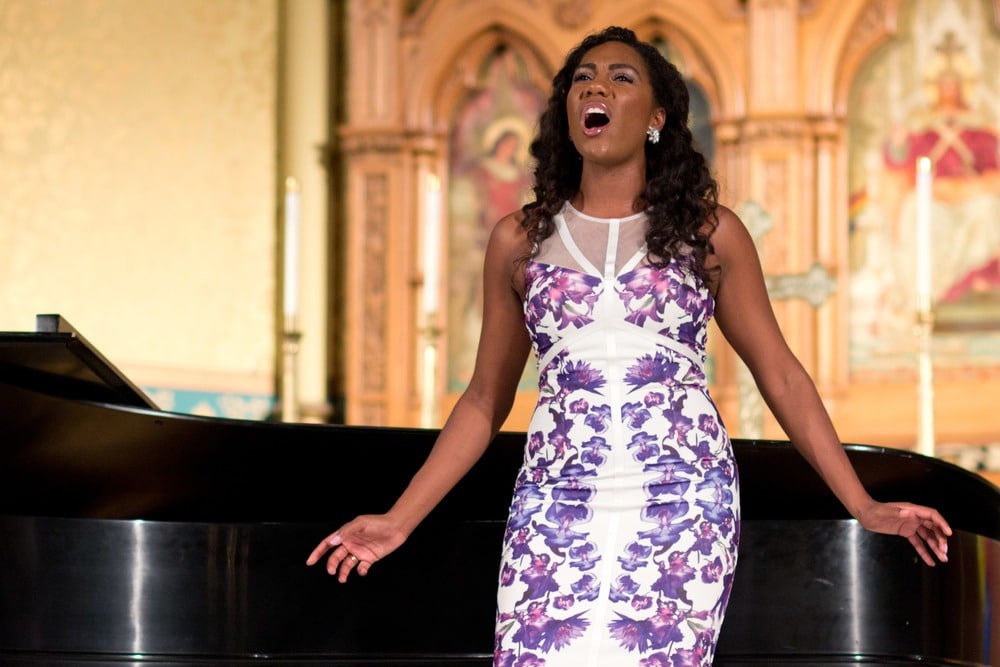
Opera songs, with their grandeur and emotional depth, represent the pinnacle of vocal and orchestral artistry. Rooted in centuries of musical tradition, opera is a dramatic form of storytelling where music takes center stage to convey the intricacies of human emotion and narrative. These compositions, often performed in grand opera houses, are characterized by powerful vocal performances, elaborate staging, and a fusion of music, drama, and visual arts.
Arias, the solo vocal pieces within operas, showcase the singer’s technical prowess and ability to convey the character’s emotions. These songs are marked by dynamic shifts, intricate melodies, and often demand a wide vocal range. Duets, ensembles, and choruses further enrich the operatic experience, creating complex musical tapestries that enhance the narrative.
Opera songs span diverse genres and eras, from the timeless works of composers like Giuseppe Verdi and Wolfgang Amadeus Mozart to modern operatic creations. Themes range from tragic love stories to historical epics, each song serving as a vessel for the expression of human passion and vulnerability.
The power of opera lies not only in its musical brilliance but also in its ability to transport audiences into a world where the human voice becomes a vehicle for profound storytelling. Whether a stirring soprano aria or a rousing ensemble piece, opera songs captivate, challenge, and resonate, leaving an indelible mark on the rich tapestry of musical history.
1. Va, pensiero by Giuseppe Verdi
“Va, pensiero” is a stirring and iconic chorus from Giuseppe Verdi’s opera “Nabucco.” Composed in 1842, “Nabucco” tells the biblical story of the Babylonian exile of the Jews, and “Va, pensiero” serves as the emotional centerpiece, expressing the longing and collective nostalgia of the Hebrew slaves for their homeland.
The chorus is also known by its subtitle, “Chorus of the Hebrew Slaves.” Sung in the third act, it reflects the yearning for freedom and homeland among the oppressed Jewish people. The lyrics, written by Temistocle Solera, depict the Jews as they express their deep desire to return to their homeland, presenting a poignant and powerful portrayal of the human spirit’s resilience.
Musically, “Va, pensiero” is characterized by its beautiful and melancholic melody, with the chorus building gradually to a powerful and emotive climax. The piece has become synonymous with the struggle for liberty and has transcended its operatic context to become a symbol of national identity and unity.
“Va, pensiero” is a prime example of how opera, through its emotional depth and powerful choruses, has the ability to evoke profound collective emotions and resonate with audiences across time and cultural boundaries. Verdi’s masterpiece stands as a testament to the enduring impact of opera as both a musical and emotional force.
2. Una furtiva lagrima by Gaetano Donizetti
“Una furtiva lagrima” is a poignant and famous aria from Gaetano Donizetti’s opera “L’elisir d’amore” (The Elixir of Love). Composed in 1832, this Italian opera buffa tells the story of Nemorino, a young peasant in love with the beautiful Adina. The aria occurs in the second act, and it is one of the most celebrated tenor arias in the operatic repertoire.
In “Una furtiva lagrima” (A furtive tear), Nemorino expresses his joy and astonishment after discovering that Adina has shed a tear for him. The aria beautifully captures Nemorino’s realization of Adina’s true feelings and the hope it brings to his romantic pursuit. The delicate orchestration and lyrical melody contribute to the aria’s emotional resonance.
The title translates to “A furtive tear,” referring to the tear that Nemorino witnesses, interpreting it as a sign of Adina’s love. The aria’s tender expression, combined with the character’s vulnerability and sincerity, makes it a standout moment in the opera.
“Una furtiva lagrima” showcases Donizetti’s gift for lyrical melody and emotional storytelling, and its popularity endures as a testament to the enduring beauty of bel canto opera. It has been widely performed and recorded by numerous tenors, becoming a staple of the classical vocal repertoire.
3. The Toreador Song by Georges Bizet
The Toreador Song, also known as “Votre toast, je peux vous le rendre,” is an aria from the opera “Carmen” composed by Georges Bizet. “Carmen” is a French opera that premiered in 1875, with libretto by Henri Meilhac and Ludovic Halévy. The Toreador Song is one of the most famous and recognizable pieces from the opera.
In the opera, the Toreador Song is sung by the character Escamillo, a charismatic bullfighter. The aria is delivered in Act 2, as Escamillo makes his entrance, boasting of his courage and popularity. The character expresses confidence in his abilities as a toreador and acknowledges the adoration he receives from the crowd.
The Toreador Song is characterized by its lively and rhythmic melody, reflecting the festive and vibrant atmosphere of the bullfighting arena. It features a strong and memorable brass accompaniment, capturing the bravado and grandeur associated with the toreador’s character.
The aria has become a popular and frequently performed piece in concert settings and is often associated with the romanticized image of Spanish bullfighting. The Toreador Song is a testament to Bizet’s ability to infuse his compositions with vivid characterizations and memorable melodies, contributing to the enduring popularity of “Carmen” as one of the most beloved operas in the repertoire.
4. Che gelida manina by Giacomo Puccini
“Che gelida manina” is an aria from the first act of Giacomo Puccini’s opera “La Bohème.” It is one of the most famous and frequently performed arias in the operatic repertoire. The opera, with a libretto by Luigi Illica and Giuseppe Giacosa, premiered in 1896 and has since become one of Puccini’s most beloved works.
In “Che gelida manina,” the character Rodolfo, a young poet, introduces himself to Mimì, a seamstress, whom he has just met. The title translates to “What a cold little hand” in English. In the aria, Rodolfo tells Mimì about his life and offers her his warm hands to help her feel better.
The aria is known for its expressive and lyrical melody, showcasing Puccini’s ability to create poignant and emotional moments in his compositions. The soaring and romantic vocal lines, combined with the lush orchestration, convey the tender and passionate emotions of the characters.
“La Bohème” is celebrated for its melodic richness and its portrayal of the bohemian life in Paris. “Che gelida manina” is a highlight of the opera, capturing the essence of young love and the initial spark between Rodolfo and Mimì. The aria is often performed as a standalone piece in concerts and has become a staple for tenors in the world of classical music.
5. Voi, che sapete by Wolfgang Amadeus Mozart
“Voi, che sapete” is a charming and well-known aria from Wolfgang Amadeus Mozart’s opera “Le Nozze di Figaro” (The Marriage of Figaro). Composed in 1786, the opera is based on the comedic play by Pierre Beaumarchais and is considered one of Mozart’s most celebrated works.
In “Voi, che sapete” (You who know), the character Cherubino, a young page, sings about the confusion of his emotions as he navigates the complexities of love and desire. The aria is characterized by its playful and lighthearted melody, reflecting the innocence and youthful exuberance of the character.
The lyrics, written by Lorenzo Da Ponte, convey Cherubino’s curiosity and fascination with the mysteries of love. Cherubino’s character is sung by a mezzo-soprano, adding to the charm of the aria with the timbre of a lower female voice portraying the young male character.
“Voi, che sapete” is celebrated for its delightful melody and Mozart’s ability to capture the essence of youthful infatuation. The aria has become a beloved piece in the operatic repertoire and is often performed in concerts and recitals, showcasing Mozart’s enduring influence on classical vocal music.
6. E lucevan le stelle by Giacomo Puccini
“E lucevan le stelle” is an aria from the third act of Giacomo Puccini’s opera “Tosca.” The opera premiered in 1900 and has since become one of Puccini’s most celebrated and frequently performed works.
In “E lucevan le stelle,” the character Mario Cavaradossi, a painter, sings about the beauty of the stars while reflecting on his impending execution. Cavaradossi has been imprisoned and is scheduled to face the firing squad at dawn. The title translates to “And the stars were shining” in English.
The aria is an emotionally charged and poignant moment in the opera, capturing Cavaradossi’s inner turmoil and the beauty of life juxtaposed with the imminent threat of death. The melody is expressive, and Puccini’s orchestration enhances the dramatic impact of the scene.
The central theme of love and sacrifice is a recurring motif in “Tosca,” and “E lucevan le stelle” is a powerful representation of the human experience facing tragedy and loss. The aria has become a staple in the repertoire for tenors and is often performed in concert settings, showcasing the depth and emotional range of Puccini’s music.
7. Suor Angelica Si, mi chiamano Mimi by Giacomo Puccini
“Suor Angelica” and “Si, mi chiamano Mimi” are from two different operas composed by Giacomo Puccini.
“Suor Angelica” is one of the one-act operas that make up Puccini’s trilogy “Il trittico.” “Suor Angelica” tells the tragic story of Sister Angelica, a nun who has been secluded in a convent due to her illegitimate child. “Senza mamma,” not “Si, mi chiamano Mimi,” is one of the notable arias from “Suor Angelica.” In “Senza mamma,” Sister Angelica expresses her deep sorrow and longing for her lost child.
On the other hand, “Si, mi chiamano Mimi” is a famous aria from Puccini’s opera “La Bohème.” In this aria, the character Mimì introduces herself and reflects on her simple, carefree life as a seamstress. She describes her humble background and expresses her desire for a peaceful and loving existence.
Both arias are beautifully crafted and showcase Puccini’s ability to evoke deep emotions through his music, but they belong to different operas with distinct characters and narratives.
8. Un bel di vedremo by Giacomo Puccini
“Un bel dì vedremo” is a poignant and well-known aria from Giacomo Puccini’s opera “Madama Butterfly.” Composed in 1903, “Madama Butterfly” tells the tragic tale of Cio-Cio-San, a young Japanese geisha, who falls in love with and marries an American naval officer, Lieutenant Pinkerton.
In “Un bel dì vedremo” (One beautiful day, we will see), Cio-Cio-San expresses her unwavering belief and hope that one day, Pinkerton will return to her. The aria is filled with lyrical beauty as she envisions the day when she sees his ship on the horizon. The emotional intensity of the music captures Cio-Cio-San’s anticipation, longing, and optimism.
Puccini’s masterful composition, coupled with the evocative lyrics by Luigi Illica and Giuseppe Giacosa, makes “Un bel dì vedremo” one of the standout moments in “Madama Butterfly.” The aria is both musically and emotionally rich, allowing the soprano portraying Cio-Cio-San to showcase her vocal prowess while conveying the character’s depth of emotion.
This poignant aria has become a staple in the soprano repertoire and remains a powerful and moving piece that captures the heart-wrenching essence of unrequited love and enduring hope.
9. Vissi d'arte by Giacomo Puccini
“Vissi d’arte” is an aria from Giacomo Puccini’s opera “Tosca.” The opera premiered in 1900 and has since become one of Puccini’s most performed and admired works.
In “Vissi d’arte,” the character Floria Tosca, a celebrated opera singer, laments her current situation and questions why, despite having lived a life devoted to art and love, she now faces such hardship. The title translates to “I lived for art” in English.
The aria is a moment of introspection and despair for Tosca, who is caught in a web of political intrigue and personal tragedy. The expressive melody and poignant orchestration convey Tosca’s emotional turmoil and the injustice of her circumstances.
“Vissi d’arte” is notable for its beautiful and melancholic melody, as well as its deep emotional impact. The aria is considered one of the highlights of “Tosca” and is often praised for its ability to showcase the vulnerability and strength of the character of Tosca.
The central themes of love, sacrifice, and the harsh realities of life are poignantly expressed in “Vissi d’arte,” making it a powerful and memorable moment in the opera repertoire. The aria remains a favorite among sopranos and is frequently performed in concert settings.
10. Largo al factotum by Gioachino Rossini
“Largo al factotum” is one of the most famous arias from Gioachino Rossini’s opera “Il barbiere di Siviglia” (The Barber of Seville). This comedic opera premiered in 1816 and quickly became one of Rossini’s most popular works.
The aria is sung by the character Figaro, the barber of Seville, who is a versatile and resourceful factotum (a person with many jobs and responsibilities). Figaro introduces himself and describes the various tasks he can perform, emphasizing his popularity and ubiquity in Seville. The title “Largo al factotum” translates to “Make way for the factotum” in English.
The aria is known for its lively and playful character, reflecting Figaro’s personality. Its catchy and fast-paced melody, coupled with humorous lyrics, has made it a favorite among audiences and a signature piece for baritones. The repeated “Figaro, Figaro, Figaro” refrain is particularly iconic.
“Largo al factotum” is not only a showcase for vocal virtuosity but also an excellent example of Rossini’s mastery in creating lively and memorable operatic compositions. The opera “Il barbiere di Siviglia” remains one of the most performed and beloved works in the operatic repertoire.
11. Libiamo ne' lieti calici by Giuseppe Verdi
“Libiamo ne’ lieti calici” is a lively and famous drinking song from Giuseppe Verdi’s opera “La Traviata.” Composed in 1853, “La Traviata” is based on the play “La Dame aux Camélias” by Alexandre Dumas fils and is one of Verdi’s most beloved works.
In the opera, “Libiamo ne’ lieti calici” is performed in the first act during a party scene. The characters Alfredo Germont and Violetta Valéry propose a toast to love and pleasure. The title translates to “Let’s drink from the joyful cups” in English. The festive and upbeat nature of the song is well-suited to the celebratory atmosphere of the scene.
The duet is known for its catchy melody, rhythmic energy, and the exuberant expression of the characters’ enjoyment of life. The repeated refrain of “Libiamo, libiamo ne’ lieti calici” adds to the joyful and celebratory spirit of the song.
“Libiamo ne’ lieti calici” has become one of the most recognizable and frequently performed arias from “La Traviata.” Its popularity extends beyond the opera house, making it a well-known piece in classical and popular music, often associated with the conviviality of toasting and celebrating life.
12. Der Holle Rache kocht in meinem Herzen by Wolfgang Amadeus Mozart
“Der Hölle Rache kocht in meinem Herzen,” commonly known as the “Queen of the Night Aria,” is a dramatic and technically demanding soprano aria from Wolfgang Amadeus Mozart’s opera “Die Zauberflöte” (The Magic Flute). Composed in 1791, “Die Zauberflöte” is a singspiel that blends fantastical elements with Masonic symbolism.
In the aria, the Queen of the Night expresses her intense anger and determination to destroy Sarastro, the high priest. The title translates to “The vengeance of Hell boils in my heart” in English. Known for its challenging vocal acrobatics and high notes, the aria demands exceptional vocal agility and control.
The music is characterized by rapid coloratura passages, staccato leaps, and soaring high notes, reflecting the Queen’s fiery and vengeful emotions. The intense and virtuosic nature of the aria has made it one of the most iconic and memorable pieces in the soprano repertoire.
Despite the Queen’s malevolent intentions, the Queen of the Night Aria remains a showcase of vocal prowess and dramatic expression. Its dramatic impact, combined with Mozart’s masterful composition, has secured its place as one of the highlights of “Die Zauberflöte” and a celebrated piece in the world of opera.
13. O mio babbino caro by Giacomo Puccini
“O mio babbino caro” is a soprano aria from Giacomo Puccini’s opera “Gianni Schicchi.” The opera premiered in 1918 as part of Puccini’s trio of one-act operas known as “Il trittico.”
In “O mio babbino caro,” the character Lauretta, the daughter of Gianni Schicchi, expresses her longing for her beloved Rinuccio. The title translates to “Oh, my dear father” in English. In the aria, Lauretta pleads with her father, Gianni Schicchi, to allow her to marry Rinuccio, despite the objections of Rinuccio’s family.
The aria is characterized by its beautiful and lyrical melody, reflecting the youthful innocence and passion of Lauretta. It is one of Puccini’s most well-known and beloved arias, celebrated for its expressiveness and the emotional depth it conveys in a relatively short duration.
“O mio babbino caro” has become a popular choice for sopranos in recitals and has been featured in various films, TV shows, and commercials, further contributing to its widespread recognition. The aria stands as a testament to Puccini’s ability to create emotionally resonant and memorable music.
14. La donna e mobile by Giuseppe Verdi
“La donna è mobile” is a famous aria from Giuseppe Verdi’s opera “Rigoletto.” Composed in 1851, “Rigoletto” is a tragic opera that tells the story of the hunchbacked court jester Rigoletto and his daughter Gilda. “La donna è mobile” is sung by the Duke of Mantua, a character known for his charm and womanizing ways.
The title translates to “Woman is fickle” in English. In the aria, the Duke praises the unpredictability of women and asserts that they cannot be trusted. The melody is lively and catchy, reflecting the Duke’s light-hearted and carefree attitude towards love.
“La donna è mobile” is one of the most well-known and frequently performed arias in the operatic repertoire. Its catchy tune and memorable lyrics have made it a popular piece beyond the opera house, and it is often recognized even by those less familiar with classical music. The aria is a testament to Verdi’s skill in creating music that is not only artistically rich but also accessible and appealing to a wide audience.
15. Nessun dorma by Giacomo Puccini
“Nessun dorma” is an aria from Giacomo Puccini’s opera “Turandot.” The opera premiered in 1926, after Puccini’s death, and “Nessun dorma” is one of its most famous and recognizable arias.
In the aria, Prince Calaf expresses his determination to win the heart of Princess Turandot, who has declared that any suitor must solve three riddles to marry her. The title “Nessun dorma” translates to “None shall sleep” in English, referring to Calaf’s resolve to stay awake all night until he solves the riddles.
The aria is characterized by its powerful and dramatic melody, reflecting Calaf’s passionate determination and optimism. The central theme of the aria revolves around the idea that love will triumph over all challenges, and Calaf believes that he will win Turandot’s love.
“Nessun dorma” has become one of the most iconic and widely performed arias in the operatic repertoire. It gained even greater popularity when Luciano Pavarotti’s rendition was used as the theme for the 1990 FIFA World Cup. The aria’s emotional intensity and Puccini’s masterful composition contribute to its enduring appeal, making it a favorite for tenors and a highlight in the world of classical music.

Edward Tomlin is a frequent contributor to Singers Room. Since 2005, Singersroom has been the voice of R&B around the world. Connect with us via social media below.









