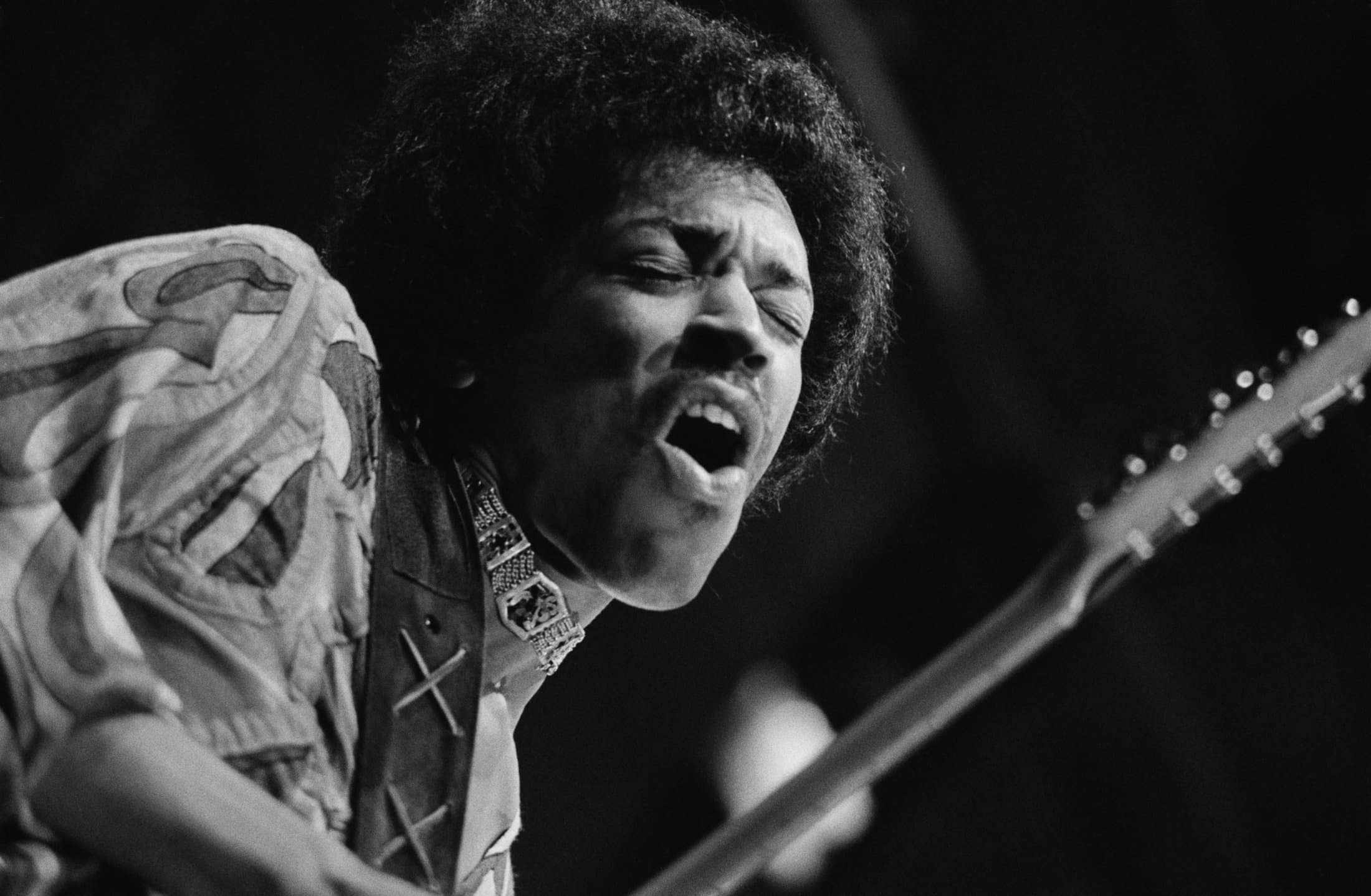
Jimi Hendrix, born Johnny Allen Hendrix on November 27, 1942, and later adopting the stage name Jimi, revolutionized the world of music with his groundbreaking approach to the electric guitar. Widely regarded as one of the greatest and most influential guitarists in the history of rock music, Hendrix’s impact extended far beyond his brief but dazzling career.
Raised in Seattle, Washington, Hendrix initially gained recognition in the 1960s as a sideman for various R&B acts. However, it was his move to London in 1966 and the formation of the Jimi Hendrix Experience that catapulted him to international stardom. Known for his virtuosic guitar skills, innovative use of effects, and charismatic stage presence, Hendrix mesmerized audiences with his electrifying performances.
His three studio albums, “Are You Experienced,” “Axis: Bold as Love,” and “Electric Ladyland,” showcased his ability to blend rock, blues, and psychedelia into a unique and influential sound. Iconic tracks like “Purple Haze,” “Hey Joe,” and “Voodoo Child (Slight Return)” solidified his place in the pantheon of rock legends.
Tragically, Jimi Hendrix’s life was cut short at the age of 27 in 1970, but his legacy endures as a symbol of artistic innovation and musical prowess that continues to inspire generations of musicians across genres.
1. “Little Wing”
“Little Wing” by Jimi Hendrix is a transcendent musical masterpiece that showcases Hendrix’s unparalleled guitar virtuosity and innovative approach to the instrument. Released in 1967 as part of the iconic album “Axis: Bold as Love,” the song is a fusion of blues, rock, and psychedelic elements that encapsulate the spirit of the 1960s counterculture.
Hendrix’s guitar work in “Little Wing” is nothing short of spellbinding, characterized by intricate fingerpicking, melodic bends, and a distinctive tone that evokes both vulnerability and strength. The song’s lyrics, poetic and enigmatic, contribute to its ethereal quality, depicting a whimsical, almost otherworldly narrative. Hendrix’s soulful vocals complement the instrumental brilliance, creating a sonic landscape that resonates with listeners on a profound emotional level.
“Little Wing” has left an indelible mark on the music world, influencing generations of guitarists and artists across genres. Its enduring appeal lies in its ability to transcend time, remaining a timeless classic that continues to captivate audiences. Whether experienced live or through recordings, “Little Wing” stands as a testament to Jimi Hendrix’s genius and his ability to push the boundaries of musical expression, leaving an everlasting impact on the landscape of rock and blues.
2. “Castles Made Of Sand”
“Castles Made of Sand” is another iconic song by Jimi Hendrix, released on the album “Axis: Bold as Love” in 1967. The song is a poignant exploration of the ephemeral nature of life and the fragility of human endeavors.
Hendrix’s guitar work in “Castles Made of Sand” is both delicate and powerful, showcasing his unparalleled skill in blending intricate fingerpicking with soulful, emotive bends. The lyrics of the song narrate a vivid and introspective story, touching upon themes of love, loss, and the transient nature of existence. The metaphor of “castles made of sand” emphasizes the transient and fleeting aspects of human achievements, echoing the impermanence of time.
The track also highlights Hendrix’s versatile vocal abilities, shifting from a gentle, reflective tone to more intense and passionate moments. The overall composition weaves together elements of blues, rock, and psychedelia, creating a sonic journey that resonates with listeners on a deeply emotional level.
“Castles Made of Sand” is celebrated not only for its musical brilliance but also for its profound lyrics, making it a timeless piece in the Jimi Hendrix catalog. The song’s enduring impact lies in its ability to convey universal truths about the human experience through a mesmerizing combination of lyrics and Hendrix’s unparalleled guitar artistry.
3. “Angel”
“Angel” is one of Jimi Hendrix’s soulful and contemplative compositions, released posthumously in 1971 on the album “The Cry of Love.” Written and recorded during the Electric Ladyland sessions in 1968, the song showcases a softer and more introspective side of Hendrix’s musical prowess.
With its ethereal guitar melodies and heartfelt lyrics, “Angel” explores themes of love, longing, and the complexities of human connection. Hendrix’s soulful vocals convey a sense of vulnerability, complemented by the gentle arrangement that features subtle percussion and a melodic bass line. The song’s emotional depth is heightened by Hendrix’s expressive guitar work, marked by his signature use of feedback and controlled distortion.
“Angel” stands as a departure from Hendrix’s more explosive and experimental compositions, revealing a nuanced facet of his artistic versatility. The track’s release after Hendrix’s passing added a poignant layer to its reception, contributing to its status as a beloved and introspective piece in his catalog. Whether through its soothing instrumentation or heartfelt lyrics, “Angel” remains a testament to Hendrix’s ability to convey raw emotion through his music, solidifying his place as a timeless and influential figure in the world of rock and blues.
4. “Who Knows”
“Who Knows” is a powerful and improvisational track by the Jimi Hendrix Experience, featuring Hendrix on guitar and vocals, Billy Cox on bass, and Mitch Mitchell on drums. The song first appeared on the posthumously released album “Band of Gypsys” in 1970.
Recorded live at the Fillmore East in New York City on New Year’s Eve 1969, “Who Knows” is notable for its extended jam sessions and Hendrix’s masterful guitar work. The song captures the energy and spontaneity of Hendrix’s live performances, showcasing his ability to push the boundaries of conventional rock and blues.
“Who Knows” is a blues-rock improvisation that allows each member of the band to showcase their instrumental prowess. Hendrix’s guitar solos are particularly remarkable, featuring his trademark use of feedback, wah-wah effects, and expressive bending of notes. The lyrics, though somewhat cryptic, convey a sense of uncertainty and introspection.
The “Band of Gypsys” album marked a departure from the original Jimi Hendrix Experience lineup and showcased Hendrix’s exploration of funk, soul, and blues. “Who Knows” is a prime example of Hendrix’s evolution as an artist and his ability to seamlessly blend genres while delivering electrifying live performances.
5. “If 6 Was 9”
“If 6 Was 9” is a psychedelic rock song written and performed by Jimi Hendrix. It appeared on the album “Axis: Bold as Love,” released in 1967. The song is known for its experimental sound, unconventional structure, and the bold expression of Hendrix’s counter-cultural beliefs.
The lyrics of “If 6 Was 9” reflect Hendrix’s rebellious and anti-establishment sentiments of the 1960s. The title itself suggests a disregard for conformity and a rejection of societal norms. The song features Hendrix’s distinctive guitar work, characterized by fuzzed-out tones, wah-wah effects, and improvisational solos that push the boundaries of traditional rock music.
The track showcases Hendrix’s skillful use of studio effects, creating a sonic tapestry that captures the essence of the psychedelic era. The unconventional time signatures and structure contribute to the song’s avant-garde feel, further solidifying Hendrix’s reputation as an innovator in the realm of rock music.
“If 6 Was 9” became an anthem for the counterculture movement of the 1960s, embracing individualism and challenging societal expectations. Its enduring appeal lies in its fusion of bold musical experimentation and rebellious lyrical content, making it a timeless piece that continues to resonate with fans of Jimi Hendrix and the spirit of the 1960s.
6. “All Along The Watchtower”
“All Along the Watchtower” is a song written by Bob Dylan and famously covered by Jimi Hendrix. It was first released by Dylan on his 1967 album “John Wesley Harding,” and Hendrix later recorded his version for the 1968 album “Electric Ladyland.”
Hendrix’s rendition of “All Along the Watchtower” is widely regarded as one of the most iconic cover songs in rock history. Hendrix’s interpretation transformed the acoustic folk song into a dynamic, electric blues-rock masterpiece. His guitar work, marked by distinctive chord progressions and a searing solo, added a new dimension to the song.
Released as a single, Hendrix’s version became a commercial success and is often considered superior to the original. The song’s enigmatic lyrics, with themes of apocalyptic visions and existential questions, coupled with Hendrix’s emotive vocals and guitar virtuosity, contribute to its enduring appeal.
The powerful combination of Dylan’s songwriting and Hendrix’s musical interpretation has made “All Along the Watchtower” a timeless classic. The cover remains a testament to Hendrix’s ability to infuse his unique style into diverse musical genres, leaving an indelible mark on the landscape of rock music.
7. “Purple Haze”
“Purple Haze” is one of Jimi Hendrix’s most iconic and influential songs, released in 1967 as a single and later included in the debut album “Are You Experienced.” This psychedelic rock anthem is renowned for its innovative guitar work, groundbreaking use of effects, and enigmatic lyrics.
The opening guitar riff of “Purple Haze” is instantly recognizable, and it immediately sets the tone for the song’s distinctive sound. Hendrix’s use of the wah-wah pedal and distortion effects, along with his groundbreaking guitar techniques, pushed the boundaries of what was possible in rock music at the time.
Lyrically, “Purple Haze” has been the subject of much interpretation and speculation. The surreal and vivid imagery, combined with Hendrix’s distinctive vocal delivery, has led to various theories about the song’s meaning. While some suggest drug references, Hendrix himself mentioned that the inspiration came from a vivid dream he had.
Beyond its musical and lyrical innovations, “Purple Haze” is culturally significant as a representative piece of the psychedelic era. The song’s success catapulted Hendrix to international fame and solidified his reputation as a groundbreaking guitarist and a symbol of the 1960s counterculture. “Purple Haze” remains a classic, celebrated for its enduring influence on the evolution of rock music and its timeless appeal.
8. “Hey Joe”
“Hey Joe” is a classic rock song that gained widespread popularity through the rendition by the Jimi Hendrix Experience. The song’s origins can be traced back to the mid-1960s, with the most well-known version being released by the Experience on their debut album, “Are You Experienced,” in 1967.
Originally written by Billy Roberts, “Hey Joe” tells the story of a man who, upon discovering that his partner has been unfaithful, decides to confront her and then contemplate his fate. The song’s straightforward yet powerful lyrics combined with its catchy melody contributed to its widespread appeal.
Jimi Hendrix’s interpretation of “Hey Joe” became a breakout hit for the band, and Hendrix’s distinct guitar playing and soulful vocals added a new dimension to the song. His rendition, characterized by a bluesy and psychedelic sound, features a memorable guitar solo that has become iconic in the history of rock music.
“Hey Joe” played a significant role in establishing Jimi Hendrix as a prominent figure in the 1960s rock scene. The song’s success helped pave the way for Hendrix’s subsequent releases and solidified his reputation as a guitar virtuoso and an influential force in the evolution of rock and blues.
9. “Foxy Lady”
“Foxy Lady” is a classic rock song by Jimi Hendrix, released in 1967 as part of the debut album “Are You Experienced.” The track is celebrated for its energetic and sensual vibe, showcasing Hendrix’s electrifying guitar skills and charismatic stage presence.
The song begins with an iconic guitar riff that instantly grabs the listener’s attention. Hendrix’s use of distortion and feedback adds a gritty and rebellious edge to the music. The lyrics of “Foxy Lady” convey a sense of attraction and desire, with Hendrix’s bold and charismatic vocal delivery complementing the electrifying instrumental arrangement.
What sets “Foxy Lady” apart is not only its musical prowess but also its role in shaping the image of Jimi Hendrix as a charismatic and innovative performer. The song became a staple of Hendrix’s live performances, and its inclusion in the album helped establish him as a leading figure in the psychedelic rock movement of the 1960s.
The lasting impact of “Foxy Lady” can be seen in its continued popularity and its status as one of Hendrix’s signature songs. The fusion of Hendrix’s virtuosic guitar work, magnetic stage presence, and the song’s bold, seductive lyrics contribute to its enduring appeal, making it a timeless piece in the rock music canon.
10. “Red House”
“Red House” is a blues song written and recorded by Jimi Hendrix. It was first released on the UK edition of the Jimi Hendrix Experience’s debut album, “Are You Experienced,” in 1967. The song showcases Hendrix’s deep appreciation for blues music and his ability to infuse it with his own distinctive style.
“Red House” is a slow blues ballad that features Hendrix’s expressive guitar playing and soulful vocals. The lyrics depict a man who, after experiencing various hardships, declares his intent to find solace in a red house where he can go to forget his troubles. Hendrix’s emotional delivery, coupled with the evocative guitar work, creates a poignant and immersive listening experience.
What sets “Red House” apart is Hendrix’s masterful use of blues phrasing and his soulful interpretation of the genre. The song allows him to showcase his guitar skills in a more traditional blues context, paying homage to the roots of his musical influences. The extended versions of “Red House” performed live further highlight Hendrix’s improvisational talent, with each rendition offering new nuances and variations.
“Red House” remains a testament to Jimi Hendrix’s versatility as a musician, showcasing his ability to seamlessly navigate between genres while staying true to the essence of the blues. It stands as a timeless example of Hendrix’s profound impact on the world of rock and blues music.

Edward Tomlin is a frequent contributor to Singers Room. Since 2005, Singersroom has been the voice of R&B around the world. Connect with us via social media below.









