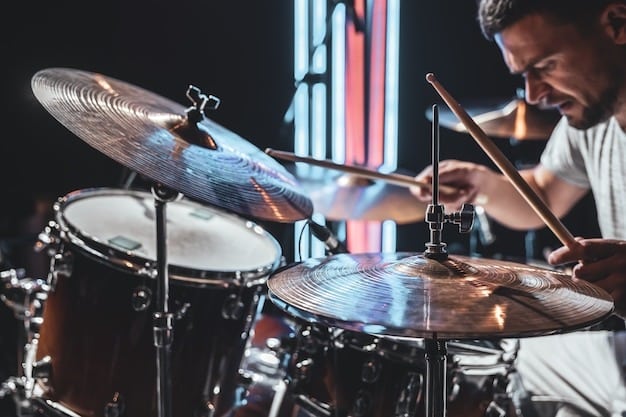
The rhythmic heartbeat of any musical composition lies in the hands of its drummer, the unsung hero whose percussive prowess propels the entire ensemble forward. As we embark on a rhythmic journey through the annals of musical history, we find ourselves in awe of the indelible mark left by the virtuosos who have elevated drumming to an art form. In the kaleidoscope of musical genres, from rock to jazz, funk to metal, these drummers stand as titans, their beats echoing through time. The “15 Best Drummers of All Time” is a celebration of the drumming virtuosos whose innovation, skill, and passion have not only shaped the landscape of music but have also inspired generations of aspiring percussionists. From thunderous fills that shake arenas to subtle, intricate patterns that weave through complex compositions, each drummer on this list has carved a unique niche, contributing to the rich tapestry of musical expression. Join us as we embark on a rhythmic odyssey, exploring the unparalleled talent, influence, and enduring legacy of the drummers who have earned their place among the greatest of all time. Whether it’s the primal energy of a live performance, the finesse of studio recordings, or the sheer creativity that pushes the boundaries of what drums can achieve, these drummers have left an indelible mark on the world of music. Get ready to be immersed in the world of rhythm, as we pay homage to the trailblazers, innovators, and maestros who have set the standard for excellence and continue to inspire drummers and music enthusiasts alike.
1. John Bonham
John Bonham, often hailed as one of the best drummers of all time, solidified his place in rock music history as the rhythmic powerhouse behind Led Zeppelin. Born on May 31, 1948, in Redditch, England, Bonham’s drumming prowess and innovative style set him apart in the world of rock and roll. His thunderous, dynamic playing became synonymous with the band’s sound, contributing to the iconic Zeppelin sound that defined an era. Bonham’s ability to seamlessly blend power and finesse, coupled with his impeccable sense of timing, made him a driving force behind the band’s success. His performances on classic tracks like “Whole Lotta Love” and “Good Times Bad Times” showcase his technical skill and musicality, influencing countless drummers across genres.
Tragically, John Bonham’s life was cut short on September 25, 1980, at the age of 32. Despite his untimely death, his impact on the world of drumming and rock music endures. Bonham’s legacy lives on through the timeless Led Zeppelin catalog, and his influence can be heard in the work of countless drummers who continue to draw inspiration from his powerful and innovative approach to the drums. With his distinctive style, unparalleled skill, and contributions to some of the greatest rock songs of all time, John Bonham remains an enduring figure in the pantheon of legendary drummers.
2. Neil Peart
Neil Peart, revered as one of the greatest drummers of all time, left an indelible mark on the world of progressive rock and beyond. Born on September 12, 1952, in Hamilton, Ontario, Canada, Peart rose to prominence as the drummer and primary lyricist for the iconic rock band Rush. His technical prowess and intricate drumming style became a hallmark of the band’s sound, elevating the role of the drummer in rock music. Peart’s drumming seamlessly blended complex rhythms with lyrical storytelling, contributing to the intellectual and musical depth of Rush’s discography.
Known for his meticulous approach to drumming, Peart constantly pushed the boundaries of his craft. His drum solos, such as the legendary “The Rhythm Method,” showcased his exceptional skill and creativity. Beyond his contributions to Rush, Peart’s influence extended to drummers across various genres, inspiring a new generation to explore the expressive possibilities of the drum kit. Tragically, Neil Peart passed away on January 7, 2020, after a private battle with brain cancer. His legacy lives on through the timeless Rush catalog and the enduring impact he had on the art of drumming, cementing his status as a true virtuoso and a beloved figure in the world of music.
3. Keith Moon
Keith Moon, the legendary drummer for The Who, is often celebrated as one of the most unconventional and energetic percussionists in the history of rock music. Born on August 23, 1946, in Wembley, London, Moon’s drumming style was characterized by its wild, unpredictable nature, perfectly mirroring his larger-than-life personality. His explosive performances and chaotic drumming technique became a defining element of The Who’s sound, contributing to the band’s rebellious and revolutionary image during the 1960s and 1970s.
Moon’s drumming was not just about keeping time; it was a theatrical and dynamic spectacle. Renowned for his aggressive fills, extravagant drum kit destruction, and unorthodox playing, Moon’s approach to the drums was a key element in establishing The Who as one of the pioneering acts of the British rock invasion. His contributions to iconic tracks like “My Generation” and “Baba O’Riley” showcased his ability to add a distinct, frenetic energy to the band’s music.
Unfortunately, Keith Moon’s life was cut short at the age of 32 when he died on September 7, 1978. Despite his tumultuous personal life, Moon’s impact on the world of drumming and rock music remains unparalleled. His legacy lives on as a symbol of the rebellious spirit of rock and the limitless possibilities of drumming as a form of artistic expression.
4. Buddy Rich
Buddy Rich, born on September 30, 1917, in Brooklyn, New York, is widely regarded as one of the greatest jazz drummers of all time. His remarkable talent and technical proficiency established him as a virtuoso whose influence extended far beyond the jazz world. Rich’s career spanned over six decades, and he earned a reputation for his unparalleled speed, precision, and improvisational skills behind the drum kit.
Rich began his professional career at a very young age, performing in vaudeville as a child prodigy. As he matured, he transitioned seamlessly into the world of big band jazz, collaborating with renowned artists such as Tommy Dorsey and Harry James. His tenure as the drummer for the latter helped solidify his reputation as a master of the drums. Rich’s performances were marked by lightning-fast drum rolls, intricate patterns, and an ability to navigate complex arrangements with finesse.
Beyond his technical prowess, Buddy Rich was known for his charismatic stage presence and fiery personality. His commanding presence behind the drums captivated audiences, and he became a legendary figure in the world of percussion. Even though Rich passed away on April 2, 1987, his legacy endures through recordings, videos, and the ongoing admiration of drummers across genres who continue to draw inspiration from his unparalleled skill and passion for the art of drumming.
5. Ginger Baker
Ginger Baker, born on August 19, 1939, in London, England, was a pioneering drummer who left an indelible mark on the world of rock and jazz. Best known as a co-founder of the supergroup Cream, Baker was a trailblazer in the fusion of rock and jazz drumming. His unique style combined elements of African rhythms, jazz improvisation, and powerful rock beats, setting him apart as one of the most innovative drummers of his time.
Baker’s contributions to Cream’s seminal albums, such as “Disraeli Gears” and “Wheels of Fire,” showcased his technical prowess and ability to push the boundaries of traditional drumming. His drum solos, particularly on tracks like “Toad,” became legendary for their complexity and intensity. Beyond Cream, Baker continued to explore diverse musical landscapes, collaborating with artists like Fela Kuti and forming the jazz-rock group Ginger Baker’s Air Force.
Known for his eccentric personality and no-nonsense attitude, Baker’s influence on subsequent generations of drummers is immeasurable. He paved the way for drummers to embrace a broader range of musical styles, showcasing the drums as a versatile and expressive instrument. Ginger Baker passed away on October 6, 2019, leaving behind a legacy of groundbreaking drumming that continues to inspire and captivate musicians across genres.
6. Mitch Mitchell
Mitch Mitchell, born on July 9, 1947, in Ealing, London, was the innovative drummer who provided the rhythmic backbone for the legendary Jimi Hendrix Experience. His distinctive drumming style played a crucial role in shaping the psychedelic and blues-infused sound that defined Hendrix’s revolutionary music during the late 1960s.
Mitchell’s drumming was characterized by its fusion of jazz, rock, and blues elements, showcasing his remarkable versatility and ability to adapt to Hendrix’s groundbreaking guitar work. His intricate fills and dynamic playing can be heard on iconic tracks like “Purple Haze,” “Hey Joe,” and “Voodoo Child (Slight Return).” Mitchell’s intuitive sense of rhythm and willingness to experiment with unconventional time signatures contributed to the experimental nature of the Jimi Hendrix Experience’s sound.
Beyond his technical proficiency, Mitchell’s improvisational approach to drumming added a layer of spontaneity to Hendrix’s live performances. His drumming became an integral part of the trio’s chemistry, creating a musical synergy that resonated with audiences around the world.
Mitch Mitchell’s impact on the evolution of rock drumming is undeniable. Even after the dissolution of the Jimi Hendrix Experience, he continued to contribute to various musical projects, leaving an enduring legacy as one of the pioneering drummers of the psychedelic era. Mitchell passed away on November 12, 2008, but his influence on drummers across genres persists, as his contributions to the art of drumming continue to be celebrated and studied.
7. Gene Krupa
Gene Krupa, born on January 15, 1909, in Chicago, Illinois, was a legendary jazz drummer and bandleader who played a pivotal role in the history of drumming. As one of the first drummers to gain international fame, Krupa brought the drums to the forefront of jazz music during the swing era of the 1930s and 1940s.
Krupa’s energetic and flamboyant style set him apart, making him a standout performer in big bands, most notably with the Benny Goodman Orchestra. His groundbreaking drumming on tracks like “Sing, Sing, Sing” became iconic and showcased his exceptional skill in elevating the role of the drummer from mere timekeeper to a soloist in his own right. Krupa’s virtuosic use of the drum kit, including his famous extended drum solos, inspired generations of drummers to approach their instrument with flair and showmanship.
Aside from his technical prowess, Gene Krupa’s influence extended beyond the drumming community. He was one of the first drummers to achieve celebrity status, breaking down racial barriers and paving the way for future generations of diverse musicians. Krupa’s impact on the popularization of the drum set and the evolution of jazz drumming remains significant, solidifying his place as a true pioneer in the world of percussion. Gene Krupa passed away on October 16, 1973, but his legacy lives on, with his contributions continuing to shape the artistry and showmanship of drummers across genres.
8. Ringo Starr
Ringo Starr, born Richard Starkey on July 7, 1940, in Liverpool, England, is renowned as the drummer for the iconic rock band, The Beatles. Despite not being known for flashy solos or intricate fills, Starr’s distinctive drumming style played a crucial role in shaping the sound and success of The Beatles during the 1960s. His ability to provide solid, rhythmic foundations while serving the song was a key element of the band’s signature sound.
Ringo’s unique approach to drumming, characterized by simplicity, musicality, and an uncanny sense of timing, contributed to the accessibility and universal appeal of The Beatles’ music. His steady backbeat and innovative use of percussion instruments added a layer of charm to hits like “A Hard Day’s Night,” “Come Together,” and “Hey Jude.” Starr’s drumming was an integral part of the band’s evolution, adapting seamlessly to the diverse musical styles explored in their vast catalog.
Beyond his contributions to The Beatles, Ringo Starr had a successful solo career and continued to collaborate with various artists. He was inducted into the Rock and Roll Hall of Fame as a solo artist in 2015 and received recognition for his impact on the drumming community. Ringo’s influence extends far beyond his time with The Beatles, making him a beloved figure in the world of drumming and a symbol of the power of simplicity and groove in music.
9. Lars Ulrich
Lars Ulrich, born on December 26, 1963, in Gentofte, Denmark, is best known as the co-founder and drummer of the iconic heavy metal band Metallica. As a key architect of the thrash metal movement, Ulrich’s powerful and precise drumming style has been a driving force behind Metallica’s success and enduring influence.
Ulrich’s drumming, characterized by fast double bass pedal work, intricate fills, and a dynamic sense of rhythm, became a defining element of Metallica’s sound. His collaboration with guitarist James Hetfield in shaping the band’s compositions contributed to the complexity and intensity of their music. Ulrich’s drumming prowess is prominently featured in Metallica’s groundbreaking albums such as “Master of Puppets,” “And Justice for All,” and the commercially successful “Metallica” (also known as “The Black Album”).
Beyond his drumming, Lars Ulrich is recognized for his role as one of Metallica’s primary songwriters and a driving force in the band’s business and creative decisions. While his drumming style has evolved over the years, Ulrich’s impact on the heavy metal genre and the broader music industry is undeniable. His contributions have earned Metallica a place among the greatest rock bands, and Ulrich remains a respected figure in the drumming community for his influential work over the past four decades.
10. Dave Grohl
Dave Grohl, born on January 14, 1969, in Warren, Ohio, has solidified his status as a multifaceted musician, with his drumming playing a significant role in his illustrious career. Best known as the drummer for the groundbreaking alternative rock band Nirvana, Grohl’s energetic and powerful drumming style contributed to the band’s seismic impact on the music scene during the early 1990s.
Grohl’s drumming, heard on Nirvana’s iconic album “Nevermind,” featured a dynamic combination of punk energy and hard-hitting grooves. His contributions to songs like “Smells Like Teen Spirit” and “In Bloom” showcased his ability to navigate between explosive beats and nuanced subtleties, helping define the grunge sound of the era.
Following Nirvana’s dissolution, Dave Grohl seamlessly transitioned to the role of frontman and guitarist with his own band, Foo Fighters. While assuming a more prominent role as a singer and songwriter, Grohl continued to showcase his drumming prowess on Foo Fighters’ albums, incorporating a diverse range of styles from punk to hard rock.
Dave Grohl’s influence extends beyond the drum kit, as he has become a rock music icon known for his versatility, musicality, and genuine passion for the craft. With an impressive career spanning several decades, Grohl’s impact on both the drumming community and the broader world of rock and alternative music is undeniable.
11. Charlie Watts
Charlie Watts, born on June 2, 1941, in London, England, was the revered drummer for The Rolling Stones and a true embodiment of timeless rock and roll. Known for his understated yet steady drumming style, Watts played an integral role in shaping The Rolling Stones’ sound and identity throughout their legendary career.
Watts’ drumming was marked by its simplicity, precision, and impeccable sense of timing. His ability to lay down a solid rhythmic foundation allowed the other members of the band, particularly Mick Jagger and Keith Richards, to shine. Whether on classic tracks like “Paint It Black” or “Sympathy for the Devil,” Watts’ drumming showcased a perfect blend of jazz-inspired finesse and rock and roll swagger.
Beyond his drumming skills, Charlie Watts was admired for his unassuming demeanor and dedication to his craft. His loyalty and longevity with The Rolling Stones, spanning over five decades, contributed to the band’s status as one of the greatest rock acts in history. Watts’ timeless contributions earned him respect as one of the most influential drummers in rock, with his legacy living on even after his passing on August 24, 2021. In celebrating Charlie Watts, the drumming world recognizes not just a masterful musician, but a foundational pillar of the enduring rock and roll spirit.
12. Stewart Copeland
Stewart Copeland, born on July 16, 1952, in Alexandria, Virginia, is acclaimed for his dynamic and innovative drumming as the rhythmic force behind the iconic rock band The Police. Copeland’s distinctive style, which blends elements of punk, reggae, and new wave, played a crucial role in shaping The Police’s sound during the late 1970s and early 1980s.
As the drummer and one of the primary songwriters for The Police, Copeland showcased his versatility by incorporating complex rhythms and syncopated patterns into the band’s hit songs. Tracks like “Message in a Bottle,” “Roxanne,” and “Every Breath You Take” demonstrate Copeland’s ability to seamlessly fuse different genres while maintaining a distinctive and infectious groove.
Beyond his drumming, Copeland’s contributions extended to his use of percussion and electronic elements, adding a layer of sophistication to The Police’s music. His innovative approach to the drum kit and willingness to experiment with various sounds set him apart as a visionary drummer in the new wave era.
Stewart Copeland’s influence transcends his time with The Police, as he has continued to contribute to various musical projects and film scores. His legacy in the drumming community endures as a testament to his creativity, technical skill, and enduring impact on the evolution of rock and popular music.
13. Mike Portnoy
Mike Portnoy, born on April 20, 1967, in Long Beach, New York, is a highly regarded drummer and one of the founding members of the progressive metal band Dream Theater. Portnoy’s drumming style is known for its technical proficiency, intricate patterns, and versatility, making him a standout figure in the world of progressive and metal music.
As the primary drummer for Dream Theater for over 25 years, Portnoy played a pivotal role in the band’s complex and ambitious compositions. His command of odd time signatures, elaborate drum fills, and intricate double bass drumming became synonymous with Dream Theater’s progressive sound. Notable albums like “Metropolis Pt. 2: Scenes from a Memory” and “Images and Words” showcase Portnoy’s exceptional drumming skills.
In addition to his work with Dream Theater, Mike Portnoy has been involved in numerous side projects and collaborations, further showcasing his versatility. His technical prowess extends to various drumming styles, and he has earned acclaim for his work with bands like Liquid Tension Experiment, Transatlantic, and Avenged Sevenfold.
Despite parting ways with Dream Theater in 2010, Mike Portnoy’s impact on the drumming community and progressive metal genre remains significant. His influence is felt not only through his technical abilities but also through his role as a driving force in shaping the landscape of modern progressive music.
14. Alex Van Halen
Alex Van Halen, born on May 8, 1953, in Amsterdam, Netherlands, is a highly influential drummer best known for his role in the iconic rock band Van Halen. Alongside his brother, Eddie Van Halen, Alex played a crucial part in shaping the band’s sound and contributing to their success throughout the late 1970s and beyond.
Alex Van Halen’s drumming style is characterized by its powerful and energetic approach. His driving rhythms and skillful use of double bass drumming became a trademark of Van Halen’s music, influencing a generation of rock drummers. His contributions to classic Van Halen albums such as “Van Halen” (1978), “1984,” and “5150” showcased his technical prowess and ability to anchor the band’s explosive sound.
Beyond his proficiency as a drummer, Alex Van Halen played a key role in the band’s songwriting process and arrangements. His musical partnership with Eddie Van Halen, particularly in crafting intricate transitions and dynamic changes within their songs, contributed to the band’s distinctive style.
While Van Halen experienced lineup changes over the years, Alex remained a consistent force behind the drum kit, earning him acclaim as one of the most influential drummers in the rock genre. His legacy endures not only through the enduring popularity of Van Halen’s music but also through his impact on the evolution of rock drumming.
15. Roger Taylor
Roger Taylor, born on July 26, 1949, in King’s Lynn, Norfolk, England, is celebrated as the versatile drummer and a vital creative force behind the legendary rock band Queen. Taylor’s impact on the band extends beyond his drumming, as he contributed significantly to Queen’s songwriting and vocals.
Taylor’s drumming style is characterized by its precision, power, and flair, making a substantial impact on Queen’s sound. His drumming prowess is evident in iconic tracks such as “Bohemian Rhapsody,” “We Will Rock You,” and “Radio Ga Ga.” Taylor’s ability to blend rock, pop, and theatrical elements in his drumming played a crucial role in defining Queen’s diverse musical palette.
In addition to his drumming skills, Roger Taylor’s vocal harmonies and songwriting contributions added depth to Queen’s catalog. His compositions, including hits like “Radio Ga Ga” and “I’m in Love with My Car,” showcase his musical versatility and creative vision.
Beyond his work with Queen, Roger Taylor has pursued solo projects, showcasing his talents as a drummer, vocalist, and songwriter. His enduring influence on the world of rock music and drumming is evident in the continued admiration for Queen’s legacy, as well as in Taylor’s ongoing contributions to the music industry.

Samuel Moore is a frequent contributor to Singers Room. Since 2005, Singersroom has been the voice of R&B around the world. Connect with us via social media below.