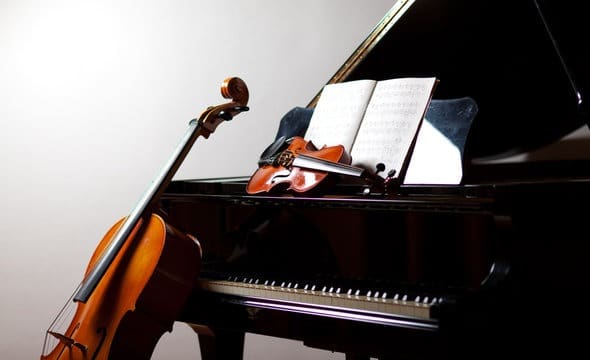
Classical music, with its rich history spanning centuries, represents a vast and diverse landscape of masterpieces that have left an indelible mark on the cultural tapestry of humanity. These compositions, born from the minds of revered composers, traverse a spectrum of emotions, offering a profound journey through the realms of beauty, melancholy, and grandeur.
From the sublime orchestral arrangements of Beethoven’s symphonies to the intricate counterpoint of Bach’s fugues, classical music captivates with its structural complexity and emotional depth. The genre encompasses a myriad of forms, including sonatas, concertos, operas, and chamber music, each showcasing the virtuosity and creativity of its composers.
Mozart’s graceful melodies and Haydn’s innovative wit reflect the elegance of the Classical era, while the emotional intensity of Romantic giants like Tchaikovsky and Chopin speaks to the human condition with unmatched poignancy. Moving into the 20th century, composers like Stravinsky and Debussy challenged traditional norms, ushering in the era of modern classical music with avant-garde experimentation.
Classical music offers listeners an immersive experience, transcending temporal boundaries to evoke a profound connection between the artist and the audience. Whether exploring the divine serenity of a choral piece or the visceral energy of a symphonic movement, classical music stands as an eternal testament to the enduring power of artistic expression.
1. Gymnopédies by Erik Satie
Erik Satie’s “Gymnopédies” stand as serene and evocative piano compositions, capturing a distinctive atmosphere that transcends the conventional boundaries of classical music. Composed in the late 19th century, these three short pieces exemplify Satie’s revolutionary approach to music, marked by simplicity, tranquility, and a departure from the prevailing Romantic trends of his time.
The Gymnopédies, named after ancient Greek dances, exhibit a minimalistic yet emotive character. Satie’s use of repetitive patterns and gentle, unhurried tempos creates an ambiance of contemplation and introspection. The delicate interplay between melody and harmony, coupled with Satie’s unique notational directions like “painfully” or “with astonishment,” adds a whimsical touch to the compositions.
These pieces have left an indelible mark on both classical and popular music, influencing future generations of composers and performers. The Gymnopédies’ impact extends beyond the concert hall, often finding a place in film soundtracks, advertisements, and contemporary arrangements. Their enduring popularity attests to the timeless allure of Satie’s innovative vision, inviting listeners into a contemplative realm where simplicity becomes a vessel for profound emotion and expression.
2. Nuages gris by Franz Liszt
“Nuages gris” (French for “Gray Clouds”) is a solo piano piece composed by the Hungarian composer Franz Liszt. Written in 1881 during Liszt’s later years, “Nuages gris” is a striking departure from his earlier, more virtuosic compositions, reflecting a profound shift in his musical style.
As the title suggests, “Nuages gris” paints a somber and introspective musical landscape. Liszt’s use of dissonance and unconventional harmonies in this composition creates an atmosphere of melancholy and contemplation. The repetitive and meandering nature of the piece contributes to its sense of ambiguity, as if wandering through the eponymous gray clouds.
Liszt, a composer known for his romantic and virtuosic works, showcases a more subdued and introspective side in “Nuages gris.” The composition stands as a testament to Liszt’s ability to evolve and experiment with different musical styles as he aged.
Though not as frequently performed as some of Liszt’s more famous compositions, “Nuages gris” has garnered appreciation for its unique character and its departure from the composer’s earlier flamboyant style. Liszt’s exploration of more subdued emotions in this piece adds a layer of complexity to his body of work and provides listeners with a glimpse into the mature reflections of a musical master.
3. Nessun dorma by Giacomo Puccini
“Nessun Dorma” is a powerful and emotionally charged aria from the final act of Giacomo Puccini’s opera “Turandot.” Written in 1926 and left incomplete at the time of Puccini’s death, the opera was later finished by Franco Alfano. The aria itself is sung by the character Calaf, a prince who falls in love with Princess Turandot.
The title “Nessun Dorma” translates from Italian to “None Shall Sleep.” The aria is a poignant and dramatic soliloquy in which Calaf expresses his determination to win Turandot’s love, even if it means facing death. The famous and triumphant final lines proclaim that when dawn breaks, Turandot will finally know his name, ending with the powerful declaration, “Vincero! Vincero!,” meaning “I will win! I will win!”
The aria is renowned for its emotional intensity, soaring melodies, and the climactic high note on “Vincero,” which demands a tenor of considerable vocal prowess. “Nessun Dorma” has become one of the most recognizable and beloved arias in the operatic repertoire, transcending its operatic origins to become a popular and widely performed piece in various musical contexts. The aria gained even more widespread recognition when it was used as the theme for the 1990 FIFA World Cup, further cementing its place in the cultural zeitgeist.
4. Swan Lake by Pyotr Ilyich Tchaikovsky
“Swan Lake” is a ballet composed by Pyotr Ilyich Tchaikovsky in 1875–76. It is one of Tchaikovsky’s most well-known and frequently performed works and is considered a masterpiece of classical ballet.
The ballet’s narrative revolves around a young princess named Odette who is cursed by an evil sorcerer, transforming her into a swan during the day. The only way to break the curse is through the declaration of true love. The ballet features both the white swan, Odette, and the black swan, Odile, danced by the same ballerina in dual roles, often showcasing the dancer’s versatility.
“Swan Lake” is renowned for its exquisite and emotive music. Tchaikovsky’s score includes memorable compositions such as the graceful “Swan Theme” and the energetic and challenging “Dance of the Little Swans.” The music’s richness and emotional depth contribute significantly to the ballet’s enduring popularity.
Despite its initial mixed reception during Tchaikovsky’s lifetime, “Swan Lake” has become a staple of the classical ballet repertoire. Numerous ballet companies worldwide perform various adaptations of “Swan Lake,” ensuring its continued influence and impact on the world of dance and music. The ballet’s timeless themes, combined with Tchaikovsky’s lush and evocative score, have secured its place as a masterpiece in the realm of classical arts.
5. Brandenburg Concertos by J.S. Bach
The Brandenburg Concertos are a collection of six instrumental works composed by Johann Sebastian Bach. These concertos, collectively known as the Brandenburg Concertos, were presented by Bach to Christian Ludwig, Margrave of Brandenburg-Schwedt, in 1721. The concertos are considered among Bach’s finest and are celebrated for their innovative instrumentation, intricate counterpoint, and overall brilliance.
Each concerto within the collection features a unique combination of instruments, showcasing Bach’s ingenuity and mastery of composition.
Each concerto explores different ensemble combinations, featuring a variety of instruments such as strings, woodwinds, brass, and harpsichord. The concertos are characterized by their lively and virtuosic nature, with intricate dialogues between instruments and sections.
The Brandenburg Concertos are recognized not only for their artistic significance but also for their historical importance in showcasing the capabilities of different instruments and demonstrating the concerto grosso style. They remain central to the repertoire of Baroque music and are widely performed and admired for their timeless beauty and compositional ingenuity.
6. Adagio for Strings by Samuel Barber
“Adagio for Strings” is a poignant and emotive composition by American composer Samuel Barber. Originally the second movement of Barber’s String Quartet, Op. 11, he later arranged it for string orchestra in 1936, gaining immense popularity in this revised form.
The “Adagio for Strings” is renowned for its depth of emotion and solemnity. Its slow tempo and expressive melodies evoke a profound sense of introspection and melancholy. Barber’s masterful use of string instruments, particularly the soaring and poignant violin lines, contributes to the overall impact of the piece.
The composition gained widespread recognition and emotional significance when it was used in various films, television shows, and public events. One notable instance is its inclusion in the soundtrack of the 1986 film “Platoon,” directed by Oliver Stone, where it enhances the emotional weight of the scenes it accompanies.
“Adagio for Strings” has become one of Barber’s most celebrated and performed works, appreciated for its ability to elicit deep emotional responses. Its enduring popularity speaks to the universal and timeless quality of Barber’s composition, resonating with listeners across generations.
7. Flight of the Bumblebee by Nikolai Rimsky-Korsakov
“Flight of the Bumblebee” is a famous orchestral interlude written by Russian composer Nikolai Rimsky-Korsakov. The piece is part of his opera “The Tale of Tsar Saltan,” composed in 1899–1900. The opera tells the story of Tsar Saltan, and “Flight of the Bumblebee” serves as an interlude between Acts II and III.
The composition is renowned for its technical difficulty and has become a showpiece for virtuoso instrumentalists, particularly for the solo violin or other instruments like the flute or clarinet. Its lively and rapid-paced nature emulates the flight of a bee, with quick, buzzing motifs and intricate runs.
While the opera itself may not be as well-known as some other works by Rimsky-Korsakov, “Flight of the Bumblebee” has achieved significant independent recognition and popularity. Its rapid and frenetic pace, combined with its catchy melodies, has made it a favorite for orchestras and soloists alike.
The piece has been adapted and arranged for various instruments and ensembles, contributing to its widespread appeal. “Flight of the Bumblebee” remains a challenging and exhilarating piece that continues to captivate audiences with its technical brilliance and vivid musical depiction of a bumblebee in flight.
8. William Tell Overture by Gioachino Rossini
The “William Tell Overture” is a lively and famous composition by Italian composer Gioachino Rossini. Composed in 1829, it serves as the overture to Rossini’s final opera, “William Tell” (Guillaume Tell in French). The overture is known for its dynamic and exhilarating character, as well as its distinct sections that have become iconic in popular culture.
The overture opens with a serene and pastoral theme, depicting the Swiss landscape, followed by the widely recognized galloping motif that has been popularized in various media. This section, often referred to as the “Lone Ranger” theme, is marked by its energetic pace and is frequently associated with adventurous and heroic contexts.
Rossini’s “William Tell Overture” is notable not only for its catchy tunes but also for its innovative use of orchestration and dynamic contrasts. The piece builds to a grand finale, showcasing the composer’s ability to create excitement and drama through orchestral brilliance.
Despite its association with the opera “William Tell,” the overture has achieved independent fame and is often performed as a standalone concert piece. Its enduring popularity makes it one of Rossini’s most recognizable and beloved compositions, transcending its original operatic context to become a symbol of high-spirited and exhilarating music.
9. Canon in D by Johann Pachelbel
Johann Pachelbel’s “Canon in D” is a timeless and enduring piece of classical music. Composed in the late 17th century, during the Baroque period, this work is celebrated for its graceful simplicity, mesmerizing melodic lines, and its ingenious use of a repeating bass line known as a canon.
The “Canon in D” is structured around a ground bass (a repeating bass line) upon which the various instruments build and layer their melodies. The piece begins with a delicate and recognizable three-note motif, which then unfolds and intertwines in a captivating and seamless manner. Pachelbel’s use of harmony, particularly in the three-part canon structure, contributes to the piece’s sense of balance and beauty.
The work was not widely known during Pachelbel’s lifetime, but it experienced a resurgence in popularity during the 20th century. “Canon in D” has since become a popular choice for weddings, film soundtracks, and various cultural events. Its serene and uplifting qualities make it a timeless favorite, and its influence can be heard in modern popular music, further solidifying its place as one of the most cherished and recognizable classical compositions.
10. Ride of the Valkyries by Richard Wagner
“Ride of the Valkyries” is a dramatic orchestral piece composed by Richard Wagner. It is part of the second act of Wagner’s opera “Die Walküre,” which is the second opera in the four-opera cycle titled “Der Ring des Nibelungen” (The Ring of the Nibelung). The entire cycle, often referred to simply as “The Ring,” is a monumental work that revolutionized opera and is considered one of the pinnacles of Western classical music.
“Ride of the Valkyries” (original German title: “Walkürenritt”) occurs in the opera during the Valkyries’ tumultuous ride to collect fallen heroes from the battlefield and bring them to Valhalla. The music is characterized by its powerful and dynamic orchestration, depicting the Valkyries’ fierce and determined journey.
The composition is instantly recognizable for its dramatic and heroic themes. The opening trumpet fanfare followed by the rhythmic and energetic string and brass passages creates a sense of urgency and intensity. The piece has been widely used in popular culture, often as a symbol of impending battle or a grand, triumphant entrance.
“Ride of the Valkyries” is not only a prominent and iconic segment of Wagner’s operatic cycle but has also transcended its operatic context to become a standalone orchestral work appreciated for its dramatic impact and memorable motifs.
11. Moonlight Sonata by Ludwig van Beethoven
The “Moonlight Sonata,” officially known as Piano Sonata No. 14 in C-sharp minor “Quasi una fantasia”, Op. 27, No. 2, is a captivating and iconic composition by Ludwig van Beethoven. Composed in 1801 and dedicated to his pupil, Countess Giulietta Guicciardi, the sonata is commonly referred to as the “Moonlight Sonata” due to its evocative first movement.
The first movement, marked “Adagio sostenuto,” is characterized by its hauntingly beautiful melody and a sense of brooding emotion. The sonata opens with a gentle, repetitive motif that sets the contemplative and atmospheric tone. The movement progresses through various sections, showcasing Beethoven’s innovative use of dynamics and expressive markings.
The second movement, “Allegretto,” provides a contrast with its rhythmic and dance-like character. Despite being more lively, it maintains a melancholic undertone that contributes to the overall emotional depth of the sonata.
The final movement, “Presto agitato,” returns to the dramatic and passionate atmosphere, showcasing Beethoven’s mastery of the piano and his ability to create intense emotional landscapes through music.
The “Moonlight Sonata” stands as one of Beethoven’s most recognized and beloved works, admired for its emotive power, technical brilliance, and timeless appeal. Its enduring popularity has made it a staple of classical piano repertoire, captivating audiences and musicians alike with its profound beauty and expressive depth.
12. The Marriage of Figaro by Wolfgang Amadeus Mozart
“The Marriage of Figaro” (“Le nozze di Figaro” in Italian) is an opera buffa (comic opera) composed by Wolfgang Amadeus Mozart. The libretto was written by Lorenzo Da Ponte, based on the play “La Folle Journée, ou Le Mariage de Figaro” by Pierre-Augustin Caron de Beaumarchais. Mozart’s opera premiered in Vienna in 1786 and is considered one of his most brilliant and enduring works.
The opera is set in the palace of Count Almaviva and continues the story from Beaumarchais’s earlier play, “The Barber of Seville.” The plot revolves around the complex and humorous interactions among the characters, including the servants Figaro and Susanna, Count Almaviva, and his wife Countess Almaviva. The opera explores themes of love, class distinctions, and the triumph of cleverness over social hierarchy.
Notable arias and ensembles from “The Marriage of Figaro” include Figaro’s lively “Non più andrai,” the Countess’s poignant “Porgi, amor,” and the famous ensemble piece “Sull’aria.” The overture, with its bright and bustling theme, is also widely recognized and appreciated.
Mozart’s mastery in combining sublime music with insightful characterization and witty storytelling makes “The Marriage of Figaro” a cornerstone of the operatic repertoire. Its enduring popularity is a testament to Mozart’s ability to capture the complexities of human relationships with humor and profound musical expression.
13. Eine kleine Nachtmusik by Wolfgang Amadeus Mozart
“Eine kleine Nachtmusik” (A Little Night Music) is one of Wolfgang Amadeus Mozart’s most beloved and well-known compositions. Written in 1787, this serenade, cataloged as K. 525, is often referred to as Serenade No. 13 for strings in G major.
Composed during a prolific period in Mozart’s career, “Eine kleine Nachtmusik” is characterized by its delightful and elegant melodies, conveying a sense of joy and sophistication.
The title “Eine kleine Nachtmusik” suggests a light-hearted and intimate character, befitting the serenade’s nature. The work has become immensely popular and is frequently performed in concert halls worldwide. Its enduring appeal lies in Mozart’s ability to craft engaging and accessible music while maintaining a level of sophistication and artistic brilliance.
14. The Four Seasons by Antonio Vivaldi
“The Four Seasons” (Italian: “Le quattro stagioni”) is a set of four violin concertos composed by the Baroque composer Antonio Vivaldi. Each concerto in the set corresponds to a different season and is accompanied by a sonnet, presumably written by Vivaldi himself, providing descriptive imagery that complements the music. Composed around 1720, “The Four Seasons” is one of Vivaldi’s most famous works and a prime example of program music, where the music is intended to evoke images or convey a narrative. Each concerto is structured in three movements: fast-slow-fast.
Vivaldi’s depiction of the changing seasons through music is vivid and innovative. He uses various musical techniques to convey elements like bird songs, thunderstorms, and the crispness of winter. The concertos are known for their virtuosic violin writing and dynamic orchestration.
The popularity of “The Four Seasons” has endured through the centuries, making it one of the most recorded and performed pieces of classical music. Its lively and descriptive character, combined with Vivaldi’s inventive use of form and melody, continues to captivate audiences and showcase the brilliance of Baroque composition.
15. Symphony No. 5 by Ludwig van Beethoven
Ludwig van Beethoven’s Symphony No. 5 in C minor, Op. 67, is one of the most iconic and recognizable works in the classical music repertoire. Composed between 1804 and 1808 during a period of personal crisis for Beethoven, the symphony is often referred to as the “Fate Symphony” due to the recurring four-note motif in the first movement that has been famously interpreted as “short-short-short-long” or “fate knocking at the door.”
Beethoven’s Symphony No. 5 is celebrated not only for its innovative use of motivic development but also for its emotional depth and the profound impact it has had on the classical music landscape. It remains a symbol of artistic expression and resilience, embodying Beethoven’s ability to transcend adversity through his music.

Edward Tomlin is a frequent contributor to Singers Room. Since 2005, Singersroom has been the voice of R&B around the world. Connect with us via social media below.









