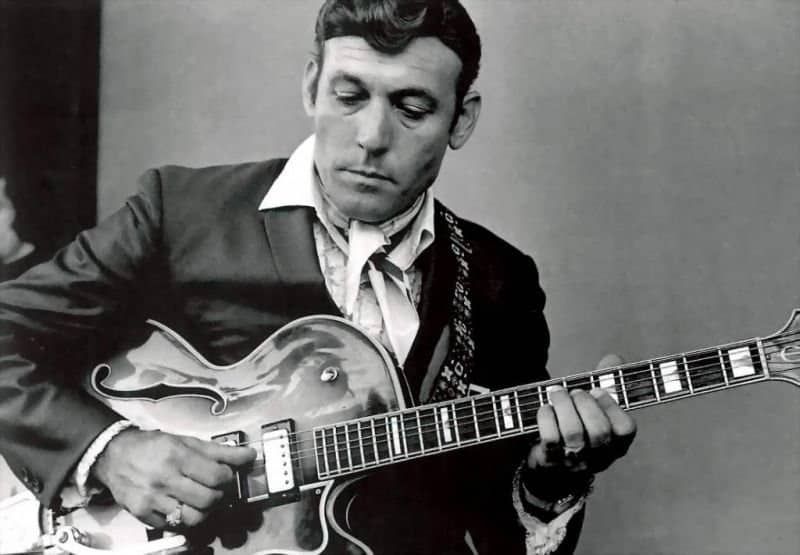
Carl Perkins was an American rockabilly musician and songwriter, best known for his contributions to the early development of rock and roll. He was born on April 9, 1932, in Tiptonville, Tennessee, and passed away on January 19, 1998.
Carl Perkins achieved fame with his hit song “Blue Suede Shoes,” released in 1956. The song became a rock and roll standard and is considered one of the genre’s seminal tracks. “Blue Suede Shoes” reached the top of the charts and played a significant role in the popularization of rock and roll during the 1950s.
Perkins’ style blended elements of country, blues, and rockabilly, and he was recognized for his distinctive guitar work. His influence extended beyond his own recordings, as his songs were covered by numerous artists, including The Beatles, who recorded Perkins’ “Matchbox.”
While “Blue Suede Shoes” remains his most famous song, Carl Perkins continued to make music throughout his career, contributing to the rockabilly and country genres. His impact on the early years of rock and roll and his influence on subsequent generations of musicians are widely acknowledged, making him a significant figure in the history of American popular music.
1. Your True Love
“Your True Love” is a classic rockabilly song written and originally recorded by Carl Perkins. The song was released as a single in 1957 and later included on his album “Dance Album of Carl Perkins.” Perkins, known for his distinctive guitar style and energetic performances, played a crucial role in shaping the rock and roll and rockabilly genres.
“Your True Love” features Perkins’ signature twangy guitar riffs, a driving rhythm, and his expressive vocals. The song captures the upbeat and lively spirit of rockabilly, a genre that blended elements of country, blues, and rock and roll.
Over the years, “Your True Love” has become a rockabilly classic and has been covered by various artists, including The Beatles, who recorded a version during their early years in Liverpool. Perkins’ influence on subsequent generations of musicians, particularly in the rock genre, is widely acknowledged, and his songs continue to be celebrated for their energy and authenticity.
2. Let the Jukebox Keep On Playing
“Let the Jukebox Keep On Playing” is a classic rockabilly song written and recorded by Carl Perkins. It was released as a single in 1954 and later included on the album “Dance Album of Carl Perkins” in 1957. Carl Perkins, a pioneer of the rock and roll and rockabilly genres, was known for his energetic performances and influential guitar style.
“Let the Jukebox Keep On Playing” exemplifies the upbeat and rhythmic characteristics of rockabilly music. The song features Perkins’ distinctive guitar licks and a lively, danceable tempo. Lyrically, the song expresses the joy of music and dancing, capturing the spirit of the rock and roll era.
While “Let the Jukebox Keep On Playing” may not be as well-known as some of Perkins’ other hits like “Blue Suede Shoes,” it remains a testament to his contributions to the early days of rock and roll. Perkins’ influence on the genre and subsequent generations of musicians is widely acknowledged, and his work continues to be celebrated in the annals of American music history.
3. Honey Don’t
“Honey Don’t” is a song written by Carl Perkins, a rockabilly and rock ‘n’ roll pioneer, and it gained notable recognition when it was recorded by The Beatles. The song is known for its upbeat and rockabilly style, characteristic of Perkins’ musical influence.
Carl Perkins originally recorded “Honey Don’t” in 1956. Later, in 1964, The Beatles, specifically Ringo Starr, performed the song during the recording sessions for their album “Beatles for Sale.” Ringo Starr took the lead vocals on this track, showcasing his affinity for rockabilly and his admiration for Carl Perkins.
The Beatles’ version of “Honey Don’t” was included on their “Beatles for Sale” album, released in 1964. The album featured a mix of original compositions and cover songs, showcasing the band’s versatility and appreciation for various musical styles.
The Beatles’ rendition of “Honey Don’t” has a lively and spirited feel, capturing the essence of the rockabilly genre. Ringo’s energetic vocal delivery and the band’s tight instrumentation contribute to the song’s overall charm. The track reflects The Beatles’ deep respect for the rock ‘n’ roll pioneers who influenced their musical journey.
4. That’s Right
“That’s Right” is a rockabilly song by Carl Perkins. It was released as a single in 1957 and later included on Perkins’ album “Whole Lotta Shakin’.” Carl Perkins, a pivotal figure in the rock and roll and rockabilly genres, was renowned for his distinctive guitar playing and energetic performances.
“That’s Right” exemplifies the characteristic sound of rockabilly, featuring Perkins’ twangy guitar riffs, a driving rhythm, and his spirited vocals. The song, like many in the rockabilly genre, often focused on themes of romance, dancing, and the joy of music.
While “That’s Right” may not be as widely recognized as some of Perkins’ more famous hits, it showcases the raw and infectious energy that defined his contributions to the early years of rock and roll. Carl Perkins’ influence on the genre and his impact on subsequent generations of musicians have cemented his legacy in the history of American music.
5. Movie Magg
“Movie Magg” is a song written and performed by Carl Perkins, one of the pioneers of rockabilly music. Carl Perkins was known for his energetic and innovative approach to blending country, blues, and rock influences, and “Movie Magg” is an early example of his work in the rockabilly genre.
Released in 1955, “Movie Magg” was one of Perkins’ early recordings and showcases his distinctive guitar playing style and vocal delivery. The song features Perkins’ signature mix of country and blues elements, with a lively tempo and catchy melody. The lyrics tell the story of a young man’s infatuation with a girl he sees at the movies.
Carl Perkins’ contributions to rockabilly and rock ‘n’ roll had a significant impact on the genre, and he is best known for his hit songs like “Blue Suede Shoes.” “Movie Magg” is part of his early catalog, reflecting the raw and exciting sound that would become a hallmark of rockabilly music.
As a pioneering figure in the rockabilly movement, Carl Perkins’ influence extended to later generations of musicians, including The Beatles, who covered his songs and expressed admiration for his work.
6. Blue Suede Shoes
“Blue Suede Shoes” is a classic rock and roll song written and originally recorded by Carl Perkins. Released as a single in 1956, the song became a massive hit and is considered one of the defining tracks of the rockabilly genre.
Carl Perkins, with his distinctive guitar style and energetic vocals, created a song that captured the spirit of early rock and roll. The lyrics tell a cautionary tale about the importance of preserving one’s cherished possessions, particularly a pair of blue suede shoes, in the face of potential damage at a dance party.
“Blue Suede Shoes” reached significant commercial success, peaking at number 2 on the Billboard Hot 100 chart. The song’s popularity extended beyond its initial release, and it has been covered by numerous artists across various genres. Notably, Elvis Presley also recorded a widely known version of the song, further contributing to its iconic status.
The phrase “don’t step on my blue suede shoes” has become a cultural reference, and the song remains a symbol of the early days of rock and roll. Carl Perkins’ impact on the genre and his influence on subsequent generations of musicians are integral to the history of American music.
7. Matchbox
“Matchbox” is a rock and roll song written by Carl Perkins and recorded by him in 1956. The song became a significant hit and has been covered by various artists, most notably by The Beatles.
Carl Perkins originally released “Matchbox” as a single in 1957. The song’s catchy rhythm, energetic guitar work, and Perkins’ lively vocal delivery contributed to its success. “Matchbox” reached the top of the Billboard R&B charts.
The Beatles, particularly Ringo Starr, later covered “Matchbox” during the recording sessions for their “Long Tall Sally” EP in 1964. Ringo took the lead vocals for the Beatles’ version, and the song was released as a single in the United States. The Beatles’ cover of “Matchbox” showcases their appreciation for rock and roll and their admiration for artists like Carl Perkins.
“Matchbox” remains one of Carl Perkins’ signature songs, and its enduring popularity is evident in the various covers and adaptations by different artists over the years. The song is celebrated for its lively and infectious rockabilly energy.
8. Everybody’s Trying To Be My Baby
“Everybody’s Trying to Be My Baby” is a classic rock and roll song written by Carl Perkins. It was first recorded and released by Perkins in 1957. The song is known for its lively and infectious rockabilly sound, featuring Perkins’ distinctive guitar work and energetic vocals.
Perkins’ version of “Everybody’s Trying to Be My Baby” was released as a single and later included on his album “Dance Album of Carl Perkins.” The lyrics convey a sense of confidence and charm, as the singer humorously navigates the attention and admiration he receives.
The song gained further recognition when The Beatles covered it on their 1964 album “Beatles for Sale.” George Harrison, who was a great admirer of Carl Perkins, took lead vocals on The Beatles’ version.
“Everybody’s Trying to Be My Baby” has since been covered by various artists, and it remains a celebrated example of the rockabilly genre. Carl Perkins’ influence on rock and roll, as well as the admiration he received from iconic bands like The Beatles, solidify his legacy in the history of popular music.
9. Dixie Fried
“Dixie Fried” is a rock and roll song written and recorded by Carl Perkins. It was released as a single in 1956 and later included on Perkins’ album of the same name, “Dance Album of Carl Perkins.” The song is characteristic of Perkins’ energetic rockabilly style, featuring his distinctive guitar playing and dynamic vocals.
“Dixie Fried” reflects the influence of Perkins’ Southern roots and showcases the merging of country, blues, and rock elements. The lyrics celebrate the joys of Southern living, expressing pride in the cultural traditions and lifestyle associated with the American South.
While “Dixie Fried” may not be as widely recognized as some of Perkins’ other hits, it remains a testament to his contributions to the early years of rock and roll. Perkins’ innovative guitar playing, energetic performances, and ability to blend various musical influences have solidified his place as a pioneer in the genre.
10. Boppin’ the Blues
“Boppin’ the Blues” is a classic rock and roll song written by Carl Perkins and Howard “Curley” Griffin. Carl Perkins, a pioneering figure in the rockabilly genre, recorded and released the song in 1956.
The song features the signature rockabilly style that Carl Perkins was known for, with a driving rhythm, energetic guitar work, and Perkins’ distinctive vocal delivery. “Boppin’ the Blues” is an upbeat and lively track that captures the spirit of the emerging rock and roll movement of the 1950s.
The lyrics of “Boppin’ the Blues” celebrate the joy and excitement of dancing and having a good time. The term “boppin'” is a reference to the energetic dance style associated with the rock and roll era.
As with many of Perkins’ songs, “Boppin’ the Blues” became influential in the rockabilly and rock and roll genres. Perkins’ innovative guitar playing and songwriting style had a significant impact on later generations of musicians, including The Beatles, who covered several of his songs. “Boppin’ the Blues” remains a classic example of the energetic and infectious sound of early rock and roll.

Edward Tomlin is a frequent contributor to Singers Room. Since 2005, Singersroom has been the voice of R&B around the world. Connect with us via social media below.









