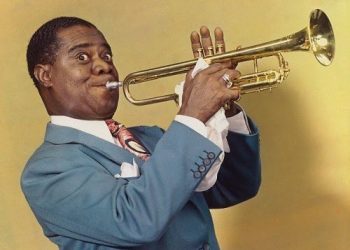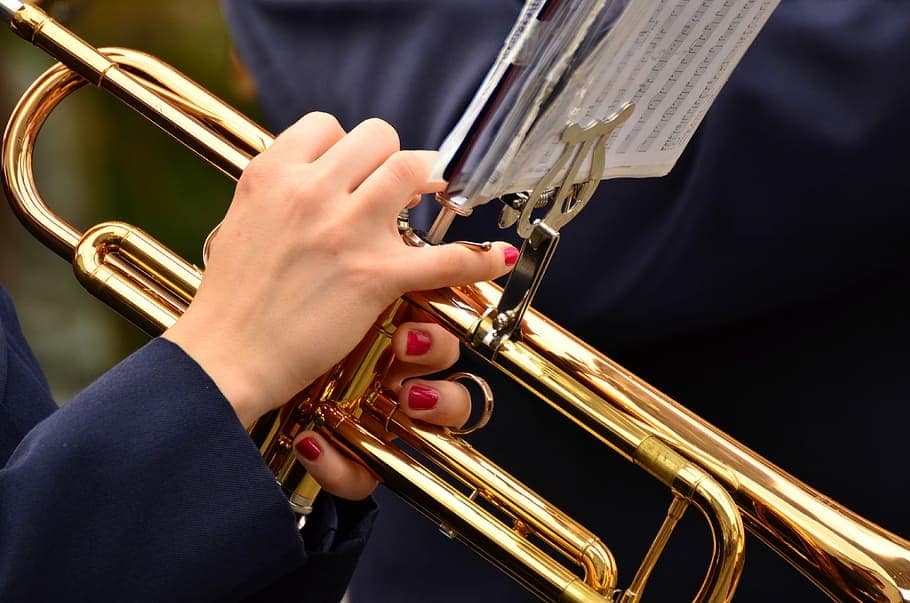
Trumpet players, with their commanding presence and resonant sound, are the heralds of musical expression. The trumpet, a brass instrument with a bright and penetrating timbre, becomes an extension of the player’s soul, capable of conveying a wide range of emotions. Whether heralding the regal fanfares of classical compositions or improvising scorching solos in jazz, trumpet players are virtuosos whose craft transcends genres.
Masters of the instrument possess a unique ability to navigate its three valves, manipulating pitches and creating a palette of tones that can be both triumphant and tender. From the soaring heights of bright, staccato notes to the soulful warmth of muted tones, the trumpet player’s skill lies in the delicate balance between technical precision and expressive nuance.
In the world of jazz, trumpet players are often synonymous with innovation and virtuosity. Their improvisations, marked by blistering runs and soulful phrasing, have shaped the course of the genre. In classical ensembles, the trumpet’s brilliance adds a majestic quality to orchestral compositions, with players exhibiting impeccable technique and breath control.
Whether performing in symphony orchestras, big bands, or leading their groups as soloists, trumpet players hold a special place in the pantheon of musical virtuosos. Their contributions, spanning centuries and genres, enrich the auditory tapestry of our shared musical heritage, ensuring that the trumpet’s resounding voice remains an enduring symbol of musical brilliance.
1. Woody Shaw
Woody Shaw, born on December 24, 1944, in Laurinburg, North Carolina, was an American jazz trumpeter and composer known for his innovative approach, technical prowess, and distinctive sound. As a prominent figure in the post-bop and avant-garde jazz movements, Shaw left an indelible mark on the genre during his relatively short but impactful career.
Shaw’s early exposure to music came through his father, a classical trombonist. He quickly developed a passion for the trumpet, showcasing his prodigious talent at an early age. In the 1960s, he gained attention as a sideman with influential figures like Eric Dolphy, Horace Silver, and Art Blakey.
The 1970s marked Shaw’s emergence as a bandleader and a force of innovation. His albums, including “Blackstone Legacy” and “The Moontrane,” demonstrated his harmonic sophistication, rhythmic complexity, and a willingness to explore new musical territories. Shaw’s compositions, often characterized by intricate structures and modal frameworks, showcased his forward-thinking approach.
A distinctive aspect of Woody Shaw’s playing was his use of the trumpet’s upper register, exploring its expressive possibilities with remarkable clarity and precision. His technical virtuosity and ability to convey deep emotions through his playing set him apart as a true master of the instrument.
Woody Shaw’s collaborations with fellow jazz luminaries, such as McCoy Tyner and Dexter Gordon, further solidified his status as a groundbreaking trumpeter. Despite personal challenges and health issues, Shaw’s dedication to pushing the boundaries of jazz remained unwavering.
Tragically, Woody Shaw passed away on May 10, 1989, but his contributions to jazz continue to be celebrated. His legacy lives on through his recordings, compositions, and the influence he had on subsequent generations of trumpet players, cementing his place among the great innovators in the history of jazz.
2. Bix Beiderbecke
Bix Beiderbecke, born Leon Bismark Beiderbecke on March 10, 1903, in Davenport, Iowa, was an American jazz cornetist, pianist, and composer. Despite his relatively short life, Bix Beiderbecke made profound contributions to jazz, leaving an enduring legacy as one of the most influential figures of the 1920s jazz era.
Known for his lyricism, inventive improvisation, and distinctive approach to jazz, Bix was a key member of the Chicago style, which emerged during the Roaring Twenties. His unique voice on the cornet, coupled with an innate sense of melody and harmony, set him apart from his contemporaries.
Bix Beiderbecke’s career flourished during his time with the Wolverines and the Jean Goldkette Orchestra, but it was with the Paul Whiteman Orchestra that he gained national acclaim. His solos in Whiteman’s orchestra, often featured prominently in recordings like “Singin’ the Blues,” became iconic examples of early jazz improvisation.
Beiderbecke’s impact extended beyond his instrumental skills; he was a pioneer in introducing a more nuanced and sophisticated harmonic language to jazz. His recordings with Frankie Trumbauer, including “Singing’ the Blues” and “I’m Coming, Virginia,” are considered classics and showcase Bix’s innovative use of the cornet.
Tragically, Bix Beiderbecke’s life was cut short by health issues, and he passed away on August 6, 1931, at the age of 28. Despite his brief career, Bix’s influence on jazz endured, inspiring later generations of musicians. His unique musical legacy, marked by emotional depth and groundbreaking improvisation, solidifies his place as a seminal figure in the history of jazz.
3. Nat Adderley
Nat Adderley, born on November 25, 1931, in Tampa, Florida, was an American jazz trumpeter and composer. Renowned for his soulful and blues-inflected playing, Adderley made significant contributions to hard bop and post-bop jazz. He was a key member of the Cannonball Adderley Quintet, led by his brother, saxophonist Julian “Cannonball” Adderley.
Nat Adderley’s musical career gained prominence in the 1950s when he joined the Lionel Hampton Orchestra. He later became a featured soloist in his brother’s quintet, which became one of the most successful and influential small groups of the time. The Cannonball Adderley Quintet’s soulful and accessible approach to jazz, often incorporating elements of R&B and gospel, appealed to a broad audience.
One of Nat Adderley’s most well-known compositions is “Work Song,” which became a signature piece for the Cannonball Adderley Quintet. The tune’s catchy melody and bluesy feel contributed to its popularity, and it remains a jazz standard.
Nat Adderley’s trumpet playing was characterized by a warm tone, expressive phrasing, and a deep connection to the blues. His contributions extended beyond his work with his brother; he led his own groups, recorded numerous albums as a bandleader, and collaborated with various jazz luminaries, including Wes Montgomery, Horace Silver, and George Duke.
In addition to his trumpet playing, Nat Adderley was an accomplished composer and arranger. His compositions, often rooted in the blues and gospel traditions, showcased his ability to create accessible yet sophisticated jazz.
Nat Adderley continued to perform, record, and teach throughout his career. He passed away on January 2, 2000, but his legacy lives on through his timeless recordings and enduring contributions to the world of jazz. Nat Adderley’s impact on the genre, particularly in the realm of hard bop and soul jazz, remains celebrated by jazz enthusiasts and musicians alike.
4. Roy Eldridge
Roy Eldridge, born on January 30, 1911, in Pittsburgh, Pennsylvania, was an influential American jazz trumpeter. Renowned for his powerful and dynamic playing style, Eldridge played a crucial role in the development of swing and bebop, leaving an indelible mark on the history of jazz.
Roy Eldridge began his career in the 1930s, playing with a variety of big bands, including those led by Teddy Hill, Fletcher Henderson, and Gene Krupa. His virtuosic and energetic trumpet playing caught the attention of both audiences and fellow musicians.
Eldridge’s impact on jazz was particularly significant during his time with the Count Basie Orchestra in the late 1930s. His contributions to the Basie band, such as his solo on “Rock-A-Bye Basie,” showcased his technical brilliance and innovative approach to improvisation.
One of Eldridge’s notable characteristics was his ability to blend elements of swing and the emerging bebop style. His powerful, brassy sound and adventurous improvisations influenced subsequent generations of trumpet players, including Dizzy Gillespie and Fats Navarro.
Roy Eldridge continued to evolve with the changing landscape of jazz, adapting to the bebop movement of the 1940s. His recordings with small groups, including collaborations with Coleman Hawkins, further demonstrated his versatility and adaptability.
In addition to his trumpet prowess, Eldridge was known for his charismatic stage presence and showmanship. His engaging performances and commanding presence made him a popular live performer.
Roy Eldridge’s career spanned several decades, and he continued to perform and record into the 1980s. His influence on the development of jazz trumpet and his role in bridging the gap between swing and bebop solidified his status as a jazz legend.
Roy Eldridge passed away on February 26, 1989, but his recordings and the impact of his innovative playing style continue to be celebrated, and he remains an enduring figure in the history of jazz.
5. Harry James
Harry James, born on March 15, 1916, in Albany, Georgia, was an American trumpeter, bandleader, and one of the most prominent figures in the big band and swing eras. Renowned for his virtuosic trumpet playing, charismatic stage presence, and leadership of successful big bands, James became a significant influence in the world of jazz and popular music.
Harry James rose to prominence in the late 1930s as the lead trumpeter and featured soloist with Benny Goodman’s orchestra. His brilliant and dynamic trumpet solos, notably in Goodman’s hit recording of “Sing, Sing, Sing,” garnered attention and set the stage for his own illustrious career.
In 1939, James formed his own big band, The Harry James Orchestra, which quickly gained popularity. The orchestra produced numerous hit records, and James himself became known for his expressive playing and ability to connect with audiences.
One of Harry James’ most famous collaborations was with singer Frank Sinatra in the early 1940s. The combination of James’ swinging arrangements and Sinatra’s vocal prowess resulted in several chart-topping hits.
Throughout his career, James adapted to evolving musical styles, incorporating elements of bebop and maintaining his popularity through the post-war era. His versatility allowed him to appeal to a broad audience, from jazz enthusiasts to fans of popular music.
Harry James continued to perform and record into the 1980s. His impact on the world of big band jazz and his enduring contributions to the trumpet’s legacy solidify his position as a legendary figure in the history of American music. Harry James passed away on July 5, 1983, leaving behind a rich musical legacy that continues to be celebrated.
6. Donald Byrd
Donald Byrd, born on December 9, 1932, in Detroit, Michigan, was an American jazz trumpeter, bandleader, and educator. Renowned for his versatility and ability to traverse various jazz styles, Byrd played a significant role in the development of hard bop and post-bop jazz during the mid-20th century.
Donald Byrd’s early career included collaborations with notable musicians such as Art Blakey and Horace Silver. He was a member of the Jazz Messengers, led by Blakey, and contributed to the classic album “At the Cafe Bohemia, Vol. 1” (1955).
In the late 1950s and early 1960s, Donald Byrd established himself as a bandleader with a series of successful and influential albums for Blue Note Records. His recordings, such as “Off to the Races” (1958) and “Byrd in Flight” (1960), showcased his formidable trumpet playing and compositional skills.
By the mid-1960s, Donald Byrd’s music began to incorporate elements of soul, funk, and R&B. His collaborations with artists like producer Larry Mizell resulted in a series of albums that embraced a more commercial sound while maintaining a jazz foundation. The albums “Black Byrd” (1973) and “Street Lady” (1973) were particularly successful and played a role in popularizing jazz-funk.
In addition to his performing career, Donald Byrd had a significant impact on jazz education. He earned a master’s degree in music education and later earned a doctorate in music. Byrd became a professor at Howard University and, later, North Carolina Central University, where he influenced many aspiring musicians.
Donald Byrd’s career spanned several decades, and he recorded over 100 albums as a bandleader. His ability to adapt to different musical styles, from hard bop to jazz-funk, reflects his versatility and open-minded approach to music.
Donald Byrd passed away on February 4, 2013, but his legacy as a trumpeter, composer, and educator continues to influence and inspire musicians across genres.
7. Arturo Sandoval
Arturo Sandoval, born on November 6, 1949, in Artemisa, Cuba, is a world-renowned trumpeter, pianist, composer, and one of the most dynamic and virtuosic figures in contemporary jazz. His remarkable career has spanned genres, showcasing not only his prowess in jazz but also his versatility in classical and Latin music.
Sandoval’s journey began in Cuba, where he studied classical trumpet at the National School of Arts before becoming a prominent figure in the Cuban jazz scene. His association with the legendary Dizzy Gillespie marked a turning point in his career, as he defected to the United States in 1990 while on tour with Gillespie.
As a trumpeter, Sandoval is known for his dazzling technique, expressive phrasing, and a deep connection to the roots of Afro-Cuban music. His improvisational skills have garnered admiration worldwide, earning him numerous accolades, including multiple Grammy Awards.
In addition to his trumpet prowess, Sandoval is a gifted pianist, composer, and arranger. His compositions seamlessly blend jazz with Cuban rhythms, showcasing a rich musical vocabulary that transcends cultural boundaries. Albums like “Danzón” and “Hot House” exemplify his ability to fuse diverse influences into a cohesive and vibrant musical tapestry.
Arturo Sandoval’s contributions extend beyond performance; he is an educator, author, and a recipient of the Presidential Medal of Freedom. His dedication to preserving the cultural heritage of Cuban music while pushing the boundaries of jazz has solidified his status as a living legend in the world of music. Arturo Sandoval’s enduring impact continues to inspire and captivate audiences globally.
8. Maynard Ferguson
Maynard Ferguson, born on May 4, 1928, in Verdun, Quebec, Canada, was a virtuoso trumpeter, bandleader, and one of the most influential figures in the world of jazz and big band music. Known for his incredible range, power, and dynamic stage presence, Ferguson’s career spanned several decades and left an indelible mark on the jazz and brass world.
Ferguson’s rise to prominence began in the 1940s as a member of the Stan Kenton Orchestra, where his high-energy solos and ability to play in the upper register became his signature. His technical prowess and showmanship set him apart, earning him the nickname “The Scream Machine.”
In the 1950s and 1960s, Maynard Ferguson formed his own big bands, showcasing his innovative approach to jazz and his commitment to pushing the boundaries of brass playing. His album “Birdland Dream Band” and the hit single “Gonna Fly Now,” from the movie “Rocky,” are among his notable achievements.
Ferguson’s ability to lead high-energy big bands and his commitment to featuring young, talented musicians contributed to the lasting impact of his work. He was also an early adopter of electronic innovations in trumpet playing, incorporating them into his performances.
Throughout his career, Maynard Ferguson continued to evolve, exploring various styles, including jazz-rock fusion and funk. His recordings and live performances remained captivating, showcasing his unparalleled skill and mastery of the trumpet.
Maynard Ferguson passed away on August 23, 2006, but his legacy lives on through his recordings, compositions, and the inspiration he provided to countless trumpeters. His influence on the world of brass playing and big band jazz ensures that his contributions are remembered and celebrated in the annals of music history.
9. Clifford Brown
Clifford Brown, born on October 30, 1930, in Wilmington, Delaware, was an exceptionally talented American jazz trumpeter. Celebrated for his lyrical and emotive playing, Brown’s career was tragically cut short, yet he made an indelible impact on the world of jazz during his brief time in the spotlight.
Brown’s proficiency on the trumpet was evident from an early age, and he quickly gained attention in the jazz scene. He played in various bands, including those led by Tadd Dameron and Lionel Hampton. However, it was his time with drummer Max Roach in the Clifford Brown-Max Roach Quintet that solidified his reputation as one of the leading trumpeters of the hard bop era.
The Clifford Brown-Max Roach Quintet, formed in the mid-1950s, produced a series of groundbreaking recordings for the EmArcy label. Brown’s partnership with Roach, along with other brilliant musicians like Sonny Rollins and Richie Powell, resulted in classic albums such as “Clifford Brown & Max Roach” (1954) and “Study in Brown” (1955).
Clifford Brown’s trumpet playing was characterized by its clarity, technical prowess, and warm tone. His ability to convey deep emotion through his instrument set him apart as a truly exceptional musician. Brown’s improvisational skills and melodic inventiveness influenced generations of trumpeters.
Tragically, Clifford Brown’s promising career was cut short when he died in a car accident on June 26, 1956, at the age of 25. Despite his relatively brief time in the jazz world, Brown’s impact was profound, and he is remembered as one of the greatest trumpeters in the history of jazz.
The legacy of Clifford Brown lives on through his recordings, which continue to inspire and captivate jazz enthusiasts. His influence extends beyond the realm of trumpet playing, as his approach to melody and improvisation remains a touchstone for musicians seeking to express themselves with depth and emotion.
10. Wynton Marsalis
Wynton Marsalis, born on October 18, 1961, in New Orleans, Louisiana, is an American trumpeter, composer, bandleader, and one of the most prominent and influential figures in contemporary jazz. As a virtuoso trumpeter and dedicated advocate for jazz education, Marsalis has played a pivotal role in shaping the trajectory of the genre.
Coming from a musical family in New Orleans, Wynton Marsalis began playing the trumpet at an early age. His prodigious talent quickly gained attention, and he joined Art Blakey’s Jazz Messengers while still a teenager. Marsalis later became a central figure in the 1980s jazz resurgence, contributing to the formation of the “Young Lions” movement.
In 1983, Wynton Marsalis became the first artist to win Grammy Awards in both jazz and classical categories in the same year. His contributions to jazz, particularly in the realm of acoustic, straight-ahead jazz, have earned him acclaim and respect.
Marsalis is known for his work as the artistic director of Jazz at Lincoln Center, an organization he co-founded in 1987. Through this role, he has worked tirelessly to promote jazz education, appreciation, and performance. Under his leadership, Jazz at Lincoln Center has become a hub for jazz education and has played a crucial role in preserving and advancing the jazz tradition.
As a composer, Wynton Marsalis has produced a wide range of works, including jazz standards, classical compositions, and extended works for jazz orchestra. His versatility, technical brilliance, and commitment to artistic excellence have solidified his position as a leading figure in the world of music.
Wynton Marsalis continues to perform, record, and advocate for the cultural significance of jazz. His impact extends beyond the stage, as he remains a respected spokesperson for the art form, influencing generations of musicians and enthusiasts alike.
11. Lee Morgan
Lee Morgan, born on July 10, 1938, in Philadelphia, Pennsylvania, was an influential American jazz trumpeter and composer. Known for his brilliant technique, expressive playing, and prolific output, Morgan made significant contributions to the hard bop and soul jazz movements during the 1950s and 1960s.
Morgan’s talent emerged early, and he joined Dizzy Gillespie’s big band at the age of 18. Shortly afterward, he became a member of Art Blakey’s Jazz Messengers, a pivotal experience that helped shape his musical identity. Morgan’s partnership with Blakey’s group and his association with Blue Note Records fueled his rise to prominence.
One of Lee Morgan’s most celebrated compositions is “The Sidewinder,” a soulful and infectious tune that became a crossover hit. Released in 1964, the album of the same name marked a shift toward a more commercial sound for Morgan, while still retaining his artistic integrity.
Morgan’s approach to the trumpet was marked by a warm tone, agility, and a remarkable ability to convey a wide range of emotions in his playing. His technical prowess and inventive improvisations made him a sought-after sideman and bandleader.
Tragically, Lee Morgan’s life was cut short when he was fatally shot by his common-law wife, Helen More, during a performance at Slug’s, a jazz club in New York City, on February 19, 1972. Morgan was only 33 years old at the time of his death.
Despite his premature passing, Lee Morgan left behind an extensive discography as a leader and sideman, featuring influential albums such as “The Cooker” (1957), “Search for the New Land” (1966), and “Cornbread” (1965). His legacy endures not only through his recordings but also through the impact he had on the evolution of jazz during a transformative period in its history.
12. Louis Armstrong
Louis Armstrong, born on August 4, 1901, in New Orleans, Louisiana, was an American trumpeter, vocalist, and one of the most influential figures in the history of jazz. Affectionately known as “Satchmo” and “Pops,” Armstrong’s innovative approach to trumpet playing and his charismatic stage presence made him a global icon and a key figure in the development of jazz.
Armstrong’s career took off in the 1920s when he joined King Oliver’s Creole Jazz Band and later moved to Chicago to play with Fletcher Henderson’s Orchestra. His groundbreaking recordings with his Hot Five and Hot Seven groups, featuring classics like “West End Blues” and “Potato Head Blues,” showcased his virtuosity and improvisational brilliance.
One of Louis Armstrong’s signature contributions to jazz was his pioneering use of scat singing, a vocal improvisation with nonsensical syllables, adding a new dimension to jazz vocalization. His gravelly, expressive voice and innovative trumpet playing set the standard for jazz musicians for decades.
Louis Armstrong’s influence extended beyond his musical innovations; he played a pivotal role in breaking racial barriers in the entertainment industry. His collaborations with various artists, including Ella Fitzgerald, showcased the power of interracial musical partnerships during a time of segregation.
Armstrong’s rendition of “What a Wonderful World” became a timeless classic, reflecting his optimistic and joyful outlook on life. Throughout his career, he toured the world, becoming a global ambassador for jazz and American music.
Louis Armstrong passed away on July 6, 1971, but his legacy endures. His impact on jazz, popular music, and the art of trumpet playing is immeasurable, and his contributions have left an indelible mark on the cultural landscape.
13. Miles Davis
Miles Davis, born on May 26, 1926, in Alton, Illinois, and raised in East St. Louis, was an iconic American jazz trumpeter, bandleader, and composer. Regarded as one of the most influential figures in the history of jazz, Davis played a pivotal role in shaping the evolution of the genre through multiple stylistic phases over a career that spanned five decades.
Miles Davis first gained attention in the 1940s as a young trumpeter in Charlie Parker’s bebop group. His early recordings, such as “Now’s the Time” and “Ko-Ko,” showcased his exceptional talent and set the stage for his future innovations.
In the 1950s, Miles Davis led a groundbreaking quintet with musicians including John Coltrane, Red Garland, Paul Chambers, and Philly Joe Jones. Albums like “Birth of the Cool” (1957) and “Kind of Blue” (1959) are considered masterpieces that exemplify Davis’s gift for innovation. “Kind of Blue” is particularly noteworthy for its modal approach, influencing the direction of jazz for years to come.
In the 1960s, Davis embarked on a period of experimentation, embracing modal jazz, avant-garde influences, and electric instrumentation. Albums such as “Miles Smiles” (1967) and “In a Silent Way” (1969) marked the transition into his electric period, which reached its pinnacle with the groundbreaking “Bitches Brew” (1970).
Throughout the 1970s and 1980s, Miles Davis continued to push boundaries, incorporating elements of funk, rock, and electronic music into his sound. Notable albums from this era include “On the Corner” (1972) and “Tutu” (1986).
Miles Davis’s impact on jazz extends beyond his trumpet playing; his ability to assemble and lead influential bands, his openness to new musical ideas, and his restless pursuit of innovation have left an enduring legacy. His numerous awards include multiple Grammy Awards, and he was posthumously inducted into the Rock and Roll Hall of Fame in 2006.
Miles Davis passed away on September 28, 1991, but his influence on the world of jazz and music as a whole continues to resonate, inspiring generations of musicians to explore new possibilities within the art form.
14. Dizzy Gillespie
Dizzy Gillespie, born John Birks Gillespie on October 21, 1917, in Cheraw, South Carolina, was an American trumpeter, composer, bandleader, and one of the towering figures in the world of jazz. Renowned for his groundbreaking contributions to bebop, his virtuosic trumpet playing, and his charismatic stage presence, Gillespie played a pivotal role in shaping the course of jazz history.
Dizzy Gillespie’s early career saw him performing with prominent big bands, including those led by Teddy Hill and Cab Calloway. However, it was his collaboration with Charlie Parker in the mid-1940s that led to the development of the bebop movement. Gillespie’s innovative use of complex harmonies and his mastery of the trumpet’s high register became hallmarks of the bebop style.
As a bandleader, Gillespie fronted various influential groups, including the Dizzy Gillespie Orchestra. His compositions, such as “A Night in Tunisia” and “Salt Peanuts,” have become jazz standards, reflecting his distinctive blend of Afro-Cuban rhythms and bebop improvisation.
Beyond his musical innovations, Dizzy Gillespie was known for his trademark bent trumpet, a result of an accident that occurred when he was a child. His humorous and charismatic stage persona, along with his trademark beret and horn-rimmed glasses, made him a beloved and iconic figure in the jazz world.
Gillespie’s impact extended to his role as an ambassador for jazz, touring extensively and participating in cultural exchange programs. He received numerous awards and honors throughout his career, including the Presidential Medal of Freedom in 1989.
Dizzy Gillespie continued to perform and record prolifically until his passing on January 6, 1993. His enduring legacy as a pioneer of bebop, a master trumpeter, and a charismatic ambassador for jazz ensures that his contributions remain central to the evolution of this art form.
15. Freddie Hubbard
Freddie Hubbard, born on April 7, 1938, in Indianapolis, Indiana, was an American jazz trumpeter and composer whose powerful and virtuosic playing made him one of the leading figures in post-bop and fusion jazz. With a career spanning several decades, Hubbard’s contributions left an indelible mark on the world of jazz.
Hubbard’s early musical education began in the Indianapolis public school system, and he quickly gained recognition for his exceptional talent on the trumpet. In the late 1950s, he moved to New York City and became a sought-after sideman, playing with artists such as Art Davis, Philly Joe Jones, and McCoy Tyner.
In the early 1960s, Freddie Hubbard joined Art Blakey’s Jazz Messengers, a pivotal experience that helped solidify his reputation as a trumpeter with a distinctive voice. His time with the Jazz Messengers showcased his ability to combine technical brilliance with a soulful and expressive approach to improvisation.
Hubbard’s work as a bandleader produced numerous acclaimed albums, including “Red Clay” and “Straight Life,” where he explored elements of funk and fusion. His composition “Red Clay” became a signature piece and a fusion jazz classic.
Known for his brilliant high-register playing, fluid technique, and versatility, Freddie Hubbard continued to evolve as an artist. He seamlessly navigated through various jazz styles, including hard bop, modal jazz, and fusion, collaborating with a wide array of musicians, including Herbie Hancock, Wayne Shorter, and Eric Dolphy.
Freddie Hubbard’s impact extended beyond his instrumental prowess; he contributed significantly to the evolution of jazz during a dynamic period of exploration and experimentation. His legacy lives on through his influential recordings, memorable compositions, and the inspiration he continues to provide to trumpet players and jazz enthusiasts worldwide.
Freddie Hubbard passed away on December 29, 2008, but his enduring contributions ensure his place among the great trumpeters in the history of jazz.

Edward Tomlin is a frequent contributor to Singers Room. Since 2005, Singersroom has been the voice of R&B around the world. Connect with us via social media below.