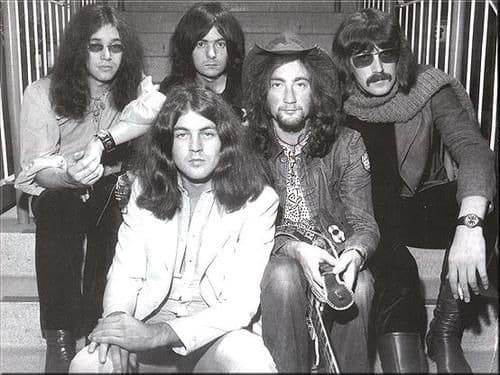
1. Perfect Strangers
“Perfect Strangers” is a pivotal album by the iconic rock band Deep Purple, released in 1984. This record marked the reunion of the classic “Mark II” lineup, featuring Ian Gillan (vocals), Ritchie Blackmore (guitar), Jon Lord (keyboards), Roger Glover (bass), and Ian Paice (drums), after an extended hiatus. The album served as a triumphant return, showcasing the enduring chemistry and musical brilliance of the band.
The title track, “Perfect Strangers,” is a standout single that epitomizes Deep Purple’s ability to blend powerful riffs with Gillan’s distinctive vocals and Lord’s intricate keyboard work. The album as a whole is a testament to the band’s resilience and adaptability, successfully incorporating contemporary elements without compromising their signature sound. With tracks like “Knocking at Your Back Door” and “Nobody’s Home,” the album explores a range of musical styles, from hard-hitting rock to more introspective and melodic moments.
“Perfect Strangers” not only revitalized Deep Purple’s career but also demonstrated their enduring relevance in the evolving rock landscape of the 1980s. The album received critical acclaim and commercial success, solidifying Deep Purple’s status as one of rock’s enduring and influential acts.
2. Black Night
“Black Night” is a song by the English rock band Deep Purple, released as a single in 1970. It’s one of Deep Purple’s most iconic tracks and is known for its distinctive guitar riff and energetic performance.
The song features Ritchie Blackmore’s powerful guitar work, Ian Gillan’s dynamic vocals, and the band’s trademark hard rock sound. “Black Night” is characterized by its catchy riff and memorable chorus, making it a staple in Deep Purple’s live performances.
Despite being initially intended as a single for the band’s forthcoming album, “In Rock,” “Black Night” was later excluded from the album’s original release. However, the song’s popularity endured, and it has become one of Deep Purple’s most enduring and beloved tracks.
“Black Night” is often praised for its infectious energy and remains a classic example of Deep Purple’s contribution to the hard rock genre. The song’s success helped solidify Deep Purple’s status as one of the leading rock bands of the 1970s.
3. Lazy
“Lazy” is a classic rock song by Deep Purple, featured on their critically acclaimed 1972 album “Machine Head.” Known for its bluesy and laid-back vibe, the song stands out for its extended instrumental passages, showcasing the virtuosity of each band member.
The track begins with a distinctive, meandering Hammond organ intro by Jon Lord, creating a moody atmosphere. Soon, Ritchie Blackmore’s iconic guitar riffs join in, complementing the Hammond organ’s bluesy tones. The lyrics, penned by lead vocalist Ian Gillan, convey a sense of lethargy and the desire to take it easy, fitting well with the song’s relaxed musical feel.
One of the defining moments of “Lazy” is the instrumental break, where each member of the band gets a chance to shine. This section features impressive solos, particularly from Jon Lord on the Hammond organ, showcasing the band’s instrumental prowess and improvisational skills.
“Lazy” has become a fan favorite and a staple in Deep Purple’s live performances. Its enduring popularity is a testament to the timeless appeal of the song and the enduring legacy of Deep Purple in the world of rock music.
4. Hush
“Hush” is a song by the American rock band Deep Purple, originally released in 1968 on their debut studio album, “Shades of Deep Purple.” The song was written by American musician Joe South and became one of Deep Purple’s early hits.
“Hush” is characterized by its catchy and upbeat rhythm, featuring distinctive guitar work by Ritchie Blackmore and Rod Evans’ expressive vocals. The song incorporates elements of rock, pop, and psychedelia, reflecting the musical trends of the late 1960s.
One of the notable features of “Hush” is the use of Joe South’s distinctive “hush, hush” vocal refrain, which adds to the song’s catchy and memorable nature. The energetic and infectious qualities of the track helped it gain popularity, both as a single and as part of Deep Purple’s live performances.
Over the years, “Hush” has been covered by various artists, further contributing to its enduring legacy. The song remains a significant part of Deep Purple’s early discography and is often associated with the band’s formative years and their exploration of different musical styles.
5. Highway Star
“Highway Star” is a high-energy and iconic rock song by Deep Purple, featured as the opening track on their seminal 1972 album “Machine Head.” Widely regarded as one of the band’s signature tunes, “Highway Star” is celebrated for its driving rhythm, virtuosic instrumental performances, and memorable lyrics.
The song opens with an instantly recognizable, speed-inducing guitar riff played by Ritchie Blackmore. Ian Paice’s thunderous drumming, Roger Glover’s pulsating bass, and Jon Lord’s dynamic keyboard work further contribute to the track’s adrenaline-pumping energy. Ian Gillan’s powerful vocals deliver lyrics that pay homage to the thrill of driving a fast car on the open road.
“Highway Star” is notable for its instrumental interludes, including Blackmore’s legendary guitar solo and Lord’s innovative organ solo. The dynamic shifts between these instrumental sections and the energetic verses create a sense of excitement and urgency, making the song a standout in Deep Purple’s discography.
The track has become a classic in the hard rock and heavy metal genres, and its influence can be heard in subsequent generations of rock music. “Highway Star” remains a staple in Deep Purple’s live performances, showcasing the band’s musical prowess and their ability to create timeless and electrifying rock anthems.
6. Smoke on the Water
“Smoke on the Water” is one of the most iconic and recognizable songs by the English rock band Deep Purple. Released in 1972, the song is featured on the album “Machine Head” and is celebrated for its distinctive guitar riff.
The song was inspired by a real-life event: the burning down of the Montreux Casino in Switzerland during a Frank Zappa concert. The lyrics tell the story of the fire and the band’s experience witnessing the event. The narrative, combined with Ritchie Blackmore’s legendary guitar riff, contributes to the song’s enduring popularity.
The riff in “Smoke on the Water” is often one of the first that aspiring guitarists learn due to its simplicity and widespread recognition. Ian Gillan’s vocals and the powerful instrumentation from the rest of the band, including Jon Lord’s Hammond organ, further solidify the song’s status as a classic in the rock genre.
“Smoke on the Water” has been covered and referenced in various forms of media, making it a cultural touchstone. The song’s influence on rock music is undeniable, and its impact has endured for decades, securing its place in the pantheon of rock classics.
7. Rat Bat Blue
“Rat Bat Blue” is a track by Deep Purple, appearing on their 1971 album “Who Do We Think We Are.” The song reflects the band’s blues-rock roots with a touch of hard rock, characteristic of their style during this period.
The title “Rat Bat Blue” itself is enigmatic and doesn’t directly relate to the lyrics. The song features a bluesy guitar riff by Ritchie Blackmore and showcases the powerful vocals of Ian Gillan. Jon Lord’s keyboard work adds depth to the track, while Roger Glover on bass and Ian Paice on drums provide a solid rhythm foundation.
Lyrically, “Rat Bat Blue” is somewhat abstract, with its verses describing a sense of confusion and disillusionment. Gillan’s vocals deliver the emotional weight of the lyrics, and the overall mood of the song is reflective of the early ’70s rock era.
While not as well-known as some of Deep Purple’s other hits, “Rat Bat Blue” has gained appreciation among fans for its musical complexity and the band’s ability to experiment with different sounds within the context of their blues and hard rock framework. The song remains an interesting chapter in Deep Purple’s discography, showcasing their versatility and willingness to explore various musical styles.
8. Fireball
“Fireball” is a song by the English rock band Deep Purple, released as the title track of their fifth studio album, “Fireball,” in 1971. The album marked a continuation of Deep Purple’s hard rock and progressive rock sound, and “Fireball” is known for its energetic and fast-paced musical style.
The song “Fireball” features a driving rhythm, prominent bassline, and a distinctive guitar riff, characteristic of Deep Purple’s early 1970s sound. Ian Gillan’s powerful vocals and Jon Lord’s keyboard work contribute to the song’s dynamic and electrifying atmosphere.
Lyrically, “Fireball” is less narrative-driven and more abstract, with vivid and surreal imagery. The song’s lyrics, written by the band’s vocalist Ian Gillan, add an enigmatic quality to the overall composition.
“Fireball” was well-received by fans and critics alike, and the album of the same name achieved commercial success. The track remains a favorite among Deep Purple enthusiasts and is often featured in the band’s live performances. It showcases Deep Purple’s ability to deliver high-energy, hard-rocking music, contributing to their legacy as one of the pioneering bands in the genre.
9. Space Truckin’
“Space Truckin'” is a classic rock song by Deep Purple, featured as the closing track on their 1972 album “Machine Head.” This energetic and space-themed anthem is celebrated for its driving rhythm, dynamic instrumental sections, and vivid lyrics.
The song kicks off with a powerful and infectious guitar riff by Ritchie Blackmore, setting the tone for an interstellar musical journey. The rhythm section, consisting of Roger Glover on bass and Ian Paice on drums, propels the song forward with a relentless and pulsating beat. Jon Lord’s distinctive keyboard work adds a cosmic touch, enhancing the overall atmosphere of the track.
Ian Gillan’s vocals contribute to the narrative of space travel and exploration, with lyrics describing a futuristic adventure aboard a “space truck.” The extended instrumental sections, including Blackmore’s guitar solos and Lord’s keyboard improvisations, showcase the band’s exceptional musicianship and their ability to create a sonic landscape that captures the imagination.
“Space Truckin'” has become a fan favorite and a staple in Deep Purple’s live performances. Its combination of infectious energy, cosmic themes, and instrumental prowess solidifies its place as one of the standout tracks in the band’s extensive catalog. The song remains a testament to Deep Purple’s influence on the hard rock and heavy metal genres and their ability to craft timeless and captivating rock anthems.
10. Woman From Tokyo
“Woman from Tokyo” is a song by the English rock band Deep Purple, released in 1973 as a single from their album “Who Do We Think We Are.” The song is known for its distinctive guitar riff and reflects Deep Purple’s characteristic blend of hard rock and bluesy elements.
The lyrics of “Woman from Tokyo” are somewhat cryptic, with references to a woman from the Japanese city of Tokyo. The song’s narrative is open to interpretation, but it is often considered to be a reflection of the band’s experiences while touring and encountering different cultures.
Musically, “Woman from Tokyo” features Ritchie Blackmore’s signature guitar work, Ian Gillan’s powerful vocals, and a tight rhythm section. The track is characterized by its catchy and melodic chorus, making it a standout piece in Deep Purple’s catalog.
Despite being a successful single, “Woman from Tokyo” didn’t receive the same level of commercial attention as some of Deep Purple’s earlier hits. Nevertheless, the song has endured as a fan favorite and is often included in the band’s live performances. Its energetic and bluesy rock sound continues to resonate with listeners, showcasing Deep Purple’s enduring influence in the rock genre.

Edward Tomlin is a frequent contributor to Singers Room. Since 2005, Singersroom has been the voice of R&B around the world. Connect with us via social media below.









