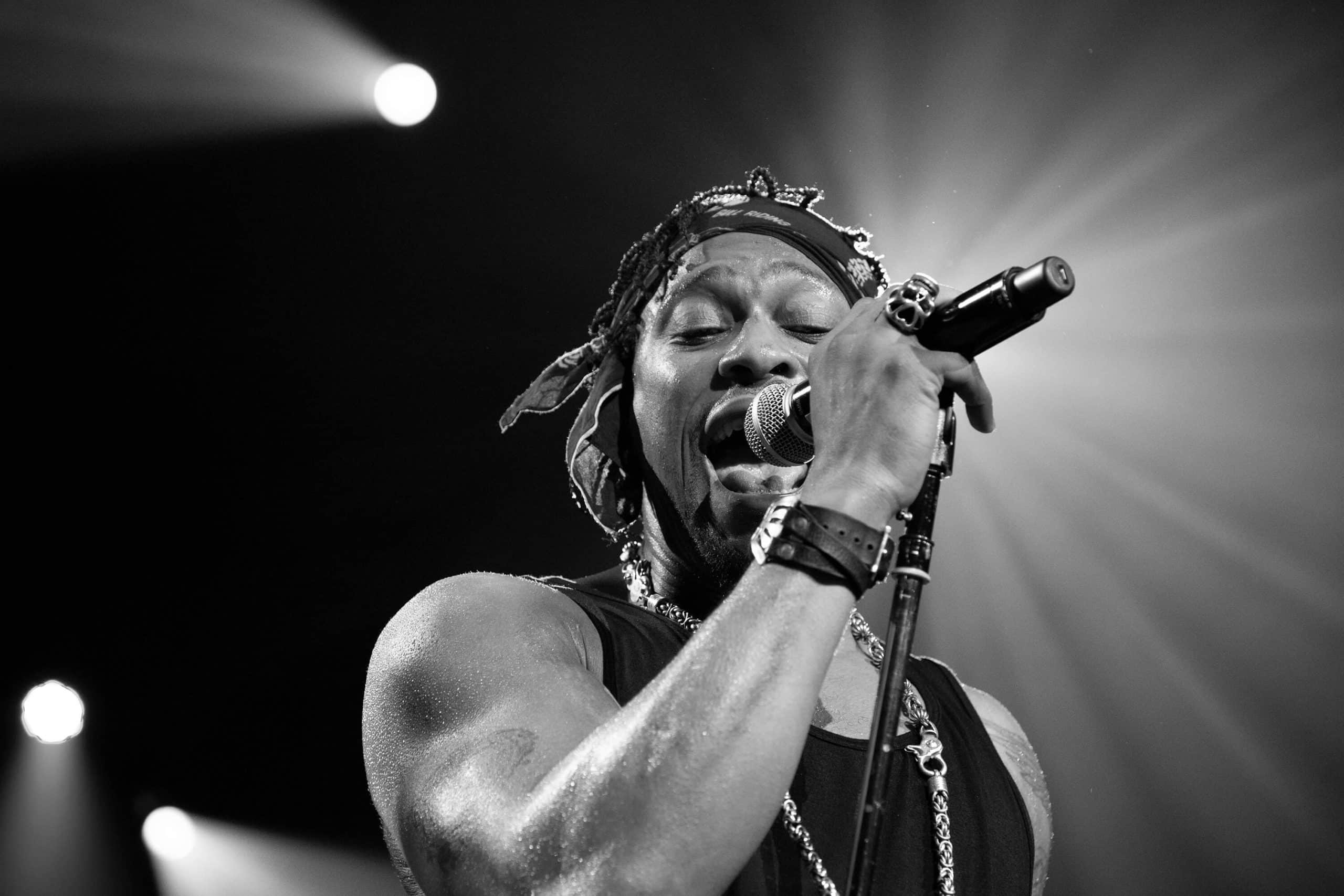
D’Angelo, born Michael Eugene Archer, is a highly influential American singer, songwriter, and multi-instrumentalist known for his soulful and innovative contributions to the R&B and neo-soul genres. Emerging in the mid-1990s, D’Angelo quickly became a pivotal figure in the music industry, renowned for his velvety voice, intricate musical arrangements, and a distinctive fusion of classic soul with contemporary R&B elements.
His critically acclaimed debut album, “Brown Sugar” (1995), showcased D’Angelo’s ability to seamlessly blend sensuality with socially conscious lyrics, earning him widespread acclaim and comparisons to legends like Marvin Gaye and Prince. However, it was his sophomore release, “Voodoo” (2000), that solidified his status as a musical icon. The album, characterized by its experimental sound and intricate instrumentation, garnered Grammy Awards and further cemented D’Angelo’s reputation as a genre-defying artist.
Despite intermittent hiatuses, D’Angelo’s impact on modern music remains undeniable. His live performances are celebrated for their raw energy and unparalleled musicianship, with D’Angelo often demonstrating his prowess as a skilled guitarist and pianist. Beyond his musical talents, D’Angelo’s enigmatic persona and commitment to authenticity have endeared him to a diverse fan base, ensuring his enduring influence on the ever-evolving landscape of soul and R&B.
1. “Brown Sugar”
“Brown Sugar” is the debut studio album by D’Angelo, released in 1995. As a groundbreaking work in the neo-soul movement, the album combines elements of traditional R&B, funk, and hip-hop with D’Angelo’s distinct voice and songwriting prowess. Born Michael Eugene Archer, D’Angelo co-wrote and produced most of the tracks, showcasing his musical dexterity and keen understanding of the genre.
The album’s title track, “Brown Sugar,” served as a breakthrough single, blending smooth vocals with a laid-back groove and socially conscious lyrics. D’Angelo’s exploration of themes such as love, relationships, and the African American experience resonated with audiences, earning critical acclaim and commercial success. The album’s success helped establish D’Angelo as a leading figure in the soul and R&B revival of the 1990s.
“Brown Sugar” is celebrated for its timeless sound, blending classic soul influences with a modern twist. D’Angelo’s ability to seamlessly incorporate elements of jazz, gospel, and funk into his music set the stage for his future innovative work. The album remains a pivotal contribution to the evolution of R&B, solidifying D’Angelo’s reputation as a visionary artist in the genre.
2. “Untitled (How Does It Feel)”
“Untitled (How Does It Feel)” is a soulful and sensuous R&B song by D’Angelo, released in 2000 as a single from his critically acclaimed album “Voodoo.” The track is known for its smooth and seductive sound, as well as its intimate and emotional lyrics.
The lyrics of “Untitled (How Does It Feel)” are a passionate and intimate expression of desire. D’Angelo’s soulful vocals convey vulnerability and intensity as he sings about the emotional and physical aspects of a romantic relationship. The title, “Untitled,” reflects the raw and unfiltered nature of the song.
Musically, the track is characterized by its minimalist arrangement, with a focus on D’Angelo’s vocals and the soulful instrumentation. The use of falsetto, combined with the slow tempo and sparse instrumentation, adds to the song’s seductive and atmospheric quality. The track’s production draws inspiration from classic soul and R&B, contributing to its timeless and evocative feel.
The music video for “Untitled (How Does It Feel)” gained attention for its simplicity and the focus on D’Angelo’s physique. Directed by Paul Hunter, the video features a single shot of D’Angelo singing directly into the camera. The visual aspect complemented the intimate nature of the song and became iconic in its own right.
“Untitled (How Does It Feel)” received critical acclaim and earned D’Angelo a Grammy Award for Best Male R&B Vocal Performance. The song is often cited as one of the standout tracks in D’Angelo’s career and is celebrated for its emotional depth, soulful delivery, and timeless appeal.
3. “Cruisin’”
“Cruisin'” is a classic R&B and soul song originally written and recorded by Smokey Robinson for his 1979 album “Where There’s Smoke…” However, the version that gained widespread popularity is the 1980 cover by American singer and actor D’Angelo. D’Angelo’s rendition of “Cruisin'” was featured on the soundtrack of the film “Duets.”
D’Angelo’s version of “Cruisin'” maintains the smooth and romantic essence of the original, blending contemporary R&B with a hint of neo-soul. His soulful and seductive vocals, accompanied by a mellow and groovy musical arrangement, give the song a timeless quality. The cover showcases D’Angelo’s ability to infuse new life into a classic while paying homage to the soulful roots of the original.
The lyrics of “Cruisin'” express the joy and bliss of being in love, capturing a relaxed and carefree atmosphere. The song’s gentle melody and D’Angelo’s emotive delivery contribute to its enduring popularity as a romantic ballad.
“Cruisin'” by D’Angelo became a commercial success and is often associated with the neo-soul movement of the late 1990s and early 2000s. The cover not only introduced a new generation to Smokey Robinson’s timeless song but also solidified D’Angelo’s reputation as a soulful and innovative artist.
4. “Lady”
“Lady” is one of D’Angelo’s standout tracks from his debut album, “Brown Sugar,” released in 1995. The song is a soulful and seductive ode to a woman, showcasing D’Angelo’s smooth and emotive vocal delivery. The lyrics express admiration and desire, and the music features a laid-back, groove-oriented rhythm that reflects the classic R&B influences of the artist.
“Lady” quickly became one of the signature tracks of D’Angelo’s early career, contributing to the album’s critical and commercial success. The song captures the essence of neo-soul, blending traditional soul elements with contemporary R&B, and it helped establish D’Angelo as a leading figure in the genre.
Beyond its musical appeal, “Lady” is known for its innovative music video directed by Hype Williams. The video, featuring D’Angelo in a black-and-white aesthetic, became iconic for its sensuality and helped solidify D’Angelo’s image as a charismatic and stylish performer.
“Lady” remains a timeless classic, often cited as one of the defining tracks of the neo-soul movement. Its enduring popularity underscores D’Angelo’s ability to create music that transcends temporal boundaries, continuing to resonate with audiences long after its initial release.
5. “Devil’s Pie”
“Devil’s Pie” is a song by D’Angelo from his critically acclaimed second studio album, “Voodoo,” released in 2000. The track is known for its unique blend of neo-soul, funk, and R&B, and it showcases D’Angelo’s distinctive musical style and vocal prowess.
The lyrics of “Devil’s Pie” address societal issues and the consequences of materialism and excess. D’Angelo critiques the pursuit of wealth, power, and superficial pleasures, suggesting that indulging in the “devil’s pie” comes with a cost. The song reflects D’Angelo’s social consciousness and willingness to tackle substantive themes in his music.
Musically, “Devil’s Pie” features a funky and infectious groove with a prominent bassline and rhythmic guitar riffs. D’Angelo’s soulful vocals are complemented by the layered instrumentation, creating a rich and textured sonic experience. The song’s production is a fusion of various genres, showcasing D’Angelo’s ability to draw from diverse influences.
“Devil’s Pie” was well-received by critics for its innovative sound and meaningful lyrics. It contributed to the success of the “Voodoo” album, which is widely regarded as a landmark in neo-soul and contemporary R&B. The track’s socially conscious message, combined with its soulful and funky musicality, demonstrates D’Angelo’s artistry and his impact on the evolution of soul and R&B music.
6. “Send It On”
“Send It On” is a track from D’Angelo’s critically acclaimed second studio album, “Voodoo,” released in 2000. The album marked a significant departure from the more straightforward neo-soul sound of his debut, “Brown Sugar.” “Send It On” exemplifies the experimental and intricate nature of “Voodoo.”
The song is characterized by its layered and complex instrumentation, featuring a fusion of soul, funk, and jazz elements. D’Angelo’s vocals are accompanied by a rich arrangement of instruments, showcasing his musical versatility. The lyrics of “Send It On” explore themes of love and spirituality, reflecting the introspective and socially conscious nature of D’Angelo’s songwriting.
“Voodoo” received widespread critical acclaim for its innovative sound, and “Send It On” contributed to the album’s reputation as a groundbreaking work in contemporary R&B. The track showcases D’Angelo’s commitment to pushing artistic boundaries, incorporating elements of live instrumentation and a unique production style that set it apart from conventional R&B tracks.
Overall, “Send It On” stands as a testament to D’Angelo’s ability to evolve as an artist and experiment with different musical styles while maintaining a deep connection to the roots of soul and R&B.
7. “Really Love”
“Really Love” is a song by D’Angelo and the Vanguard, featured on D’Angelo’s third studio album, “Black Messiah,” released in 2014. The album marked D’Angelo’s highly anticipated return to the music scene after a long hiatus. “Really Love” stands out for its soulful and romantic nature, showcasing D’Angelo’s signature blend of R&B, soul, and jazz influences.
The lyrics of “Really Love” express a deep and sincere romantic sentiment, with D’Angelo singing about the profound emotions associated with genuine love. The song explores themes of passion, vulnerability, and the transformative power of a meaningful connection.
Musically, “Really Love” features a lush and sophisticated arrangement. It incorporates elements of jazz, neo-soul, and R&B, with D’Angelo’s smooth vocals serving as the centerpiece. The track includes acoustic guitar, strings, and a rich ensemble of instruments, creating a warm and timeless sound. The intricate musical composition highlights D’Angelo’s commitment to craftsmanship and his ability to create a sonic atmosphere that resonates with listeners.
“Really Love” received critical acclaim for its artistry, musicality, and the emotional depth conveyed in both its lyrics and instrumentation. The song won a Grammy Award for Best R&B Song in 2016. Overall, “Really Love” is a standout track on “Black Messiah,” showcasing D’Angelo’s growth as an artist and his enduring ability to craft soulful and resonant music.
8. “Chicken Grease”
“Chicken Grease” is an instrumental track from D’Angelo’s second studio album, “Voodoo,” released in 2000. The song is an instrumental interlude that showcases D’Angelo’s virtuosity as a musician and his exploration of diverse musical influences.
“Chicken Grease” is notable for its funky and groovy instrumentation, featuring a mix of soul, jazz, and R&B elements. The title itself, with its colloquial and playful connotations, reflects the lighthearted and whimsical nature of the track. D’Angelo’s use of live instrumentation and his incorporation of unconventional sounds contribute to the unique and experimental atmosphere of the song.
While “Chicken Grease” is not a traditional vocal track, it serves as a testament to D’Angelo’s musical prowess and his willingness to experiment with different sonic textures. The track is part of the larger narrative of “Voodoo,” an album that pushed the boundaries of contemporary R&B and soul, earning critical acclaim for its innovative sound and artistic vision.
“Chicken Grease” remains a favorite among fans who appreciate D’Angelo’s ability to blend genres and create music that defies easy categorization. The instrumental track adds a distinctive flavor to the overall tapestry of “Voodoo,” contributing to the album’s reputation as a landmark work in the evolution of modern soul and R&B.
9. “Me and Those Dreamin’ Eyes of Mine”
“Me and Those Dreamin’ Eyes of Mine” is a song by D’Angelo from his debut studio album, “Brown Sugar,” released in 1995. The track is an early example of D’Angelo’s unique blend of soul, R&B, and funk, showcasing his distinctive musical style and impressive vocal delivery.
The lyrics of “Me and Those Dreamin’ Eyes of Mine” convey a romantic narrative. D’Angelo sings about the allure and enchantment of a romantic relationship, capturing the dreamy and surreal feelings associated with being in love. The song’s title itself suggests a sense of introspection and longing.
Musically, the track features a laid-back and smooth groove, with D’Angelo’s vocals gliding effortlessly over the instrumentation. The production incorporates elements of traditional soul and funk, with a modern and innovative twist that would become characteristic of D’Angelo’s sound. The use of keyboards, guitar, and a subtle rhythm section contributes to the song’s nostalgic yet contemporary vibe.
“Me and Those Dreamin’ Eyes of Mine” received positive reviews for its soulful sound and D’Angelo’s vocal performance. The track, along with the entire “Brown Sugar” album, played a significant role in the neo-soul movement of the mid-1990s. D’Angelo’s ability to fuse classic soul with contemporary R&B elements made this song and the album influential in shaping the landscape of modern R&B and soul music.
10. “The Charade”
“The Charade” is a song by D’Angelo and the Vanguard from the album “Black Messiah,” released in 2014. The album marked D’Angelo’s comeback after a long hiatus, and “The Charade” is one of its standout tracks. Known for its socially conscious themes and sophisticated musical arrangement, the song is a powerful reflection on racial and social issues.
Lyrically, “The Charade” addresses the complexities of racial injustice, systemic oppression, and the struggle for equality. D’Angelo uses powerful imagery to convey the pain and frustration associated with these issues, making the song a poignant commentary on the state of society.
Musically, “The Charade” features a mix of neo-soul, funk, and jazz influences. The track has a dynamic arrangement, with intricate instrumentation that includes horn sections, electric guitar, and a rhythmically rich foundation. D’Angelo’s emotive vocals are a central element, delivering the song’s message with passion and intensity.
“The Charade” received critical acclaim for its depth, both lyrically and musically. It contributed to the overall impact and success of “Black Messiah,” which went on to win the Grammy Award for Best R&B Album in 2016. The song’s poignant themes and D’Angelo’s artistic expression make it a significant contribution to the conversation about social issues within the context of modern R&B and soul music.

Edward Tomlin is a frequent contributor to Singers Room. Since 2005, Singersroom has been the voice of R&B around the world. Connect with us via social media below.









