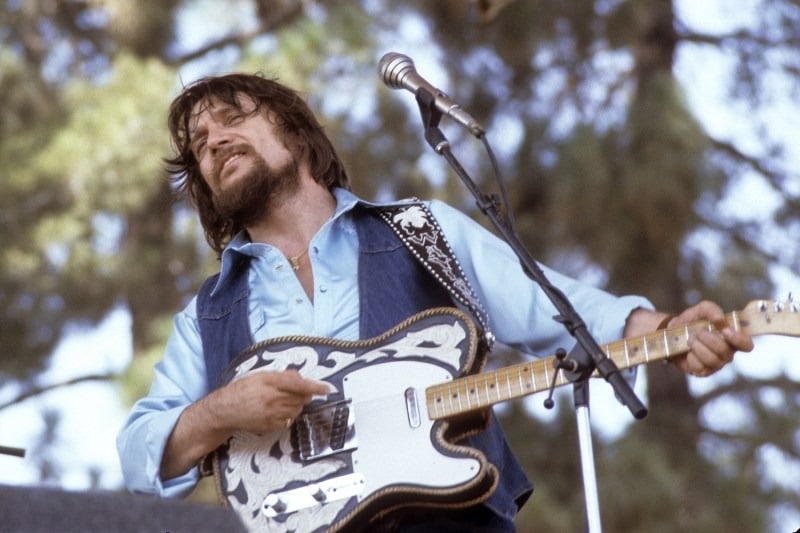
Waylon Jennings, born on June 15, 1937, was an American country music legend renowned for his distinctive voice, rebellious spirit, and influential contributions to the outlaw country movement. Raised in Littlefield, Texas, Jennings began his musical journey as a radio DJ before pursuing a career as a performer. His music was characterized by a perfect blend of honky-tonk and rock influences, creating a sound that resonated with a diverse audience.
Jennings rose to prominence in the 1970s, earning the nickname “The Outlaw” for challenging the conventional norms of the Nashville establishment. Hits like “Luckenbach, Texas” and “Mammas Don’t Let Your Babies Grow Up to Be Cowboys” showcased his raw authenticity and emotional depth. His collaboration with Willie Nelson, Waylon & Willie, further solidified his status as a country icon.
Beyond his musical prowess, Waylon Jennings was recognized for his rebellious image, often seen sporting his trademark black hat and leather attire. His life and career were marked by struggles with addiction, but he eventually triumphed over his demons. Jennings left an indelible mark on the country music landscape, leaving behind a legacy that continues to inspire generations of artists who appreciate his boldness, independence, and undeniable talent. He passed away on February 13, 2002, but his impact on the genre endures through his timeless music.
1. Luckenbach, Texas (Back to the Basics of Love)
“Luckenbach, Texas (Back to the Basics of Love)” is a classic country song that became one of Waylon Jennings’ signature hits. Co-written by Bobby Emmons and Chips Moman, the song was released in 1977 as the title track of Jennings’ album “Ol’ Waylon.” The song’s distinctive sound and catchy lyrics contributed to its popularity and enduring status in the country music canon.
The lyrics of “Luckenbach, Texas” tell the story of a couple seeking refuge from the hustle and bustle of modern life by returning to the simplicity and authenticity of small-town living. The reference to Luckenbach, a tiny Texas town, became iconic, and the song’s chorus emphasizes the desire to get “back to the basics of love.” The narrative resonated with listeners, capturing the spirit of the outlaw country movement and Waylon Jennings’ own rebellious approach to his music.
The song’s success propelled it to the top of the country music charts, solidifying Waylon Jennings’ reputation as a key figure in the genre. “Luckenbach, Texas” remains a beloved classic, celebrated for its timeless appeal and its reflection of the enduring human yearning for a simpler, more genuine way of life.
2. Mamas Don’t Let Your Babies Grow Up to Be Cowboys
“Mammas Don’t Let Your Babies Grow Up to Be Cowboys” is a country classic that became an iconic duet performed by Waylon Jennings and Willie Nelson. Written by Ed Bruce and Patsy Bruce, the song was released in 1978 as part of the collaborative album “Waylon & Willie.” The track went on to achieve considerable success, earning the duo a Grammy Award for Best Country Performance by a Duo or Group with Vocal.
The song’s lyrics offer advice to mothers, cautioning them against letting their children pursue a life as cowboys. Despite the romanticized image of cowboys in popular culture, the song paints a realistic picture of the hardships and challenges that come with the cowboy lifestyle. It explores themes of tough living, loneliness, and the toll it takes on personal relationships.
With Waylon Jennings and Willie Nelson’s distinctive voices complementing each other, the song became a hit and resonated with a wide audience. The collaboration between these two outlaw country legends added to the song’s charm, making it a timeless piece in the country music landscape. “Mammas Don’t Let Your Babies Grow Up to Be Cowboys” remains a classic representation of the outlaw country genre, celebrated for its authenticity and the chemistry between two of country music’s most iconic figures.
3. Good-Hearted Woman
“Good-Hearted Woman” is another classic country song that showcases the collaborative genius of Waylon Jennings and Willie Nelson. Released in 1972, the song was written by Jennings and Nelson and served as the title track for both Nelson’s album “The Words Don’t Fit the Picture” and Jennings’ album “Good Hearted Woman.”
The lyrics tell the tale of a man who appreciates the virtues of a good-hearted woman despite his own struggles and imperfections. The song explores themes of love, loyalty, and the challenges of maintaining a relationship in the face of life’s difficulties. It reflects the outlaw country ethos with its honest portrayal of the ups and downs of life, relationships, and the complexities of the human experience.
“Good-Hearted Woman” became a major hit for both Jennings and Nelson, reaching the top of the country charts. The song’s success solidified the partnership between the two artists and their impact on the outlaw country movement. Their collaboration showcased a seamless blend of their voices and songwriting talents, leaving an indelible mark on the country music landscape. The enduring popularity of “Good-Hearted Woman” continues to affirm its status as a classic in the genre, appreciated for its authenticity and timeless appeal.
4. Are You Sure Hank Done It This Way
“Are You Sure Hank Done It This Way” is a song by Waylon Jennings that was released in 1975. Written by Jennings himself, the song is both a reflection on the changing landscape of country music and a statement about his own approach to the genre.
In the lyrics, Jennings questions the evolving nature of country music, expressing concern about the direction it was heading. The title references Hank Williams, a legendary figure in country music, and implies a departure from the traditional sounds and themes associated with the genre. Jennings, a key figure in the outlaw country movement, was known for challenging the Nashville establishment and infusing his music with a rebellious spirit.
The song’s driving beat and Jennings’ distinctive vocal delivery contributed to its success, making it a hit on the country charts. “Are You Sure Hank Done It This Way” became one of Jennings’ signature songs, embodying the outlaw country ethos and solidifying his status as a pioneer in the genre. The track remains relevant as a commentary on the changing dynamics of country music and serves as a testament to Jennings’ unique contribution to the genre.
5. I’ve Always Been Crazy
“I’ve Always Been Crazy” is a song by Waylon Jennings, released in 1978 as the title track of his album. Written by Jennings himself, the song is a candid and self-reflective piece that encapsulates his rebellious spirit and individualistic approach to life.
The lyrics of “I’ve Always Been Crazy” express Jennings’ unapologetic nature and his refusal to conform to societal expectations. The song acknowledges his unconventional lifestyle, love of freedom, and the ups and downs of his personal journey. It embraces the idea that living outside the norm is inherent to Jennings’ character, and he proudly declares that he wouldn’t have it any other way.
The track’s energetic tempo, coupled with Jennings’ distinct vocal style, contributed to its success. It became another hit in Jennings’ catalog, resonating with audiences who appreciated his authenticity and the rebellious ethos of outlaw country. The chorus, with its memorable line “I’ve always been crazy, but it’s kept me from going insane,” has become iconic and is often cited as an anthem for those who celebrate individuality and nonconformity.
“I’ve Always Been Crazy” not only showcases Waylon Jennings’ musical prowess but also serves as a declaration of his unyielding commitment to staying true to himself in the face of societal expectations. The song remains a testament to his enduring impact on the country music landscape.
6. Amanda
“Amanda” is a heartfelt ballad by Waylon Jennings, released in 1974. Written by Bob McDill, the song became one of Jennings’ most successful and enduring hits, showcasing a softer and more tender side of the outlaw country singer.
The lyrics of “Amanda” tell the story of unrequited love and the narrator’s deep affection for a woman named Amanda. Jennings’ delivery of the song is filled with emotion, and the melody is both soulful and poignant. The chorus, with its repeated declaration of “I’m gonna love you forever,” adds to the enduring appeal of the song.
Released as a single, “Amanda” climbed to the top of the country charts, marking a commercial success for Jennings. The song resonated with audiences, and its timeless theme of love and longing has kept it relevant through the years.
“Amanda” is often regarded as one of Waylon Jennings’ signature songs, showcasing his versatility as an artist who could deliver not only the edgier outlaw country tunes but also soulful and emotionally resonant ballads. The enduring popularity of “Amanda” underscores its place in the pantheon of classic country music.
7. Honky Tonk Heroes
“Honky Tonk Heroes” is a landmark album by Waylon Jennings, released in 1973. The album marked a significant moment in country music history, as it is often considered one of the seminal works of the outlaw country subgenre. The title track, “Honky Tonk Heroes,” was penned by Billy Joe Shaver, and the entire album reflects a departure from the polished and orchestrated Nashville sound of the time.
The songs on “Honky Tonk Heroes” are characterized by their raw, stripped-down sound and gritty, honest lyrics. Jennings, along with producer Tompall Glaser, embraced a more rebellious and authentic approach to recording, challenging the conventions of the Nashville establishment. The album’s themes revolve around the hardships of life, heartbreak, and the rough-and-tumble world of honky-tonk bars.
The title track, in particular, became a classic in Waylon Jennings’ discography. The album also includes other notable tracks such as “Old Five and Dimers Like Me” and “Wilie the Wandering Gypsy and Me.” “Honky Tonk Heroes” not only solidified Jennings’ status as a leading figure in outlaw country but also influenced subsequent generations of artists who sought a more unvarnished and genuine sound in their music.
The impact of “Honky Tonk Heroes” extends beyond its initial release, as it continues to be celebrated as a cornerstone of outlaw country, representing a rebellion against the Nashville sound and a celebration of authenticity in country music.
8. I Ain’t Living Long Like This
“I Ain’t Living Long Like This” is a song written by Rodney Crowell that was notably covered by Waylon Jennings. Originally released by Crowell in 1979, the song gained widespread recognition when Waylon Jennings included it on his album of the same name, released in 1980.
The song’s lyrics depict a gritty and rebellious narrative, capturing a sense of restlessness and defiance. The narrator reflects on a life of trouble, engaging in risky and outlaw behavior. The recurring refrain, “I ain’t living long like this,” adds a sense of urgency and inevitability to the narrative.
Waylon Jennings’ rendition of “I Ain’t Living Long Like This” became a hit, reaching the top of the country charts. The song’s success further solidified Jennings’ reputation as a pioneer of outlaw country, known for his edgy sound and rebellious attitude.
The track has since been covered by various artists, showcasing its enduring appeal and the impact of both Rodney Crowell’s songwriting and Waylon Jennings’ interpretation. “I Ain’t Living Long Like This” remains a classic example of outlaw country, celebrated for its gritty lyrics, electrifying performance, and its place in the evolution of the genre.
9. Only Daddy That’ll Walk the Line
“Only Daddy That’ll Walk the Line” is a classic country song performed by Waylon Jennings. Written by Ivy J. Bryant, the song was released in 1968 as a single and became one of Jennings’ early hits, marking a significant moment in his career.
The song’s lyrics convey a sense of independence and nonconformity, with the narrator declaring that he’s the “only daddy that’ll walk the line.” The phrase “walk the line” implies maintaining a sense of discipline or adhering to a set of principles, and in the context of the song, it suggests a commitment to a rebellious and free-spirited lifestyle.
With its distinctive guitar riff and Jennings’ gritty vocal delivery, “Only Daddy That’ll Walk the Line” showcased the emerging outlaw country sound. The song reached success on the country charts, becoming one of Jennings’ signature tunes. Its rebellious attitude and infectious energy contributed to the evolving landscape of country music in the late 1960s and early 1970s.
The enduring popularity of “Only Daddy That’ll Walk the Line” solidifies its place in country music history and Waylon Jennings’ legacy as a trailblazer in the genre. The song remains a classic representation of the outlaw country movement, celebrated for its authenticity and the raw edge that Jennings brought to his music.
10. Dreaming My Dreams with You
“Dreaming My Dreams with You” is a poignant and soulful country ballad recorded by Waylon Jennings. Released in 1975, the song served as the title track for Jennings’ album of the same name. The track is particularly notable for its emotional depth and introspective lyrics.
The song, written by Allen Reynolds, captures the introspective musings of a person contemplating their dreams and the challenges they face. The narrator expresses a sense of loneliness and vulnerability, finding solace in the act of dreaming about the one they love. The melancholic yet beautiful melody, combined with Jennings’ sincere delivery, enhances the emotional impact of the song.
“Dreaming My Dreams with You” became one of Waylon Jennings’ significant hits, reaching high positions on the country music charts. Its success underscored Jennings’ ability to convey genuine emotions through his music and marked a departure from the more rebellious sound associated with outlaw country.
Over the years, the song has been recognized as a classic in the country music genre, celebrated for its timeless appeal and its portrayal of heartfelt emotions. Its enduring popularity is a testament to Waylon Jennings’ influence as an artist who could navigate a range of musical styles and emotions with authenticity.

Edward Tomlin is a frequent contributor to Singers Room. Since 2005, Singersroom has been the voice of R&B around the world. Connect with us via social media below.









