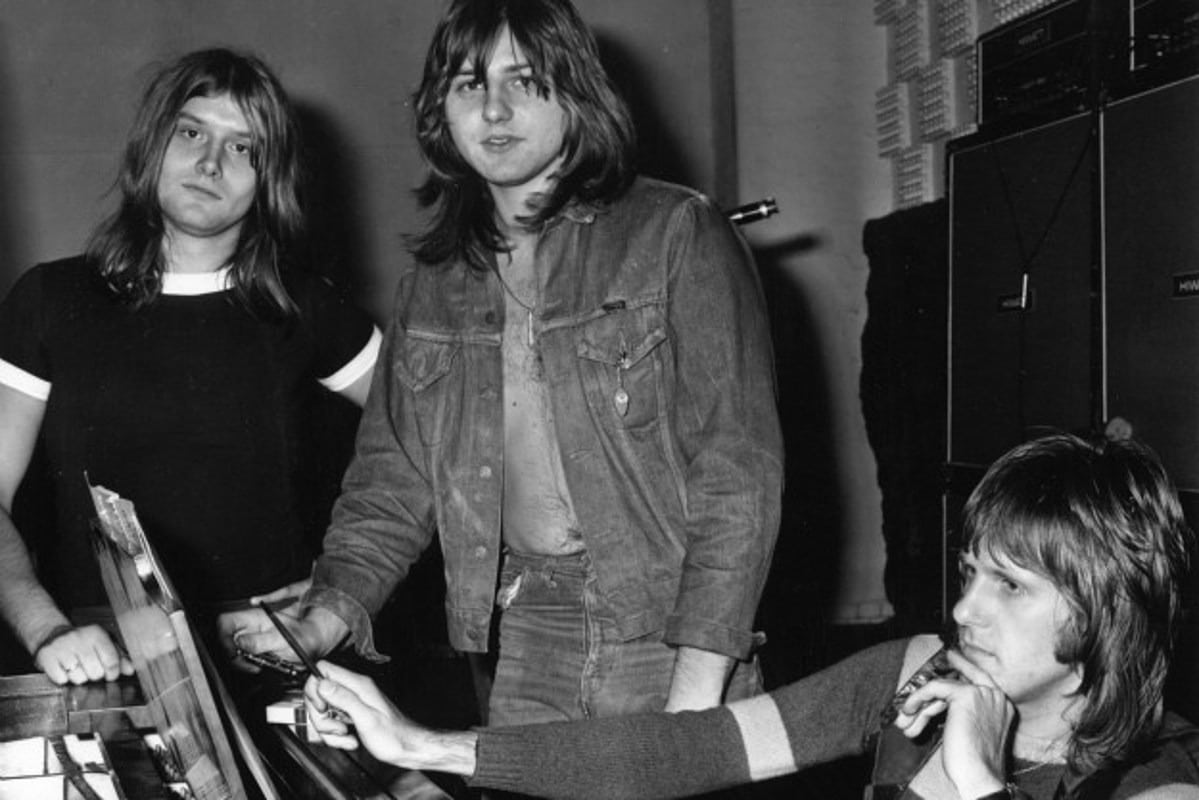
Emerson, Lake & Palmer (ELP) stands as one of the iconic and pioneering forces in the realm of progressive rock. Formed in 1970, the trio of keyboard virtuoso Keith Emerson, bassist and vocalist Greg Lake, and drummer Carl Palmer brought together a fusion of classical, rock, and experimental influences that redefined the boundaries of musical exploration.
ELP’s self-titled debut album in 1970 showcased their groundbreaking approach, featuring the mesmerizing “Lucky Man” with Lake’s vocals and Emerson’s synthesizer wizardry. The band’s subsequent albums, including “Tarkus” and “Brain Salad Surgery,” exemplified their ambitious compositions and intricate arrangements, often drawing inspiration from classical pieces.
Renowned for their elaborate live performances, ELP’s concerts were spectacles of technical prowess and innovation, with Emerson’s dazzling keyboard work, Lake’s emotive vocals, and Palmer’s precision on drums. The band’s adaptation of classical works, such as Mussorgsky’s “Pictures at an Exhibition,” further solidified their reputation as trailblazers in the progressive rock movement.
Though the band faced hiatuses and lineup changes over the years, Emerson, Lake & Palmer’s legacy endures. Their influence on the progressive rock genre and their ability to seamlessly blend diverse musical elements make them a perennial source of inspiration for generations of musicians and fans alike.
1. Lucky Man
“Lucky Man” is a classic rock song by Emerson, Lake & Palmer (ELP), featured on their eponymous debut album released in 1970. Written by Greg Lake, the band’s bassist and vocalist, the song is notable for its melodic simplicity and the inclusion of a Moog synthesizer solo performed by Keith Emerson.
The song’s verses carry an acoustic simplicity with Lake’s vocals conveying a sense of reflection and gratitude. The unexpected addition of the Moog synthesizer solo in the middle of the song, showcasing Emerson’s virtuosity, became a defining moment and contributed to the track’s uniqueness.
“Lucky Man” gained widespread acclaim and radio play, becoming one of ELP’s most well-known and enduring songs. The single’s success played a significant role in the popularity of the band’s debut album.
Beyond its commercial success, “Lucky Man” is often cited for its role in popularizing the Moog synthesizer in rock music during the early 1970s. The combination of Lake’s emotive lyrics, acoustic guitar, and Emerson’s groundbreaking use of synthesizers contributed to the song’s timeless appeal and secured its place in the classic rock canon.
2. From the Beginning
“From the Beginning” is another notable song by Emerson, Lake & Palmer (ELP), featured on their album “Trilogy,” released in 1972. Similar to “Lucky Man,” this track highlights the band’s ability to fuse progressive rock with classical and acoustic elements.
Written by Greg Lake, the song features his distinctive vocals and acoustic guitar work. The composition showcases a softer side of ELP, deviating from their more intricate and complex progressive rock pieces. The lyrics evoke a sense of introspection and reflection, adding a layer of emotional depth to the track.
One of the notable aspects of “From the Beginning” is the interplay between Lake’s acoustic guitar and Keith Emerson’s synthesizer, which provides a melodic counterpoint to the vocals. The combination of these elements creates a beautifully crafted and accessible piece, demonstrating ELP’s versatility as musicians.
The song became a radio hit and is considered one of Emerson, Lake & Palmer’s signature tracks. Its enduring popularity lies in its balance of intricate musicianship and melodic accessibility, making it a classic example of the band’s contribution to the progressive rock genre.
3. Still…You Turn Me On
“Still… You Turn Me On” is a song by Emerson, Lake & Palmer (ELP) from their album “Brain Salad Surgery,” released in 1973. The track, written by Greg Lake, features his vocals, acoustic guitar, and bass, while Keith Emerson contributes keyboards, including the Moog synthesizer.
The song is characterized by its intimate and acoustic-driven arrangement, standing in contrast to some of ELP’s more elaborate and progressive compositions. Greg Lake’s emotive vocals and the simplicity of the instrumentation give the track a poignant and evocative quality.
“Still… You Turn Me On” was a departure from the band’s more complex and experimental pieces, showcasing their ability to explore different musical styles. The track’s lyrical content revolves around themes of love and desire, delivered with a sense of vulnerability in Lake’s vocal performance.
While perhaps not as well-known as some of ELP’s other hits, “Still… You Turn Me On” has earned praise for its intimate and stripped-down approach. It remains a testament to the band’s versatility and their ability to craft emotionally resonant songs amidst their more progressive and intricate works.
4. Karn Evil 9
“Karn Evil 9” is a multi-part suite by Emerson, Lake & Palmer (ELP), featured on their progressive rock album “Brain Salad Surgery,” released in 1973. The suite is divided into three impressions: “First Impression,” “Second Impression,” and “Third Impression.”
The suite is known for its ambitious and complex structure, showcasing the band’s virtuosity and innovative use of synthesizers, particularly Keith Emerson’s Moog synthesizer. Each impression explores different musical themes and moods, ranging from intricate keyboard solos to powerful guitar and bass sections.
“Karn Evil 9” is renowned for its inclusion of electronic sounds and synthesized textures, contributing to its futuristic and avant-garde atmosphere. The suite incorporates a variety of musical styles, from classical to jazz-rock, demonstrating ELP’s ability to seamlessly blend genres within an expansive and progressive framework.
Particularly famous is the opening section of “First Impression,” which features a memorable synthesizer riff and the lyrics “Welcome back my friends to the show that never ends.” This section became an iconic introduction for the band’s live performances.
“Karn Evil 9” is considered one of ELP’s signature compositions, and its intricate arrangements and conceptual nature exemplify the band’s contribution to the progressive rock genre during the 1970s.
5. Fanfare for the Common Man
“Fanfare for the Common Man” is an iconic instrumental piece by Emerson, Lake & Palmer (ELP), originally composed by Aaron Copland in 1942. ELP’s adaptation of the classical piece was released on their album “Works Volume 1” in 1977.
ELP’s version of “Fanfare for the Common Man” is a powerful and dramatic interpretation that showcases the band’s virtuosity and ability to blend classical influences with rock instrumentation. The piece is known for its grandiosity, featuring Keith Emerson’s impressive keyboard work, Greg Lake’s solid bass, and Carl Palmer’s dynamic percussion.
The track opens with a majestic synthesizer fanfare, capturing the essence of Copland’s original composition. It then transitions into a rock arrangement with a driving rhythm section and Emerson’s intricate keyboard improvisations. The combination of classical motifs and progressive rock elements makes ELP’s adaptation a standout in their repertoire.
“Fanfare for the Common Man” became a signature piece for Emerson, Lake & Palmer and was often featured in their live performances. The band’s rendition pays homage to Copland’s intent to create a musical tribute to the common people, making it a powerful and enduring composition that resonates across genres.
6. Hoedown
“Hoedown” is a piece by Aaron Copland that was originally part of his ballet “Rodeo,” composed in 1942. The ballet portrays American cowboys and rodeo culture, and “Hoedown” specifically captures the lively and celebratory atmosphere of a hoedown—a traditional American folk dance.
Emerson, Lake & Palmer (ELP) adapted and popularized “Hoedown” in a rock context on their album “Trilogy,” released in 1972. Their rendition, arranged by Keith Emerson, brought a new energy to Copland’s original composition, infusing it with rock instrumentation and progressive elements.
ELP’s version of “Hoedown” became particularly well-known for its dynamic and electrifying quality. Keith Emerson’s virtuosic synthesizer work, Greg Lake’s solid bass, and Carl Palmer’s intricate drumming added a rock intensity to the lively and spirited nature of the piece.
The adaptation showcased the band’s ability to reinterpret classical works within a progressive rock framework, introducing Copland’s composition to a new audience. “Hoedown” remains one of the notable examples of the fusion between classical and rock music during the progressive rock era.
7. Trilogy
“Trilogy” is the title track from Emerson, Lake & Palmer’s (ELP) 1972 album of the same name. The album is the third studio release by the progressive rock supergroup, following their self-titled debut and “Tarkus.”
The instrumental title track, “Trilogy,” is notable for its complex and dynamic composition, characteristic of ELP’s progressive rock style. The piece consists of multiple sections, showcasing the band’s virtuosity and their ability to seamlessly blend classical and rock elements. Keith Emerson’s intricate keyboard work, Greg Lake’s melodic bass lines, and Carl Palmer’s precise drumming contribute to the rich and layered sound.
The album “Trilogy” marked a continuation of ELP’s exploration of diverse musical styles, incorporating classical influences alongside the more traditional rock elements. The title track, in particular, is recognized for its ambitious structure and the band’s collective musicianship.
The success of “Trilogy” as an album solidified Emerson, Lake & Palmer’s position in the progressive rock scene of the 1970s. The band’s ability to fuse different genres and their innovative approach to composition contributed to their enduring influence on the progressive rock genre.
8. Take a Pebble
“Take a Pebble” is a song by Emerson, Lake & Palmer (ELP), featured on their self-titled debut album, released in 1970. The song, written by Greg Lake, reflects the band’s early exploration of progressive rock and showcases their ability to blend various musical styles within a single composition.
“Take a Pebble” is a multi-part suite that incorporates elements of folk, classical, and jazz, indicative of ELP’s eclectic approach to music. The song begins with a delicate acoustic guitar introduction by Lake, followed by a section featuring Keith Emerson’s intricate piano work. The composition then evolves into a jazz-influenced segment, showcasing the virtuosity of the individual band members.
A notable feature of “Take a Pebble” is its dynamic structure, transitioning between different musical themes and allowing each member of ELP to shine through their instrumental contributions. The lyrics, delivered with Lake’s distinctive vocals, convey a sense of introspection and contemplation.
The song’s complexity and the band’s instrumental prowess contributed to its appeal among progressive rock enthusiasts. “Take a Pebble” remains a classic representation of Emerson, Lake & Palmer’s early experimentation and their ability to create intricate, genre-defying compositions.
9. C’est la Vie
“C’est la Vie” is a song by Emerson, Lake & Palmer (ELP), featured on their 1977 album “Works Volume 1.” The song is notable for its more straightforward and accessible style compared to some of ELP’s earlier complex and progressive works.
Written by Greg Lake, “C’est la Vie” is characterized by its acoustic-driven sound, featuring Lake’s vocals and acoustic guitar prominently. The song has a melodic and wistful quality, and its lyrics reflect on the transient nature of life and love, with “C’est la vie” being a French expression that translates to “That’s life.”
The simplicity and emotional resonance of “C’est la Vie” marked a departure from the more intricate and avant-garde compositions for which ELP was known. The band’s willingness to explore different musical avenues showcased their versatility as musicians.
While “C’est la Vie” may not have been as complex or progressive as some of ELP’s earlier works, its accessibility and heartfelt nature endeared it to a broader audience. The song remains a notable part of Emerson, Lake & Palmer’s discography, demonstrating their ability to adapt their musical style while maintaining a high level of craftsmanship.
10. Knife-Edge
“Knife-Edge” is a track by Emerson, Lake & Palmer (ELP), featured on their self-titled debut album released in 1970. The song, composed by Greg Lake, showcases the band’s virtuosity and their fusion of classical and rock elements.
The title “Knife-Edge” aptly describes the tension and sharpness conveyed in the composition. The song opens with a dramatic and powerful synthesizer riff by Keith Emerson, which sets the tone for the rest of the piece. Greg Lake’s vocals and bass contribute to the intensity, while Carl Palmer’s precise drumming adds to the rhythmic complexity.
“Knife-Edge” is known for its dynamic shifts and intricate instrumentation, reflecting ELP’s early exploration of progressive rock. The band’s ability to incorporate classical influences, particularly through Emerson’s keyboard work, distinguishes the track.
While not as commercially successful as some of ELP’s later works, “Knife-Edge” remains a notable example of the band’s innovative approach to music. Its inclusion on the debut album solidified Emerson, Lake & Palmer’s reputation as trailblazers in the progressive rock genre.

Edward Tomlin is a frequent contributor to Singers Room. Since 2005, Singersroom has been the voice of R&B around the world. Connect with us via social media below.









