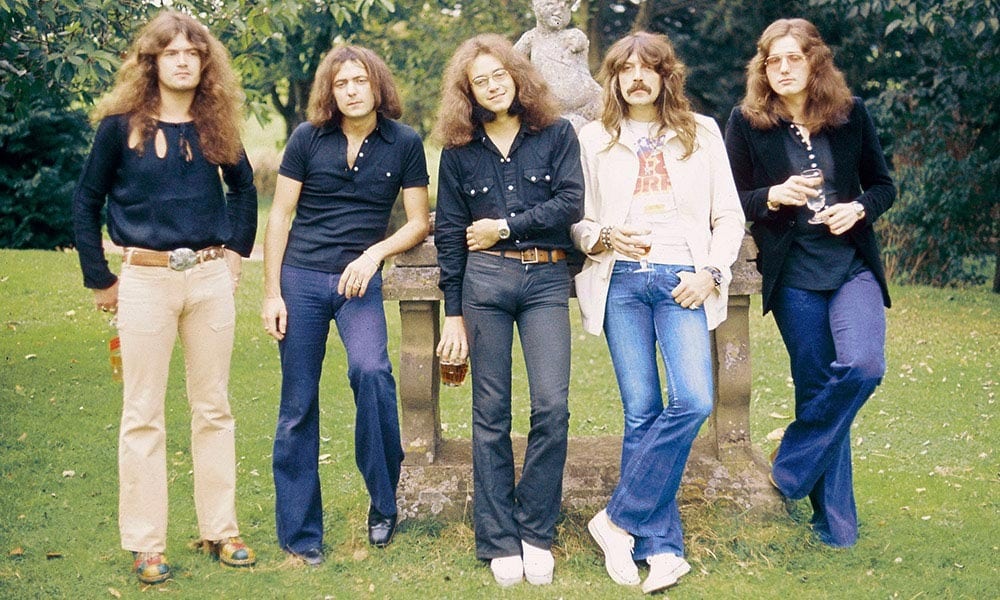
Deep Purple, formed in Hertford, England, in 1968, stands as one of the most influential and enduring bands in the history of rock music. Pioneers of the hard rock and heavy metal genres, Deep Purple has consistently pushed musical boundaries and left an indelible mark on the global music scene.
The classic lineup of Ian Gillan, Ritchie Blackmore, Jon Lord, Roger Glover, and Ian Paice produced iconic albums, including the groundbreaking “Deep Purple in Rock” (1970) and the timeless “Machine Head” (1972). The latter featured the legendary “Smoke on the Water,” a rock anthem recognized worldwide for its unforgettable guitar riff.
Known for their virtuosic musicianship, Deep Purple seamlessly blended rock, blues, and classical elements, with Lord’s majestic keyboard work and Blackmore’s incendiary guitar solos defining their sound. The band’s dynamic compositions, such as “Child in Time” and “Highway Star,” showcased their ability to create complex yet accessible music.
Despite lineup changes over the years, Deep Purple’s resilience and commitment to their craft have allowed them to remain a vital force in rock. Inducted into the Rock and Roll Hall of Fame, Deep Purple’s legacy is not just marked by their impressive catalog but also by their enduring influence on subsequent generations of musicians and their continued ability to captivate audiences with their electrifying performances.
1. Smoke on the Water
“Smoke on the Water” is an iconic rock anthem by Deep Purple, released in 1972 as part of their seminal album “Machine Head.” Written by the band members—Ritchie Blackmore, Ian Gillan, Roger Glover, Jon Lord, and Ian Paice—the song is celebrated for its distinctive guitar riff, widely recognized as one of the greatest in rock history.
The inspiration for “Smoke on the Water” came from a real-life incident. In 1971, Deep Purple was recording in Montreux, Switzerland, when a fire broke out during a Frank Zappa concert at the Montreux Casino. The casino was destroyed, and the smoke over Lake Geneva inspired the song’s title.
The track’s instantly recognizable guitar riff, played by Ritchie Blackmore, has become a cornerstone of rock music. The simple yet powerful riff, coupled with Ian Gillan’s vocals and the band’s tight instrumentation, contributed to the song’s enduring popularity.
“Smoke on the Water” has been covered and referenced by countless artists and remains a fixture in rock culture. Its universal appeal, both as a guitar riff for budding musicians and a classic rock anthem for audiences worldwide, solidifies its status as one of the defining songs of the genre.
2. Highway Star
“Highway Star” is a classic rock song by Deep Purple, featured as the opening track on their seminal 1972 album “Machine Head.” Written by the band members Ritchie Blackmore, Ian Gillan, Roger Glover, Jon Lord, and Ian Paice, the song is renowned for its dynamic energy and virtuosic performances.
“Highway Star” is often cited as one of the quintessential examples of the “driving rock” genre. The song is characterized by its intense pace, powerful guitar riffs, and Jon Lord’s remarkable organ solo. The lyrics, penned by Ian Gillan, evoke the excitement of driving a fast car on the open road.
Ritchie Blackmore’s guitar work in “Highway Star” is particularly notable, showcasing his technical prowess and contributing to the song’s status as a guitar-driven rock classic. Ian Gillan’s vocals, Roger Glover’s bass, Jon Lord’s keyboards, and Ian Paice’s drumming collectively create a high-octane sonic experience.
“Highway Star” has become a staple of Deep Purple’s live performances and is celebrated for its influential role in the development of hard rock and heavy metal. The song’s enduring popularity underscores its status as a timeless and electrifying piece of classic rock history.
3. Space Truckin’
“Space Truckin'” is a rock song by Deep Purple, featured on their 1972 album “Machine Head.” Written by the band members Ritchie Blackmore, Ian Gillan, Roger Glover, Jon Lord, and Ian Paice, the song is known for its energetic and space-themed musicality.
“Space Truckin'” encapsulates the signature sound of Deep Purple, blending hard rock with progressive and psychedelic elements. The song features prominent guitar riffs by Ritchie Blackmore, complemented by Jon Lord’s distinctive keyboard work and Ian Gillan’s powerful vocals. The lyrics playfully delve into space exploration and the idea of a cosmic journey.
The track is characterized by its upbeat tempo, dynamic instrumental interplay, and a sense of improvisational freedom, making it a fan favorite and a highlight of Deep Purple’s live performances. “Space Truckin'” often served as a closing number during their concerts, leaving audiences with a lasting impression of the band’s musical prowess.
“Space Truckin'” has endured as one of Deep Purple’s most beloved songs, capturing the spirit of the early 1970s rock scene and contributing to the band’s legacy as pioneers of hard rock and heavy metal.
4. Burn
“Burn” is a hard rock song by Deep Purple, released as the title track of their eighth studio album in 1974. This was the first Deep Purple album to feature the Mark III lineup, including David Coverdale on vocals and Glenn Hughes on bass and vocals, alongside Ritchie Blackmore (guitar), Jon Lord (keyboards), and Ian Paice (drums).
The song “Burn” is known for its powerful and energetic sound, blending elements of hard rock and blues. David Coverdale’s vocals and Glenn Hughes’s harmonized backing vocals add a new dimension to Deep Purple’s sonic palette. The track features a distinctive guitar riff by Ritchie Blackmore and dynamic keyboard work by Jon Lord.
The lyrics of “Burn” are open to interpretation, but they are often associated with themes of rebirth and renewal. The song’s fiery and intense atmosphere is reflected in both its musical composition and the passionate vocal delivery.
“Burn” became a significant part of Deep Purple’s live repertoire and is considered a classic in their discography. The album marked a successful transition for the band, showcasing the versatility and adaptability of Deep Purple’s lineup changes over the years.
5. Perfect Strangers
“Perfect Strangers” is a song by Deep Purple, released as the title track of their eleventh studio album in 1984. The album marked the reunion of the classic Mark II lineup, featuring Ian Gillan on vocals, Ritchie Blackmore on guitar, Roger Glover on bass, Jon Lord on keyboards, and Ian Paice on drums.
“Perfect Strangers” is characterized by its powerful and melodic sound, blending hard rock elements with progressive rock influences. The song opens with a distinctive keyboard riff played by Jon Lord, followed by a strong guitar presence from Ritchie Blackmore and Ian Gillan’s soaring vocals. The track features intricate instrumental sections and showcases the technical prowess of each band member.
The lyrics of “Perfect Strangers” are open to interpretation but convey a sense of reunion and the complexities of human relationships. The song’s title track became a staple in Deep Purple’s live performances and is often considered one of the highlights of their post-reunion era.
“Perfect Strangers” contributed to the commercial success of the album, marking a triumphant return for the classic lineup. The song remains a fan favorite and a testament to Deep Purple’s enduring legacy in the realm of hard rock and classic rock.
6. Woman from Tokyo
“Woman from Tokyo” is a classic rock song by Deep Purple, released on their 1973 album “Who Do We Think We Are.” The song was written by the band members Ritchie Blackmore, Ian Gillan, Roger Glover, Jon Lord, and Ian Paice.
“Woman from Tokyo” features a distinctive guitar riff played by Ritchie Blackmore, creating a catchy and memorable musical motif. The song is characterized by its energetic and melodic sound, blending hard rock with elements of blues and funk. Ian Gillan’s vocals add a dynamic and soulful quality to the track, and Jon Lord’s keyboards contribute to the overall richness of the composition.
The lyrics of “Woman from Tokyo” are somewhat enigmatic, with references to a woman and the allure of the city. The song’s appeal lies not only in its musicality but also in its ability to evoke a sense of mystery and wanderlust.
Despite being somewhat overshadowed by some of Deep Purple’s more well-known tracks, “Woman from Tokyo” remains a fan favorite and has endured as a classic in the band’s extensive catalog. Its infectious melody and rock groove make it a standout piece in the context of 1970s rock music.
7. Child in Time
“Child in Time” is a monumental rock song by Deep Purple, featured on their 1970 album “Deep Purple in Rock.” The song showcases the band’s progressive and dynamic approach to rock music. It is one of Deep Purple’s most revered compositions and is often cited as a classic within the rock genre.
“Child in Time” begins with a serene and haunting vocal section by Ian Gillan, gradually building in intensity. The song then erupts into a powerful instrumental section, highlighted by Ritchie Blackmore’s blistering guitar solos, Jon Lord’s atmospheric organ work, and the driving rhythm section of Roger Glover on bass and Ian Paice on drums.
Lyrically, “Child in Time” addresses themes of innocence lost, war, and the longing for a peaceful world. The song is known for its extended instrumental passages and Gillan’s impressive vocal range, particularly in the iconic screams that punctuate the track.
The live performances of “Child in Time” became legendary for the band, showcasing their improvisational skills and the ability to create a captivating atmosphere. The song remains a powerful and emotional piece that has left a lasting impact on rock music and is often regarded as one of Deep Purple’s signature songs.
8. Black Night
“Black Night” is a classic rock song by Deep Purple, released as a single in 1970. Although not initially included on a studio album, it later appeared on the U.S. edition of “Deep Purple in Rock” and various compilation albums. The song was written by the band members Ritchie Blackmore, Ian Gillan, Roger Glover, Jon Lord, and Ian Paice.
“Black Night” is known for its catchy and driving guitar riff, played by Ritchie Blackmore, and its upbeat and energetic tempo. The song’s lyrics are somewhat enigmatic, with references to insomnia and a sense of restlessness. Ian Gillan’s vocals contribute to the song’s lively and anthemic quality.
The track became a commercial success, reaching high positions on the charts in various countries. Its popularity was further boosted by the band’s energetic live performances. “Black Night” is often celebrated for its straightforward and infectious rock sound, making it a staple in Deep Purple’s live repertoire and a fan favorite throughout the years.
9. Hush
“Hush” is a song by Deep Purple, originally released on their debut studio album “Shades of Deep Purple” in 1968. The song, written by Joe South, became one of Deep Purple’s most recognizable early tracks.
“Hush” is known for its catchy and upbeat nature, featuring a distinctive and memorable guitar riff played by Ritchie Blackmore. The song also includes energetic organ work by Jon Lord and showcases the soulful vocals of then-lead singer Rod Evans.
The lyrics of “Hush” tell a story of a romantic relationship and the desire to keep things quiet and low-key. The song’s infectious rhythm and memorable melody contributed to its success.
While “Hush” marked a significant moment in Deep Purple’s early career, the band would later evolve to become one of the pioneers of hard rock and heavy metal. Nevertheless, “Hush” remains a classic track and an important part of Deep Purple’s musical legacy, often remembered for its catchy hooks and the vibrant energy it captured during the late 1960s.
10. Soldier of Fortune
“Soldier of Fortune” is a poignant ballad by Deep Purple, featured on their 1974 album “Stormbringer.” The song was written by the band members David Coverdale and Ritchie Blackmore.
“Soldier of Fortune” stands out within Deep Purple’s discography for its departure from their more hard rock and blues-driven sound. Instead, the song leans towards a softer, acoustic style, allowing for a more introspective and melancholic atmosphere.
The lyrics of “Soldier of Fortune” evoke themes of heartbreak, loss, and reflection, portraying a sense of vulnerability and longing. David Coverdale’s emotive vocals and Ritchie Blackmore’s expressive guitar work contribute to the emotional depth of the song.
While not initially released as a single, “Soldier of Fortune” has become one of Deep Purple’s enduring classics. Its enduring popularity lies in its evocative and timeless quality, showcasing the band’s versatility in delivering both hard-hitting rock anthems and soul-stirring ballads. The song remains a favorite among fans and a testament to Deep Purple’s ability to explore various musical avenues throughout their career.

Edward Tomlin is a frequent contributor to Singers Room. Since 2005, Singersroom has been the voice of R&B around the world. Connect with us via social media below.









