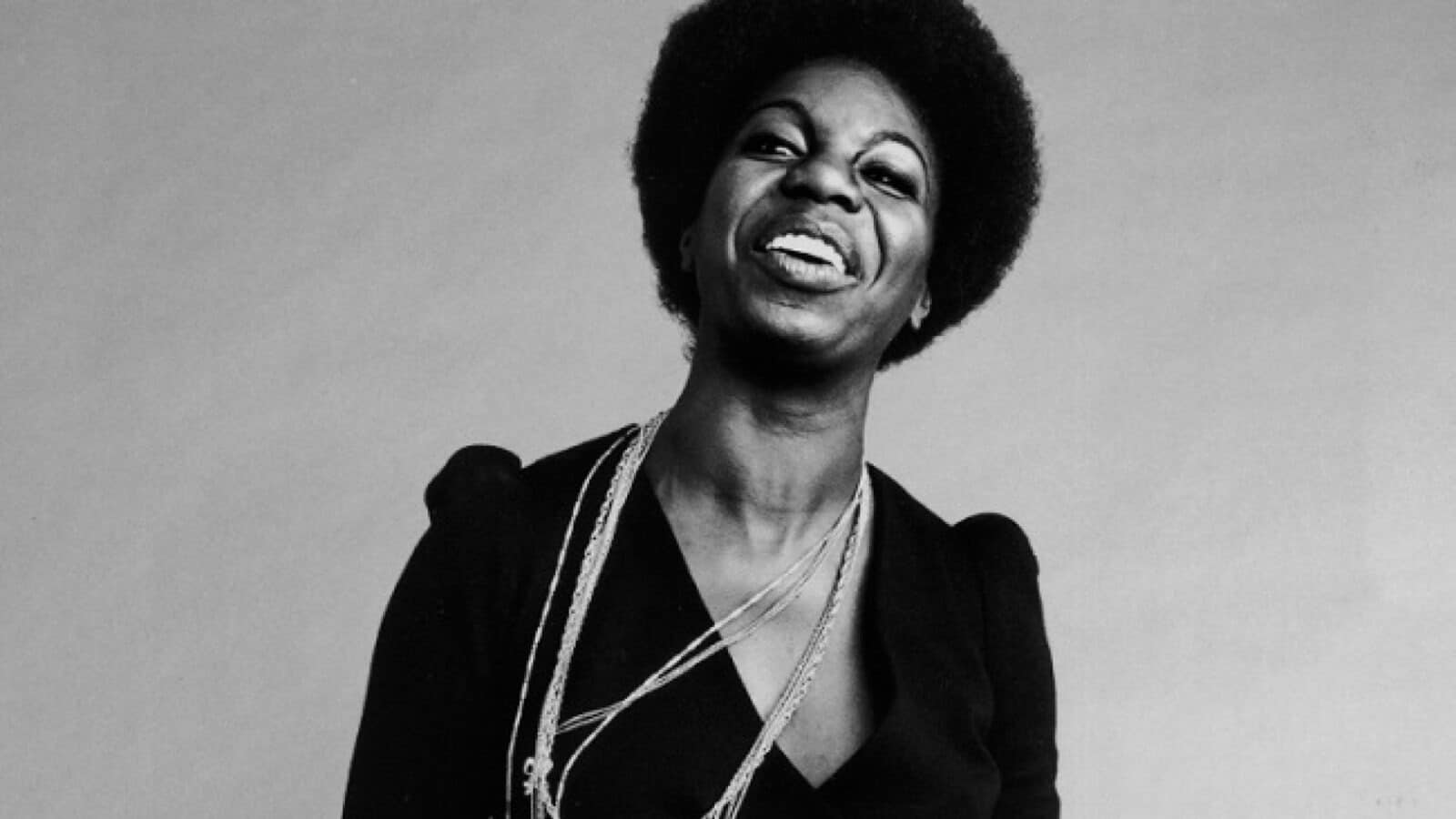
Nina Simone, born Eunice Kathleen Waymon on February 21, 1933, was an American singer, songwriter, pianist, and civil rights activist. She was one of the most influential and versatile musicians of the 20th century, known for her powerful voice and a wide range of musical styles including jazz, blues, classical, gospel, and folk.
Some of Nina Simone’s most popular and enduring songs include “Feeling Good,” “I Put a Spell on You,” “My Baby Just Cares for Me,” and “To Be Young, Gifted and Black.” Her music often addressed social and political issues, reflecting her deep involvement in the civil rights movement. Simone’s unique style blended elements of jazz, blues, and soul, making her a distinctive and captivating artist.
Apart from her musical career, Nina Simone was a passionate advocate for civil rights. She used her platform to address issues of racial inequality and injustice, and her activism is evident in songs like “Mississippi Goddam,” which she wrote in response to the 1963 assassination of Medgar Evers and the Birmingham church bombing.
Nina Simone’s legacy continues to influence generations of musicians and activists. Despite facing personal and professional challenges throughout her life, she left an indelible mark on the world of music and social justice. Nina Simone passed away on April 21, 2003, but her impact on music and activism lives on.
1. “Feeling Good”
“Feeling Good” is a classic song originally written by Anthony Newley and Leslie Bricusse for the musical “The Roar of the Greasepaint – The Smell of the Crowd” in 1964. However, it was Nina Simone’s rendition that became one of the most iconic and celebrated versions of the song. Nina Simone, with her powerful and soulful voice, transformed “Feeling Good” into a timeless anthem of empowerment.
Simone’s version was released on her 1965 album “I Put a Spell on You.” In her interpretation, she infuses the song with a sense of liberation and triumph. The lyrics express a newfound freedom and positivity, capturing the essence of breaking free from limitations and embracing a sense of empowerment.
Nina Simone’s delivery, characterized by her deep, rich vocals and emotional intensity, adds layers of complexity to the song. The arrangement, with its orchestral elements and dynamic build, enhances the overall impact of the performance.
“Feeling Good” has since become a classic and has been covered by numerous artists in various genres. It has been featured in films, commercials, and television shows, further solidifying its status as a cultural touchstone. Nina Simone’s rendition, in particular, remains a powerful and influential interpretation, celebrated for its emotional depth and timeless appeal.
2. “I Put a Spell on You”
“I Put a Spell on You” is a classic song originally written and composed by Jalacy “Screamin’ Jay” Hawkins in 1956. Over the years, it’s been covered by numerous artists, but one of the most notable renditions was by Nina Simone. Her interpretation of the song, released in 1965, became one of her signature performances.
Nina Simone’s version of “I Put a Spell on You” is haunting and powerful, showcasing her incredible vocal range and emotional depth. The song exudes a mix of passion, sensuality, and a touch of darkness. Simone’s soulful voice brings a captivating intensity to the song’s lyrics, expressing a raw and compelling narrative of desire and obsession.
Her rendition features a slow, bluesy arrangement with a striking piano accompaniment that adds to the song’s brooding atmosphere. The way Simone interprets the lyrics, infusing them with emotion and a sense of mystique, creates a mesmerizing experience for listeners.
Simone’s “I Put a Spell on You” remains an iconic and enduring rendition, praised for its artistry and emotional resonance. Her interpretation elevated the song to a new level of recognition, cementing its place as a classic in both her discography and the realm of blues and jazz music.
3. “My Baby Just Cares for Me”
“My Baby Just Cares for Me” is a classic jazz standard that gained significant popularity through Nina Simone’s rendition. Originally composed by Walter Donaldson with lyrics by Gus Kahn in the 1930s, the song was recorded by Nina Simone in 1958 as part of her debut album, but it gained widespread attention in the 1980s after it was featured in a Chanel No. 5 perfume commercial.
Nina Simone’s version of “My Baby Just Cares for Me” is a captivating blend of jazz and blues. Her soulful, velvety vocals breathe new life into the song, delivering a sense of playful affection and longing. The track features a lively piano melody that complements Simone’s vocals, creating an infectious and upbeat rhythm.
The lyrics convey a narrative of unrequited love and the singer’s realization that despite her own affections, her partner is indifferent. Simone’s emotive performance captures the bittersweet essence of the song, balancing a sense of resignation with a touch of playful charm.
The song’s resurgence in popularity after its use in the Chanel advertisement introduced a new generation to Nina Simone’s timeless talent and musical legacy. “My Baby Just Cares for Me” remains one of her most recognized and beloved songs, celebrated for its infectious melody, Simone’s enchanting vocals, and its enduring appeal in the world of jazz and popular music.
4. “Sinnerman”
“Sinnerman” is a traditional African American spiritual song that has been interpreted and recorded by various artists over the years. One of the most renowned versions is by Nina Simone. Simone’s rendition, in particular, is an extended and powerful interpretation that fuses elements of jazz, gospel, and blues.
Nina Simone recorded “Sinnerman” multiple times throughout her career, but one of the most notable versions is from her 1965 album “Pastel Blues.” The song’s lyrics explore themes of sin, redemption, and the urgency of seeking salvation. The repetitive and hypnotic nature of the melody adds a sense of urgency and intensity to the performance.
Simone’s arrangement builds gradually, starting with her soulful vocals and minimal instrumentation before escalating into a dramatic climax featuring a lively piano, percussion, and backing vocals. Clocking in at over ten minutes in some versions, Simone’s “Sinnerman” is a dynamic and emotionally charged musical journey.
“Sinnerman” has transcended its spiritual roots to become an iconic piece in the realms of jazz and soul music. The song has been used in various films, TV shows, and commercials, and its enduring popularity is a testament to the captivating and timeless nature of Nina Simone’s interpretation.
5. “Don’t Let Me Be Misunderstood”
“Don’t Let Me Be Misunderstood” is a classic song that has been interpreted by various artists, but one of the most notable versions is by Nina Simone. Originally written by Bennie Benjamin, Gloria Caldwell, and Sol Marcus, the song was first recorded by Simone in 1964.
Nina Simone’s rendition of “Don’t Let Me Be Misunderstood” is characterized by her soulful and emotive delivery, which became one of her signature styles. Released on her album “Broadway, Blues, Ballads,” Simone’s version captures the vulnerability and intensity of the lyrics.
The song explores the theme of yearning for understanding in relationships, with the narrator expressing a fear of being misunderstood. Simone’s interpretation adds depth and emotion to the lyrics, making it a poignant and powerful piece.
Over the years, “Don’t Let Me Be Misunderstood” has been covered by numerous artists, but Nina Simone’s version remains one of the most celebrated. The song’s enduring popularity has led to its inclusion in various films, TV shows, and commercials, solidifying its place as a classic in the realms of jazz and soul music.
6. “To Be Young, Gifted and Black”
“To Be Young, Gifted and Black” is a powerful and uplifting anthem written by Nina Simone and Weldon Irvine. Released in 1969 as the title track of Nina Simone’s album, the song became a significant anthem during the civil rights movement, conveying a message of empowerment, pride, and resilience.
The song was inspired by a play written by Lorraine Hansberry, the playwright behind “A Raisin in the Sun.” It honors the memory and legacy of Hansberry, who used the phrase “young, gifted and black” in a speech, celebrating African American identity and potential.
Nina Simone’s rendition of “To Be Young, Gifted and Black” is characterized by its soulful melody, passionate vocals, and a message that resonated deeply with the struggles and aspirations of African Americans during the civil rights era. The song is an anthem of hope, urging pride in one’s heritage and abilities while acknowledging the challenges faced in a society marked by racial inequality.
The lyrics celebrate the beauty, strength, and potential of being young, gifted, and black. They reflect a message of empowerment, encouraging individuals to embrace their identity and talents, despite the obstacles they might encounter.
Nina Simone’s rendition of “To Be Young, Gifted and Black” remains a timeless anthem that continues to inspire and uplift generations. Its powerful message of pride, resilience, and empowerment transcends its time, making it a symbol of hope and unity in the ongoing fight for equality and justice.
7. “Mississippi Goddam”
“Mississippi Goddam” is a powerful and politically charged song by Nina Simone. Written and performed by Simone in 1964, the song was a visceral response to the racial injustice and violence that occurred during the Civil Rights Movement in the United States. It specifically addresses the murder of civil rights activist Medgar Evers in Mississippi and the bombing of the 16th Street Baptist Church in Birmingham, Alabama, which resulted in the deaths of four African American girls.
Simone composed “Mississippi Goddam” in less than an hour, expressing her anger and frustration at the racial violence and oppression faced by African Americans. The song blends elements of jazz, blues, and gospel, featuring Simone’s emotive vocals and powerful piano playing.
The lyrics convey a sense of urgency and a call for immediate action in the face of injustice. The chorus includes the line “Alabama’s gotten me so upset, Tennessee made me lose my rest, and everybody knows about Mississippi Goddam,” highlighting the systemic racism prevalent in Southern states.
“Mississippi Goddam” became an anthem of the Civil Rights Movement and a symbol of protest music. It was controversial and faced backlash, leading to radio stations banning the song in some areas. Despite this, the song remains a testament to Nina Simone’s commitment to using her art as a form of activism, addressing social issues through her music.
8. “Ain’t Got No, I Got Life”
“Ain’t Got No, I Got Life” is a dynamic and empowering song performed by Nina Simone. It was originally featured in the musical “Hair,” written by James Rado, Gerome Ragni, and Galt MacDermot. Nina Simone’s rendition, released in 1968, became one of her most iconic and powerful performances.
The song combines two distinct sections: “Ain’t Got No,” which highlights the hardships and lack of material possessions experienced by the singer, and “I Got Life,” a defiant and uplifting declaration of personal worth and joy in life’s simple pleasures.
The “Ain’t Got No” section catalogs a series of societal lacks and personal struggles, emphasizing the absence of material possessions, societal recognition, and even traditional definitions of success. However, this is juxtaposed with the spirited “I Got Life” section, where Simone enthusiastically celebrates her individuality, inner strength, and the joy found in being alive and embracing life’s experiences.
Nina Simone’s rendition of this song is marked by her powerful vocals, soulful delivery, and the emotional depth she brings to the lyrics. Her passionate performance captures the essence of resilience and empowerment, turning what might initially seem like a litany of lacks into a celebration of life itself.
“Ain’t Got No, I Got Life” quickly became an anthem for empowerment and self-acceptance. Its message of finding worth and joy beyond material possessions or societal standards resonated strongly during the civil rights era and continues to inspire individuals to embrace their inner strength and celebrate life’s simple pleasures.
9. “I Want a Little Sugar in My Bowl”
“I Want a Little Sugar in My Bowl” is a classic blues and jazz song that has been performed by various artists, but one of the most notable versions is by Nina Simone. Written by Nina Simone, along with her brother Charles B. Simone and bassist and vocalist Buster Brown, the song was first recorded by Simone in 1967 for her album “Nina Simone Sings the Blues.”
The lyrics of “I Want a Little Sugar in My Bowl” are a metaphorical expression of desire and sensuality. Simone’s sultry and soulful delivery, combined with the bluesy arrangement, enhances the seductive and intimate atmosphere of the song.
Nina Simone’s interpretation of the song showcases her ability to infuse jazz, blues, and soul elements into her music, creating a unique and captivating sound. Her emotive vocals and the expressive piano accompaniment contribute to the song’s timeless appeal.
“I Want a Little Sugar in My Bowl” has been covered by various artists over the years, but Nina Simone’s rendition remains one of the definitive versions. The song is a testament to Simone’s versatility as a performer, effortlessly navigating different genres and delivering songs with depth and emotion.
10. “Wild Is the Wind”
“Wild Is the Wind” is a hauntingly beautiful song that has been covered by various artists, but it was made particularly famous by Nina Simone with her rendition in 1966. Originally written for the 1957 film of the same name, the song conveys themes of love, longing, and the unpredictability of emotions.
Nina Simone’s version of “Wild Is the Wind” is an emotionally charged performance that showcases her extraordinary vocal range and ability to convey deep emotion. Her rendition is characterized by its raw intensity, with Simone’s soulful delivery capturing the tumultuous nature of love and desire.
The lyrics paint a vivid picture of love’s unpredictability, comparing it to the untamed and uncontrollable nature of the wind. The song explores the complexities of a passionate and sometimes tumultuous love affair, evoking feelings of yearning and vulnerability.
Simone’s passionate interpretation of “Wild Is the Wind” infuses the song with a sense of longing and emotional depth. The sweeping orchestration combined with her soulful vocals creates a poignant and evocative experience for the listener, making it one of her memorable and emotionally charged performances.
Nina Simone’s rendition of “Wild Is the Wind” remains a testament to her artistry, showcasing her ability to infuse a song with raw emotion and depth, leaving a lasting impact on listeners with its haunting beauty and evocative portrayal of love’s complexities.

Edward Tomlin is a frequent contributor to Singers Room. Since 2005, Singersroom has been the voice of R&B around the world. Connect with us via social media below.









