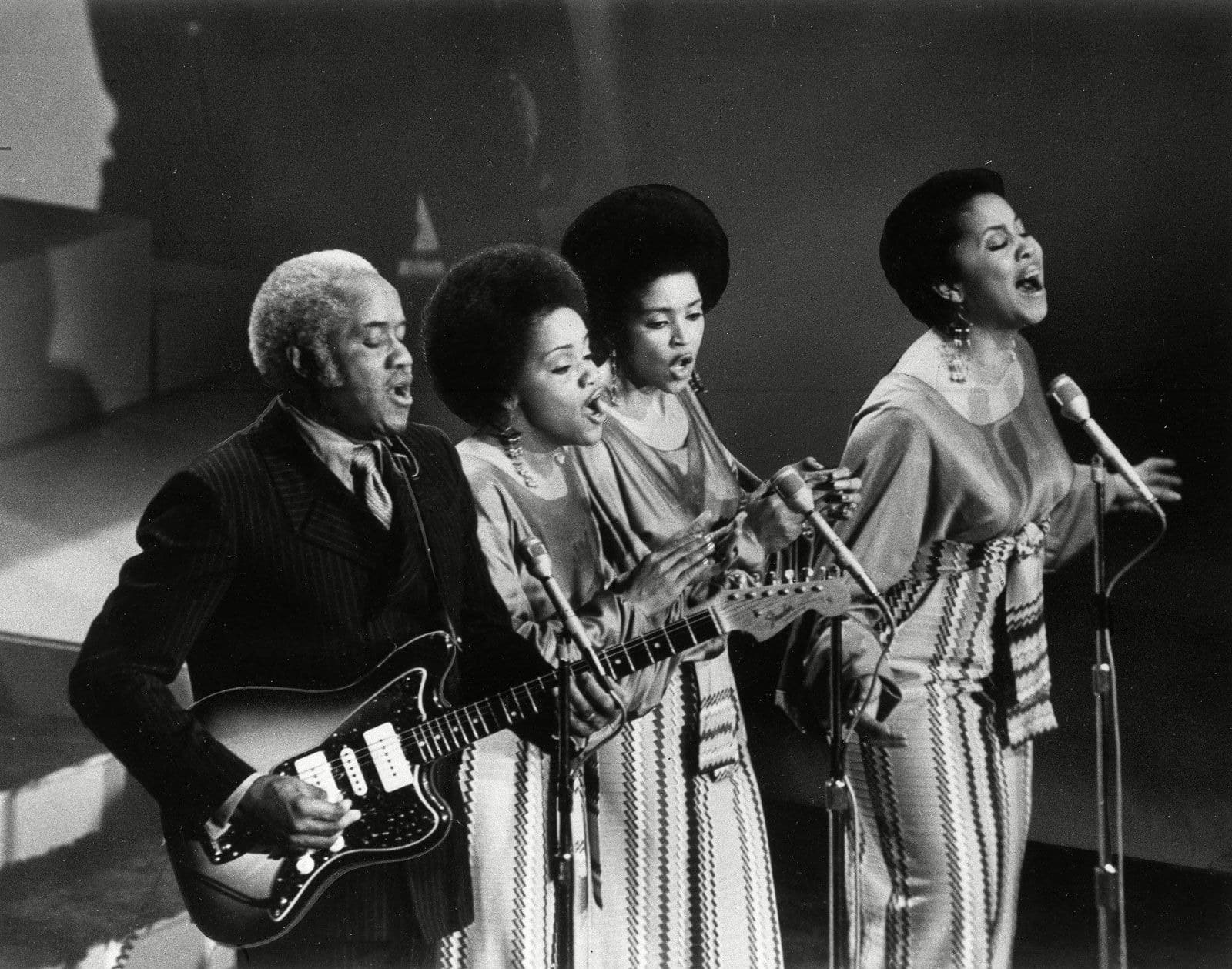
The Staple Singers were a renowned gospel, soul, and R&B family band originating from Chicago, Illinois. Led by patriarch Roebuck “Pops” Staples and featuring his children Cleotha, Pervis, Yvonne, and Mavis, the group emerged in the 1950s and became influential figures in the music industry.
Known for their unique blend of gospel, soul, and socially conscious music, The Staple Singers infused their songs with powerful messages of civil rights, empowerment, and spirituality. Their distinct sound, characterized by Pops Staples’ soulful guitar playing and the family’s harmonious vocals, garnered widespread acclaim and popularity.
In the 1960s and ’70s, the group transitioned from primarily gospel music to soul and R&B, achieving commercial success with hits like “Respect Yourself,” “I’ll Take You There,” and “Let’s Do It Again.” Their music often carried messages of empowerment, social change, and positivity, earning them a reputation as a group that not only entertained but also uplifted and inspired listeners.
The Staple Singers’ contributions to music and their impact on social causes, particularly during the civil rights movement, solidified their legacy as trailblazers in both the music industry and the fight for equality and justice. Their harmonious blend of soulful melodies and socially conscious lyrics continues to resonate and influence musicians across genres to this day.
1. I’ll Take You There
“I’ll Take You There” is a soulful and uplifting song by The Staple Singers, released in 1972. The track became one of the group’s signature hits and is celebrated for its infectious groove and empowering lyrics.
Lyrically, “I’ll Take You There” conveys a message of hope, unity, and perseverance. The song’s lyrics evoke feelings of joy and promise, promising to lead listeners to a place of happiness and peace, a metaphorical “there” that represents a better, more harmonious world.
Musically, the song features a distinctive and irresistible groove, driven by a funky bassline and a catchy chorus. The Staple Singers’ harmonious vocals, led by Mavis Staples’ powerful voice, add depth and soulfulness to the track, creating an uplifting and anthemic feel.
“I’ll Take You There” became a massive hit for The Staple Singers, topping the charts and earning critical acclaim for its infectious rhythm and positive message. Its blend of gospel, soul, and R&B elements resonated with audiences, making it a timeless anthem of empowerment and unity.
The song’s enduring popularity and its ability to uplift and inspire have solidified “I’ll Take You There” as a classic in the realm of soul and R&B music, continuing to resonate with listeners across generations.
2. Respect Yourself
“Respect Yourself” is a soulful and socially conscious song by The Staple Singers, released in 1971. The track is celebrated for its empowering message and infectious rhythm.
Lyrically, “Respect Yourself” conveys a message of self-empowerment and dignity. The song encourages self-respect, urging individuals to take pride in themselves and to uphold their worth, despite societal challenges or pressures. It also carries a message of social awareness, advocating for equality and reminding listeners to demand respect from others.
Musically, the song features a catchy and upbeat melody, characterized by its soulful groove and vibrant horns. The Staple Singers’ distinctive harmonies, coupled with Mavis Staples’ powerful vocals, infuse the track with soulful energy, making it both a compelling anthem and a danceable tune.
“Respect Yourself” became a significant hit for The Staple Singers, resonating with audiences and receiving critical acclaim for its catchy hooks and socially conscious message. The song’s impact extended beyond the music charts, becoming an anthem for self-empowerment and social change during a transformative era in American history.
Its timeless message of self-worth, paired with its infectious rhythm and soulful delivery, solidified “Respect Yourself” as a classic in the realm of soul and R&B music, leaving a lasting legacy as an empowering and socially relevant song.
3. Slippery People
4. Touch A Hand, Make A Friend
5. Oh La De Da
“Oh La De Da” is a song by The Staple Singers, released in 1973 as part of their album “Be What You Are.” The track reflects the group’s signature blend of gospel, soul, and R&B.
Lyrically, “Oh La De Da” carries a carefree and joyful message. The song celebrates life’s simple pleasures and encourages listeners to embrace positivity, enjoy the moment, and not worry about the challenges that may come their way. Its lyrics convey a sense of light-heartedness and freedom, urging people to let go of worries and just enjoy the ride.
Musically, the song features a lively and upbeat tempo, characterized by its infectious rhythm and the Staple Singers’ soulful harmonies. The track’s vibrant instrumentation, including rhythmic guitar and spirited vocals, creates an energetic and joyful atmosphere that invites listeners to dance and have a good time.
While “Oh La De Da” might not be as well-known as some of The Staple Singers’ other hits, it embodies the group’s ability to infuse positivity and joy into their music. The song’s carefree spirit and uplifting melody showcase the group’s versatility and their knack for creating soulful, feel-good tunes.
6. This World
7. Heavy Makes You Happy (Sha-Na-Boom Boom)
“Heavy Makes You Happy (Sha-Na-Boom Boom)” is a soulful and energetic song by The Staple Singers. It was released as a single in 1971 and is featured on their album “The Staple Swingers.”
The Staple Singers, known for their unique blend of gospel, soul, and R&B, delivered this song with their signature style. “Heavy Makes You Happy” features a lively and infectious groove, complemented by Mavis Staples’ powerful and soulful vocals. The song’s lyrics express the joy and liberation that music, particularly “heavy” or intense music, can bring.
The Staple Singers, led by patriarch Roebuck “Pops” Staples and featuring vocalists like Mavis Staples, were not only celebrated for their musical talent but also for their socially conscious lyrics. Their music often carried messages of hope, empowerment, and social justice.
“Heavy Makes You Happy (Sha-Na-Boom Boom)” is a notable example of The Staple Singers’ ability to infuse positive and uplifting messages into their soulful sound. The song remains a classic within their discography and a testament to the enduring appeal of their music.
8. If You’re Ready (Come Go With Me)
“If You’re Ready (Come Go with Me)” is a soulful and spirited song by The Staple Singers, released in 1973 as part of their album “Be What You Are.” The track is recognized for its infectious groove and empowering lyrics.
Lyrically, “If You’re Ready (Come Go with Me)” carries a message of encouragement and unity. The song emphasizes readiness for change, inviting listeners to embrace positivity, stand together, and take action for a better future. It champions solidarity, urging individuals to join together and make progress collectively.
Musically, the song features a dynamic and funky rhythm, characterized by its vibrant instrumentation and the Staple Singers’ soulful vocals. The track’s spirited energy, backed by a lively groove and powerful harmonies, creates an uplifting and empowering vibe that resonates with listeners.
“If You’re Ready (Come Go with Me)” became a notable hit for The Staple Singers, receiving acclaim for its catchy hooks and socially conscious message. The song’s blend of soul, R&B, and gospel elements showcased the group’s musical versatility while delivering a powerful call for unity and empowerment.
Its infectious rhythm, coupled with its empowering lyrics, solidified “If You’re Ready (Come Go with Me)” as a standout track in The Staple Singers’ repertoire, inspiring audiences with its message of unity and readiness for positive change.
9. City in the Sky
“City in the Sky” is a soulful track by The Staple Singers, featured on their album “Be What You Are,” released in 1973. The song showcases the group’s unique blend of gospel-infused soul and R&B.
Lyrically, “City in the Sky” explores spiritual themes and imagines a place of peace and harmony beyond the earthly realm. The song’s lyrics evoke imagery of a celestial city, a metaphor for a utopian world or a heavenly existence where there is love, unity, and spiritual fulfillment.
Musically, the track features a serene and soulful melody, complemented by the Staple Singers’ powerful harmonies and emotive vocals. The song’s gentle tempo and lush instrumentation create a reflective and tranquil atmosphere, inviting listeners on a soul-stirring journey through its celestial imagery.
While “City in the Sky” may not have been one of The Staple Singers’ chart-topping hits, its soulful and contemplative nature makes it a standout track in their discography. The song’s spiritual themes, paired with the group’s heartfelt delivery, resonate with audiences seeking a sense of hope and tranquility.
“City in the Sky” serves as a testament to The Staple Singers’ ability to infuse their music with spirituality and soul, creating a serene and uplifting listening experience that transcends earthly boundaries.
10. Let’s Do It Again
“Let’s Do It Again” is a soul and funk song performed by The Staple Singers. It was written and produced by Curtis Mayfield and served as the title track for the soundtrack of the 1975 film “Let’s Do It Again,” which starred Sidney Poitier, Bill Cosby, and Calvin Lockhart.
The song itself became a major hit for The Staple Singers, reaching the number one spot on the Billboard Hot 100 in 1975. Its smooth and infectious groove, coupled with Mavis Staples’ soulful vocals, contributed to its widespread popularity.
“Let’s Do It Again” is characterized by its romantic and positive lyrics, reflecting the themes of love and togetherness. The song’s success marked another achievement for The Staple Singers and further solidified their reputation as one of the prominent soul and gospel groups of the era.
The soundtrack and the song itself remain notable contributions to the musical landscape of the 1970s, showcasing the intersection of soul, funk, and R&B in that era. The Staple Singers’ ability to blend their gospel roots with contemporary sounds was a key element in the success of “Let’s Do It Again.”

Edward Tomlin is a frequent contributor to Singers Room. Since 2005, Singersroom has been the voice of R&B around the world. Connect with us via social media below.









