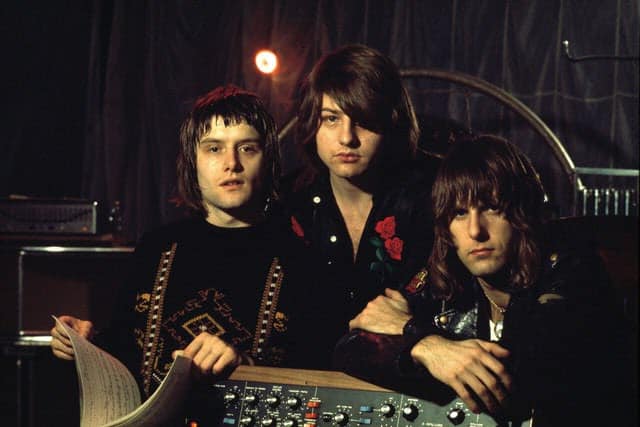
In the kaleidoscopic landscape of progressive rock, few bands have left an indelible mark as profound as Emerson, Lake & Palmer (ELP). With their virtuosic musicianship, innovative compositions, and avant-garde approach, ELP carved a niche that resonated across generations. This article embarks on a sonic journey to explore the timeless brilliance of the “Top 10 Best Emerson Lake And Palmer Songs of All Time.” From the groundbreaking synthesis of Keith Emerson’s keyboard wizardry to the melodic elegance of Greg Lake’s vocals and the percussive prowess of Carl Palmer, ELP’s discography is a treasure trove of musical ingenuity. Each track represents a chapter in the band’s evolutionary tale, showcasing their ability to seamlessly blend classical influences with rock, jazz, and electronic elements. As we traverse this musical odyssey, we’ll delve into the intricate arrangements, poetic lyrics, and enduring legacy that make these songs not just compositions but sonic masterpieces. Join us in celebrating the sonic alchemy of ELP as we unveil the crème de la crème of their discography, a testament to their enduring impact on the world of progressive rock.
1. Lucky Man
Embodying the ethereal essence of progressive rock, “Lucky Man” by Emerson, Lake & Palmer is a sonic tapestry that weaves intricate storytelling with lush instrumentation. Released in the early ’70s, the song is a journey through celestial landscapes, marked by Greg Lake’s emotive vocals and a poignant Moog synthesizer solo by Keith Emerson. The lyrics, exploring the capriciousness of life, resonate with a timeless wisdom, while the iconic synthesizer riff remains etched in the annals of rock history.
2. From the Beginning
A masterpiece of acoustic elegance, “From the Beginning” invites listeners into a sonic haven crafted by the virtuosic trio of Emerson, Lake & Palmer. Released in 1972, the song unfolds like a musical tapestry, with Greg Lake’s introspective vocals accompanied by acoustic guitar and Emerson’s signature synthesizer wizardry. Its lyrics delve into the complexities of love and self-discovery, resonating across generations. The song’s dynamic shifts and poetic lyricism showcase the band’s ability to seamlessly blend classical influences with rock, solidifying its place as a timeless classic.
3. Fanfare for the Common Man
A triumphant anthem celebrating the resilience of the human spirit, Aaron Copland’s “Fanfare for the Common Man” transcends its classical roots. Adapted into a progressive rock gem by Emerson, Lake & Palmer in 1977, the piece is a sonic tour de force. The band transforms Copland’s brass-driven composition into a keyboard-driven spectacle, infusing it with rock energy while retaining its grandeur. A musical tribute to the everyday hero, “Fanfare for the Common Man” captivates with its soaring melodies and dynamic arrangements.
4. Karn Evil 9
A magnum opus of progressive rock, “Karn Evil 9” is a multi-part epic that showcases Emerson, Lake & Palmer’s prowess in composition and performance. Released in 1973, the song’s dystopian narrative unfolds over three movements, featuring complex instrumentation, intricate lyrics, and Keith Emerson’s keyboard virtuosity. From the ominous “Welcome back my friends, to the show that never ends” to the frenetic synthesizer solos, the piece immerses listeners in a sonic journey that explores the intersection of man and machine.
5. Take a Pebble
A tranquil voyage through musical landscapes, “Take a Pebble” by Emerson, Lake & Palmer is a poetic exploration of introspection. Released in 1970, the song begins with Greg Lake’s gentle vocals accompanied by a delicate piano melody, gradually building into a tapestry of acoustic beauty. Keith Emerson’s masterful piano and Moog synthesizer work, coupled with Carl Palmer’s precise percussion, create a serene yet dynamic atmosphere. The composition’s multifaceted structure, including a serene ballad and a jazz-influenced interlude, showcases the band’s versatility and sets “Take a Pebble” apart as a timeless piece of progressive rock artistry.
6. Still…You Turn Me On
Emerson, Lake & Palmer’s “Still…You Turn Me On” is a delicate ballad that showcases the band’s ability to balance grandiosity with intimacy. Released in 1973, the song features Greg Lake’s soulful vocals accompanied by acoustic guitar and subtle percussion. The lyrics, a poignant expression of love’s vulnerability, are complemented by Keith Emerson’s sensitive piano work. The song’s simplicity and emotional depth make it a standout in the band’s repertoire, offering a respite from their more complex and progressive compositions.
7. C’est La Vie
An exquisite blend of folk-inspired melodies and progressive rock finesse, “C’est La Vie” is a gem from Emerson, Lake & Palmer’s repertoire. Released in 1977, the song is driven by acoustic guitar and features Greg Lake’s evocative vocals. The lyrics, sung in both English and French, add a romantic and cosmopolitan flair to the composition. With its graceful orchestration and melodic charm, “C’est La Vie” stands as a testament to the band’s ability to traverse diverse musical landscapes.
8. Knife-Edge
A dynamic and powerful piece from the early days of Emerson, Lake & Palmer, “Knife-Edge” is a rock tour de force. Released in 1970, the song kicks off with a dramatic classical riff before diving into a whirlwind of Keith Emerson’s virtuosic Hammond organ and synthesizer solos. Greg Lake’s commanding vocals and Carl Palmer’s precise drumming contribute to the song’s intensity. “Knife-Edge” exemplifies the band’s fusion of classical and rock elements, setting the stage for their later progressive epics.
9. Tarkus
A progressive rock epic, “Tarkus” is a tour de force of musical innovation and complexity. Released in 1971, the titular track spans multiple movements, each representing a different facet of the mythical creature Tarkus. Keith Emerson’s synthesizer wizardry, Greg Lake’s commanding vocals, and Carl Palmer’s intricate drumming converge to create a sonic odyssey. “Tarkus” is a prime example of Emerson, Lake & Palmer’s ambitious and groundbreaking approach to rock music, pushing the boundaries of the genre.
10. Hoedown
Emerson, Lake & Palmer’s rendition of Aaron Copland’s “Hoedown” is a high-energy fusion of classical and rock influences. Featured on their 1972 album “Trilogy,” the song transforms Copland’s original orchestral piece into a lively and rhythmic showcase. Keith Emerson’s dazzling synthesizer and organ work, coupled with Carl Palmer’s dynamic percussion, infuse the composition with a sense of urgency and excitement. “Hoedown” is a testament to the band’s ability to reimagine classical works in a rock context, creating a piece that is both technically impressive and irresistibly energetic.

Samuel Moore is a frequent contributor to Singers Room. Since 2005, Singersroom has been the voice of R&B around the world. Connect with us via social media below.









