
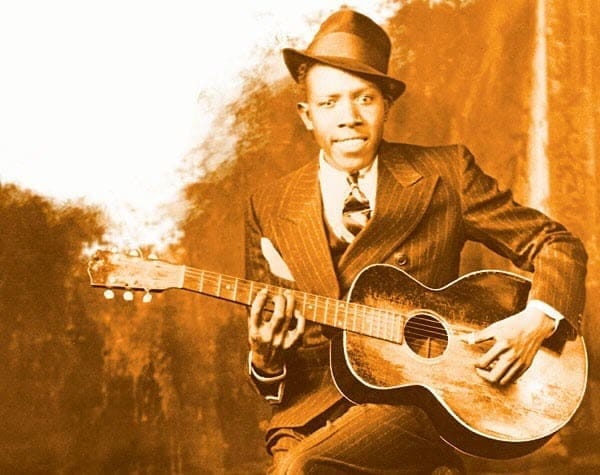
Robert Johnson, often hailed as the “King of the Delta Blues,” was a legendary American blues musician whose influence on the genre and subsequent generations of musicians is immeasurable. Born on May 8, 1911, in Hazlehurst, Mississippi, and tragically passing away at the young age of 27, Johnson’s life and music remain shrouded in myth and mystery.
Johnson’s contribution to the blues genre is profound. His haunting guitar playing and soulful, emotive vocals defined the Delta blues style. His songs, like “Cross Road Blues,” “Sweet Home Chicago,” and “Love in Vain,” are enduring classics that continue to resonate with music lovers around the world.
What sets Johnson apart is not just his technical skill but the legend that surrounds his life. The story of his supposed pact with the devil at a Mississippi crossroads in exchange for musical prowess has become an integral part of his mythology. While the truth of this story remains elusive, it adds to the mystique that surrounds his music.
Johnson’s influence can be heard in the work of countless blues and rock artists who came after him, including Eric Clapton, Keith Richards, and Jimi Hendrix. His impact on the evolution of blues and the development of rock ‘n’ roll is undeniable.
Despite his tragically brief life, Robert Johnson’s legacy endures as a testament to the power of music to transcend time and place. His haunting and emotionally charged songs continue to captivate new generations, ensuring that his status as a true blues icon will never fade.
1. “Cross Road Blues”
“Cross Road Blues” is a seminal blues composition by Robert Johnson, one of the most influential figures in the history of blues music. Recorded in 1936, this song has become a cornerstone of the Delta blues genre and has left an indelible mark on the world of music.
Lyrically, “Cross Road Blues” explores themes of despair and a sense of being at a crossroads in life. Johnson’s haunting lyrics convey a feeling of loneliness and desperation, as he sings about trying to catch a ride to escape his troubles. The crossroads in the song’s title are often associated with the mythical crossroads where Johnson is said to have made a pact with the devil in exchange for his extraordinary musical talents.
Musically, the song is characterized by Johnson’s virtuosic fingerpicking guitar style, which has influenced generations of guitarists. The mournful slide guitar and Johnson’s soulful vocals add depth and emotion to the track.
“Cross Road Blues” stands as a testament to Johnson’s ability to convey profound emotion through his music. Its enduring popularity and impact on subsequent generations of musicians highlight its significance in the blues canon.
2. “Sweet Home Chicago”
“Sweet Home Chicago” is a blues standard that has become synonymous with the genre itself. Although it has been performed by countless artists, it was originally penned and popularized by Robert Johnson in 1936.
Lyrically, the song is a heartfelt plea to return to the familiar comforts of Chicago, a place where the narrator feels at home. The lyrics paint a vivid picture of a longing traveler, expressing a desire to leave the troubles behind and reunite with loved ones. Lines like “Baby, don’t you want to go? Back to that same old place, my sweet home Chicago” resonate with listeners who can relate to the yearning for home.
Musically, “Sweet Home Chicago” is characterized by its infectious and upbeat rhythm, featuring Johnson’s energetic guitar playing and spirited vocals. The song’s catchy melody and call-and-response structure have made it a favorite among blues musicians and enthusiasts alike.
“Sweet Home Chicago” has become an anthem for the city and a beloved classic in the blues genre. Its enduring popularity and adaptability demonstrate its timeless appeal, making it a song that continues to be celebrated and cherished by musicians and audiences worldwide.
3. “Love in Vain”
“Love in Vain” is a haunting and emotionally charged blues ballad by Robert Johnson, recorded in 1937. This song is a testament to Johnson’s ability to convey heartache and melancholy through his music.
Lyrically, “Love in Vain” tells the story of a love lost and the pain of rejection. The lyrics express a sense of abandonment and sorrow as the narrator reflects on the end of a once-promising relationship. Lines like “And the woman I love, took from my best friend” evoke feelings of betrayal and heartbreak.
Musically, the song features Johnson’s exquisite fingerpicking guitar style and mournful slide guitar. His vocals are filled with a deep sense of longing and vulnerability, adding to the song’s emotional depth.
“Love in Vain” is a soulful and deeply moving song that resonates with anyone who has experienced the pain of unrequited love. Johnson’s ability to channel his emotions into his music makes this track a standout in his catalog and a classic in the blues genre. It continues to captivate listeners with its timeless portrayal of heartache and loss.
4. “Hellhound on My Trail”
“Hellhound on My Trail” is a haunting and evocative blues masterpiece by Robert Johnson. Recorded in 1937, this song showcases Johnson’s ability to convey a sense of foreboding and existential turmoil through his music.
Lyrically, the song paints a vivid picture of a narrator pursued by an ominous, supernatural presence—the “hellhound.” The lyrics convey a feeling of relentless pursuit and impending doom, with lines like “Hellhound on my trail, all I do is keep on runnin’.” The song’s sense of desperation and existential unease has resonated with generations of listeners.
Musically, “Hellhound on My Trail” features Johnson’s intricate guitar work and soulful vocals. His guitar playing, characterized by intricate fingerpicking and slide guitar, adds to the song’s eerie and unsettling atmosphere.
The song’s enduring appeal lies in its ability to tap into universal themes of fear, mortality, and the inevitability of fate. “Hellhound on My Trail” is a testament to Johnson’s mastery of the Delta blues style and his ability to convey complex emotions through his music. It remains a haunting and enigmatic classic in the blues genre.
5. “I Believe I’ll Dust My Broom”
“I Believe I’ll Dust My Broom” is a classic blues song by Robert Johnson, recorded in 1936. This track is characterized by its upbeat tempo and lively guitar work, making it a favorite among blues enthusiasts.
Lyrically, the song tells the story of a narrator who is ready to move on from a troubled relationship. The lyrics convey a sense of empowerment and determination, with lines like “I’m gonna write a letter, telephone every town I know” and “I’m gettin’ up soon in the mornin’, I believe I’ll dust my broom.” The act of “dusting one’s broom” is a metaphor for leaving behind the past and starting anew.
Musically, “I Believe I’ll Dust My Broom” features Johnson’s signature guitar style, with lively fingerpicking and slide guitar that gives the song its infectious rhythm. Johnson’s energetic vocals add to the song’s sense of determination and resolve.
The song’s enduring popularity lies in its spirited and optimistic tone, which stands in contrast to some of Johnson’s more melancholic compositions. “I Believe I’ll Dust My Broom” is a lively and uplifting blues classic that continues to bring joy and energy to audiences.
6. “Come On in My Kitchen”
“Come On in My Kitchen” is a blues gem by Robert Johnson, recorded in 1936. This song showcases Johnson’s intricate guitar work and lyrical storytelling prowess.
Lyrically, the song is an invitation from the narrator to a visitor to enter his kitchen, a metaphorical space where they can share their troubles and sorrows. The lyrics convey a sense of openness and empathy, with lines like “You better come on in my kitchen, ’cause it’s goin’ to be rainin’ outdoors” and “It’s goin’ to be rainin’ outdoors, and the woman I love, took from my best friend.”
Musically, “Come On in My Kitchen” features Johnson’s virtuosic guitar playing, characterized by intricate fingerpicking and slide guitar. His vocals are soulful and expressive, adding depth to the song’s emotional resonance.
The song’s enduring appeal lies in its ability to create a sense of intimacy and connection between the artist and the listener. “Come On in My Kitchen” is a blues classic that continues to captivate audiences with its heartfelt storytelling and exceptional guitar artistry.
7. “Stop Breakin’ Down Blues”
“Stop Breakin’ Down Blues” is a classic blues track by Robert Johnson, recorded in 1937. This song showcases Johnson’s signature guitar style and lyrical prowess.
Lyrically, the song conveys a sense of frustration and longing for a lover to stop mistreating the narrator. The lyrics express a desire for the mistreatment to end, with lines like “Stop breakin’ down; please, stop breakin’ down” and “You’re breakin’ my life; I’m ’bout to lose my mind.” The song captures the raw emotion and turmoil of a tumultuous relationship.
Musically, “Stop Breakin’ Down Blues” features Johnson’s virtuosic guitar playing, characterized by intricate fingerpicking and a compelling rhythm. His vocals are filled with urgency and passion, adding to the song’s emotional intensity.
The song’s enduring appeal lies in its ability to convey the pain and complexity of human relationships through music. “Stop Breakin’ Down Blues” is a timeless blues classic that continues to resonate with listeners who can relate to the ups and downs of love and heartache.
8. “Terraplane Blues”
“Terraplane Blues” is a lively and metaphorical blues song by Robert Johnson, recorded in 1936. This track is notable for its playful and suggestive lyrics.
Lyrically, the song uses automobile and road metaphors to describe a romantic relationship. The “Terraplane” in the title refers to a popular car model of the time, and Johnson cleverly uses it as a metaphor for a desirable woman. Lines like “And I feel so lonesome, you hear me when I moan” and “I’m gonna get deep down in this connection” playfully allude to both the car and the romantic pursuit.
Musically, “Terraplane Blues” features Johnson’s spirited guitar playing and dynamic vocals. The song’s upbeat tempo and catchy melody make it a favorite among blues enthusiasts.
The song’s enduring appeal lies in its ability to blend clever wordplay with a sense of humor and sensuality. “Terraplane Blues” is a testament to Johnson’s storytelling skills and his ability to infuse his music with double entendre and charm.
9. “Walkin’ Blues”
“Walkin’ Blues” is a classic blues track by Robert Johnson, recorded in 1936. This song is characterized by its intricate guitar work and expressive vocals.
Lyrically, the song conveys a sense of restlessness and a desire to keep moving, which is reflected in the lyrics: “Woke up this morning, feel ’round for my shoes; You know ’bout that babe, had them old walkin’ blues.” The narrator expresses a need to keep moving and leaving behind troubles and heartache.
Musically, “Walkin’ Blues” features Johnson’s nimble fingerpicking and slide guitar playing. His vocals are soulful and filled with emotion, conveying the restlessness and wanderlust described in the lyrics.
The song’s enduring appeal lies in its universal themes of travel and the blues, which resonate with anyone who has felt the urge to hit the road in search of solace or adventure. “Walkin’ Blues” is a timeless blues classic that captures the essence of the genre and Johnson’s ability to convey deep emotions through his music.
10. “Kind Hearted Woman Blues”
“Kind Hearted Woman Blues” is a classic blues song by Robert Johnson, recorded in 1936. This track showcases Johnson’s exceptional guitar skills and storytelling ability.
Lyrically, the song tells the story of a kind-hearted woman who is causing the narrator to sing the blues. The lyrics express a sense of longing and admiration for this woman, with lines like “She’s a kind-hearted woman; she studies evil all the time” and “She’s a good-hearted woman, but she got an evil mind.” The song captures the complexity of human relationships and emotions.
Musically, “Kind Hearted Woman Blues” features Johnson’s intricate fingerpicking and slide guitar work. His vocals are soulful and filled with yearning, adding depth to the song’s emotional resonance.
The song’s enduring appeal lies in its ability to convey the timeless themes of love, desire, and the human condition through the blues. “Kind Hearted Woman Blues” is a classic example of Johnson’s storytelling prowess and his ability to connect with listeners on a deeply emotional level.

David Morrison is a frequent contributor to Singers Room. Since 2005, Singersroom has been the voice of R&B around the world. Connect with us via social media below.









