
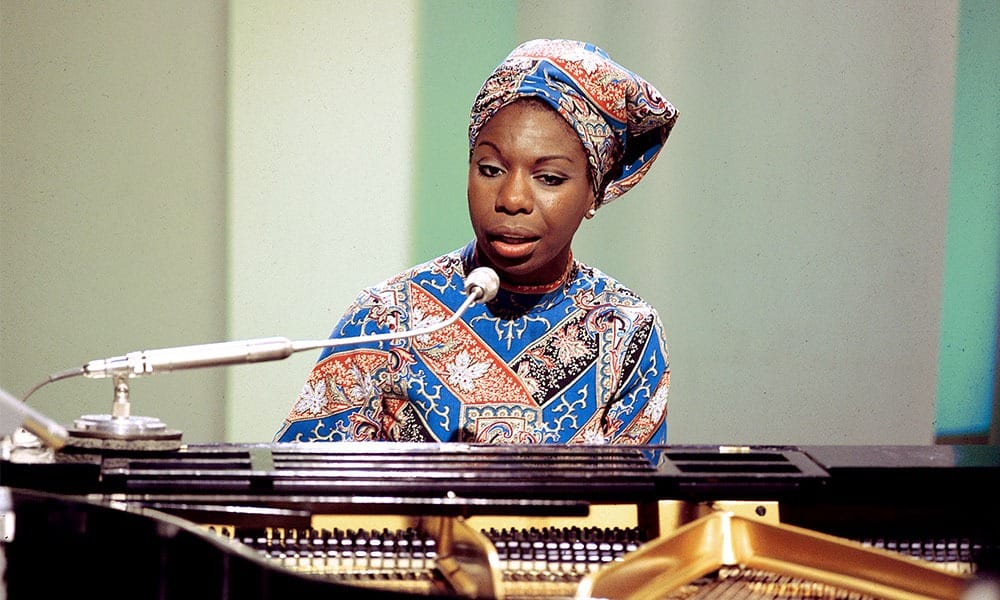
Nina Simone, born Eunice Kathleen Waymon on February 21, 1933, in Tryon, North Carolina, was a singular and influential figure in the world of music. She was a multi-talented artist, renowned as a singer, pianist, songwriter, and civil rights activist. Her remarkable career spanned several decades, leaving an indelible mark on the realms of jazz, blues, soul, and civil rights advocacy.
Simone’s distinct voice was a commanding force that could convey a wide range of emotions, from deep sorrow to unabashed passion. Her repertoire included jazz standards, blues classics, and original compositions that often tackled issues of race, discrimination, and social justice. Songs like “Strange Fruit” and “Mississippi Goddam” became anthems of the civil rights movement, reflecting the struggles and aspirations of African Americans in the 1960s.
As a pianist, Simone’s virtuosity was equally remarkable, combining classical technique with the improvisational spirit of jazz. Her performances were often a mesmerizing blend of musical prowess and emotional intensity.
Throughout her life, Nina Simone used her platform to champion civil rights and social justice causes, even at the expense of her own career. Her activism, powerful music, and unwavering dedication to fighting injustice have made her a beloved and respected figure in both the music world and the broader struggle for civil rights.
Nina Simone’s legacy endures not only through her timeless music but also as a symbol of artistic integrity and a fearless advocate for equality and justice. Her impact on the world of music and her contributions to the civil rights movement continue to inspire generations of artists and activists.
1. “Feeling Good”
“Feeling Good” is a timeless and uplifting song that exudes positivity and empowerment. Originally written by Anthony Newley and Leslie Bricusse for the musical “The Roar of the Greasepaint – The Smell of the Crowd,” Nina Simone’s rendition has become the definitive version.
The song’s lyrics convey a sense of renewal and awakening, as the narrator declares their newfound sense of freedom and happiness. Lines like “It’s a new dawn, it’s a new day, it’s a new life for me, and I’m feeling good” capture the essence of embracing life’s possibilities.
Nina Simone’s interpretation of “Feeling Good” is nothing short of spectacular. Her rich, soulful voice, accompanied by a dramatic and jazzy arrangement, adds depth and emotion to the song. The way she delivers the lyrics makes you feel like you’re experiencing a personal transformation alongside her.
“Feeling Good” has transcended generations and genres, becoming an anthem of optimism and self-affirmation. It’s a song that can lift your spirits and make you believe in the boundless potential of a new day.
2. “I Put a Spell on You”
“I Put a Spell on You” is a sultry and bewitching song that has captivated audiences for decades. Originally penned by Jalacy “Screamin’ Jay” Hawkins, Nina Simone’s rendition adds her own unique touch to this classic.
The song is a passionate declaration of love and desire, with lyrics that suggest the power of attraction and enchantment. The narrator sings of putting a spell on someone to make them fall in love, and the song’s haunting melody and delivery intensify the sense of longing and seduction.
Nina Simone’s interpretation of “I Put a Spell on You” is a tour de force. Her deep, resonant voice conveys a sense of urgency and sensuality that is impossible to ignore. The song is characterized by its smoky, bluesy arrangement and a vocal performance that oozes with charisma and intensity.
“I Put a Spell on You” has become one of Nina Simone’s signature songs, a testament to her ability to infuse music with raw emotion and seductive allure. It’s a song that has stood the test of time, remaining as enchanting and seductive as the day it was recorded.
3. “My Baby Just Cares for Me”
“My Baby Just Cares for Me” is a delightful and playful jazz standard that showcases Nina Simone’s versatility as an artist. Written by Gus Kahn and Walter Donaldson, the song exudes a timeless charm and sophistication.
The lyrics of the song describe the narrator’s amazement at how their partner’s affections are unwavering, even in the face of material wealth and fame. It’s a celebration of love that transcends material possessions, and the playful tone of the song adds to its charm.
Nina Simone’s rendition of “My Baby Just Cares for Me” is a true gem. Her velvet-smooth voice and impeccable phrasing breathe new life into the classic tune. The arrangement features a lively piano melody and jazzy instrumentation that perfectly complements the song’s joyful spirit.
The song gained renewed popularity when it was used in a 1987 Chanel No. 5 perfume commercial, introducing a new generation to Nina Simone’s timeless artistry.
“My Baby Just Cares for Me” remains a beloved standard in the world of jazz and showcases Nina Simone’s ability to capture the essence of a song with her unmatched vocal prowess and charisma. It’s a song that continues to bring smiles and joy to listeners of all ages.
4. “Sinnerman”
“Sinnerman” is a captivating and spiritually charged song that has become one of Nina Simone’s most iconic and celebrated compositions. The song’s origins can be traced back to traditional African American spirituals, and Nina Simone’s rendition is a tour de force of her vocal and musical prowess.
Lyrically, “Sinnerman” addresses themes of redemption, repentance, and the human struggle with sin and salvation. The song’s narrator urgently calls on “Sinnerman” to hide them from divine judgment, creating a sense of desperation and the need for spiritual deliverance.
What truly sets Nina Simone’s version of “Sinnerman” apart is its mesmerizing and dynamic arrangement. The song evolves over its nearly ten-minute duration, starting with Nina’s powerful vocals and piano, gradually building with added instrumentation, including percussion and a gospel choir. The arrangement creates an intense and immersive listening experience that escalates into a breathtaking climax.
The song’s repetitive yet hypnotic refrain of “Power, Lord” and its rhythmic intensity make it a standout in Nina Simone’s repertoire. “Sinnerman” has also been sampled and covered by various artists over the years, attesting to its enduring influence on music.
5. “Don’t Let Me Be Misunderstood”
“Don’t Let Me Be Misunderstood” is a poignant and introspective song that addresses the complexities of communication and understanding in relationships. Written by Bennie Benjamin, Gloria Caldwell, and Sol Marcus, Nina Simone’s rendition of the song is a masterful exploration of vulnerability and emotion.
Lyrically, the song expresses the fear of being misunderstood and the desire for empathy and acceptance. The narrator seeks reassurance that their intentions are genuine and that their actions are not misinterpreted. The lyrics are a heartfelt plea for empathy and connection.
Nina Simone’s rendition of “Don’t Let Me Be Misunderstood” is characterized by its soulful and emotive vocal performance. Her voice conveys a sense of raw vulnerability and sincerity, drawing listeners into the emotional core of the song. The arrangement features lush orchestration that enhances the song’s dramatic impact.
The chorus, with Simone passionately singing “Don’t let me be misunderstood,” is a powerful and memorable moment. It’s a song that speaks to the universal desire for understanding and acceptance in the face of miscommunication and misjudgment.
“Don’t Let Me Be Misunderstood” has been covered by various artists over the years, but Nina Simone’s rendition remains the definitive version. Her ability to infuse the song with depth and emotion has made it a timeless classic that continues to resonate with listeners.
6. “To Be Young, Gifted and Black”
“To Be Young, Gifted and Black” is a powerful and anthemic song that has become an enduring anthem of empowerment and civil rights. Written by Nina Simone herself, along with Weldon Irvine, the song is a celebration of Black identity and a call to embrace one’s gifts and potential.
Lyrically, the song asserts the pride and strength that come from being young, gifted, and Black. It emphasizes the importance of recognizing and nurturing one’s talents and heritage. The lyrics are a testament to resilience and the determination to overcome adversity.
Nina Simone’s rendition of “To Be Young, Gifted and Black” is characterized by her impassioned vocal delivery. Her voice exudes confidence and conviction, making the song an empowering and uplifting experience. The arrangement features a soulful and gospel-inspired sound that complements the song’s message of unity and self-empowerment.
The chorus, with Simone singing “To be young, gifted, and Black, oh, what a lovely precious dream,” is an affirmation of the beauty and potential inherent in Black identity. The song became an anthem of the civil rights movement and a source of inspiration for generations.
“To Be Young, Gifted and Black” stands as a testament to Nina Simone’s role as both an artist and an activist. It remains a timeless anthem that continues to resonate with individuals and communities seeking empowerment and recognition of their unique gifts and heritage.
7. “Mississippi Goddam”
“Mississippi Goddam” is a fearless and unapologetic protest song by Nina Simone that emerged during the heart of the civil rights movement in the 1960s. Written in response to the 1963 assassination of civil rights activist Medgar Evers and the bombing of the 16th Street Baptist Church in Birmingham, Alabama, the song is a powerful and confrontational call for justice.
Lyrically, “Mississippi Goddam” addresses the racial violence and injustice prevalent in the American South at the time. The title itself is a provocative expression of the frustration and anger felt by Black Americans in the face of systemic racism. The lyrics directly confront the racism and discrimination of the era, demanding change and action.
Nina Simone’s rendition of “Mississippi Goddam” is a searing and impassioned vocal performance. Her voice carries the weight of the song’s message, alternating between sorrow, anger, and determination. The song’s arrangement combines elements of gospel, jazz, and protest music, creating a sonic backdrop that intensifies its impact.
The chorus, with Simone passionately singing “Alabama’s got me so upset, Tennessee made me lose my rest, and everybody knows about Mississippi Goddam,” has become an iconic rallying cry against racial injustice.
“Mississippi Goddam” remains a powerful and relevant song that serves as a reminder of the ongoing struggle for civil rights and equality. It’s a testament to Nina Simone’s role as a fearless artist and activist who used her music to speak truth to power.
8. “Ain’t Got No, I Got Life”
“Ain’t Got No, I Got Life” is a soulful and affirming song that encapsulates the resilience of the human spirit. Originally written for the musical “Hair” by Gerome Ragni, James Rado, and Galt MacDermot, Nina Simone’s rendition adds her own unique flair and emotional depth.
Lyrically, the song contrasts the negative aspects of life, represented by “ain’t got no,” with the positive and life-affirming elements, represented by “got life.” The lyrics convey a sense of gratitude and celebration for the simple joys and essentials of life, emphasizing the power of resilience and the ability to find contentment amidst adversity.
Nina Simone’s interpretation of “Ain’t Got No, I Got Life” is characterized by her rich and emotive vocal delivery. Her voice exudes a sense of exuberance and freedom, celebrating the affirmation of life’s blessings. The song’s arrangement features a lively and infectious rhythm that further enhances its uplifting spirit.
The chorus, with Simone joyfully singing “I got my hair, I got my head, I got my brains, I got my ears, I got my eyes, I got my nose, I got my mouth, I got my smile,” is a powerful declaration of self-acceptance and appreciation for the beauty of life itself.
“Ain’t Got No, I Got Life” remains an inspirational and feel-good song that encourages listeners to focus on the positive aspects of life, even in challenging circumstances. Nina Simone’s rendition is a testament to her ability to infuse a song with joy and vitality.
9. “I Want a Little Sugar in My Bowl”
“I Want a Little Sugar in My Bowl” is a sultry and seductive song by Nina Simone that explores themes of desire and sensuality. Originally written by Nina Simone, along with her then-husband, Andy Stroud, and pianist Sylvia Fine, the song is a masterclass in vocal intimacy and expression.
Lyrically, the song is a playful yet passionate plea for romantic satisfaction. The narrator expresses a longing for affection and physical intimacy, using metaphors and innuendo to convey desire. The lyrics are filled with suggestive imagery and a sense of longing that adds to the song’s sensuality.
Nina Simone’s rendition of “I Want a Little Sugar in My Bowl” is characterized by her sultry and smoky vocal delivery. Her voice exudes a sense of vulnerability and yearning that draws listeners into the intimate world of the song. The arrangement features a bluesy and jazzy sound that perfectly complements the song’s mood.
The chorus, with Simone sensuously singing “I want a little sugar in my bowl,” is a memorable and evocative refrain that captures the essence of desire and longing.
“I Want a Little Sugar in My Bowl” has become a signature song in Nina Simone’s repertoire, celebrated for its sensual and expressive qualities. It’s a song that continues to captivate and seduce listeners with its timeless allure.
10. “Wild Is the Wind”
“Wild Is the Wind” is a hauntingly beautiful and emotionally charged ballad that showcases Nina Simone’s exceptional vocal prowess and interpretative skills. Originally written by Dimitri Tiomkin and Ned Washington for the 1957 film of the same name, Nina Simone’s rendition elevates the song to new heights of emotional depth.
Lyrically, the song explores the tumultuous and unpredictable nature of love and desire. The lyrics convey a sense of longing and surrender, likening love to the wild and unpredictable wind. The words are filled with imagery and emotion, creating a profound sense of vulnerability and passion.
Nina Simone’s interpretation of “Wild Is the Wind” is a tour de force of vocal artistry. Her voice is the centerpiece of the song, conveying a range of emotions from tender vulnerability to soaring intensity. The song’s arrangement features lush orchestration that adds to its cinematic quality.
The chorus, with Simone’s emotive rendition of “Wild is the wind,” is a transcendent moment that resonates with listeners on a deeply emotional level. Her ability to infuse the song with raw emotion and vulnerability makes it a captivating and unforgettable performance.
“Wild Is the Wind” is regarded as one of Nina Simone’s most iconic and beloved songs. Her rendition captures the essence of love’s unpredictability and the depth of human emotions, making it a timeless classic that continues to move and inspire audiences.

David Morrison is a frequent contributor to Singers Room. Since 2005, Singersroom has been the voice of R&B around the world. Connect with us via social media below.









