
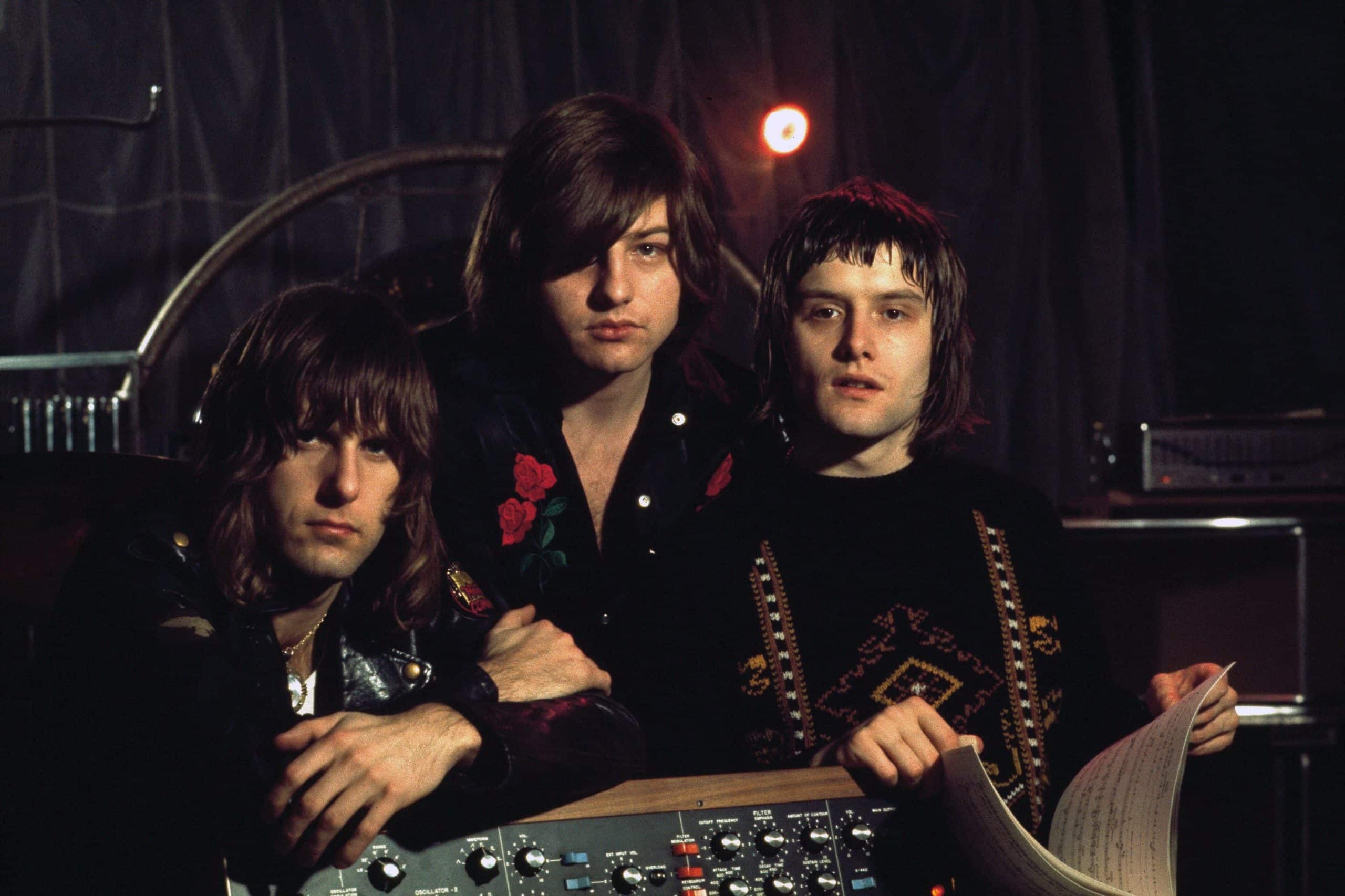
Emerson, Lake & Palmer (ELP) were a groundbreaking and influential progressive rock band that emerged in the early 1970s. Comprising three virtuoso musicians – keyboardist Keith Emerson, bassist and vocalist Greg Lake, and drummer Carl Palmer – the band combined classical music, jazz, rock, and electronic elements to create a unique and symphonic sound that pushed the boundaries of rock music.
Keith Emerson’s mastery of keyboards, including the use of the Moog synthesizer, made him one of the pioneers of progressive rock. Greg Lake’s soulful vocals and melodic basslines added a strong, accessible element to their music, while Carl Palmer’s intricate and dynamic drumming provided the rhythmic backbone.
ELP’s music was known for its complexity and ambitious compositions, often incorporating classical pieces by composers like Mussorgsky and Bach into their rock arrangements. Their self-titled debut album in 1970, featuring tracks like “Lucky Man” and “The Barbarian,” established them as a force to be reckoned with in the progressive rock scene.
Their live performances were legendary, featuring elaborate stage setups and mind-bending improvisations. The band’s 1973 tour included a massive custom-built synthesizer rig for Emerson that became an iconic symbol of their concerts.
Despite lineup changes and creative differences over the years, ELP left an indelible mark on the progressive rock genre. Their albums like “Tarkus,” “Brain Salad Surgery,” and “Trilogy” remain influential, and their fusion of rock and classical music continues to inspire musicians across genres. Emerson, Lake & Palmer are remembered as pioneers of progressive rock and as a band that pushed the boundaries of what rock music could achieve.
1. “Lucky Man”
“Lucky Man” is an iconic track that showcases Emerson, Lake & Palmer’s ability to blend rock and progressive elements into a memorable and timeless song. Featured on their eponymous debut album in 1970, the song became one of their signature pieces and remains a classic of the progressive rock genre.
The lyrics of “Lucky Man” tell a tale of both serendipity and tragedy. It’s a song that contrasts the simple joys of life with the unpredictability of fate. Greg Lake’s emotive vocals and acoustic guitar work add a folk-rock element to the track, while Keith Emerson’s use of the Moog synthesizer introduces a futuristic and otherworldly aspect.
Musically, “Lucky Man” combines acoustic and electric elements, featuring Lake’s heartfelt singing and acoustic guitar, as well as Emerson’s virtuosic keyboard work. The song is particularly notable for Emerson’s iconic Moog synthesizer solo, which was one of the first rock recordings to feature this groundbreaking instrument.
“Lucky Man” is not only a song that showcases the technical prowess of the band but also their ability to create emotionally resonant and thought-provoking music. It remains a beloved classic that has stood the test of time and continues to captivate new generations of listeners.
2. “Karn Evil 9: 1st Impression – Part 2”
“Karn Evil 9: 1st Impression – Part 2” is a remarkable composition that forms part of a larger suite on ELP’s 1973 album “Brain Salad Surgery.” This progressive rock epic is a prime example of the band’s penchant for complex arrangements and ambitious storytelling.
The lyrics of “Karn Evil 9: 1st Impression – Part 2” paint a dystopian picture of a futuristic world dominated by machines and technology. The song’s narrative explores themes of human existence, artificial intelligence, and the consequences of technological advancement.
Musically, this piece is a tour de force, featuring Keith Emerson’s virtuoso keyboard skills, Carl Palmer’s thunderous drumming, and Greg Lake’s powerful bass and vocals. The composition seamlessly weaves together various musical styles, from classical to rock, and showcases Emerson’s use of synthesizers and innovative sound effects.
The “Karn Evil” suite, of which “1st Impression – Part 2” is a pivotal segment, is known for its ambitious and avant-garde approach to rock music. The piece’s intricate instrumental passages, intricate time signatures, and thematic depth have solidified its status as a classic in the progressive rock canon.
“Karn Evil 9: 1st Impression – Part 2” stands as a testament to Emerson, Lake & Palmer’s progressive vision and their willingness to push the boundaries of rock music, creating a sonic journey that is as thought-provoking as it is musically dazzling.
3. “From the Beginning”
“From the Beginning” is a beautifully crafted song that showcases the softer and more melodic side of Emerson, Lake & Palmer. Released on their 1972 album “Trilogy,” the song is a testament to the band’s versatility and ability to create emotionally resonant music.
The lyrics of “From the Beginning” explore themes of love, vulnerability, and the complexities of relationships. Greg Lake’s vocals are tender and heartfelt, conveying the depth of emotions described in the lyrics. The song’s message reflects a sense of longing and a desire to reconnect with the simplicity of love.
Musically, “From the Beginning” features an acoustic guitar-driven arrangement that provides a warm and inviting backdrop for Lake’s vocals. Keith Emerson’s contributions include subtle keyboard touches that enhance the song’s atmosphere without overshadowing its melodic core.
“From the Beginning” is a departure from the band’s more intricate and progressive compositions, but it demonstrates their ability to craft memorable and accessible songs. It has become a fan favorite and a staple of the band’s live performances, showcasing their range as musicians and songwriters.
The song’s enduring appeal lies in its simplicity, emotional depth, and the genuine connection it creates with listeners. “From the Beginning” stands as a timeless example of Emerson, Lake & Palmer’s ability to create music that resonates on a personal and emotional level.
4. “Tarkus”
“Tarkus” is an epic and ambitious composition that occupies the entire first side of Emerson, Lake & Palmer’s 1971 album of the same name. This multi-part suite is a pinnacle of progressive rock, showcasing the band’s virtuosity and penchant for intricate storytelling through music.
The title track “Tarkus” is a concept piece that follows the journey of a mythical creature called Tarkus, a combination of an armadillo and a tank. The lyrics, although sparse, provide a glimpse into the surreal and fantastical narrative. The instrumental sections of the suite are where ELP truly shine, as Keith Emerson’s keyboards, Greg Lake’s bass, and Carl Palmer’s drums take the listener on a mesmerizing musical odyssey.
Musically, “Tarkus” is a tour de force of complex time signatures, innovative sound textures, and masterful performances. Keith Emerson’s keyboard work, including the use of synthesizers, pushes the boundaries of what was possible in rock music during that era. Carl Palmer’s drumming is thunderous and precise, and Greg Lake’s vocals and bass playing provide a strong foundation.
“Tarkus” is often cited as one of the greatest achievements in progressive rock, a genre known for its intricate and lengthy compositions. It remains a fan favorite and a testament to the band’s ability to create grand and immersive musical experiences.
5. “Fanfare for the Common Man”
“Fanfare for the Common Man” is a powerful and awe-inspiring instrumental composition that was first released on Emerson, Lake & Palmer’s 1977 album “Works Volume 1.” This track stands out as an extraordinary example of the band’s ability to infuse classical and rock elements into a cohesive and breathtaking piece of music.
The title of the song itself is a nod to American composer Aaron Copland’s famous piece of the same name. Emerson, Lake & Palmer’s interpretation takes Copland’s fanfare and transforms it into a dynamic and electrifying rock arrangement. The result is a composition that evokes a sense of unity, grandeur, and celebration.
Musically, “Fanfare for the Common Man” features Keith Emerson’s virtuosic keyboard work, including the use of the Moog synthesizer, which adds a futuristic and cosmic quality to the piece. Greg Lake’s bass and Carl Palmer’s percussion provide a rhythmic and driving foundation, while Emerson’s organ and synthesizer solos elevate the composition to new heights.
“Fanfare for the Common Man” is not only a showcase of technical prowess but also a testament to the band’s ability to create music that resonates with a wide audience. Its triumphant and anthemic qualities have made it a staple in ELP’s live performances and a classic in the realm of progressive rock.
6. “Trilogy”
“Trilogy” is the title track from Emerson, Lake & Palmer’s 1972 album and is a prime example of the band’s ability to blend classical influences with rock sensibilities. This instrumental piece demonstrates their mastery of complex arrangements and showcases each member’s instrumental virtuosity.
The composition of “Trilogy” is intricate and multifaceted, with three distinct sections that flow seamlessly into one another. It begins with a delicate and melodic piano introduction by Keith Emerson, showcasing his classical training. The middle section features a more upbeat and dynamic instrumental passage, driven by Greg Lake’s bass and Carl Palmer’s drums. The final section returns to the serene piano melody, bringing the piece to a satisfying conclusion.
One of the standout features of “Trilogy” is Keith Emerson’s use of the Moog synthesizer, which adds layers of sonic textures and ethereal soundscapes to the composition. Emerson’s keyboard wizardry is on full display, and his ability to create intricate and emotive musical landscapes is a defining aspect of the song.
“Trilogy” is a testament to Emerson, Lake & Palmer’s ability to create music that transcends traditional genre boundaries. It seamlessly combines classical, rock, and progressive elements into a cohesive and mesmerizing piece. It remains a fan favorite and is celebrated for its complexity, instrumental virtuosity, and emotional depth.
7. “C’est la Vie”
“C’est la Vie” is a delightful and melodic track from Emerson, Lake & Palmer’s 1977 album “Works Volume 1.” The song showcases a more accessible and pop-oriented side of the band, featuring catchy melodies and Greg Lake’s distinctive vocals.
The lyrics of “C’est la Vie” explore themes of love and life, with the phrase “C’est la vie” translating to “That’s life” in French. The song’s message reflects a sense of resignation and acceptance of the ups and downs that come with love and existence.
Musically, “C’est la Vie” features acoustic guitar and piano prominently, giving it a light and breezy feel. Greg Lake’s vocals are warm and inviting, delivering the lyrics with a sense of sincerity and reflection. Keith Emerson’s keyboard work adds tasteful embellishments to the arrangement, enhancing the song’s overall charm.
“C’est la Vie” is a departure from the band’s more complex and progressive compositions, but it showcases their ability to craft accessible and melodic songs that resonate with a broader audience. Its catchy melody and heartfelt lyrics have made it a beloved track in the ELP catalog.
8. “Jerusalem”
“Jerusalem” is a powerful and anthemic track featured on Emerson, Lake & Palmer’s 1973 album “Brain Salad Surgery.” The song’s lyrics are adapted from the poem “And did those feet in ancient time” by William Blake, and it has become an enduring anthem, especially in England.
The lyrics of “Jerusalem” are a call to build a better and more just society in England’s “green and pleasant land.” The song’s message is one of hope, renewal, and a vision for a brighter future. Greg Lake’s vocals are commanding and impassioned, delivering the lyrics with a sense of conviction.
Musically, “Jerusalem” features a majestic and grandiose arrangement, with Keith Emerson’s keyboard work playing a prominent role. The song is characterized by its soaring melodies and orchestral elements, creating a sense of epic grandeur.
“Jerusalem” has become an iconic and patriotic anthem in England, often performed at national and sporting events. Emerson, Lake & Palmer’s interpretation of this classic poem has given it new life and resonance, and it remains a beloved and enduring track in their catalog.
9. “Still… You Turn Me On”
“Still… You Turn Me On” is a romantic and intimate song from Emerson, Lake & Palmer’s 1973 album “Brain Salad Surgery.” The track stands out for its simplicity and Greg Lake’s emotive vocals, making it a poignant and heartfelt composition.
The lyrics of “Still… You Turn Me On” express the feelings of love and desire, capturing the essence of a passionate and intimate relationship. Greg Lake’s vocals are tender and soulful, delivering the lyrics with genuine emotion.
Musically, the song features acoustic guitar and Lake’s vocals at the forefront, creating an intimate and stripped-down atmosphere. While it may be less complex in its arrangement compared to some of the band’s other compositions, it shines in its ability to convey raw and authentic emotions.
“Still… You Turn Me On” is a testament to the band’s versatility, showcasing their ability to create songs that resonate on a deeply personal level. Its simplicity and emotional depth have made it a cherished track in Emerson, Lake & Palmer’s discography.
10. “Take a Pebble”
“Take a Pebble” is a sprawling and intricate composition from Emerson, Lake & Palmer’s self-titled debut album released in 1970. The song is a showcase of the band’s virtuosity and their ability to seamlessly blend various musical styles and elements into a cohesive piece.
The lyrics of “Take a Pebble” paint a vivid picture of nature and introspection. The imagery of a pebble, a river, and a tree reflects a sense of contemplation and the interconnectedness of the natural world. Greg Lake’s vocals are emotive and reflective, enhancing the song’s lyrical depth.
Musically, “Take a Pebble” is a journey through different musical passages, featuring Greg Lake’s acoustic guitar, Keith Emerson’s intricate piano work, and Carl Palmer’s dynamic drumming. The song incorporates elements of classical music, jazz, and rock, showcasing the band’s versatility and their willingness to experiment with various styles.
“Take a Pebble” is an epic composition that invites the listener to immerse themselves in its intricate and evolving musical landscape. It remains a favorite among fans and is celebrated for its complexity, instrumental virtuosity, and the sense of adventure it evokes.

David Morrison is a frequent contributor to Singers Room. Since 2005, Singersroom has been the voice of R&B around the world. Connect with us via social media below.









