
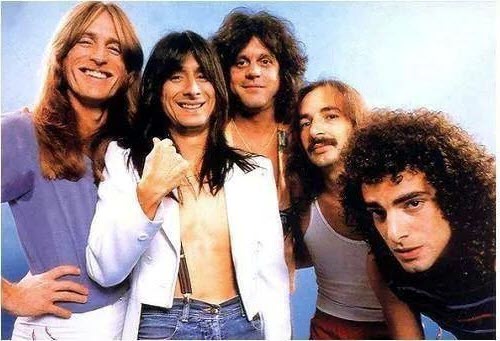
Some bands write songs for the moment. Journey writes them for every doorway you will ever step through. A piano phrase that feels like headlights on a night highway. A guitar melody that hangs in the air like city glow after rain. A tenor that can be both prayer and dare. The band’s blend of arena scale and small room sincerity makes ordinary days feel cinematic. These ten staples travel through hope, heartache, grit, and the sheer joy of singing at full voice with strangers who suddenly feel like friends. Turn them up and let pop romance and rock muscle live in one heartbeat.
1. Don’t Stop Believin’
The opening piano notes feel like lights blinking on down a long platform. A bass pedal tone arrives like a rumble underfoot. Then that tight guitar figure sketches a corridor straight to the chorus you came to hear. The marvel is patience. Journey does not spend the hook early. The verse paints street corner scenes with a novelist’s eye. A small town girl and a city boy meet inside a melody that moves with calm inevitability. Steve Perry sings with conviction but never shouts. Neal Schon answers with short glints of tone that promise a future solo. Jonathan Cain’s keys glow like street lamps. Ross Valory holds a steady backbone and Steve Smith’s drums place each accent with a dancer’s care. When the chorus finally lands, the lift feels earned rather than forced, and the band keeps the harmony in motion so the chant never stagnates. Lyrically it is generous. It gives you an image for perseverance that belongs to everyone who has ever faced a closed door. The last minutes ascend with stacked voices and bright guitar that refuses to grandstand. This is not just an anthem. It is a design for hope that survives fashions and keeps filling rooms with shared courage.
2. Separate Ways Worlds Apart
The synth stabs hit like signal flares and the rhythm section locks into a march that dares you to stand still. Separate Ways is hard romantic drama set to an engine of riffs. Perry’s voice enters with clenched jaw resolve. He delivers every line as both challenge and plea. Schon’s guitar punches through the spaces like a second narrator, then unspools a solo that climbs in steps rather than fireworks. The chorus is a banner. It spreads wide and pulls the story forward with the certainty of a storm front. Listen to the way the pre chorus tightens the screws with a rolling pattern on keys and a drum part that sets up the strike. The lyric faces a breakup with pure nerve, insisting that love’s echo will outlast pride. What keeps it from soap opera is rhythm. Steve Smith and Ross Valory swing inside the muscle, which gives the track breath and forward lean. The bridge rides a sleek keyboard figure that suggests neon reflections on rain, then the band roars back with renewed purpose. This is Journey’s steel spine, proof that you can weld arena power to raw feeling and never lose the pulse of human scale truth.
3. Faithfully
Faithfully opens like a letter read at the kitchen table before dawn. Piano sketches a gentle circle. A cymbal whispers time. Then Steve Perry steps in with a vow sung as plain speech. The road details are simple and exact. Wheels that go round. A circus life under a big top world. Those images turn touring into a universal distance. The song’s power lives in restraint. The vocal sits at the center of his range where the grain and warmth feel closest to skin. Neal Schon paints around the voice with glassy harmonics and then builds to a solo that sings like a second melody rather than a display. Jon Cain’s keyboard voicings keep the harmony bright but never sugary. Steve Smith and Ross Valory breathe like trusted companions. The chorus rises in careful arcs, each return a little fuller, yet the track never shouts. It glows. That is why couples claim it for first dances and long drives and quiet reconciliations. It tells the truth about absence and the discipline of choosing love again. Even the final high notes feel less like exclamation and more like the yes you say to another person over years. A master class in tender scale.
4. Open Arms
A single held piano chord and you already know the room. Soft light. Careful breath. Open Arms is vulnerability without apology. Perry delivers the first lines almost like a confession, his tone transparent enough to let fear and hope occupy the same syllable. The lyric refuses ornament. It says exactly what is needed and nothing more, which is why the chorus feels like a door opening. The arrangement is spare by design. Keys carry the weight at first. Then bass and drums enter like a heartbeat remembering itself. When the guitars bloom they do not invade. They lift. Schon’s solo traces the melody with a voice like light against glass, avoiding speed for contour so the feeling stays intact. The dynamics of the performance are crucial. Verses almost whisper and the chorus expands without losing intimacy. That is the secret. The song can fill an arena and still sound like one person asking another to take their hand. Production leaves air around every instrument so resonance becomes part of the emotion. No trickery. Only proportion and trust. Open Arms endures because it turns a plea into a homecoming and because it treats softness as a kind of courage.
5. Any Way You Want It
From the first guitar stab, this is a celebration. Any Way You Want It is pure rocket fuel, a two and a half minute smile taught to dance. The groove sits high and bouncy, kick and snare snapping like bright sneakers on pavement. Neal Schon jangles and then sprints, shaping a melodic lead that winks as much as it roars. Steve Perry turns the lyric into an open door policy for joy. He phrases with percussive pop and then releases into long vowels that feel like windows thrown wide. Jonathan Cain’s keys percolate in the corners while Ross Valory keeps the bass line playful and firm. Steve Smith accents transitions with quick flurries that never clutter. The chorus is instantly yours. It encourages you to sing before you even know the words. The bridge adds a just right modulation that lifts the room a few inches before the final chorus lands. This is the band’s party muscle. Shiny, yes, but never shallow. The track’s generosity lies in how cleanly it is built. Every part knows when to speak and when to grin from the sidelines. Put it on and an ordinary day becomes a small parade that feels limitless.
6. Wheel in the Sky
Here comes motion as metaphor. Wheel in the Sky is a road song that carries season and distance in its chords. The intro guitar picks like the start of a long walk, then a drum thump tightens the stride and the main riff turns the horizon into something you can almost touch. Perry sings with a traveler’s grit, weather in his vowels and promise in his high notes. The lyric avoids postcard romance. It is about uncertainty and stubborn hope, the way the months keep slipping while the work goes on. Neal Schon’s tone balances heat and chime, and his solo maps constellations rather than shred for speed. Jon Cain’s keys keep the landscape wide. Ross Valory’s bass writes a counter melody that makes the verses feel alive under the surface. Steve Smith’s hi hat work gives the song its restless breath. The chorus is a mantra you can lean on when the next town looks like the last. It neither scolds nor complains. It rolls forward, which is exactly what the title promises. This is Journey during their hinge from fusion roots to songcraft focus, and it captures that evolution with air in the lungs and fire in the feet.
7. Lights
The first chord is twilight over water. Lights is not just about a city. It is about belonging and the ache of watching that place glow from far away. Perry sings as if showing you a skyline from a hill and remembering a version of himself who used to walk those streets. The tempo hangs back slightly, letting every piano figure and guitar curl feel like a breeze off the bay. Neal Schon plays with liquid tone that never crowds the vocal. Jonathan Cain’s keys color the edges in shades of gold and blue. Ross Valory and Steve Smith keep the heartbeat slow and sure so the melody can float. The chorus is simple and true. It does not try to be clever. It opens the arms of the city and asks the listener to imagine their own place inside it. A brief guitar break adds sweetness without shaking the spell. The beauty here is balance. The song is intimate but not small, nostalgic but not syrupy. You can hear why it has become a kind of civic hymn and also a private comfort for people who carry two homes in one chest. Lights proves that gentleness can illuminate just as far as volume.
8. Lovin’, Touchin’, Squeezin’
A blues strut with arena savvy, Lovin’, Touchin’, Squeezin’ turns heartbreak into communal theater. The groove is mid tempo swagger, guitar and piano trading sly phrases while the rhythm section walks like someone who knows they are being watched. Steve Perry leans into the consonants with a storyteller’s relish, sketching betrayal in a handful of lines that could be delivered at a bar booth or a stage lip. The genius arrives in the chant. That cascading na na coda feels like a friend group calling out the villain while dancing the sting away. Neal Schon adds a solo that sings more than screams, bending phrases in a way that lets the lyric keep center stage. Steve Smith and Ross Valory ground everything with a pocket that moves hips first and then minds. The production keeps the edges gritty. You can hear fingers on strings and a little sweat in the vocal mic. It is a song about getting wise and getting free, and it invites the entire room to practice that freedom out loud. The last minute piles the voices in layers until the call becomes both joke and verdict, which is exactly the point. Healing can sound like joyful noise.
9. Who’s Crying Now
Here the band slows the camera and lets nuance carry the plot. Who’s Crying Now is late night conversation set to a glide. The keys draw a soft horizon, the bass writes lazy counter lines, and the drums sit back with elegant minimalism. Steve Perry sings the first verse almost under his breath, as if he is still deciding how much truth to admit. The chorus tilts the harmony upward just enough to feel like air entering the room. The lyric is not interested in revenge fireworks. It studies the push and pull of a bond that refuses to break cleanly. Neal Schon’s solo is a small miracle. He begins with a vocal quality, then stretches into a cascade that seems to suspend time, his touch so controlled you can almost see the string vibrate. That solo rests on silence in a way few rock singles dare. The band trusts space. When the chorus returns it sounds wiser rather than louder. This track is a master class in dynamic modesty, in choosing the exact right sound and then letting it bloom. It proves Journey can be sleek without being slick, and that reflection can ride a groove with quiet authority.
10. Stone in Love
Summer night electricity bottled in four minutes. Stone in Love is memory you can dance to, the snap of a snare becoming the snap of a streetlight coming on. Neal Schon’s riff is all sun on chrome, a bright pattern that sets the mood before a word is sung. The rhythm section locks into a buoyant bounce that keeps bodies moving while the melody sketches Polaroids of old friends and fast plans. Steve Perry sings with a grin in his timbre, mixing nostalgia with adrenaline. The pre chorus tightens the frame just enough to make the chorus feel like a sprint down a familiar block. Guitar and keys play tag at the edges, and the middle section opens up for a solo that refuses showboat antics in favor of singable lines. What keeps the song evergreen is the way it honors youthful heat without turning sentimental. You feel the humid air, the shared look, the sense that the entire world is within five blocks of this corner. The band’s chemistry shines. Everyone leaves space for everyone else and the song cruises on that generosity. By the last chorus you are inside the memory with them, stone in love with sound and the life it brings back.

David Morrison is a frequent contributor to Singers Room. Since 2005, Singersroom has been the voice of R&B around the world. Connect with us via social media below.









