
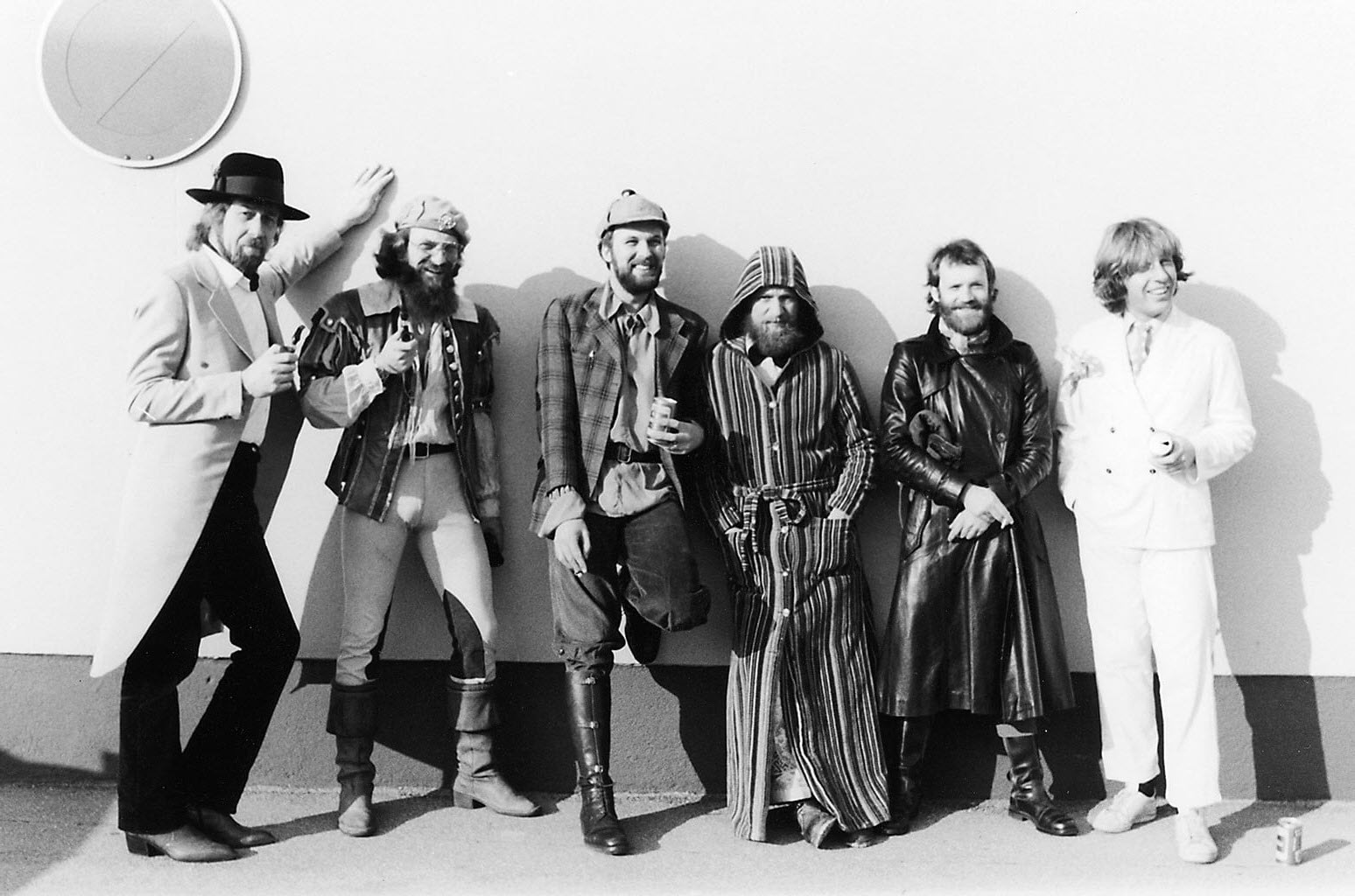
Jethro Tull built a world where pastoral tales share a table with roaring riffs and a flute can outshout an electric guitar. The band’s songs feel like fireside stories told by a traveler who has seen both foggy moors and neon cities, then set to rhythms that buck and canter. Ian Anderson’s voice perches on melodies like a hawk, his flute skitters and sings, and the arrangements shift from folk hush to thunder with theatrical poise. These ten staples catch that alchemy in full color. Pour a cup, tilt the speakers, and step into a place where wit and wildness dance as equals.
1. Aqualung
Aqualung is a portrait painted with cold air on warm glass. The acoustic guitar enters like a street corner benediction, then the band explodes in granite chords that feel carved rather than strummed. Ian Anderson sings not as a judge but as a narrator with a sharp pen, sketching characters who are painfully human. What makes it endure is the song’s architecture. The verses sit close and ragged, the pre chorus leans forward, and the chorus arrives like a bell that refuses to crack. Martin Barre’s guitar solo is both statement and scalpel, cutting through the arrangement with a tone that has become a landmark on its own. Underneath, John Evan’s keys and Clive Bunker’s drums steer the dynamic swings so the track breathes rather than bludgeons. Listen to the way the acoustic figure returns after each storm, a reminder that the story is still a person at arm’s length. Tull’s trick is contrast. Sacred chords next to gutter dialogue, folk fragility next to iron stomp. The result is not just a classic rock pillar but a miniature novel set to meter, a song that invites argument and reflection long after the last chord fades.
2. Locomotive Breath
A lonely piano counts the seconds like a pocket watch, then the engine catches and the song begins to move with a pulse that never slows. Locomotive Breath is momentum given a backbeat. The riff is iron and ember, simple enough to remember after one listen and sturdy enough to carry the whole arrangement on its back. Ian Anderson sings against that pressure with clipped precision, riding the consonants so the syllables snap like rail joints. When the full band locks, Martin Barre’s guitar becomes the steel rail under the wheels, while bass and drums lay down the ties. The lyric feels like both parable and dispatch, a man chasing his own shadow while the machine he built keeps pulling him forward. John Evan’s piano returns in short, urgent phrases, and the flute solo slices across the groove like sudden daylight. This is one of those recordings where control becomes excitement. No part wanders. Every accent pushes the same direction. The final stretch widens like a landscape and then tightens around the hook until it is the only thing left. You can analyze meters and motifs if you want, but it works first as pure physical music. It makes rooms lean.
3. Living in the Past
A nimble bass line steps out with an almost courtly gait, and the drums clap in a meter that sidesteps pop convention while sounding completely natural. Living in the Past marries folk elegance to jazz poise and then invites a crowd to sing. The melody is a friendly conspirator, breezy on the surface yet anchored by subtle harmonic turns that keep the ear awake. Ian Anderson’s phrasing is teasing and precise, finding smile points in the verse and then opening wider for the refrain. The flute is not decoration here. It is the second voice, circling the vocal and answering with bright phrases that feel like winks. John Evan’s keys add pastel color at the edges, and the percussion choices keep the groove buoyant rather than heavy. The magic is the meter. That off kilter pulse sounds effortless, which means the band is working very hard to make it glide. Lyrically it is a sly look at nostalgia and comfort, unwilling to scold yet unwilling to let complacency off the hook. It is also a reminder that Tull could pack adventurous writing into a tune that still feels like a stroll. You leave humming, and you leave a little smarter.
4. Bungle in the Jungle
Here the band paints with bright animal colors. Acoustic strum, cheeky strings, and a rhythm section that walks with a friendly swagger make Bungle in the Jungle one of Tull’s most accessible cuts. Ian Anderson leans into metaphor with showman ease, turning the city into a cartoon safari where human instincts wear fur and fangs. The chorus pops like sunlight through leaves, and the verses keep the story moving with lines that feel written on the back of a travel ticket. Martin Barre’s guitar adds little claws of distortion when needed, but much of the charm is in the skip of the groove and the smile of the arrangement. Listen for the way the orchestration nudges the hook without crowding it, a lesson in arrangement that keeps a radio single lively on repeat. Underneath the wit is a sly social read, as if Aesop took a train to the suburbs. The performance never turns heavy, yet it carries enough bite to make the sweetness honest. Put it on in a kitchen or in a car and you get the same result. Shoulders loosen, voices join the refrain, and the room inherits a little mischief.
5. Thick as a Brick Pt I
The opening acoustic motif is a door to a maze. Step through and the walls keep shifting with delightful logic. Thick as a Brick in its shorter radio life still hints at the grandeur of the side long original while working as a self contained suite. Ian Anderson sings like a storyteller who trusts his audience, tossing vivid lines that sound like childhood memory and social satire sharing a table. The band pivots on a dime. Pastoral guitar becomes martial snap. Flute lines turn from playful to incisive and back again. John Evan’s keys provide glue and sly commentary, while Martin Barre’s guitar lands punches with elegant timing. What marks this piece is motion. Themes return in new clothes, rhythms tilt, and yet the thread never breaks. The recording balances intimacy and spectacle so the narrative voice remains close even when the arrangement swells. It is progressive music that remembers songs should move feet as well as minds. For listeners who only meet Tull on singles playlists, this is a friendly map to the larger country. The edit closes before the epic’s full journey, but you feel the horizon beyond the fade, which is exactly the point.
6. Cross Eyed Mary
Guitar and flute trade glances like streetwise friends and then the band slams into a riff that feels both aristocratic and raw. Cross Eyed Mary is character study as rock theatre. Ian Anderson inhabits the role with biting empathy, his vocal lines balancing sneer and sorrow. The arrangement moves like a small play in scenes. A hard march gives way to sly woodwind filigree. Piano stabs color the corners. Martin Barre’s tone is a blade when required and velvet when the lyric needs room. The rhythm section earns its keep by never letting the tempo sag while navigating the song’s pivot points with grace. The secret is dynamic shading. Loud does not mean thick, and quiet does not mean empty. The band uses space as an instrument, so the chorus can hit without brute force. Lyrically the song shows Tull’s knack for mixing Dickens with modern grit, refusing to paint its subject in easy colors. You come away humming the hook and thinking about the person inside it. That double life is why the track keeps its edge. It is proof that rock can carry a short story without dropping the groove.
7. Songs From the Wood
A chorus of layered voices opens like a porch door on winter air, then hand drums and bright acoustic figures gather the listener into a circle. Songs From the Wood is a toast and a thesis. It invites you to bring the ancient into the present and to hear how rural rhythms can power modern joy. Ian Anderson’s words revel in craft, hearth, and ritual, delivered with relish and exact meter. The band’s interplay is the marvel. Guitars interlock like branches, flute darts like a small bird, and the rhythm section keeps a dancer’s precision. John Glascock’s bass is especially songful here, weaving counter lines that make the chorus lift. The production gives every part a seat by the fire, which lets the arrangement feel rich without clutter. What sets it apart is celebration without naivete. The track honors the old while acknowledging the present, marrying choral glow to crisp rock snap. By the time the final refrain returns you feel adopted by a community built from melody and time. It is one of Tull’s most generous offerings, a welcome letter to the band’s folk heart that still slaps with electric life.
8. Skating Away on the Thin Ice of the New Day
Steam kettle percussion, wheezing squeezebox, and a gently ticking guitar figure create a small stage where a fable can unfold. Skating Away is motion as metaphor made singable. Ian Anderson treats the lyric like a pep talk to a timid friend and a dare to himself, mixing winter imagery with practical wisdom. The melody glides, then kicks, then glides again, mirroring the song’s title. When the full band arrives, it does so with restraint. The groove is buoyant, not bombastic. Flute lines sketch curlicues above Martin Barre’s tidy jabs, and the backing voices arrive like a friendly push at the small of the back. The arrangement is a lesson in lightness. It stacks many timbres but leaves air between them, so the ear never grows tired. You can hear the fun the players are having, yet the message remains firm. Risk is not a posture. It is practice. The final rounds of the chorus feel earned because the band has built the rink under your feet in real time. Few rock groups could make advice this charming without turning it thin. Tull makes it dance and think at once.
9. Bouree
A Bach dance made new with jazz humor and folk grit, Bouree is the calling card that introduced many listeners to the idea that flute can swing. Ian Anderson’s tone is earthy yet agile, darting through the theme with a smile you can hear. The rhythm section treats the piece like a club tune rather than a museum item. Bass walks with confidence, drums place accents that flirt with shuffle, and handclaps appear like friendly ghosts. Martin Barre peppers the edges with tasteful guitar voicings that keep the harmony modern. The joy of this track is conversation. The band listens as much as it plays. Phrases are tossed and caught. The famous mid section loosens into a small jam that never loses the original shape, then the head returns with renewed vigor. It is virtuosic without vanity, mischievous without mockery. The recording quality leaves enough room to hear wood and breath, which is key to the charm. For a group often discussed through the lens of concept albums and big statements, Bouree is proof that they could make a two or three minute miniature feel like a complete evening.
10. Minstrel in the Gallery
Minstrel in the Gallery opens with acoustic introspection that feels almost private, as if you have stumbled on a rehearsal in an old theater. Then the curtain flies up and the band storms in, turning ballad into broadside with fearless timing. Ian Anderson plays the title role with theatrical relish, recounting the performer’s odd relationship with court and crowd. The lyric balances satire and confession, and the melody gives both room. Martin Barre’s guitar tone is molten here, slicing under the vocal and then racing ahead in phrases that feel sung rather than picked. John Evan decorates the transitions with piano that glitters without fuss. The rhythm section handles sudden tempo and texture changes as if there were no other way to move. The production lets the shift from whisper to roar land with impact because the quiet is truly quiet. That is drama made with faders and fingers. By the end you have taken a small journey from hearth to riot and back, a cycle that feels like the honest life of anyone who makes things for an audience. It is one of Tull’s most complete statements in a single track, a play in four minutes and change.

David Morrison is a frequent contributor to Singers Room. Since 2005, Singersroom has been the voice of R&B around the world. Connect with us via social media below.









