
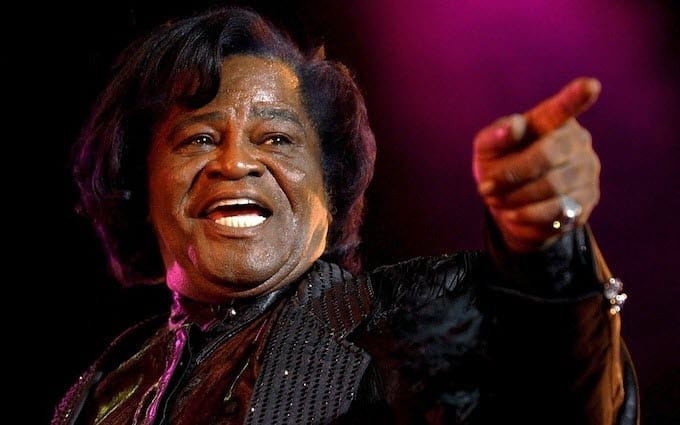
James Brown made rhythm feel alive and slightly dangerous, as if a groove could tilt the room all by itself. He commanded bands with a glance you could hear, carving songs into lean machines where every horn stab and guitar chop carried purpose. That voice could rasp, purr, and testify within one breath, turning simple refrains into rituals. From blistering funk vamps to grand soul ballads, his catalog is a map of modern dance music. These ten essentials capture the architect and the fire starter, the lover and the drill sergeant. Clear a patch of floor. The pocket is about to walk in.
1. I Got You I Feel Good
Joy arrives like a brass sunrise. Trumpets flash, the snare cracks, and James Brown hurls the title like a spark that catches everything around it. Yet the celebration is engineered with watchmaker care. Guitar scratches a clipped figure that never changes and never needs to. Bass moves in short phrases that bounce with confidence. Horns behave like a talkative Greek chorus, answering the lead in bright sentences, then stepping back to let the groove breathe. Brown sings as a percussionist who happens to carry a microphone. He places consonants on the grid, then stretches vowels so the band can pivot beneath him. Each stop time feels like a magician’s pause followed by the reveal. Lyrically there is almost nothing on the page, which is the point. The feeling is the message. By the second chorus you are in the ritual, clapping on twos and fours without thinking about it. The track also explains a truth about funk and classic soul. Economy is power when every player listens. No solo lasts too long. No line overstays. The record ends with a grin still hanging in the air and you swear the room looks brighter than it did three minutes ago.
2. Papas Got a Brand New Bag
A new rule book starts in the first bar. Drums land with a sly swagger, guitar becomes pure rhythm, and the horns speak in clipped phrases that slice the beat into shining pieces. Brown’s vocal sits above it all like a foreman with a poet’s ear, tossing cues that are both musical and theatrical. The bag is not a purse, it is an approach. Chords stop being the main story. Interlocking parts take over, each instrument treated like a drum with pitch. The guitar stays on one figure and becomes an engine. Bass refuses clutter and gains weight. Silence becomes one more piece of percussion. Brown keeps the lyric like a street corner announcement. The old steps are gone, the new steps are whatever feels truest. That spirit radiates through the arrangement. Breaks appear for a heartbeat, then the band hits as one, the kind of precision that feels loose only because it is so well drilled. You can hear entire futures of dance music in these two minutes. It is a manifesto that never lectures since the proof is in the motion of your shoulders. Call it innovation you can dance to, a clean new suit that still fits sixty years later.
3. Get Up I Feel Like Being a Sex Machine
This is groove as hypnosis. The drum pattern ticks like a confident clock, hi hat steady while kick and snare press forward in patient steps. Bass repeats a short mantra that never lets go. Guitar chops at the grid in tight wrist circles, turning harmony into rhythm. Clavinet and organ flicker at the edges like city lights. Over that lattice, Brown works the room as bandleader and cheer captain, trading shouts with his players, calling for parts to come in or hush and constantly resetting the energy without breaking the spell. The message is simple. Get up. Stay up. Keep the pocket clean. The genius is discipline. No one rushes to show off. Small variations become thrilling because the foundation never moves. A breakdown midway through feels less like a solo section and more like the furniture being rearranged so you can admire the floor. The band returns, tighter than before, and the chant takes on the force of instruction. You learn that repetition becomes revelation when everyone believes. Endurance is the star here. The track lasts minutes that feel like seconds and when it ends your body is still doing exactly what the title told it to do.
4. Its a Mans Mans Mans World
After the lean geometry of the funk sides, this ballad opens like a velvet curtain. Strings sigh in long arcs. Organ glows like stained glass. Drums walk with dignity. Brown steps forward with a vocal that trembles and towers by turns, offering a catalog of invention before turning the lens to love and meaning. The performance lives in contrast. Verses are confessional, almost whispered, then the climactic lines arrive with preacher force. Listen to the connective tissue between phrases. Those moans and half words are breath turned into music. The arrangement saves power for moments that need it. Cymbals lift exactly when the heart does. Horns bloom like dawn, then retreat. This is not simply romantic theater. It is a study in dynamic control, and in how to hold a room with restraint as well as roar. The lyric has sparked debate for decades, which is part of its fascination. What is undeniable is the range of the singer at the center, a man who could ignite a dance floor and also hush an arena by shaping a single syllable until it glowed.
5. The Payback
Revenge gets scored for low end and patience. The drums stay close to the ground, a steady stalk rather than a chase. Bass rolls through thick phrases that feel like measured footsteps in a long hallway. Guitar stays wiry and precise, all upstrokes and attitude. Horns do not explode, they mutter and jab, little bursts that sound like side comments. Brown narrates with relish, savoring the rhythm of each threat more than the words themselves. The band stretches time without losing tension. Parts fade and reappear as if characters are entering and leaving the scene. That space is the secret. Producers across hip hop and modern soul sampled this record because the air around the parts makes them sound larger. You can drop the volume and it still feels dangerous. Turn it loud and it becomes a parade of one drum and a hundred knowing smiles. The chorus chant is pure theater yet the pocket keeps it honest. This is control masquerading as menace, a master class in how restraint can feel heavier than noise.
6. Cold Sweat
A drum figure starts and suddenly the rules tilt. Syncopation takes the wheel. Horns land on offbeats like sly winks. Guitar becomes a metronome with teeth. Bass hugs the root and then jumps just enough to turn the floor into a trampoline. Brown’s vocal punches out short lines that behave like rhythmic cues. He is singing, but he is also drumming with his throat. The famous breakdown teaches a lesson that bands still study. When the groove drops to bone, time itself becomes loud. Each return feels like an exhale after a held breath. Harmony remains minimal by choice. Interest lives in the weave of parts and in tiny changes of pressure that shift the feel by degrees. The record sounds live even on studio speakers because the energy is communal. Tambourine shakes change the weather. A ghost note on snare turns the corner of a bar into a cliff edge. Cold Sweat proves that tension is a dance partner and that the difference between stiff and irresistible lies in micrometers and intent.
7. Super Bad
Swagger becomes philosophy and the proof is in the stride of the beat. The horns speak in short sentences that grin. Guitar nags the backbeat like a friend urging you toward the floor. Bass hums a boast you can hum back, and the drums keep everything rolling with buoyant spring. Brown runs the show as ringmaster and hype sage. He talks to the band in real time, calling entrances and exits that turn the track into a master class on stagecraft captured to tape. The lyric is a list of brags that somehow feel communal. He is super bad, but so is the band, and so are you if you move with them. Solo spots cook without spilling, focused on melodic curls rather than endless speech. The joy here is not reckless, it is rehearsed until it feels effortless. That is the paradox of this music. Strut is earned through hours of discipline. When the fade finally comes, your posture is different. The day feels slightly taller. The rhythm has become a way to walk down the street.
8. Please Please Please
Here is the early signature drama, a ballad staged like a miniature tragedy. The tempo is slow and the chords are simple, which throws all the weight on delivery. Brown pleads in waves, building intensity by degrees, dropping to a hush, then blooming again. The Flames answer like a choir caught between empathy and alarm. The band shadows every turn as if holding its breath with the singer. You can hear the seed of the legendary cape routine in this shape. Collapse, refusal to quit, return. On record the architecture reveals itself. Pauses feel like living punctuation. A single cry becomes a paragraph. Horns whisper at the edges, saving their force for the crest. What keeps the performance from pure theater is the core of sincerity. Even the showmanship frames a feeling that sounds particular rather than generic. It is a singer discovering that a single word repeated with faith can carry more freight than any complicated verse. Once heard, it never quite leaves the ear.
9. Say It Loud Im Black and Im Proud
A chant turns into an anthem because the beat makes conviction move. Drums keep a cheerful bounce. Bass and guitar trade short smiling phrases, and the horns light up the corners without stealing focus. Children join the call and response, turning the hook into something that sounds like a neighborhood. Brown’s phrasing is direct and warm. He commands without scolding and celebrates without losing the point. Rhythm is the messenger. The words are clear, yet it is the sway that lets them settle in the body. Live versions carry extra electricity, but this studio take shows the design in crisp lines. Parts are light, precise, and roomy so the voices can own the center. It became more than a hit. It became a tool people carried into schools and parades and kitchens, a way to turn pride into sound. Musically it demonstrates how to keep an arrangement buoyant while delivering a serious claim. The result remains affirmation set to a pocket you can walk with all day.
10. Get Up Offa That Thing
From the first bark you know the mission. The tempo skates a touch faster than the earlier funk burners. Drums are bright and insistent. Guitar chops like a chef during the dinner rush. Bass plays a busy smile that somehow never turns messy. Horns hop in and out as if vaulting from riser to riser. Brown runs an aerobics class for the spirit, complete with encouragements, jokes, and self high fives. The structure is a chain of vamps that do not build so much as sustain, each cycle adding just enough spice to keep the engine purring at a higher glow. Listen for the small changes that prevent fatigue. Guitar shifts a pattern by one note. Drums add ghost strokes that tickle the back of the beat. The hook is a command that becomes a joke that becomes a truth. Movement heals, and energy creates its own reason. By the last refrain the room is loose, the air feels cleaner, and even the walls seem to be tapping time. That is medicine done the James Brown way, with rhythm as the doctor and the dance floor as the clinic.

David Morrison is a frequent contributor to Singers Room. Since 2005, Singersroom has been the voice of R&B around the world. Connect with us via social media below.









