
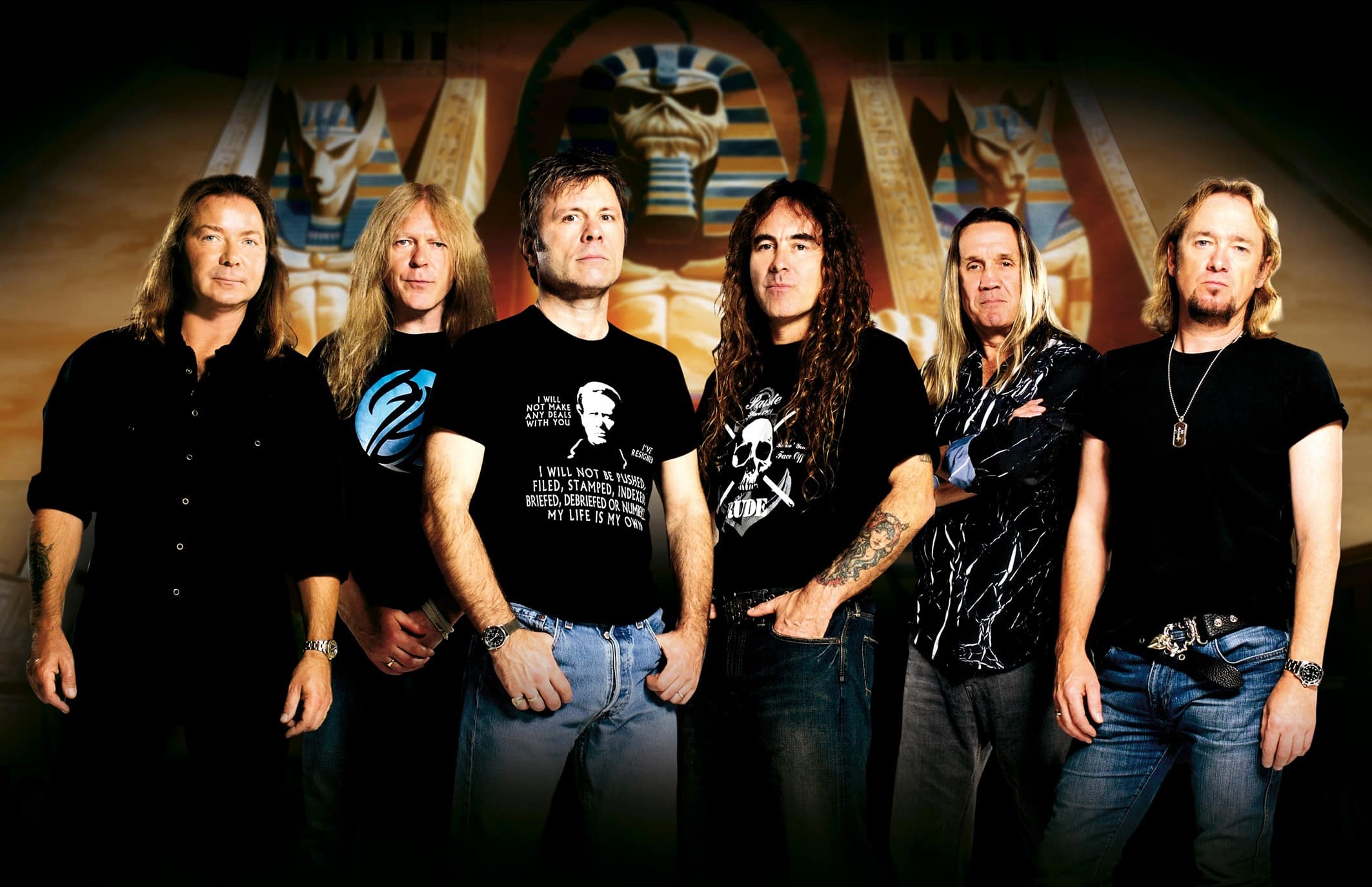
Iron Maiden built a universe where literature meets street grit, where galloping bass turns into a warhorse and twin guitars sketch banners in the air. Their songs feel like short films with choirs of fans as narrators. One minute you are in a medieval cell, the next you are climbing into a fighter cockpit or racing through London at night. Precision meets swagger, story meets speed, and melody rides above it all like a standard. This set gathers ten crowd pillars that show how the band fused drama, craft, and thunder into something unmistakable. Raise a fist and follow the banners.
1 The Trooper
A cavalry charge becomes a lesson in arrangement and stamina. The Trooper begins with a bugle like guitar fanfare that feels both noble and reckless, then Dave Murray and Adrian Smith lock into a bright two guitar weave that is pure adrenaline. Steve Harris fires off that famous gallop, a bass figure that moves like a horse finding new ground, and Nicko McBrain answers with snare patterns that crack like whips. Bruce Dickinson sings from inside the story rather than above it, placing consonants with actorly care so that every image lands. The verse melody sits just on top of the rhythm, which gives the attack its bounce, and the prechorus tilts upward like a cresting ridge before the chorus unfurls like a field of flags. Solos trade conversation more than competition and the main theme returns with the certainty of fate. You can hear the discipline behind the chaos. Every stop is rehearsed, every return is timed for maximum lift, yet the performance still feels like a dare. That is the trick. Romantic myth and harsh consequence share the same frame. The crowd does not simply sing along. It rides along, boots pounding invisible ground.
2 Hallowed Be Thy Name
This is narrative theater set to metal, a meditation on time that turns a stage into a chapel. The clean guitar intro is a small room where thoughts collect. Then the riff arrives like the sound of a gate opening and the band pours through with patient authority. Bruce Dickinson shifts gears between storyteller and witness, from cool observation to burning urgency as the clock in the lyric ticks. The rhythm section is a study in tension. Steve Harris threads lines that sing on their own while Nicko McBrain places accents that make minutes feel heavy. Twin guitars sketch harmonies that feel ancient and stern, then split for solos that search the sky and return to earth. What makes the piece immortal is the way it grows. Tempos tilt forward, motifs reappear, and when the main figure comes back after the instrumental flight it feels like destiny closing its hands. Lyrically it is about a final walk. Musically it is about perspective, how quiet can make the loud parts feel larger and how a single high note can turn a room wide. The final cry is both protest and praise. Audiences answer because the shape of the song teaches them how.
3 Run To The Hills
Speed with a conscience. Run To The Hills is a sprint that carries a history lesson, proof that heavy music can look straight at difficult subjects and still ignite a crowd. The drum pickup launches the track like a starting gun and the bass gallop snaps into place with a grin. Guitars ride the rhythm in clean lines that shine rather than smear. Bruce Dickinson attacks the verse with clear vowels so the tale reads even at arena distances, then he soars into the chorus with a metallic brightness that defines a generation of singers. The hook works for two reasons. The melody is simple and memorable and the harmonic lift under it feels like a rise to open sky. Listen for the small arrangement choices that make the pace sustainable. The band drops to half time for a few bars so the lungs can reset. The solo is a string of clear phrases rather than a blur, each one pointing back to the main theme so momentum never dies. Lyrically the song stings and the music gives that sting wings. When the crowd shouts the title line, it is not only noise. It is memory sung at full volume.
4 The Number Of The Beast
A gothic prologue, a druidic riff, and then ignition. The Number Of The Beast is a master class in stagecraft and dynamics. That spoken opening sets the room, a curtain raising on a vision of dread, then the band crashes in with a figure that lurches and strides at the same time. Steve Harris punches the root notes like a heartbeat in panic while Nicko McBrain and the guitars trace a dance between menace and celebration. Bruce Dickinson delivers the verses like a carnival barker who has seen too much, and when he climbs into the chorus you can hear stripes of fear, thrill, and triumph at once. The middle section uncoils into a solo passage that sounds like light tearing the page, phrases written in clean arcs rather than pure shred, followed by a second solo that flips a little grit into the mix. The return to the main chant is calibrated like a final leap in a stunt. What gives the track its staying power is proportion. The band frames drama with discipline and melody with muscle. It is theater you can bang your head to, a funhouse with real shadows, and a chorus that feels inevitable the second you hear it.
5 Fear Of The Dark
Few songs demonstrate the call and response pact between Iron Maiden and their audience like this one. The opening fingerstyle figure feels like footsteps in a park after midnight, each note a glance over the shoulder. Bruce Dickinson enters with a storyteller hush, choosing measured phrasing so that breath becomes part of the scene. When the first heavy riff lands, it is less a scare than a revelation of scale. The band plays with shadow and light. Steve Harris adds melodic commentary that curls around the vocal, and the guitars build scaffolding for the chant that will later belong to the crowd. The tempo shifts are surgical. The band lifts the pace not only to raise volume but to change the feeling of time, making seconds feel quick and elastic, then settling back into the dread that walks rather than runs. Live, the song becomes a conversation where thousands sing the wordless hook as if guided by an invisible conductor. In the studio it already contains that blueprint. Solos travel like flashlights along trees, finding little bright windows before returning to the path. The final refrain is not fear but recognition. We are together in the dark and that makes the night different.
6 Aces High
Aces High is pure propulsion, an anthem of engines and nerve. After the famous radio sample, the band snaps into a climbing figure that feels like the run up to takeoff. Nicko McBrain plays with a pilot’s calm, fast but even, and Steve Harris writes moving countermelodies under the chords so the bass does more than hold ground. The guitars do their signature dance, unison lines turning into harmonies then splitting for quick replies. Bruce Dickinson delivers the lyric like a dispatch from a cockpit, urgency without panic, vowels clipped to match the pulse. On the chorus his tone turns to bright steel and you can almost feel the altitude jump. The bridge is a smart change of scenery, a short sequence that lets the listener see the clouds below and catch a breath before the chase resumes. Solos fit the flight metaphor. Lines dive and climb rather than whirl in place. The hook refuses to wear out because the rhythm section keeps it buoyant. Every time the band returns to the main idea it lands with renewed energy. The track captures speed without blur and courage without chest beating. It is a study in how technical craft can feel like pure instinct.
7 Two Minutes To Midnight
Here the swagger has teeth. Two Minutes To Midnight plants its boot with a mid tempo strut that lets the lyric speak in bold print. The opening riff is a metal headline, thick and memorable, and the rhythm section keeps it locked while adding small shivers that hint at danger. Bruce Dickinson sings like a town crier with a PhD, full of bite and clarity. He leans into the title phrase with granite tone, shaping the words so they feel like a siren that happens to rhyme. Guitars sketch tough little motifs between lines then step forward for a pair of solos that balance edge and singability. Steve Harris writes bass lines that refuse to plod, outlining the harmony with quick turns that keep the floor moving. The chorus opens like a plaza and the backing vocals give it width without blunting the lead. The middle break drops the temperature for a moment so the last push can feel even hotter. Lyrically it is protest and prophecy. Musically it is hook and heft. The genius lies in patience. Nothing rushes. Every part gets space and weight, so when the final chorus arrives it sounds like a verdict delivered in ringing steel.
8 Wasted Years
Nostalgia with a bright chrome finish. Wasted Years begins with a guitar figure that sparkles like neon rain, Adrian Smith writing a melody that carries its own weather. The beat sits in that sweet pocket where you can move without strain, and Steve Harris plays lines that balance warmth with forward pull. Bruce Dickinson chooses open vowels and clear diction, making the verse feel like a postcard addressed to your future self. The chorus is one of the band’s most generous. It rises easily then lands on a phrase that is half warning and half embrace. Production details make it bloom. Harmony vocals are tucked in like lanterns, keys appear as gentle glints, and the guitars stack in a way that feels panoramic. The solo plays variations on the intro hook rather than racing away from it, which gives the track a sense of wholeness. The lyric admits that time moves strangely and that the antidote is to be present. Iron Maiden delivers that message without scolding, with radiant melody and a confident beat. The result is a stadium singalong that also works at three in the morning with headphones, a rare combination of uplift and introspection.
9 Flight Of Icarus
Myth becomes muscle. Flight Of Icarus slows the pace to give each chord a sense of weight, turning the old story into a march toward bright danger. The verses pulse with restrained heat, guitars chugging in neat patterns while Steve Harris slips in melodic curlicues that keep the ground alive. Bruce Dickinson sings with torch like focus, aiming each line straight ahead, then opens up on the chorus so the title phrase blooms across the stereo field. The rhythm section leaves space for echo, which makes the whole thing feel bigger than the meter suggests. Solos cut paths through the air, short and declarative, answering the vocal rather than tangling it. Production adds color without clutter. Cymbal swells act like gusts of wind, background harmonies arrive like sunlight on metal, and the final choruses stack into a wall that still breathes. The song’s power lives in control. The band keeps the temperature just below boil so that the last minute feels like a lift toward a bright line you are not supposed to cross. It is heavy music that chooses poise over velocity and earns its drama with architectural patience.
10 The Evil That Men Do
Here is a love song written on marble. The intro arpeggio is delicate and inviting, then the band switches to a stride that feels like fate choosing a tempo. Bruce Dickinson moves from tenderness to heraldic command, shading the first verse with lyric care before throwing open the gates on the title line. The rhythm guitars are crisp and chiseled, a platform for the soaring melody, while Steve Harris interlaces countermelodies that keep the harmony deliciously busy. The chorus is one of the band’s most undeniable. It lifts without strain and lands with finality, a signature of Seventh Son era writing. The midsection brings twin guitar lines that feel like braided light, then two complementary solos that sing rather than scribble. Nicko McBrain plays with both muscle and ballroom finesse, guiding transitions so they feel natural. The lyric explores devotion and consequence with a seriousness that suits the arrangement. It feels like myth retold for a modern crowd, grand yet human. By the last repeat the title has become mantra and promise, and the band rides out on a figure that feels both resolved and eager for another lap. It is Maiden at full stature, melody and might in perfect balance.

David Morrison is a frequent contributor to Singers Room. Since 2005, Singersroom has been the voice of R&B around the world. Connect with us via social media below.









