
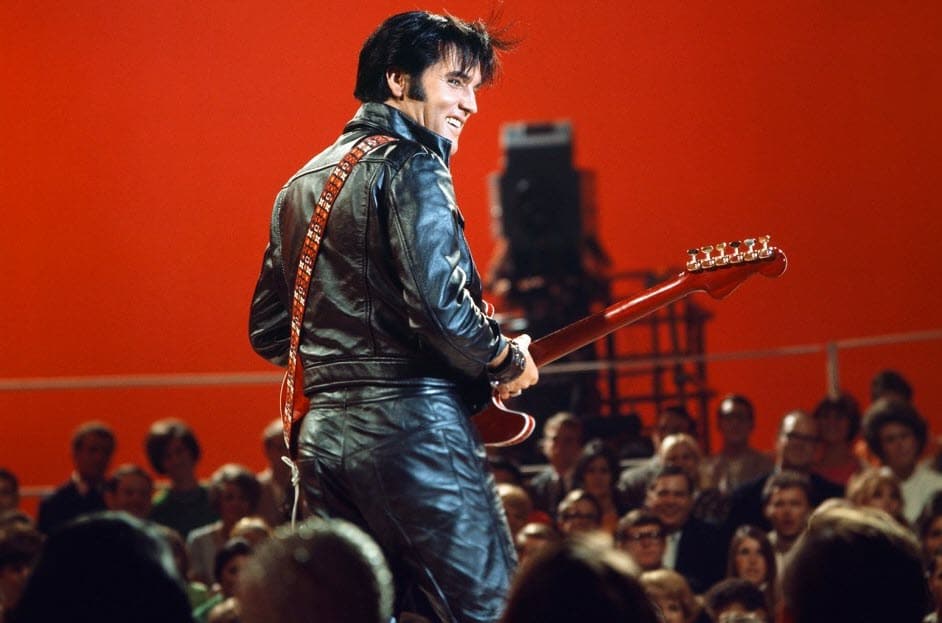
Elvis Presley did not just change music, he rewired how a voice could move a crowd. Across ballads that float like slow dancing lanterns and rhythm workouts that kickstart a party, he fused gospel intensity with blues grit, country storytelling, and a movie star’s sense of the spotlight. The result is a catalog that still feels alive in jukeboxes, arenas, and headphones. Here are ten enduring favorites. They show the range of a singer who could whisper a vow, roar through a backbeat, and find the center of a song with uncanny instinct. Turn it up and let the King do what he does best.
1. Suspicious Minds
The drama of Suspicious Minds blossoms from a simple idea. Love can be wrecked not by a big betrayal but by the drip of doubt. From the first measure, the groove breathes like a lung, a patient guitar pattern nudging the rhythm forward while the organ smolders underneath. Elvis sings with a storyteller’s poise, entering phrases just behind the beat, then surging ahead when the plea needs teeth. That ebb and flow makes the lyric feel lived in rather than merely acted. The arrangement uses tension like a spotlight. Horns flare, backing voices answer, and the famous stop start break magnifies the sense of lovers who cannot quite get free of the loop they are in. What sets the record apart is how it treats anxiety as a dance of devotion. The pocket is irresistible, yet the vocal keeps turning the emotional screw. Listen to the way he shapes the word traps, how the consonants snap then dissolve into a vow. By the end, the performance has earned its catharsis. Suspicion is still there, but the promise to push through it rings louder. Suspicious Minds remains a master lesson in building intensity without losing grace.
2. Can’t Help Falling in Love
If romance had a national anthem, many would nominate this one. The melody moves like a river, unhurried and inevitable, and Elvis treats each line as a quiet confession offered close to the ear. The accompaniment is gentle but purposeful. A bell like piano sketches the harmony while strings lean in with soft sighs. There is restraint everywhere, which is exactly why the emotion lands. Rather than push for vocal fireworks, Elvis uses breath and timbre. He darkens the tone on wise men say, then opens it like sunlight on only fools rush in. That shift is not showy, it is human. The song’s structure is equally elegant. Verses feel like steps down a staircase toward a decision already made, and the final vow feels less like a leap and more like recognition. Because the lyric is so familiar, it is easy to miss the craft. Notice the tiny delays before key words, the micro pauses that invite the strings to answer. Those choices create a shared pulse between singer and band that feels like the heartbeat of two people finding the same rhythm. Simple on the surface and rich underneath, this recording continues to score real weddings and daydream weddings for good reason.
3. Jailhouse Rock
Jailhouse Rock is a two minute thrill ride that still sounds like ignition. The guitar riff is a calling card, bright and brash, and the rhythm section stomps like a dance floor finding its footing. Elvis thrives in this setting. He sings as if grinning between lines, tossing off asides and rhythmic shouts that turn a tall tale into a room wide party. The lyric paints a cartoon of a jail that has turned into a sock hop. It is playful, even surreal, and that is the point. Rock and roll at its birth loved a little mischief. What keeps the track fresh is the precision beneath the swagger. Drums snap on the twos and fours with metronomic authority while the walking bass juggles bounce and bite. The backing vocals are placed like punctuation, never cluttering the lead, always emphasizing the joke. Elvis rides the pocket with dancer’s balance, sitting back on words that need heft, then jumping out in front when the band needs a shove. There is no excess here. Every bar serves momentum. By the last chorus the groove feels inevitable, like a train that has picked up speed and refuses to slow. Classic is an overused word, but this one fits.
4. Hound Dog
Hound Dog is Elvis at his most combustible, a groove that struts with comic bite. The beat snaps like a rolled up newspaper while the guitar claws out short phrases that answer the vocal. Elvis does not simply sing the lyric, he chews it, spits it, and polishes it, turning each repetition into a fresh jab. The joy is in the attitude. He sells mock outrage with a wink, turning a put down into a celebration of independence. Rhythmically the recording is a marvel of economy. The drummer keeps a crisp shuffle that never rushes, the bass marks time with muscular simplicity, and the guitar lays out between riffs so the vocal can own the spotlight. That space allows every handclap and shout to feel like a spark. The performance also captures a truth about early rock and roll. It borrowed from blues, country, and vaudeville, then added amplification and teenage bravado. Elvis threads those strands together with a voice that can be both snarling and smooth in the same breath. By the end, the record has transformed a scolding phrase into a chant that crowds still love to echo. Attitude plus timing equals something that never ages.
5. Heartbreak Hotel
From the first lonely guitar figure, Heartbreak Hotel feels like a foggy crossroads at midnight. Elvis steps into that atmosphere with a vocal that mixes crooner warmth and blues ache. He drops into his lower register just enough to make the room feel smaller, then lifts on the title phrase so the pain rings like a neon sign. The arrangement is spare yet cinematic. Slapped bass supplies a ghostly thump, piano creeps along the edges, and the guitar uses short stabs rather than long lines. That economy is everything. It leaves space for echo and imagination, which lets the listener build the hotel in their own mind. Lyrically the song is a parable of isolation, but the performance makes it strangely inviting. You can hear the appeal of leaning into sorrow until it becomes company. Elvis’s command of phrasing is striking. He lingers on syllables that need weight, then rushes a word to create the feel of speech tumbling out. The result is a record that sounds both antique and modern, steeped in roots yet clean in its storytelling. The door opens, the bell rings, and a broken heart checks in. We still visit because the mood is perfectly drawn.
6. Love Me Tender
Love Me Tender is a master class in quiet. The melody is borrowed from an older tune, but in Elvis’s hands it becomes a vow you can almost touch. He sings like someone who believes in the power of soft words said clearly. No vocal fireworks, no grandstanding, just care. That care extends to the accompaniment. Acoustic guitar and gentle backing voices provide a cushion, while the strings offer a halo that never overpowers. What makes the performance so affecting is the trust it asks for and the patience it models. Elvis shapes consonants with precision, then lets vowels bloom, creating an ebb that feels like breathing with another person. The lyric is plain spoken, and that simplicity invites memory. Listeners thread their own stories through the lines. A first dance, a farewell, a promise kept. The recording rewards attention to tiny details. A slight catch in the breath, a hint of vibrato on the final word of a phrase, a micro pause before the word dear that turns a common endearment into a moment. In an era that often celebrated volume, this record chose tenderness and won. It still does.
7. In the Ghetto
In the Ghetto is a narrative ballad that broadened what an Elvis single could be. The story is stark and linear, told without judgment, and the singer carries it with humility rather than theatrics. He places the lyric front and center, letting the message develop one verse at a time. The arrangement supports that approach with sober clarity. Acoustic guitar outlines the chords, a rhythm section moves at a measured pace, and strings rise in gentle arcs that never sentimentalize the scene. The performance thrives on restraint. Elvis darkens his tone for the opening line as the snow flies, then lightens slightly for descriptive detail, reserving emotional pressure for the repeating title phrase. That phrase functions as commentary, a chorus that asks us to look rather than look away. What is remarkable is how contemporary it still feels. The language is simple, the compassion direct, and the music honest. There is no grand solution offered, only witness and empathy. In a catalog famous for romance and release, this song stands as an example of conscience served by craft. It proves that a great voice can carry a community’s story with respect and without lecture.
8. Are You Lonesome Tonight?
This performance is theater and confession in the same breath. The melody arches like a sigh, and Elvis shapes it with an actor’s sense of scene. He leans into tenderness on the opening question, then narrows the tone as doubt creeps in. The famous spoken section is not a gimmick. It functions as an aside to the heart, an intimate soliloquy framed by a hush in the band. Strings murmur, backing voices hover, and the rhythm holds its breath. Because everything is so exposed, the smallest choices matter. A whispered s, a slight emphasis on act, a pause long enough to let the listener answer in their own mind. The song’s structure mirrors a memory loop. Verse, chorus, reflection, return. That circular form invites the listener to inhabit their own scenes of absence and hope. Elvis never overplays the drama. He trusts silence and slow movement, allowing the final question to hang in the air like a curtain that does not quite close. It is easy to parody such earnestness, yet the sincerity here disarms that instinct. The track still works because it treats longing with dignity and craft. It is a late night call you replay until sleep finally comes.
9. Blue Suede Shoes
Blue Suede Shoes feels like a rule book for swagger delivered in three verses and a grin. The riff struts, the beat pops, and Elvis locks into a vocal that treats every warning as a joke shared with the band. What makes the record sparkle is its mix of country twang, rhythm and blues drive, and stage ready charisma. The guitar tone has bite but not blare, the bass walks with a dancer’s bounce, and the drummer keeps a pocket that begs for footwork. Elvis rides the groove with expert timing. He stretches lines just enough to tease the downbeat, then snaps back with a crisp command. The lyric is light, but it taps something real. Personal style as armor, confidence as choreography, boundaries stated with a smile. The performance is also a snapshot of a young singer learning to command a studio. He leaves space for the band to answer, then steps forward to plant the hook. By the time he repeats the key phrase, it has become a crowd chant. The track remains a gateway for new listeners because it is pure fun backed by serious musicianship. Try to sit still. You will not.
10. All Shook Up
All Shook Up bottles the sensation of sudden infatuation and sets it dancing. The rhythm is buoyant, a quick shuffle that feels like someone trying to walk a straight line while their heart scribbles loops. Elvis turns that jitter into charm. He hiccups a consonant here, slides a vowel there, and uses playful interjections to make the whole performance feel conversational. The band mirrors that lightness. Guitar slips bright little fills between the lines, piano sprinkles upper register sparkles, and percussion keeps a crisp snap that urges the melody forward. There is craft hiding inside the ease. The song’s chord movement is clean and repetitive, which frees the singer to play with phrasing. He takes full advantage, landing words just behind the beat for warmth and then pushing ahead for excitement. The lyric itself is a catalog of symptoms rather than an explanation, and that is exactly why it works. Love at first jolt rarely makes sense. It just rearranges the furniture and invites you to dance around it. This recording honors that truth with a smile and a pocket that will not quit. By the last refrain, the title feels like both diagnosis and celebration, as if to say being all shook up is the whole point.

David Morrison is a frequent contributor to Singers Room. Since 2005, Singersroom has been the voice of R&B around the world. Connect with us via social media below.









