
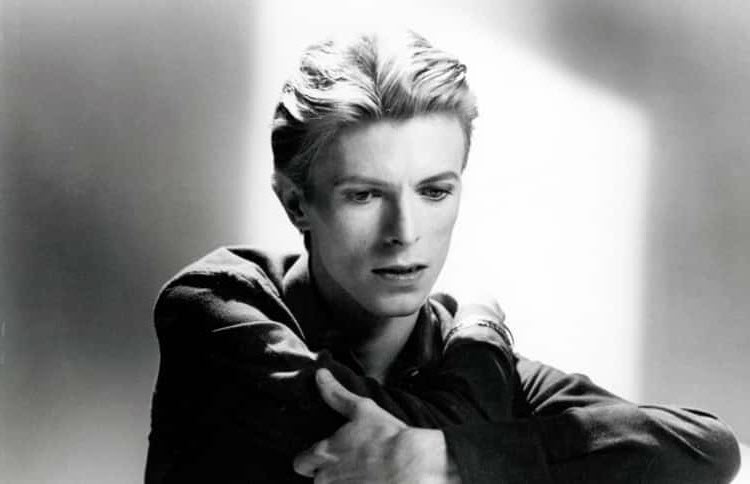
Some artists reinvent the haircut. David Bowie reinvented the room. He could turn a three minute single into a portal and a stage costume into a philosophy. One record sounds like a message from the future, the next like a telegram from your own dreams. He loved rhythm sections that walked like cats, guitarists who painted in wires and neon, and producers who knew how to leave oxygen in the frame. Yet the constant was that voice, capable of broken whispers and bronze proclamations. The ten songs below trace new planets, back alleys, hotel corridors, and human hopes that refuse to go quietly.
1. “Heroes”.
A love song written against a wall of noise and history, “Heroes” breathes in expanding circles. The rhythm section is steady as pulse, letting Robert Fripp’s sustained guitar draw a horizon line that never quite sits still. Bowie sings the verses like a confidant leaning close, then rends open the sky as the microphones are pushed farther and farther back from his voice. That production choice makes each chorus feel like a literal step toward the city’s open air, which suits a lyric about temporary kingdoms claimed by two ordinary people. Brian Eno’s synths move like weather systems, sometimes fog, sometimes phosphorescence, while Dennis Davis and George Murray hold their nerve and keep the song from floating away. What keeps “Heroes” from mere grandiosity is detail. The cigarette by the wall, the kiss, the day being just for us. Those small facts anchor the anthem so the hope feels earned. Bowie’s performance grows without swelling, a study in controlled abandon. By the final refrain he has found a tone that feels both triumphant and fragile, as if victory itself is something you must keep singing to maintain. It remains a blueprint for using studio architecture to amplify human scale bravery.
2. Space Oddity.
“Space Oddity” is a pop broadcast that doubles as a short story. The folk strum at the top has a fireside calm, then strings and stylophone sketch the pane of glass between the astronaut and the earth he is leaving. Bowie’s vocal plays both the formal language of Ground Control and the private murmurs of Major Tom. That split is the song’s quiet magic. The chorus is not a roar. It is a circle. Planet Earth is blue and there is nothing I can do sounds like awe and resignation in the same breath. The arrangement is meticulously curious. Rick Wakeman’s Mellotron floats like cold breath, the acoustic guitar stays human and warm, and the bass keeps a tether on the drift. Even the countdown functions as percussion, an elegant trick that tightens your stomach with each number. Bowie sings with careful distance, then lets a hairline crack appear on lines that suggest Tom’s isolation. The fade is a slow dissolve rather than an exit, and that choice leaves the character suspended in the listener’s imagination. Long after you know every note, the song still feels like a window you can put your forehead against and see yourself reflected in the stars.
3. Life on Mars?.
A surreal postcard from a cinema that never closes, “Life on Mars?” stacks images and lets the tune tie them together. The opening piano figure is patient and regal, then the chords begin to tilt in ways that feel like doors opening onto stranger rooms. Bowie’s vocal is equal parts choirboy clarity and streetwise theater, pronouncing the parade of characters like a film narrator who also owns a seat half way back. Mick Ronson’s string arrangement is a marvel of secondary storytelling, swelling just enough under crucial lines and then stepping back so the band can flicker. The lyric’s wit is not about punch lines. It is about juxtaposition, how cheap and holy share a bench in any city day. When the chorus finally bursts it feels less like arrival and more like revelation, the melody climbing into a place where the question mark at the end of the title is the entire point. Ken Scott’s production keeps the rhythm section crisp, giving every flourish weight. Bowie lets the final cries smear a bit, a painter’s touch that turns a pretty picture into an ache. It is both satire and prayer, a glam hymn for people who keep looking up from the newsreel and asking for sky.
4. Starman.
“Starman” is a dispatch from the radio that suggests salvation can arrive as a frequency. The verses sway with a gentle acoustic lilt that feels like leafing through magazines on the bedroom floor. Then the chorus opens its arms and the melody steps onto a glittering staircase. The brilliance is how conversational the setup remains. He told us not to blow it, because he knows it’s all worthwhile. Bowie sings hope without sermonizing, a rare trick that made teenagers feel seen rather than recruited. The backing vocals carry a friendly doo wop DNA, and Mick Ronson’s electric touches flicker like antenna lights. The arrangement is unhurried, confident that the hook will do its work, and the bridge arrives like a grin you can hear. What the song gave the culture was permission. If a transmission could land anywhere, then anyone might be the right receiver. Onstage Bowie made that invitation physical, but the record has it encoded in the harmony. It floats up rather than charging forward. The result is less a promise of rescue and more a suggestion that wonder is collaborative. Put your ear to the speaker and you are part of the circuit. That is generous pop at its finest.
5. Let’s Dance.
With “Let’s Dance” Bowie proves that reinvention can be joyous and precise. Nile Rodgers trims the arrangement to pure architecture: a rhythm guitar that clicks like a metronome learned to smile, a bass line that walks with athletic grace, and drums that place each accent like neon punctuation. Over that frame Bowie uses his lower register like a warm command. Put on your red shoes is both fashion advice and philosophy. The horn figures add flashes of heat without crowding the vocal, and Stevie Ray Vaughan’s solo arrives like a flare, blues fire shaped into sleek curves that respect the pocket. The production is a study in air. Even at maximum volume you can see the distance between the parts, which is why the groove feels so large. Lyrically the song winks while it leads. It knows that escaping into dance is always about something more than steps. The breakdown uses echo like a camera cut, pulling the listener into the club and then out onto a city street where the chorus reads as a vow. It is a pop juggernaut that never forgets to swing, and it made stadiums move in unison without sacrificing intelligence or style.
6. Ashes to Ashes.
“Ashes to Ashes” is a confession dressed in nursery rhyme colors and high fashion shadows. Bowie revisits Major Tom not as myth but as warning, folding addiction, memory, and reinvention into a single uneasy lullaby. The synth palette is deliciously odd, all plucked bubbles and glassy pads, while the bass line creeps with sly authority. Dennis Davis’s drum part is a mosaic of tight hits and gated air, making the groove feel like a series of frames rather than a linear march. Bowie’s vocal is cool and unblinking, then suddenly ghosted by harmonies that feel like voices in the corridor. The chorus uses childlike cadence to carry adult dread. We know Major Tom’s a junkie lands with the thud of a headline that also happens to be a mirror. The arrangement’s beauty lies in its contradictions. It is brittle and lush, playful and exhausted. The production makes silence part of the rhythm so each entrance has narrative weight. Even the famous video’s harlequin and bulldozer imagery seems encoded in the song’s sound. By the end you are left with a portrait of self knowledge that refuses self pity. Bowie gives you the map and the fog and asks you to walk through both.
7. Changes.
“Changes” is an artist’s manifesto disguised as a piano pop jewel. The opening stutter on the title word is both a rhythmic hook and a joke about the difficulty of saying the thing you mean. Rick Wakeman’s piano part has a show tune sparkle, but the lyric cuts closer to the bone, sketching generational eye rolls and the hazard of mirrors. Bowie’s vocal slips from playful croon to flinty observation and back again, which keeps the record from ever feeling didactic. The saxophone answers like commentary, warm and slightly tipsy, a reminder that the narrator is enjoying the ride even as he questions the map. The arrangement is pocket conscious. Bass and drums keep it buttoned but springy, letting the chorus feel inevitable each time it lands. The bridge uses a small harmonic sidestep to deepen the theme without turning moody. Best of all, the song refuses a final period. It ends like a thought that must be returned to, which is exactly the point. For listeners it has become a portable credo. For Bowie it was both forecast and promise. He told you the plan out loud and then spent decades fulfilling it with restless good humor.
8. Rebel Rebel.
Built on one of glam’s all time riffs, “Rebel Rebel” struts on treble grit and heel click attitude. The guitar figure repeats like a signature scrawl, instantly legible from the first two bars. Bowie’s vocal leans into street theater, tossing asides and taunts with affectionate flair. The lyric’s gender play was both provocation and empathy, a wink that opened doors while it poked fun at gatekeepers. The rhythm section keeps to tough simplicity, which lets the riff be the engine and the chorus the marquee. Handclaps and tambourine add party air without sweetening the punch. The production is deliberately ungilded. You can hear strings against frets and the air in the drum room, details that make the swagger feel earned rather than posed. Each return to the title line is a small victory lap, and the way the final section stretches the call and response turns a four minute single into a communal rite. For thousands of bands who learned it first in garages, the song was a passport and a dare. For Bowie it was a signature you could still read when he changed fonts. The chord never wears out because the attitude stays graciously defiant.
9. Modern Love.
“Modern Love” is philosophical dancing shoes. The band snaps into an exuberant sprint from the downbeat, with a piano part that bounces like a rubber ball and a rhythm guitar that chops sunlight. Bowie’s vocal is all forward momentum, phrasing like a man walking fast through crowds with questions chasing him. He invokes church, God, and the limits of self help, yet refuses gloom. The chorus is a release valve and a riddle, a chant that works even when you have not unpacked every line. The horn charts are tight and smiling, punching the ends of phrases like exclamation marks written by a friendly editor. Nile Rodgers’s production keeps edges crisp and leaves air for each part to wink. The breakdown where Bowie calls out modern love and the backing voices answer is a city in miniature: argument, echo, agreement, motion. By the end, the lyrical uncertainties remain, but the act of singing them together has become its own answer. It is a perfect example of Bowie’s eighties genius. He could use sleek textures to frame deeply human puzzles, making the dance floor a place where thought and joy share the same breath.
10. China Girl.
Co written with Iggy Pop, “China Girl” reimagines an earlier nocturnal sketch as a bright day hit without losing its ambivalence. The groove is deluxe and unhurried, bass striding in polished shoes while guitars shimmer like heat haze. Bowie sings with a deliberately glossy croon, which makes the lyric’s tension more striking. Heard closely, the words critique fetish and power while admitting the seduction of simplicity. Nile Rodgers’s production uses contrast to keep that conversation alive. The verses are glass and chrome. The chorus opens into warm light. The middle eight turns a shade darker harmonically, then resolves with a smile that is not untroubled. Stevie Ray Vaughan’s guitar threads taste throughout, answering lines with bend and sigh rather than pyrotechnic display. The backing vocals act as chorus and conscience, widening the frame while keeping the lead centered. What makes the record endure is its refusal to flatten itself into either satire or celebration. It is both, which is why it keeps revealing new edges depending on how you listen. On radio it was sleek pop. In headphones it remains a mirror, asking what we project onto the people we claim to love and what the dance can and cannot fix.

David Morrison is a frequent contributor to Singers Room. Since 2005, Singersroom has been the voice of R&B around the world. Connect with us via social media below.









