
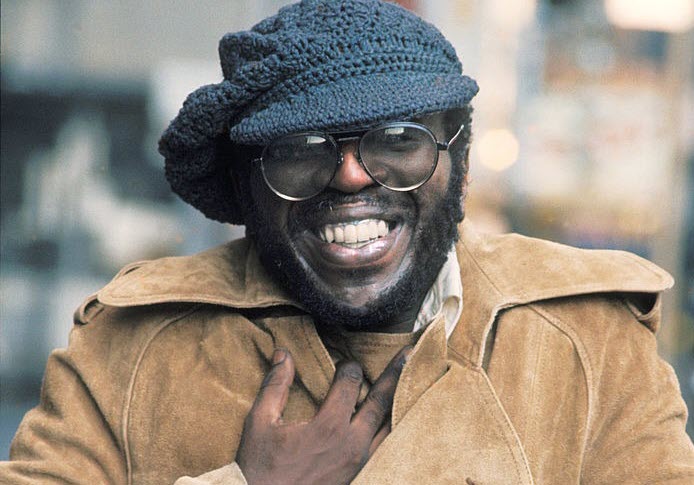
Curtis Mayfield wrote songs that sound like open windows on a summer evening. Street corners and sanctuaries share the same air, and rhythm walks with conscience at its side. His falsetto could glide like a kite and then harden into a bluesy edge when truth needed teeth. Arrangements shimmer with strings, congas, and bright guitar, yet there is always space for breath and thought. These ten essentials reveal the poet producer bandleader who turned soul into social mirror and kept the dance floor warm while he did it. Turn the lights low, lean closer, and let the calm fire of Curtis unfold.
1. Move On Up
A horn fanfare lifts the curtain and a conga pattern starts its patient climb. Move On Up is propulsion dressed as optimism, a long form groove that builds like a parade finding momentum on a sunny avenue. Mayfield sings with cordial insistence, his falsetto bright but never brittle, shaping each phrase as encouragement rather than lecture. The rhythm section locks into a bicycle wheel motion. Bass keeps a friendly circle, drums tick with springy precision, and guitar lays percussive filigree that feels like sparkles at the edge of the frame. Strings rise and fall in gentle arcs that add lift without adding weight. The lyric is deceptively simple, a pocket guide to persistence and grace, and the performance proves its thesis by the way it refuses to hurry. The extended format matters. Space becomes part of the message, letting the listener settle into stride and notice new details. A trumpet break steps forward like a smile from across the street, then retreats so the chorus can bloom again. Few records make determination feel this light. That is the Mayfield secret. Resolve can dance, and when it does, spirits rise almost without trying.
2. Superfly
The bass arrives with street wise poise, elastic but grounded, and a crisp snare puts a little snap in every step. Superfly glides on that engine while Curtis narrates a world where hustle and survival share the front seat. His delivery is sly and compassionate at once. He salutes cunning as an art and still keeps a clear line between shine and shadow. The arrangement is a master class in texture. Shimmering strings sketch the skyline. Guitar chops at the groove with rhythmic discipline. A flurry of hand percussion keeps everything alive at the edges. The chorus is memorable without shouting, a melodic nod that turns an observation into a proverb. What makes the track endure is its balance. It never glamorizes and never scolds. It looks, and then it grooves, and in that marriage of looking and moving it finds a truth that still feels current. Headphones reveal tiny choices that show how carefully the record was built. A muted horn figure here, a brief organ swell there, each one placed to deepen the scene. By the fade, the city has become soundtrack, and the soundtrack feels like the city. Cool and clear eyed at the same time.
3. Freddies Dead
This is a walking report filed in real time. The guitar scratches a steady pattern, wah accents flicker like passing headlights, and the rhythm section keeps an unhurried stride that suits the voice of a witness. Mayfield sings in a near conversational croon, soft enough to feel close, firm enough to carry weight. The lyric writes the name we have all heard on the street and then asks what that name says about the systems behind the story. Strings and horns color the corners, and they do it with restraint so the narrative can breathe. The hook is bleak on paper, yet the melody warms it enough to sit with the facts without turning away. Percussion details act like little highlighters on key words and turns of thought. The genius lies in how the piece lets you move while you think. Each return to the chorus is a reminder that rhythm can carry hard feeling without smothering it. You can dance to this and still feel the chill under the surface. That tension is deliberate. Curtis frames loss with groove so the community can hold it together. The result is elegant protest that does not blink.
4. Pusherman
A hush falls over the room and a sly pulse begins. Pusherman is voice as character study, a soft spoken boast set against a minimalist funk that feels like late night neon reflected on wet pavement. Mayfield slips between croon and whisper, choosing intimacy over roar, which makes the moral tension sharper. Bass and congas create a slow sway. Guitar becomes punctuation more than harmony, a clipped accent every few beats that marks territory. Flute and vibey keys add cool air without fogging the view. The lyric lives in ambiguity. It is a sales pitch and a confession, a portrait of a man who knows his leverage and knows the cost. Curtis does not resolve that friction. He illuminates it and lets the listeners work. Production is crystalline. You hear fingers on strings, breath on the mic, and that clarity turns the small silences into part of the rhythm. The refrain lands like a calling card placed on the table. It is a name, a role, and a warning. This track has been sampled and studied for good reason. It demonstrates how restraint can feel dangerous, and how character can be drawn in a handful of lines when the band trusts the pocket.
5. If There’s a Hell Below We’re All Going to Go
A whispered prologue, an explosion of fuzz bass, and then a rolling sermon that refuses comfortable angles. This track opens like a door kicked into a crowded room. Drums lay down a heavy march, bass snarls, and strings swirl like sirens. Curtis rides that storm with a vocal that toggles between chant and shout, naming fear and folly without giving the listener a place to hide. The arrangement is fearless. Clavinets chatter like nervous thoughts. Horns jab. Percussion clatters at the edges to keep the air charged. The hook sounds almost playful until you feel the chill in the phrase. That contrast is the point. This is a warning painted in bright colors. The mix leaves room around the parts so each strike hits like a headline. Yet for all the dread in the lyric, the groove never deadens. It moves, and that motion carries the argument forward. Mayfield was always a composer of civic feeling, and here he turns anxiety into architecture. By the end there is no answer offered, only the insistence that awareness is step one. The record proves that alarm can still be musical and that truth can ride a very heavy beat.
6. People Get Ready
This is a hymn that found a home on the radio. Guitar opens with a gentle invitation and the vocal enters like a friend at your doorway, patient and sure. The melody moves in graceful arcs that anyone can sing, which is exactly the point. The lyric offers a train as image and promise, a way of talking about hope and belonging without crossing into sermon. Harmonies cushion the lead with featherlight care and each small swell feels like a hand placed on a shoulder. The arrangement keeps faith with simplicity. No crowding. No overstatement. Just a small halo of strings and a rhythm that barely rises above a sway. Curtis sings with calm conviction, turning each refrain into a little table where listeners can set their burdens for a minute. The magic here is scale. The song is intimate and communal at once. It can be sung alone in a kitchen sink light or by a thousand voices in a field. Half a century later it still works because it never tries to coerce. It invites. It reminds. It trusts that compassion and courage can be carried on a melody made of plain words and clean lines.
7. Little Child Runnin’ Wild
Strings rise like a curtain and a stern groove plants its feet. Little Child Runnin’ Wild is cinema for the ears, a city block surveyed from eye level with compassion and clarity. Mayfield narrates in a tone that mixes witness and lament, tracing a young life pushed to improvise in rooms with crooked walls. The rhythm section keeps a measured lope that never drags. Bass walks in thoughtful steps, drums place accents like streetlights, and guitar adds glints that feel like passing cars. The orchestration is lavish but purposeful, flutes and violins sketching the weather around the story rather than hiding it. Curtis chooses details that show the stakes and he sings them without heat, which makes them land harder. The chorus opens just enough to let a breeze of hope in, then the verses return to the narrow hallway where choices are few. Production separates every element so nothing blurs, and that clarity turns the piece into a moving mural. It is protest without slogan and empathy without sentimentality. The artistry lies in how the groove never lets go even as the story tightens the throat. A lesson in how narrative and rhythm can keep each other honest.
8. The Makings of You
A delicate lattice of strings and soft percussion sets the table for one of Curtis Mayfield’s gentlest declarations. The Makings of You is a love letter written in careful script, each image chosen for warmth rather than flash. The tempo is unhurried. Acoustic guitar traces simple chords that feel like steady breath, while glockenspiel and woodwinds add small lights at the edge of the frame. Mayfield’s falsetto floats close to the microphone, intimate without turning fragile, and his phrasing suggests gratitude more than hunger. The lyric lists qualities and moments with the eye of a painter who knows that tenderness lives in particulars. There is no grand drama here, only the realization that everyday gestures can be a home. The arrangement is lush yet transparent. You can hear every bow on string and every brush on drum. That clarity keeps the sweetness from tipping into syrup. The chorus hardly rises and yet it glows, which is why the song has lingers across generations and samples. It captures the quiet of real affection, the kind that does not need announcement to feel true. This is devotion set to soft light and it never loses its flicker.
9. We the People Who Are Darker Than Blue
Here is a meditation that begins in a near whisper and gathers strength by telling the truth plainly. We the People Who Are Darker Than Blue places Mayfield’s voice over a restrained pulse and lets the lyric look inward before it looks out. He is speaking to family and community first, asking for mercy and resolve, naming divisions without giving them the last word. The band answers with dignified motion. Bass phrases glide, drums stir the surface with a light hand, and the arrangement saves its biggest lift for a closing instrumental stretch where horns and strings carry the thought forward. Guitar stays conversational, a few well placed chords and phrases that underline rather than argue. The song’s power is cumulative. Each verse adds a layer of self examination and grace, and the refrain lands like a plea that refuses despair. Curtis believed in melody as a vessel for hard conversation, and this track may be his clearest example. It invites the listener to stand taller without pretending the ground is even. Noble and unflinching, it treats unity not as slogan but as work that music can help begin.
10. We Got to Have Peace
A gentle march with a bright chorus, We Got to Have Peace turns a clear request into an easy to carry tune. The groove skips along with hand percussion and warm bass, while acoustic guitar and piano trade small smiles. Flute decorates the refrain, giving the air a hopeful shimmer. Mayfield sings in his open hearted register, the one that feels like a neighbor speaking from a front stoop, and his words move from home to world in a straight line. The hook repeats like a friendly reminder rather than a demand, which is why it sticks. Backing voices respond in compact phrases that make the chorus feel communal. The verses offer image and encouragement in equal measure and avoid heavy declarations. Production keeps the soundstage clean so the message rides without static. This is a protest song that wears a light jacket. You can sing it at a rally or in traffic and it works in both places. The secret is clarity. Curtis understood that people remember what they can hum, and he wrote this to be remembered for the right reasons. By the end your pulse is steadier and your shoulders have lifted a little. Music as kindly resolve.

David Morrison is a frequent contributor to Singers Room. Since 2005, Singersroom has been the voice of R&B around the world. Connect with us via social media below.









