
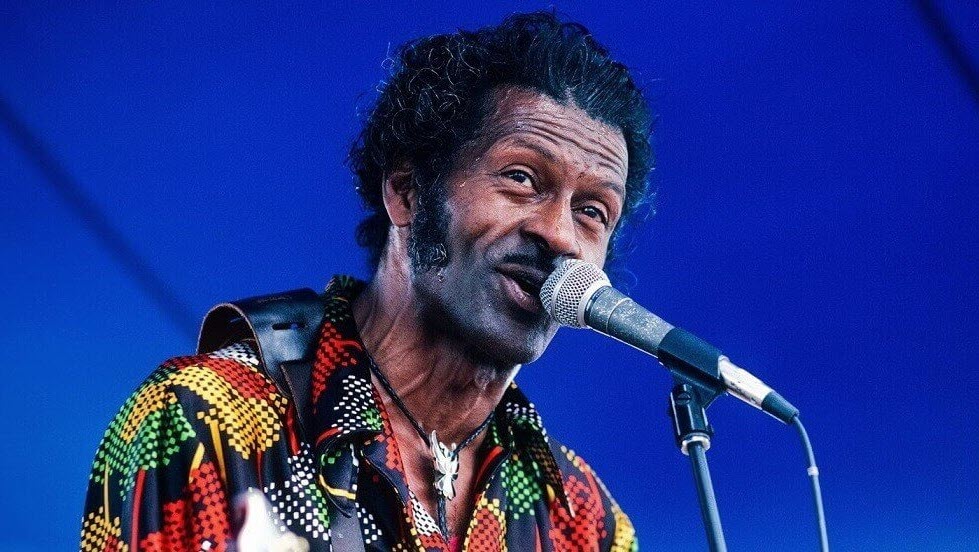
Chuck Berry turned everyday life into bright theater. He wrote about school bells and jukeboxes, fast cars and faster words, guitar dreams and Saturday nights that never seemed to end. His right hand drove a locomotive of rhythm while his left hand tossed out ringing double stops that still feel like fireworks. Across these classics you can hear the blueprint for guitar centered pop, the short story skill of a street poet, and a bandleader who knew how to make two and a half minutes feel like a movie. Turn these up and you can almost see the chrome flash by.
1 Johnny B. Goode
Johnny B. Goode is the folk tale that rock and roll wrote for itself. A kid with a guitar, a dream as bright as the lights along Highway 61, and a beat that promises tomorrow. The famous opening lick snaps like a starter pistol. Those stinging double stop figures do more than announce a key. They sketch a character before the lyric even begins. Chuck Berry sings with storyteller clarity, every consonant popping like a rimshot, every rhyme placed to hit the back row and the front row at once. Beneath the voice, the rhythm section moves with a dancer’s stride. Piano answers guitar with little grins. Snare and ride cymbal keep the road unspooling. What makes the record eternal is the way it binds aspiration to groove. You do not just hear a boy who might make it. You feel the town waking up around him, the diner windows fogging, the radio clicking on, the stage lights warming. Berry’s guitar tone is rich and nasal at once, a sound that slices and sings, and his phrasing keeps returning to that first motif as if to say remember the spark. It remains the great invitation. Plug in, count off, and go.
2 Roll Over Beethoven
Roll Over Beethoven is a letter to the future written in twelve bar script. Right from the count in, the band hits a jump beat that bounces like city pavement on a summer afternoon. Piano lays down rolling triplets. Guitar fires bright chords that ring like glass. Berry’s vocal has a grin you can hear. He names the heroes, blesses the jukebox, and draws a line from symphonic thunder to the new electricity humming in teenage bedrooms. The lyric is both playful and bold. It asks the old world to make room for a fresh noise and does so with the light touch of a comedian who knows that rhythm always wins the argument. The solo is a lesson in melody over flash. Short phrases hook the ear and lead back to the vocal like a handoff in a relay. Drums keep the shuffle snapping, neither stiff nor sloppy, which gives the chorus its spring. What lingers is the sense of ceremony. This is a benediction for the backbeat, a blessing for the needle and the groove. It is also a public service announcement for joy. The message still lands. Turn it up, clear a little space, and let the body decide.
3 Maybellene
Maybellene is a car chase, a love triangle, and a camera mounted on the front bumper all at once. The guitars come in buzzing like tires on fresh blacktop. Drums snap, bass thumps, and the whole track jumps forward with the impatience of youth. Berry’s vocal turns reportage into poetry. He rattles off details of rain and heat and needle marks on a dashboard as if the clock were a rival. The brilliance is in the compression. In under three minutes he sketches a soap opera and a map. The solo does not wander. It arrows toward the next turn, all bright bends and ringing two note punches that sit right in the pocket. Listen for the way the rhythm guitar chugs like a piston while the lead steals little breaths of time at the end of each bar. That tension creates motion you can feel in your calves. Lyrically the song treats jealousy as a fuel rather than a tragedy which makes the final twist feel both funny and true. Production wise the recording is raw in the best way. You can hear air in the room and grit on the strings. The result is a first principle of the form. Urgency as music.
4 Sweet Little Sixteen
Sweet Little Sixteen captures the calendar of a teenage nation. Berry writes like a reporter who loves his beat. He takes us city to city, listing ballrooms and beaches, radio shows and dance crazes, until the song feels like a road atlas that moves. The guitar figure is classic Berry geometry. Bright chords at the top, sliding double stops that tug the harmony forward, then a tidy turn that resets the loop. Underneath, piano plays the polite cousin to the swaggering guitar, filling gaps with little curlicues that keep the surface sparkling. The vocal is affectionate rather than leering, which is crucial. He celebrates the ritual of fandom and the thrill of being seen without turning the subject into a prop. The chorus is pure chant, easy to sing and easier to remember. Musically the band’s light touch matters. The groove is buoyant rather than heavy, which lets the melody float. The solo quotes the opening lick and then leaps into a few quick flurries that suggest squeals from the crowd. What makes the record a landmark is its mix of detail and myth. It describes a specific moment yet somehow inventories every high school year since. It is anthropology set to a backbeat.
5 Rock And Roll Music
Rock And Roll Music sounds like a creed set to chrome and sweat. The intro is a crisp punch, guitar and piano locking into a figure that lands right on the balls of the feet. Berry lays out the rules with preacherly rhythm. Any old way you choose it, as long as it swings. He praises the backbeat as if it were a civic virtue and the band seconds the motion with every bar. The recording is a master class in ensemble pulse. Piano rides the eighth notes, drums keep the snare proud and on time, bass stitches it all into a single cloth. When the solo arrives, the guitar speaks in full sentences. Phrases answer one another, and each mini statement returns to the theme as if signing the bottom line again. The track invites call and response from any room that hears it. That is why it has traveled through so many bands and eras. Tool kit wise, this is Berry distilling his aesthetic into a singable mission statement. Keep the story plain. Keep the rhythm undeniable. Keep the guitar bright enough to catch sunlight. The result is both anthem and how to guide, and it still works like fresh caffeine.
6 School Days
School Days is a snapshot of American routine that ends with liberation. The first verse sets the alarm clock. Up in the morning, books and rules, the grind that shapes a week. Berry sings it with wry patience, as if every bell ring were a rimshot. The arrangement mirrors that arc. The rhythm stays neat and clipped through the classroom scenes, then loosens when the scene shifts to the corner where the juke is jumping. That famous line about the teacher of rhythm and blues lands because the band has already begun to lean into the pocket. The chorus is a cheer that any after school crowd can learn in one pass. Guitar tone is clean and cutting, with those signature two note slides riding above a piano that grins through its teeth. The solo is all economy, a quick burst of light that becomes one more reason to head for the dance floor. What gives the track its power is empathy. Berry remembers the boredom and honors the release. He knows that music makes a room into a commons and a day into a story. By the last chorus you can smell soda syrup and warm tube amps and the first real breath of Friday.
7 You Never Can Tell
You Never Can Tell is a short novel disguised as a party. The piano vamp sets the table like a second line parade turned inward. The groove has New Orleans in its DNA, all strut and sparkle. Berry sings the timeline of a young couple who begin with nothing but a ring and a vow and end with a phonograph spinning and champagne in the icebox. The detail is delicious. He names the appliances, the furniture, the little status markers that map the climb from promise to comfort. The melody is a one step that never rushes, which gives every image room to breathe. Guitar steps back from its usual bite and becomes an elegant commentator, tossing small replies while the piano runs the show. The solo is a polite bow rather than a roar, and that choice keeps the focus on the narrative. What raises the performance to classic status is its affection. There is no wink at the couple, only pride in their hustle and delight in the way music accompanies a life. This is romance as practical magic, community as rhythm, prosperity as a good record player and a tune that keeps giving.
8 No Particular Place To Go
No Particular Place To Go rides the same chassis as a previous hit but uses it to tell a sly new story. The riff is a cousin to an earlier classic, proof that Berry knew a great engine is worth another lap. The lyric is deadpan comedy. A date night drive turns into a slow burn gag about a stubborn seat belt, and the band sells the joke by refusing to mug. The tempo cruises, never frantic. Drums keep the highway steady. Piano dots the shoulder with little lights. Guitar peels off commentary in short bright lines that mirror the growing impatience in the car. Berry’s vocal is conversational, each verse ending with a soft shrug that feeds the punch line. The recording works because it honors the song as both groove and sketch. You can dance to it without catching a single word. You can also sit and grin at the storytelling craft. The final verse pulls a lane change into memory, and the whole drive becomes a gentle rib of youthful urgency. It is a reminder that rock and roll can laugh at itself and that repetition in the right hands is tradition rather than laziness.
9 Memphis, Tennessee
Memphis, Tennessee is a master class in narrative perspective. Over a gentle shuffle, Berry calls the long distance operator to find a number for a girl named Marie. The first verses play like the usual heartbroken plea. Then the twist arrives, simple and devastating. Marie is his daughter, not a lover, and the separation is a family fracture rather than a romantic quarrel. The revelation lands because the music never overplays the hand. Guitar stays modest, rhythmic and warm. Piano offers small glints. The vocal keeps its dignity. Berry’s diction is careful, each place name and image placed so the map feels real. The solo is understated, a reflective walk rather than a sprint, which matches the lyric’s blend of hope and hurt. What makes this track special is restraint. Every element trusts the listener to connect the dots, and that respect gives the ending its emotional charge. Many songwriters have tried this kind of twist. Few place it this gently, and fewer still find a melody that feels like the ache of distance itself. It is a lullaby for the separated and a reminder that the smallest details can carry the heaviest truth.
10 Carol
Carol is swagger with a side of courtship. The opening guitar figure is a study in propulsion, those bright double stops kicking the door in and then dancing through the room. The rhythm section walks with a light heel, which lets the lead lines speak clearly without stepping on the vocal. Berry sings like a young man trying to be cool while telling the truth. He offers dance floor lessons and a promise of delight while the band proves he can back it up. The piano’s right hand chimes behind the guitar like a wingman with perfect timing. The solo is narrative, not just fireworks. It starts with a direct quote of the intro then angles into small variations that feel like a conversation with the chorus. Drums stay springy and exact, hats crisp and snare snappy. The lyric’s charm is in its simplicity. A name, an invitation, and the conviction that shared rhythm can solve most problems that matter. The cut has been covered by legends for good reason. It wears well because it is built well, each piece serving the central promise. Meet me where the music is and watch the night improve. That is a philosophy, and Carol sells it.

David Morrison is a frequent contributor to Singers Room. Since 2005, Singersroom has been the voice of R&B around the world. Connect with us via social media below.









