
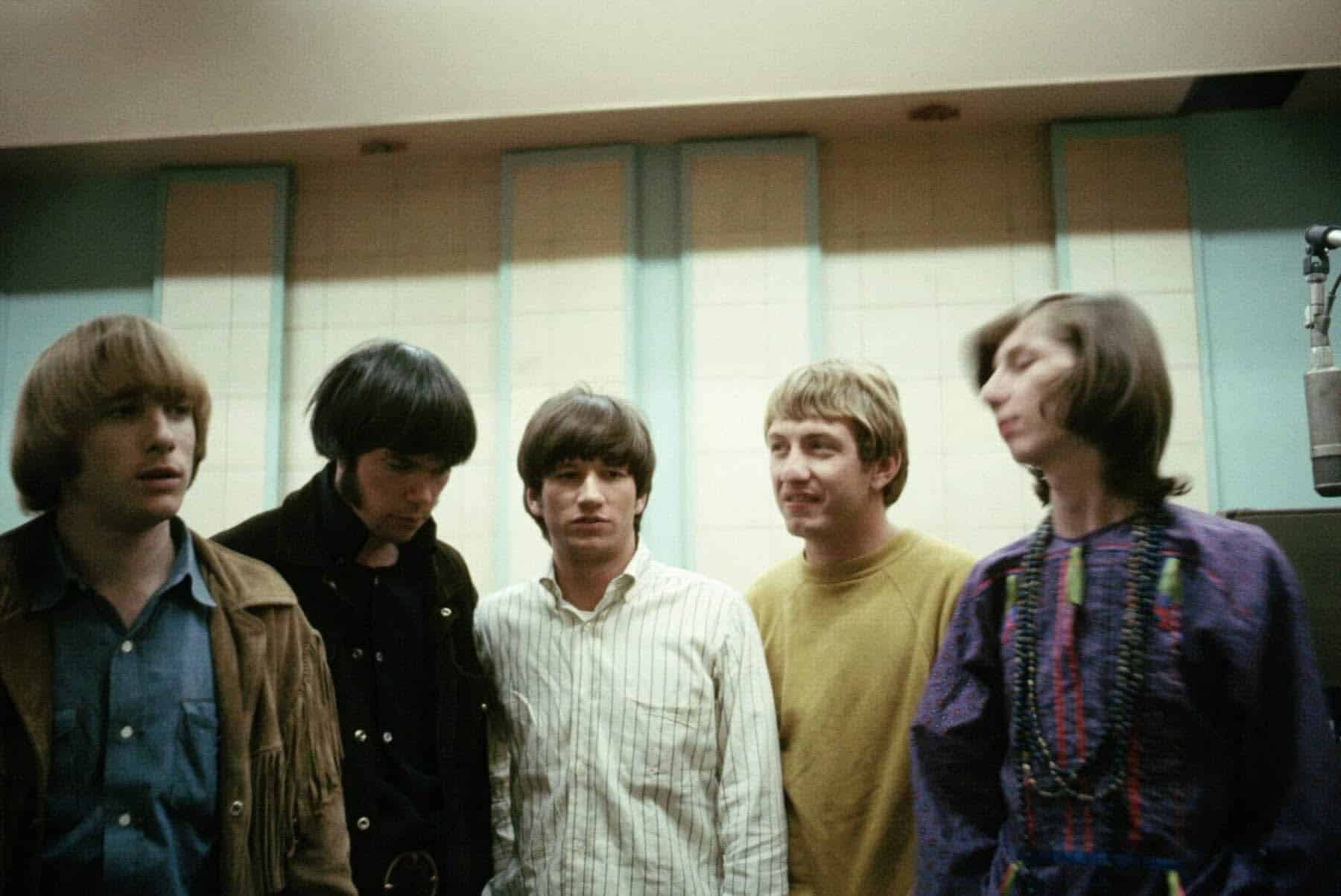
Some groups sound like they were born at a crossroads. Buffalo Springfield felt like three roads meeting at once. Stephen Stills brought sculpted songcraft and a drummer’s ear for groove. Neil Young brought mystery, noise, and a poet’s magnetism. Richie Furay brought golden tone and a country shimmer that softened hard edges. Under the California sun they turned folk guitars into river currents, electric leads into weather, and harmonies into guiding stars. Their catalog is brief, yet it keeps widening with each listen. These ten essentials show how doubt can dance, how protest can whisper and still cut, and how melody can carry a whole era.
1 For What It’s Worth
For What It’s Worth begins with the quietest alarm bell in popular music. A spare guitar figure hovers, then the kick drum places a footstep that feels like someone stepping out onto a city street after midnight. Stephen Stills sings with the calm of a reporter and the ache of a neighbor. He is not delivering a sermon. He is handing you a photograph that keeps developing while you look. The lyric draws power from plain words and small pictures. Signs, lines, children, and fears that wear different clothes but share the same face. The production leaves space around every instrument, so the tiniest cymbal whisper and the lightest bass movement register like clues. Harmony voices arrive like friends who have come not to argue but to stand with you. The famous stop line cuts because it describes, not condemns. Guitar answers text with subtext, a second narrator made of tone and restraint. By the last chorus the groove has not grown louder, only more certain, and that certainty is the message. Look, listen, measure, then move together. A protest song that trusts hush more than roar, which is why it still sounds new when the world feels old.
2 Mr. Soul
Mr. Soul walks into the room with swagger and side eye at once. Neil Young sings like a man watching his reflection move independently, amused and a little alarmed by how fame rearranges a face. The riff nods to early rock ancestors, yet the rhythm section gives it a tense modern spring that keeps the floor hot. Fuzz guitar strafes the corners, answering the vocal with phrases that bite and then hang in the air like smoke. The lyric is riddled and plain at the same time. It sketches autograph lines, back room compliments, and the strange math that turns privacy into currency. The chorus pivots into a darker melody that feels like a mirror suddenly catching different light. What keeps the track from collapsing into snarl is craft. Harmonies lace the refrain with a sweet shadow. The soloing rides melody rather than speed, letting placement do the damage. Listen to the drums. They never grandstand. They herd the cats. By the fade you have a full portrait of early stardom’s funhouse. A grin on the glass, a warning under the grin, and a band that could make critique sound like a hit.
3 Bluebird
Bluebird begins like a mountain stream and ends like a barn dance at dusk. The opening acoustic figure is so clear you can almost see the wood grain. Then the electric guitar answers with a crisp gleam, and you realize this will be a conversation rather than a monologue. Stephen Stills writes a melody that seems to walk on its toes, graceful yet grounded. Harmony voices catch the corners of the line and lift them just enough to make sky. The lyric feels like a note tucked under a coffee cup. Addressed to a person, yet speaking to a season of change. The rhythm section does a delicate job, balancing buoyancy with traction so the tune can both glide and dig. At the midpoint the track opens into an instrumental journey. It never turns into indulgence because the motifs keep returning like paths you recognize. Banjo and acoustic textures appear like old friends at the gate, and suddenly you are standing in a larger yard. The swing at the end is earned. Stills sings and plays like someone who knows that complexity does not have to feel complicated when the heart holds the map. The last chord lands like a door closing gently on golden light.
4 Expecting To Fly
Expecting To Fly is a dream filmed in slow motion. Neil Young sings almost under his breath, as if not to wake the scene he is describing. The orchestra is not syrup. It is architecture made of sighs. Woodwinds drift, strings carry the light, and a piano marks small turning points like steps on a staircase you almost cannot see. The lyric is impressionist and exact at once. Rooms, photographs, departures that happen in gestures rather than speeches. Young’s melody climbs in small intervals that feel like thoughts arriving just in time. The band gives way to the arranger’s universe, yet the core never stops feeling like a folk confession. That is the trick. Studio grandeur becomes intimate because the vocal remains human scale. The mix leaves air around each event, so silence participates as an instrument. By the last refrain you are not asked to draw conclusions. You are asked to live inside the feeling for another heartbeat. The cut lasts only a few minutes, yet it suggests the span of a life you once shared and will keep carrying in quiet rooms. It is a postcard from a dream that does not fade in daylight.
5 Broken Arrow
Broken Arrow is Neil Young’s collage piece, a suite that stitches crowd noise, heartbeat pulse, shifting tempos, and fragments of melody into a single arc. It reads like a scrapbook of fame and memory, each page a new texture. The vocal remains close to the microphone even as the landscape changes behind it, so the listener never loses the thread. Piano motifs recur like familiar thoughts. Drums appear, vanish, and reappear with fresh intent. Brass and reeds flare like sudden pictures in the mind. The lyric refuses a straight line. Instead it gives you images that illuminate one another by proximity. A face in a newspaper, a fairground echo, the ache of wanting to know whether wonder can survive a crowd. The band’s identity dissolves into the larger studio painting and then returns at just the right moments to remind you this is Buffalo Springfield. What could be a puzzle becomes a feeling because of pacing. Transitions arrive with a dancer’s grace. By the final figure you have walked from backstage nerves to main street reflection and back to a quiet chair. It remains one of the boldest pieces in the catalog, proof that pop can carry cinema without losing soul.
6 Rock And Roll Woman
Rock And Roll Woman moves with a confident shimmer. Stephen Stills writes to a presence rather than a stereotype, and the band answers with arrangement details that flatter the subject without turning the mirror into a caricature. Guitars braid bright lines, one chime clean, one a shade rougher, while the rhythm section puts a spring in the step. The verses are built from short phrases that land like snapshots. The chorus opens that album ready wideness where harmony becomes architecture. Stills sings with clear weather in his tone, and Richie Furay’s high part gives the refrain its glow. There is a quiet sophistication in the chord movement. It keeps your ear surprised without calling attention to itself. The middle stretch gives the guitars a chance to speak, but the lines stay melodic and welcoming. You feel the city in the beat and the coast in the air. Lyrically the praise is direct and a little sly, the way admiration sounds when it is delivered by a musician who has seen many rooms and still gets delightfully knocked back by a voice that can take a stage. The track earns its smile and keeps it.
7 Kind Woman
Kind Woman is Richie Furay’s valentine to steadiness. The song leans toward country grace, pedal steel weaving a soft halo while the rhythm section keeps an unhurried sway. Furay sings in his sunlit register, that easy tenor that makes even complex feelings sound like they know their own names. The lyric is as plain as a kitchen table and that is its strength. Gratitude for small daily acts, for weathered patience, for the way a home is built from gestures rather than speeches. Harmonies lift the chorus like a gentle toast. The guitar solo is all melody, no fuss, a short walk along the fence before returning to the porch. What makes the recording special inside the band’s story is the way it previews country rock’s next era without abandoning the folk pop core. You can hear how this sensibility will thread into future projects, yet the track never feels like a forecast. It feels like a moment fully present. By the last line you are left with that rare pop feeling of having been genuinely comforted. The title tells the truth and the performance honors it.
8 Nowadays Clancy Can’t Even Sing
Nowadays Clancy Can’t Even Sing contains an entire worldview in its title alone. Neil Young writes in character but draws from the weather of his own early uncertainties. Richie Furay takes the lead and gives the melody a buoyant lilt that sets a sympathetic distance from the subject. The arrangement is all precise lightness. Acoustic guitar patterns flutter, brushed drums keep a dancer’s whisper, and the bass writes a second tune under the main one. The lyric uses shifting perspectives to sketch how small town eyes can pin a person in place and how a person can become a ghost in their own circles. The chorus folds those ideas into a line that sounds like a joke and lands like a bruise. Harmony parts are placed like gentle hands on the shoulders of the tune. You can hear the band already understanding dynamics as narrative. No one overplays. Each entrance matters. The result is a song that could have been bitter yet arrives as compassionate observation. It keeps its arms open to the character even as it tells the truth. Time has only sharpened its kindness.
9 Sit Down I Think I Love You
Sit Down I Think I Love You is Stephen Stills leaning into the pop end of his compass with style. The track moves with a friendly clip, snare crisp, acoustic guitars chiming, electric accents answering like bright streetlights. The melody is built for quick memorization, yet Stills shapes phrases with a rhythmic ease that keeps the sweetness grounded. Harmony voices enrich the chorus without turning it saccharine. Lyrically the invitation is direct and polite at once, the kind of approach that sounds like conversation rather than performance. The bridge adds the smallest touch of harmonic color, a quick shadow that makes the return to the refrain feel newly lit. A compact lead line bows to the song and steps away. What you hear most is craft in service of welcome. The recording also shows why other artists could carry Springfield material so well. The bones are strong, the tune sits naturally on the voice, and the rhythm section makes it feel effortless. It is a snapshot of Laurel Canyon optimism before the clouds gathered, and its charm has not dimmed. The smile in the title becomes the smile in the room.
10 On The Way Home
On The Way Home is a goodbye that chooses to smile. Neil Young writes it and Richie Furay sings lead, which already tells you something about the group’s generosity. Horns add a bright civic color you do not always hear in their work, and the rhythm moves at a stately clip that suggests a parade passing the corner where you once stood with a friend. The verses sketch small images of movement and recognition. The chorus opens into one of the loveliest lines in the Springfield book, a rise that feels like the lift in your chest when you finally turn toward a place that still knows your name. Acoustic and electric guitars cooperate rather than compete, and the arrangement gives everyone room without clutter. The lyric acknowledges distance while refusing despair. That balance reads as wisdom now. The group was nearing its end, yet the record carries grace rather than grievance. It sounds like a band wishing itself well by wishing its listeners well. Few farewells feel this welcoming. It is a perfect last chapter to a brief story that keeps lighting the shelves of many other stories that followed.

David Morrison is a frequent contributor to Singers Room. Since 2005, Singersroom has been the voice of R&B around the world. Connect with us via social media below.