
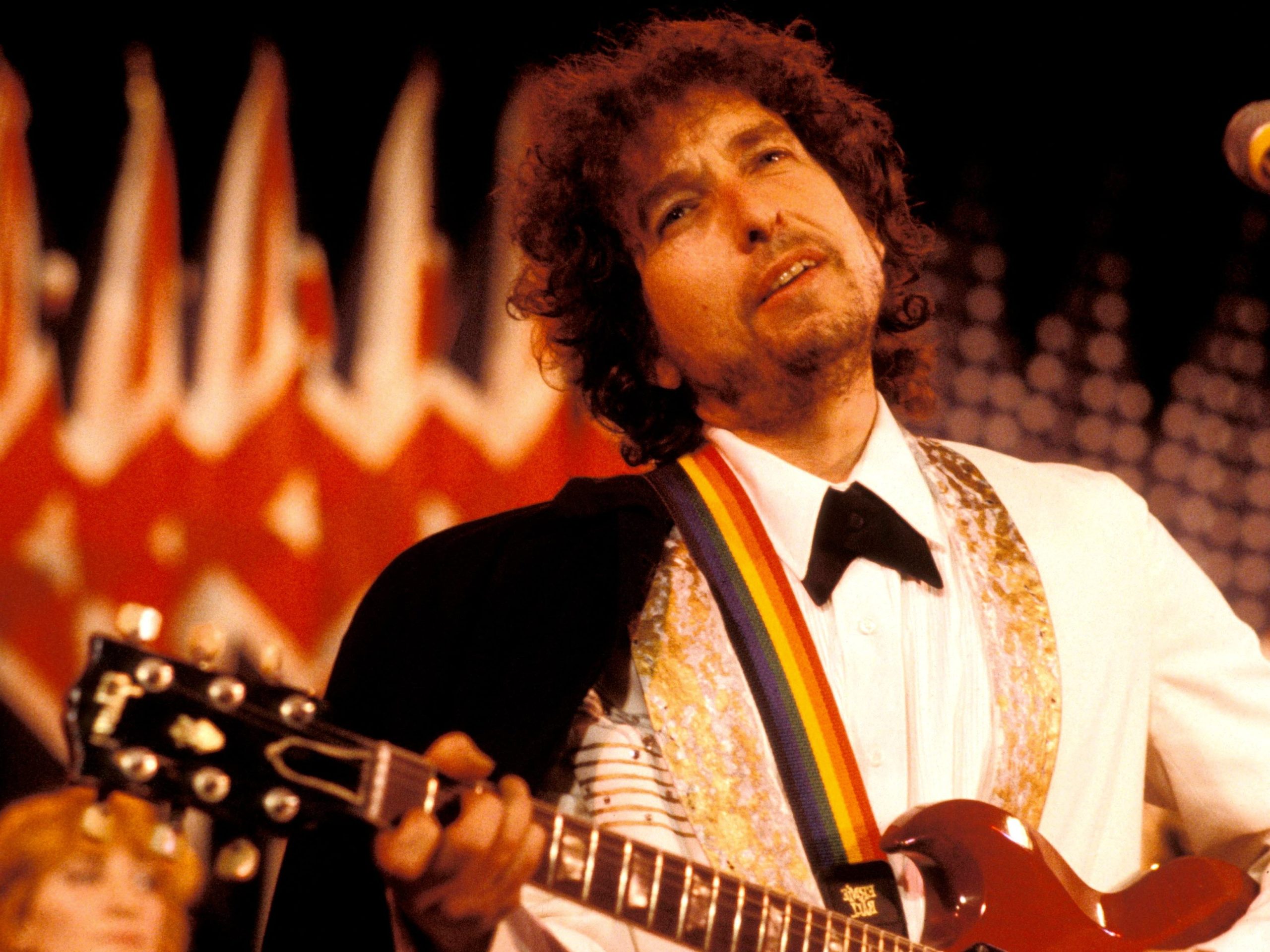
Bob Dylan is American music’s wandering compass. He can whisper like a campfire storyteller or bark like a street corner prophet. His melodies travel light while the words carry whole towns of memory and rumor. A harmonica might arrive like weather. A snare drum might sound like shoes on courthouse stone. He treats language as a living river and rhythm as a mule you can trust. Genres are doors he walks through rather than walls. These ten songs are not simply favorites. They are moving parts in a long engine of invention where folk, blues, country, and rock learn to speak in the same voice.
1. Like A Rolling Stone
An organ shimmers into focus and the band settles into a stride that feels like a city block at noon. The voice is lean and wired, telling a story the way a camera might, with quick cuts that never lose the subject. The verses sketch a tumble from comfort into exposure, each couplet a small mirror. What makes this recording endure is the balance between swagger and documentary. Dylan sounds amused and wounded at once, a reporter who has seen a lot and still finds the new angle. Al Kooper’s organ line threads through the song like a guiding rail and the snare is an impatient heartbeat. Harmonicas do not decorate. They testify. The chorus question is not cruel. It is a check on the cost of luck when it runs out. The chord progression is simple on purpose so that phrasing can be elastic. Words stretch over bar lines and then snap back with perfect timing. You can blast it in a car and shout along or sit with headphones and notice the tiny breaths that carry the performance. Either way the song feels like a rite of passage, a letter that knows your address before you offer it.
2. Blowin In The Wind
A gentle strum sets the pace of a long walk and the melody arrives with the calm of an old hymn that somehow no one had sung yet. The miracle is the plainness. Simple questions made of short words create a corridor that any listener can enter. There is no scolding. There is only a persistent curiosity that refuses to tire. Each verse moves from image to implication and back again. Doves, cannon balls, mountains, the scale of things that outlast us. The chorus gives the answer and refuses to box it up, which keeps the song honest. Vocal delivery is quietly fearless. There is no theatrical reach for high notes, only a steady lantern glow that allows the listener to do the seeing. Guitar and voice travel like old friends. You can hear why choirs take it, why schoolrooms borrow it, why a lone singer in a cafe can still turn a room with it. The tune invites harmony and the lyric invites conscience. Together they make something larger than a protest piece and more durable than a news headline. It is a folk song in the oldest sense, a melody built to outlive its first moment and to meet new weather without flinching.
3. The Times They Are A Changin
The opening line sounds like a town crier and a kind neighbor at once. A waltz feel turns the message into a communal sway rather than a drill. That is the secret. The song gathers rather than shouts. Verses invite parents, writers, and lawmakers into the same room and ask them to listen to a tide that will not be negotiated. The chorus is a banner that anyone can carry. Dylan’s diction is crisp, and the phrasing leaves room for the words to ring. Guitar stays unadorned so the lyric can do the heavy lifting. There is a seriousness here that never becomes dour because the melody welcomes voices. You can imagine this sung by one person at a kitchen table or by a field full of strangers who suddenly know the same lines. The power is not in prediction but in invitation. The song does not say what to think. It urges everyone to hear that time is already moving and to step with it. That is why it works as ceremony and as quiet personal counsel. It turns history into meter and asks for courage that begins in ordinary breath.
4. Mr. Tambourine Man
A delicate guitar figure spills like light through blinds and the vocal steps in with that soft upward smile that Dylan finds when the map leads past the border. This is a request and a surrender to imagination at the same time. Lines unravel like ribbon and then tie themselves again. Smoke rings, ragged clowns, the kind of images that feel both playful and necessary. Rhythm is gentle but insistent, a long walk with no hurry. The chorus is a child’s plea voiced by a grown heart. The beauty is the motion of the language. Phrases rest on top of the beat and then tumble ahead, as if the singer were seeing the next corner while still pointing at this one. The harmonica carries air from another room into this one. There is no heavy percussion and no need for it. The song levitates on diction and melody, proving that a story can be both precise and dreamlike without contradiction. It works alone on a stoop at midnight and it works as a spark for other musicians who hear a whole new country inside those chords. It remains a tender passport to a place where seriousness and playshake hands.
5. Subterranean Homesick Blues
Drums snap, guitar scrapes, and the voice launches into a sprint that never loses breath. The rhyme schemes are alleyway acrobatics and yet sense never gets crowded out. Johnny in the basement, the man in the trench coat, quick sketches that feel like nineteen headlines pasted to a single wall. The energy owes as much to jump blues and talking blues as to folk, which explains the song’s forward lean. The famous cue card clip is etched in memory, but the recording itself is the real engine. Dylan throws warnings and wisecracks with equal pleasure, then steps aside for a lean break before starting the next burst. What makes it work is compression. Whole neighborhoods and policy battles fit into punchy couplets that bounce like rubber balls down a flight of stairs. The band plays with a grin that refuses neatness, perfect for a lyric that mistrusts anyone who seems too sorted. Listen closely and you can hear the first ripples of a new electric approach that still respects the brisk talk of the coffeehouse. It is newsprint set to a backbeat and it still sounds current because the hustle it describes never really left.
6. All Along The Watchtower
A brief guitar prelude, then a march that feels like boots on dry ground. The lyric is a small play in three verses. Two strangers trade conclusions that sound like prophecy, and the world beyond the tent seems to shift while they speak. Dylan’s delivery is measured, almost ceremonial, which lets the tension build in the spaces between lines. Harmonica rises like a desert wind then sits down again. The chord cycle turns like a wheel and refuses to resolve too early. That circular pull is the song’s spine. The images are Biblical without dogma, a traveler’s language for danger and revelation. Many know a different arrangement from another band. Returning to this cut is a reminder of how the words sit before any embellishment. It is a meditation that wears a simple cloak. The power comes from discipline. No wasted syllable. No extra furniture in the room. Even the final line arrives like a door opening to a landscape you will have to cross yourself. It is not just a story about watchmen and thieves. It is a way to sing about moments when history and rumor and fate seem to breathe the same air.
7. Tangled Up In Blue
Acoustic guitar flickers like sunlight on a windshield and the band joins with the easy confidence of travelers who know the road’s humor. The narrative voice bends time without apology. Scenes shuffle. Pronouns pivot. A waitress becomes a historian, then a mirror, then a moving target for memory and regret. The chorus is both knot and compass, a phrase that admits confusion and claims persistence. Dylan’s phrasing is conversational, even when the rhyme suddenly clicks like a cufflink. The groove is steady but flexible, letting the singer stretch a line when the picture needs air. This is a novel told with postcards, each card with its own weather. The arrangement is modest, which allows the story to keep the wheel. You hear the joy of motion alongside the cost of leaving and the relief of finding a voice that can hold both. The beauty of the track is that it rewards attention without punishing casual listeners. You can hum along and feel the lift, or you can study how the narrative crosses its own tracks and still arrives somewhere true. Either way the song makes distance feel like part of the lesson rather than only the ache.
8. Knockin On Heavens Door
Two chords trade quiet vows while a third waits like a porch light. The lyric is spare, the kind of economy that turns a phrase into shelter. Dylan sings low, almost conversational, as if the room needs comfort more than spectacle. Backing voices arrive like family from the next room. Drums stay tender, more pulse than push. The chorus repeats like an old prayer and somehow gains weight each time without ever raising its volume. The song’s strength lies in restraint. It refuses decoration, which allows the images to breathe. Badge, guns, a doorway that may be literal or may be the line between one kind of time and another. It works in the original scene and works far beyond it because the shape is so clear. Musicians in every style have found their own way into it, yet the first recording remains the quiet room where all those interpretations learned their manners. Put it on during a crowded day and watch the noise step back a pace. The melody is a hand on the shoulder. The lyric does not attempt to solve anything. It simply keeps you company while you face what must be faced.
9. Just Like A Woman
A graceful figure on piano and a vocal that moves with a careful hush set the mood. The verses wind through small rooms and city rain, noticing gestures and small betrayals with an almost painterly patience. What keeps the song tender rather than harsh is the tone. Dylan sings without sneer, letting ambiguity color the edges. The chorus lifts in a way that feels both resigned and hopeful, as if admitting that two people can be complicated while still deserving kindness. Guitar and organ exchange quiet compliments, and the rhythm section sits back far enough to let syllables breathe. The title phrase is a lens rather than a verdict. It asks the listener to examine performance and vulnerability in equal measure. The bridge opens the window just enough to change the air, then the song returns to the central theme with deeper color. Many interpretations have argued over the portrait. That endurance is proof of craft. The language is specific but roomy, built to hold more than one lived experience. It is a ballad of close observation and imperfect affection, sung with a poise that lets the listener fill in their own margins.
10. Hurricane
Violins cut the air like sirens and the band falls into a stride that feels like a march down courthouse steps. The lyric reads like sworn testimony set to a galloping beat. Names, places, late night timelines, the machinery of accusation. Dylan’s voice is heated but lucid, never letting rage blur the facts. The chorus returns as a verdict shouted from the back row, and each verse adds another piece of documentary bone to the body of the song. The arrangement is shrewd. Percussion pushes, bass keeps a stern path, and the violin’s recurring figure underlines the tension without turning the piece into theater. The power here is specificity. The narrative does not hide behind generalities. It talks about this person in this town and the ways a system can grind a person down. Yet the performance still sings. The melody carries you even as the details weigh heavy. By the end you feel the cold of the holding cell and the heat of a crowd that refuses to look away. It is protest as storytelling, built to move feet and to sharpen memory at the same time, which is why it continues to find new listeners whenever justice is the topic on the table.

David Morrison is a frequent contributor to Singers Room. Since 2005, Singersroom has been the voice of R&B around the world. Connect with us via social media below.









