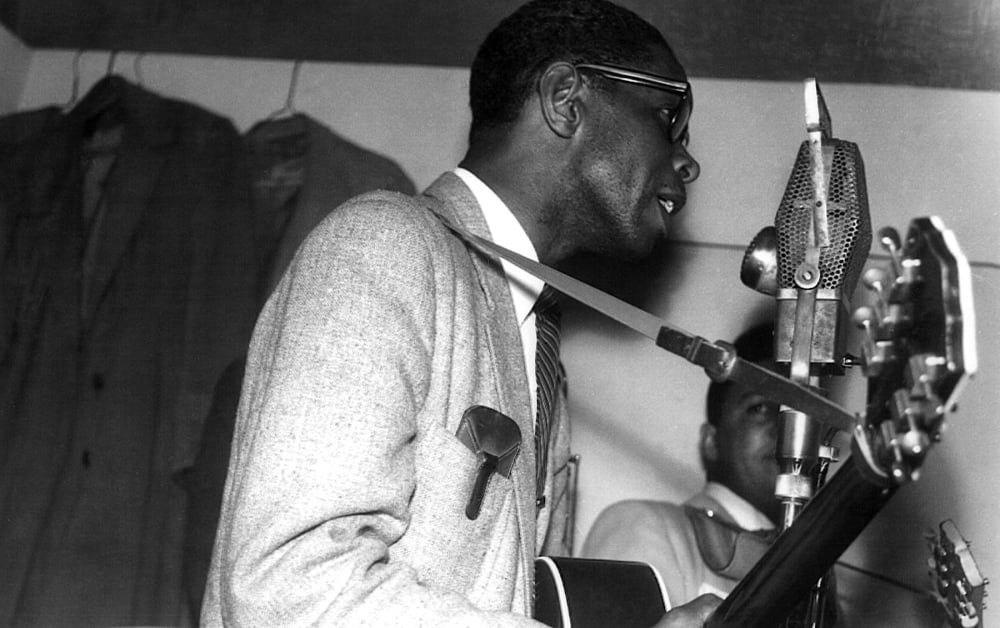
Few blues musicians left a louder, more electrifying mark on music history than Elmore James. Known as the “King of the Slide Guitar,” James transformed raw emotion into explosive sound, creating records filled with passion, heartbreak, swagger, and unstoppable energy. His fierce guitar tone and unmistakable slide technique became hugely influential on generations of blues, rock, and southern rock musicians who followed. Whether delivering hard driving blues shuffles or aching slow burners, James played with an intensity that made every performance feel alive and urgent. His recordings captured the gritty spirit of postwar electric blues while helping shape the sound of modern rock music decades before the genre fully emerged. From smoky juke joints to legendary blues compilations, his music continues to roar through speakers with timeless force. These unforgettable songs showcase the fire, soul, and groundbreaking artistry that made Elmore James a true blues giant.
1. Dust My Broom
“Dust My Broom” is the song that forever tied Elmore James to the sound of electric slide guitar. From the first slashing notes, the recording announces itself like a bolt of lightning across the blues landscape. That opening riff became one of the most influential guitar figures in American music, shaping blues, rock, and southern guitar traditions for generations. James did not simply play slide guitar; he made it roar, cry, and testify. His tone was sharp, metallic, and emotionally charged, carrying the feeling of a train whistle, a human voice, and a blade cutting through humid night air all at once.
The song’s restless lyric gives the performance its forward motion. The narrator is ready to leave, ready to move, ready to shake loose from romantic trouble and start again somewhere else. That sense of escape fits perfectly with James’s vocal delivery. He sings with grit, urgency, and a wild edge that sounds impossible to tame. The band behind him keeps the rhythm driving with compact power, but the slide guitar remains the commanding force. “Dust My Broom” is not only Elmore James’s signature recording. It is one of the foundational records of electric blues, a song that made the guitar sound bigger, fiercer, and more emotionally explosive than ever before.
2. The Sky Is Crying
“The Sky Is Crying” is one of Elmore James’s deepest and most enduring blues masterpieces, a song where sorrow seems to fall from the heavens themselves. The title image is unforgettable because it turns heartbreak into weather, making personal pain feel as large and unavoidable as a storm. James’s voice carries that grief with remarkable force. He does not sing gently around the sadness. He leans into it, letting each line tremble with longing, loneliness, and the ache of watching love slip away.
The slide guitar is central to the song’s emotional language. Every phrase seems to weep in answer to the vocal, giving the recording a call and response quality that feels almost spiritual. James’s guitar tone has a raw human quality, as though the instrument is crying right beside him. The tempo allows the feeling to stretch, giving every bend and vocal cry room to land. That patience makes the song feel monumental.
“The Sky Is Crying” became a blues standard because it captures heartbreak with elemental simplicity. Rain, tears, empty streets, and a missing lover become symbols anyone can understand. Yet in Elmore James’s hands, those symbols feel newly alive. The song stands as one of the greatest examples of how blues can turn private suffering into universal expression without losing its raw personal edge.
3. Shake Your Moneymaker
“Shake Your Moneymaker” shows Elmore James at his most energetic, playful, and rhythmically explosive. While many of his greatest recordings are built around heartbreak and desperate longing, this song runs on heat, movement, and raw dance floor electricity. The groove is immediate, designed to make bodies move, and James attacks the performance with the same intensity he brought to his stormiest blues. His voice is commanding and animated, pushing the song forward like a bandleader determined to keep the room alive until closing time.
The slide guitar work is fierce and unmistakable. James’s tone cuts through the rhythm with a bright, urgent edge, adding excitement without slowing the momentum. The song’s power comes from its blend of simplicity and fire. It does not need complicated lyrics or elaborate structure. Its purpose is direct: create motion, release tension, and turn blues feeling into physical joy. That directness is part of why the track became so influential among blues and rock musicians.
“Shake Your Moneymaker” remains one of Elmore James’s most popular songs because it captures the celebratory side of his art. It is sweaty, loud, and full of life, proving that the blues could be just as much about release as sorrow. With this recording, James gave future generations a template for high energy blues that could shake the walls.
4. It Hurts Me Too
“It Hurts Me Too” is one of Elmore James’s most emotionally generous performances, a blues ballad built around empathy, longing, and romantic pain. The song’s central idea is simple and devastating: when the person he loves suffers, he suffers with her. That emotional connection gives the recording a tenderness that stands apart from some of James’s more aggressive numbers. Yet even in a slower, more sympathetic setting, his performance carries unmistakable intensity.
James’s vocal delivery is full of ache. He sounds wounded not only by his own desire, but by the sight of someone being mistreated. That combination of compassion and longing gives the song unusual depth. He is not merely asking for love. He is offering understanding, protection, and shared pain. The slide guitar becomes the second voice in the song, stretching notes into cries that seem to echo the lyric’s emotional weight. Each guitar phrase feels carefully placed, as if James is answering his own vocal with feeling too deep for words.
“It Hurts Me Too” became a lasting blues favorite because it balances vulnerability with strength. It is tender without being soft, sorrowful without becoming passive. Elmore James brings dignity to heartbreak, showing that blues feeling can come not only from personal loss, but from the pain of caring deeply for someone who is hurting.
5. Done Somebody Wrong
“Done Somebody Wrong” is a tough, driving Elmore James classic that captures guilt, misfortune, and restless blues energy in one tightly wound performance. The song’s title suggests moral reckoning, and James sings as if trouble has finally caught up with him. His voice carries the rough authority of a man who knows he may deserve the hardship he is facing, yet still cannot escape the sting of it. That mixture of confession and complaint gives the song its enduring personality.
The arrangement is lean and muscular, powered by James’s slide guitar and a rhythm that snaps with urgency. The start and stop feel of the song gives it dramatic punch, creating space for his vocal lines and guitar bursts to hit with extra force. James’s slide playing is not ornamental. It is part of the song’s emotional structure, answering the lyric with sharp flashes of sound that suggest regret, anger, and motion all at once.
“Done Somebody Wrong” became widely admired because it contains so much of what makes Elmore James essential: raw vocals, cutting guitar, memorable phrasing, and a feeling of danger barely held in check. The song is blues as consequence, blues as confession, blues as a restless night with no easy peace. Its influence continued long after James’s lifetime, especially among bands that loved the harder edge of electric blues.
6. I Can’t Hold Out
“I Can’t Hold Out” is a brilliant example of Elmore James turning desire and impatience into blazing electric blues. The song is sometimes known by listeners through its “talk to me baby” theme, and that conversational urgency is central to its appeal. James sings like a man who has reached the limit of waiting. There is longing in his voice, but also insistence, as if the emotional pressure has built too high to remain contained.
The groove is lively, swinging, and full of momentum. The band gives James a strong foundation, but his slide guitar dominates the atmosphere with unmistakable authority. His tone has that famous biting edge, yet the playing is full of rhythmic intelligence. He does not merely fill space. He drives the song, punctuates the vocal, and turns romantic frustration into musical electricity. The performance feels spontaneous, but it is held together by James’s powerful sense of timing.
“I Can’t Hold Out” remains one of his most popular recordings because it captures the urgency of communication in love. The narrator needs an answer, a voice, a sign, anything that can ease the pressure inside him. James makes that emotional need feel physical. The song swings, burns, and pleads all at once, showing why his style became such a crucial bridge between traditional blues and the louder blues rock explosion that followed.
7. Standing At The Crossroads
“Standing At The Crossroads” places Elmore James inside one of the most powerful images in blues mythology. The crossroads has long represented decision, danger, fate, and spiritual uncertainty, and James brings that symbolism to life with a performance full of anguish and force. His voice sounds burdened, as though he is caught between past mistakes and an unknown future. That feeling gives the song a weight that goes beyond ordinary romantic sadness.
The slide guitar adds a dramatic edge to the recording. James’s phrases cut through the arrangement like cries in the dark, creating a sense of tension that matches the lyric’s emotional landscape. The song feels rooted in older Delta blues imagery, yet James’s electric attack makes it sound modern, urgent, and amplified for a new era. That is one of his greatest achievements. He carried traditional blues feeling into the electric age without losing its mystery.
“Standing At The Crossroads” is compelling because it shows Elmore James as more than a master of riffs. He was a singer of emotional situations, capable of making symbolic language feel immediate and personal. The song captures a man paused at a point of reckoning, unsure where to turn, but unable to remain unchanged. James makes that moment sound timeless, haunted, and alive with electric fire.
8. Madison Blues
“Madison Blues” is one of Elmore James’s most infectious uptempo recordings, a song that brings together dance rhythm, amplified slide guitar, and the driving force of a seasoned blues band. The track swings hard, moving with a confidence that feels both streetwise and celebratory. It reflects James’s ability to take a popular dance craze atmosphere and bend it into his own blues language, making the result sound less like a novelty and more like a full blooded performance.
His vocal delivery is loose, lively, and commanding. James sounds energized by the rhythm, calling the listener into the groove with the authority of someone who knows exactly how to lead a room. The band responds with a crisp, propulsive feel, while the saxophone and rhythm section add color and punch. Still, the slide guitar remains the center of gravity. James’s tone rides over the track with unmistakable bite, reminding everyone that even his most danceable songs carried serious musical muscle.
“Madison Blues” endures because it reveals the joyous side of Elmore James’s art. The song has movement, humor, grit, and excitement. It is proof that his blues could mourn, plead, threaten, and celebrate with equal power. For listeners discovering the range of his catalog, this track shows how naturally he could turn a groove into a statement of personality.
9. Look On Yonder Wall
“Look On Yonder Wall” is a classic Elmore James performance filled with swagger, romantic tension, and sharp blues attitude. The song has a conversational quality, as if the narrator is speaking directly from the middle of a complicated situation. James’s vocal brings that drama to life with rough charm and unmistakable authority. He sounds confident, wounded, sly, and restless all at once, which gives the track a vivid human complexity.
The guitar work is pure Elmore James. His slide tone slices through the arrangement with fierce clarity, carrying the same emotional force as his singing. The rhythm is steady and infectious, giving the song a strong foundation while leaving space for James’s phrases to shine. The result is a recording that feels both tightly arranged and alive in the moment. Every vocal shout and guitar answer adds to the sense of blues storytelling unfolding in real time.
“Look On Yonder Wall” became one of his enduring favorites because it contains the essential ingredients of his mature style. There is a memorable groove, a strong narrative voice, and enough guitar fire to satisfy anyone drawn to his reputation as the King of the Slide Guitar. The song also shows how James could make familiar blues themes feel immediate through personality alone. His performance turns a simple scene into a charged encounter full of humor, tension, and grit.
10. My Bleeding Heart
“My Bleeding Heart” is one of Elmore James’s most emotionally intense recordings, a song that places heartbreak right in the title and then delivers on that promise with raw conviction. James sings as though the wound is fresh, letting his voice crackle with pain, desire, and frustration. The phrase suggests more than ordinary sadness. It suggests emotional injury so deep that it cannot be hidden, and James gives that feeling a sound through both his vocal and guitar.
The slide guitar in this track is especially expressive. It does not simply decorate the melody. It seems to bleed alongside the singer, stretching notes into cries and answering the lyric with sharp emotional force. The arrangement has a driving quality, but the mood remains heavy with longing. That contrast gives the song its unique power. It moves forward even while the narrator seems trapped inside sorrow.
“My Bleeding Heart” is a vital Elmore James song because it captures the dramatic heart of his artistry. He could make pain sound enormous without making it theatrical. His music carried the urgency of lived experience, and this recording is a perfect example of that gift. The song later gained additional attention through artists influenced by James’s style, but the original power belongs to him. It is electric blues at its most wounded, fiery, and unforgettable.

Samuel Moore is a frequent contributor to Singers Room. Since 2005, Singersroom has been the voice of R&B around the world. Connect with us via social media below.