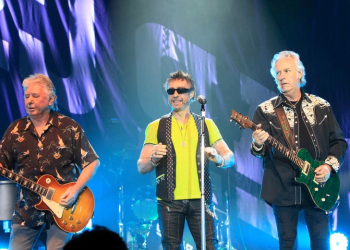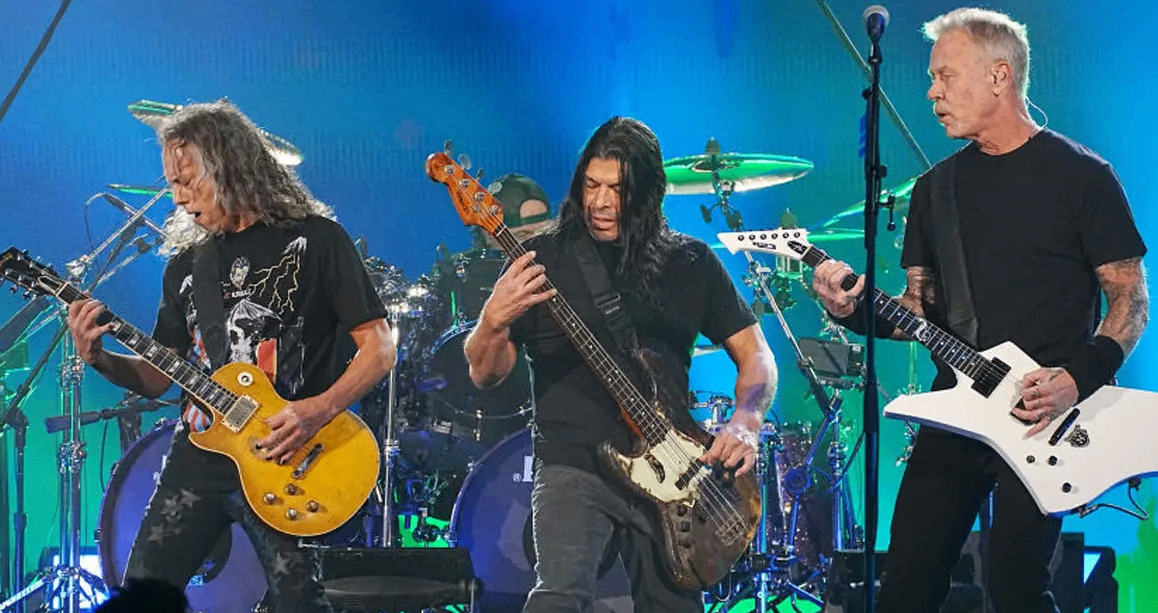
Few bands in heavy music history have reshaped the sound of metal as powerfully as Metallica. Combining blistering speed, crushing riffs, emotional intensity, and fearless songwriting ambition, Metallica helped bring thrash metal from underground clubs to massive stadiums around the world. Their music balances raw aggression with complex arrangements, unforgettable hooks, and lyrics that explore anger, isolation, war, addiction, and personal struggle. From lightning fast early classics to darker, more melodic anthems that dominated mainstream rock radio, the band consistently evolved without losing their edge. James Hetfield’s commanding vocals, Kirk Hammett’s fiery guitar solos, Lars Ulrich’s relentless drumming, and the thunderous low end that powered their sound created songs that became defining moments for generations of rock and metal fans. Metallica’s greatest tracks remain explosive, emotional, and endlessly influential decades after their release.
1. Enter Sandman
Enter Sandman is the song that turned Metallica from metal giants into global rock superstars, a dark and muscular anthem built around one of the most recognizable riffs in heavy music. The track opens with a clean, ominous guitar figure before growing into a massive groove that feels both simple and unstoppable. James Hetfield’s vocal delivery is commanding, controlled, and sinister, perfectly matching the song’s themes of nightmares, childhood fear, and psychological unease. Rather than relying on extreme speed, Metallica created power through space, precision, and weight, proving that heaviness could be just as effective when it moved with patient menace.
What makes Enter Sandman so popular is its ability to appeal far beyond the traditional metal audience without losing the band’s authority. The production is huge, polished, and punishing, giving every drum hit and guitar chord a stadium sized impact. Kirk Hammett’s solo adds a sharp flash of chaos, while Lars Ulrich’s rhythm choices keep the song locked into its hypnotic stomp. The unforgettable bedtime prayer section adds theatrical darkness, turning the track into something almost cinematic. Enter Sandman became a defining song of the 1990s because it captured Metallica’s evolution into a band that could dominate radio, arenas, and popular culture while still sounding dangerous. It remains their most famous gateway song, a perfect blend of riff, mood, hook, and controlled aggression.
2. Master of Puppets
Master of Puppets is one of Metallica’s greatest achievements, a monumental thrash metal composition that combines speed, complexity, melody, and devastating lyrical force. The song tackles addiction as a form of control, turning the image of the puppet master into a terrifying metaphor for dependence and self destruction. James Hetfield’s vocal is fierce and accusatory, sounding like both victim and tormentor as the song shifts through its many sections. The main riff is a masterpiece of downpicked precision, driving the track with relentless force while still leaving room for dramatic changes in mood and structure.
The brilliance of Master of Puppets lies in its architecture. It is not just a fast metal song. It is a journey. The opening attack is brutal and disciplined, the verses snap with mechanical intensity, and the central instrumental passage introduces a haunting melodic beauty that deepens the song’s emotional impact. Kirk Hammett and James Hetfield’s guitar work creates a powerful contrast between violence and sorrow, while Cliff Burton’s bass presence gives the recording depth and authority. Lars Ulrich’s drumming pushes the arrangement through each shift with theatrical momentum. Master of Puppets remains one of Metallica’s most beloved songs because it captures the band at a creative peak, balancing technical ambition with unforgettable songwriting. It is heavy, intelligent, furious, and deeply human beneath all the steel.
3. Nothing Else Matters
Nothing Else Matters revealed a side of Metallica that many listeners had never expected, turning intimacy and vulnerability into one of the band’s most enduring songs. Built around James Hetfield’s delicate guitar figure, the track begins with a sense of privacy, almost as if the listener has stepped into a personal confession. Hetfield’s vocal is unusually open, trading rage for reflection while still carrying the weight and seriousness that define Metallica’s best work. The lyrics speak to trust, distance, devotion, and emotional honesty, themes that helped the song connect with audiences far beyond the metal world.
What makes Nothing Else Matters so powerful is that it does not feel like a compromise. Although it is a ballad, it retains Metallica’s intensity through mood, dynamics, and emotional gravity. The orchestral touches add grandeur without overwhelming the song’s core, while the guitar solo unfolds with lyrical restraint rather than flashy excess. The band builds the arrangement gradually, allowing the final sections to feel earned rather than inflated. For longtime metal fans, the song showed Metallica’s willingness to take artistic risks. For mainstream listeners, it offered a gateway into the band’s emotional depth. Nothing Else Matters has endured as a wedding song, a concert highlight, and a global classic because it proves that heaviness is not only about volume. Sometimes the heaviest thing a band can do is tell the truth with complete sincerity.
4. One
One is one of Metallica’s most harrowing and cinematic songs, a devastating anti war epic that moves from fragile despair to full scale thrash fury. Inspired by the story of a wounded soldier trapped inside his own body, the song explores isolation, pain, and the horror of survival without freedom. The opening clean guitars establish a mournful atmosphere, while James Hetfield’s vocal enters with restraint, allowing the story’s bleakness to unfold slowly. The early sections feel almost ghostly, as if the music itself is suspended between memory and nightmare.
The power of One comes from its dramatic build. Metallica does not rush the song’s violence. Instead, the band lets the listener sit inside the silence, fear, and helplessness before the music turns heavier. When the machine gun rhythm arrives near the end, it is one of the most famous and chilling moments in metal history. Lars Ulrich’s double bass pattern mimics combat fire, while the guitars become increasingly frantic and punishing. Kirk Hammett’s soloing adds another layer of anguish, cutting through the arrangement with emotional force. One became one of Metallica’s defining songs because it combines storytelling, atmosphere, and technical intensity with rare precision. It is not merely heavy for the sake of heaviness. It uses heaviness to communicate terror, trauma, and the crushing weight of war.
5. Fade to Black
Fade to Black is one of Metallica’s most important early ballads, a song that expanded the emotional language of thrash metal and proved the band could explore despair with remarkable musical depth. The track begins with clean, sorrowful guitar lines that create an atmosphere of isolation before gradually moving toward heavier territory. James Hetfield’s vocal is raw and vulnerable, carrying lyrics that confront depression, hopelessness, and the desire to disappear. At the time, this kind of introspection was bold for a band known for aggression and speed, but Metallica turned personal darkness into something musically powerful.
Fade to Black remains beloved because of its dynamic shape. It does not stay in one emotional place. The quiet opening feels wounded and reflective, while the later sections grow more intense, as if inner pain is becoming impossible to contain. Kirk Hammett’s guitar solos are among his most expressive, moving from mournful melody to fiery release. Cliff Burton’s bass work adds depth, while Lars Ulrich’s drumming helps guide the track from fragility to thunder. The song became a turning point in Metallica’s development because it showed that heaviness could include sadness, vulnerability, and melody without losing impact. Fade to Black continues to resonate because it gives sound to an emotional state many listeners understand but struggle to express. It is haunting, honest, and cathartic.
6. The Unforgiven
The Unforgiven is one of Metallica’s most distinctive songs, a dark western flavored meditation on repression, regret, and the slow damage caused by being denied one’s true self. The track reverses the traditional power ballad formula, placing heavier sections around the verses while allowing the chorus to open into mournful melody. That unusual structure gives the song its unique emotional pull. James Hetfield sings with bitterness and sorrow, sounding like someone looking back at a life shaped by control, conformity, and unresolved pain. His vocal performance is one of the most nuanced of Metallica’s mainstream era.
The atmosphere of The Unforgiven is central to its greatness. The opening horn like guitar motif gives the song a cinematic frontier quality, while the heavy rhythm guitars create a feeling of confinement. Kirk Hammett’s solo is lyrical and beautifully paced, offering release without fully resolving the song’s sadness. The lyrics explore identity and punishment in a way that feels deeply personal, yet broad enough for listeners to connect with their own experiences. The production from the black album era gives the track enormous clarity, allowing every emotional shift to land. The Unforgiven remains one of Metallica’s most popular songs because it combines accessibility with darkness. It is melodic, heavy, thoughtful, and full of wounded dignity, proving that the band could craft radio friendly songs without abandoning emotional complexity.
7. Sad but True
Sad but True is Metallica at their most crushing and deliberate, a massive groove metal anthem built on weight rather than speed. The riff is one of the band’s heaviest, tuned lower and delivered with a blunt force that feels almost physical. James Hetfield’s vocal is menacing and commanding, speaking from the perspective of a dark inner force that seems to control and corrupt. The song’s power comes from its simplicity. Every note feels enormous, every drum hit lands like a hammer, and the whole arrangement moves with a slow, predatory confidence.
Sad but True became a fan favorite because it captures the sheer physical impact of Metallica’s black album sound. The production is dense and polished, yet the song never feels softened. Lars Ulrich’s drums are thunderous, locking into a groove that gives the guitars maximum space to hit. Kirk Hammett’s lead work adds flashes of bite, but the real star is the main riff, which feels like a machine grinding forward. Lyrically, the song explores manipulation, identity, and the darker parts of the self, giving its heaviness psychological weight. Sad but True remains one of Metallica’s most popular concert staples because it is built for crowd response. It does not need speed to dominate. It wins through mass, attitude, and an unforgettable sense of doom laden swagger.
8. For Whom the Bell Tolls
For Whom the Bell Tolls is one of Metallica’s most powerful early anthems, a song that turns war, death, and destiny into a thunderous metal ritual. Inspired by Ernest Hemingway’s famous novel, the track captures the dread of soldiers facing annihilation with no illusion of glory. The opening bell immediately sets a funereal tone, and Cliff Burton’s legendary bass intro gives the song an eerie, monumental presence. Many first time listeners mistake the opening lead line for guitar, but its bass origin only adds to the song’s mystique and power.
The strength of For Whom the Bell Tolls lies in its atmosphere and pacing. Unlike the fastest songs from Metallica’s early catalog, this track moves with a deliberate, marching force. James Hetfield’s vocal is grim and authoritative, delivering the lyrics like a battlefield prophecy. The riffs are heavy, memorable, and perfectly arranged, allowing the band to create a sense of doom without overcomplicating the structure. Lars Ulrich’s drums add martial weight, while Kirk Hammett’s guitar textures sharpen the song’s dramatic edge. For Whom the Bell Tolls remains one of Metallica’s most popular songs because it captures the band’s early ability to be both literary and brutally direct. It is a war song without triumph, a metal classic built on tension, inevitability, and the sound of fate closing in.
9. Seek and Destroy
Seek and Destroy is one of Metallica’s great early mission statements, a raw and aggressive anthem that captures the young band’s hunger, attitude, and love of high impact riffing. The song comes from Kill Em All, and it carries the reckless energy of musicians who were helping invent a faster, sharper language for heavy metal. James Hetfield’s vocal is rough, youthful, and full of threat, while the guitar riffs move with a sense of street level danger. The song may be less complex than some later Metallica epics, but its directness is exactly what makes it so enduring.
Seek and Destroy became a live favorite because it is built for participation. The central chant is simple, powerful, and perfectly suited to massive crowds, turning concerts into communal acts of metal aggression. Kirk Hammett’s soloing brings speed and flash, while the rhythm section drives the track with early thrash intensity. Cliff Burton’s bass gives the song extra grit, and Lars Ulrich’s drumming keeps the momentum sharp. The track represents Metallica before polish, before arena dominance, before mainstream acceptance. It is the sound of a band kicking open the door. Seek and Destroy remains one of their most popular songs because it preserves that original spark. It is raw, rebellious, and thrillingly uncomplicated, a reminder that Metallica’s empire began with riffs, volume, and fearless youthful force.
10. Wherever I May Roam
Wherever I May Roam is one of Metallica’s great road anthems, a powerful meditation on freedom, isolation, and life lived without permanent roots. The song opens with an exotic sounding sitar like guitar texture that immediately sets it apart, creating a sense of distance and wandering before the heavy riff arrives. James Hetfield’s vocal is commanding and reflective, presenting the road not simply as escape, but as identity. The lyrics suggest a person who belongs everywhere and nowhere, carrying home within himself while moving constantly through the world.
Wherever I May Roam stands out because it combines the massive production of the black album with a more adventurous mood. The main riff is heavy and deliberate, giving the song a powerful forward motion that mirrors the theme of travel. Lars Ulrich’s drums emphasize the grandeur of the arrangement, while Jason Newsted’s bass adds weight beneath the guitars. Kirk Hammett’s lead work brings drama and color, reinforcing the song’s sense of restless movement. The track became one of Metallica’s most popular songs because it speaks directly to the mythology of the touring rock band, yet it also resonates with anyone who has felt drawn to motion, independence, and self reliance. Wherever I May Roam is heavy, cinematic, and deeply atmospheric, a song that turns the road into both a kingdom and a curse.

Samuel Moore is a frequent contributor to Singers Room. Since 2005, Singersroom has been the voice of R&B around the world. Connect with us via social media below.