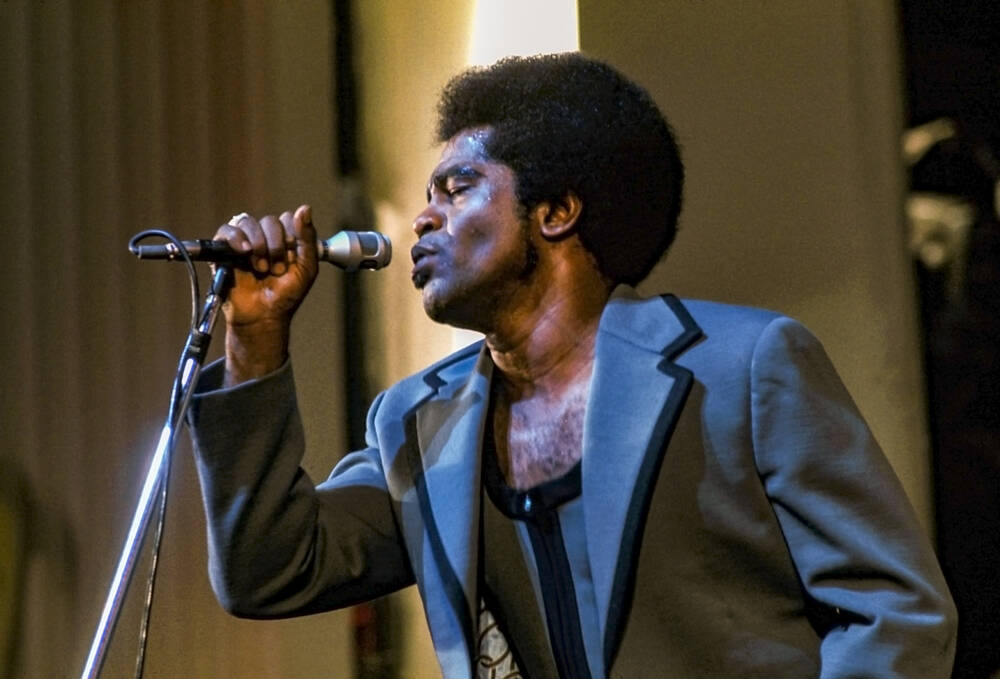
Explosive energy, razor-sharp rhythm, and a voice that could command an entire room—James Brown didn’t just perform music, he ignited it. Known as the Godfather of Soul, Brown transformed groove into a driving force, turning every beat into something physical, urgent, and impossible to ignore. His songs pulse with raw emotion, tight musicianship, and an unmistakable sense of control and chaos working together. From sweat-soaked funk workouts to powerful soul statements, his catalog reshaped modern music. This collection dives into the tracks that defined his legacy and continue to move generations to their feet.
1. I Got You I Feel Good
I Got You I Feel Good is the sound of James Brown turning joy into a physical event. The opening scream is not just an introduction. It is a signal flare, a blast of personality so immediate that the whole room seems to snap awake. From there, the horns punch, the rhythm locks in, and Brown rides the groove with absolute command. The song is simple in theme, built around romantic happiness and bodily excitement, but its power comes from the way Brown makes happiness feel explosive rather than soft.
As a vocal performance, it is a masterpiece of timing. Brown does not sing in long decorative lines. He attacks, releases, shouts, slides, and punctuates. Every phrase becomes part of the rhythm section. His voice functions like a drum, a horn, and a preacher’s call all at once. That is why the record still feels fresh. It is not merely catchy. It moves with a kind of disciplined wildness.
The arrangement is equally important. The horns do not simply decorate the song. They answer Brown, provoke him, and frame his eruptions of feeling. The rhythm is tight enough to feel engineered, yet alive enough to sound spontaneous. I Got You I Feel Good remains one of Brown’s most famous recordings because it distills his entire appeal into a few unforgettable minutes: energy, precision, showmanship, and the ability to turn a groove into pure electricity.
2. Papa’s Got a Brand New Bag
Papa’s Got a Brand New Bag is one of the great turning points in American popular music, a record where rhythm begins to take command in a new and thrilling way. James Brown was already a major force before this song, but here he sharpens his sound into something leaner, tougher, and more revolutionary. The groove does not behave like traditional rhythm and blues. It snaps into place around accents, horn stabs, guitar chops, and Brown’s clipped vocal commands. The emphasis shifts from smooth melodic flow to rhythmic impact, and that shift helped open the door to funk.
Brown’s vocal is full of swagger, but the swagger is rhythmic rather than merely lyrical. He sounds like a bandleader, dancer, and street corner philosopher rolled into one. The phrase brand new bag becomes more than a dance reference. It becomes a declaration of transformation. Brown is announcing a new way of moving, playing, and feeling music.
The brilliance of the track lies in its economy. Nothing is overplayed. The horns strike with surgical precision, the guitar scratches at the groove, and the drums keep everything taut. Brown leaves space because space is part of the funk. The song remains popular because it captures innovation in real time. You can hear older soul structures being reshaped into a harder, more rhythm centered language. Papa’s Got a Brand New Bag is not just a hit. It is a blueprint.
3. It’s a Man’s Man’s Man’s World
It’s a Man’s Man’s Man’s World reveals James Brown as a soul balladeer of tremendous dramatic force. Best known for his volcanic funk and stage intensity, Brown also possessed a remarkable ability to slow a song down and fill every inch of it with emotional weight. This recording is grand, theatrical, and deeply conflicted. The lyric surveys a world built by male achievement, cars, trains, ships, lights, and labor, only to turn on the essential admission that none of it means much without a woman or a girl. Brown sings that realization with a mixture of pride, dependence, ache, and awe.
The arrangement has a sweeping orchestral quality that gives the song its monument like scale. Strings rise around him, horns deepen the drama, and the rhythm moves with solemn purpose. Brown’s vocal is the center of gravity, raw enough to wound and controlled enough to command. He bends notes as though wrestling with the truth of the lyric, allowing vulnerability to crack through the performance.
What makes the song endure is its tension. It is both a statement of masculine power and an admission of emotional incompleteness. Brown does not resolve that contradiction neatly. He performs it. His voice carries ego and need in the same breath, which is why the song remains so fascinating. It’s a Man’s Man’s Man’s World stands as one of his most iconic recordings because it proves that his power was not only in speed and groove. It was also in stillness, drama, and soul deep confession.
4. Get Up I Feel Like Being a Sex Machine
Get Up I Feel Like Being a Sex Machine is James Brown at the command center of funk, reducing popular music to groove, call, response, discipline, and release. The song is famously direct, but its simplicity is deceptive. Brown is not interested in traditional verse and chorus storytelling here. He is building a machine out of human bodies. Every vocal cue, drum accent, bass movement, and guitar figure is placed in service of momentum. The result is one of the most influential funk recordings ever made.
Brown’s exchange with Bobby Byrd gives the track its living pulse. The famous calls and replies feel spontaneous, but they also reveal Brown’s exacting control as bandleader. He turns the recording studio into a stage and the band into a precision engine. His voice barks instructions, celebrates the groove, and becomes another rhythmic instrument. This is music as movement, not ornament.
The instrumental foundation is hypnotic. The bass sits deep in the pocket, the guitar scratches with clipped authority, and the drums keep the groove tight enough to feel unstoppable. Rather than changing constantly, the song intensifies through repetition. That repetition is the point. It teaches the listener how to hear funk as a layered rhythmic conversation.
Get Up I Feel Like Being a Sex Machine remains popular because it captures Brown’s genius in its purest form. He did not simply sing over a band. He directed energy itself, shaping rhythm into a force that still drives dance music, hip hop, and funk culture decades later.
5. Cold Sweat
Cold Sweat is one of the most important recordings in James Brown’s catalog because it marks a decisive step into the rhythmic logic of funk. The song feels stripped down, tense, and brilliantly physical. Instead of relying on lush harmony or conventional melodic sweetness, Brown focuses on the power of the groove. The band hits with lean precision, leaving sharp spaces between accents, and those spaces are as vital as the notes themselves. This is music built on tension, release, and the irresistible pull of the one.
Brown’s vocal is urgent and percussive. He grunts, shouts, phrases, and commands with a sense of bodily intensity that makes the title feel literal. He does not merely describe desire or pressure. He makes the listener feel the heat in the rhythm. His voice becomes a guide through the arrangement, cueing the band and shaping the emotional temperature of the track.
The instrumental work is extraordinary. The horn lines are clipped and declarative, the drums carve out the pulse, and the guitar adds rhythmic bite. The song’s famous break helped shape generations of funk, soul, and hip hop thinking because it showed how a groove could become the central event. Nothing in Cold Sweat feels accidental. It is raw, but it is also disciplined.
The song remains popular because it captures invention at the moment of ignition. Brown was not polishing an old formula. He was redefining the rules. Cold Sweat is lean, dangerous, and historically seismic.
6. Get Up Offa That Thing
Get Up Offa That Thing is James Brown using funk as medicine, motivation, and command. The message is beautifully simple: move your body and release the pressure. Yet in Brown’s hands, that instruction becomes almost spiritual. He understood that rhythm could change a room’s emotional temperature, and this song is built around that belief. It does not ask politely. It insists. The groove arrives with urgency, and Brown’s vocal pushes the listener toward motion as if stillness itself is the problem.
The performance has the quality of a live ritual even in recorded form. Brown shouts, directs, encourages, and energizes. His genius here is in transforming dance into liberation. The lyric may seem casual, but beneath it is a serious understanding of stress, release, and communal energy. To get up is to participate. To move is to survive.
The band responds with crisp discipline. The horns jab with bright force, the rhythm section keeps the track buoyant, and the entire arrangement feels designed to lift weight from the body. Unlike some of Brown’s darker grooves, this one is open, celebratory, and almost therapeutic. It is funk as pressure valve.
Get Up Offa That Thing remains popular because it captures James Brown’s ability to turn a crowd into a single moving organism. It is direct, joyous, and physically persuasive. Few songs so clearly demonstrate his belief that rhythm was not background. Rhythm was action.
7. Say It Loud I’m Black and I’m Proud
Say It Loud I’m Black and I’m Proud is one of James Brown’s most culturally powerful recordings, a song that transformed pride into a chant, a groove, and a public declaration. Released during a period of intense social struggle and Black political awakening, the track gave voice to a collective demand for dignity. Brown had always been a commanding performer, but here his authority carries historical weight. He is not only entertaining. He is leading a call and response rooted in identity, resistance, and affirmation.
The song’s structure is direct and communal. Brown calls out, and the voices answer. That exchange is essential to its power. The recording turns individual pride into shared sound. It invites participation, making the listener part of the statement. The rhythm is firm and funky, but never distracts from the message. Instead, the groove gives the words strength, making the declaration impossible to separate from movement.
Brown’s vocal is commanding without being overly ornate. He delivers the lines with clarity and purpose, understanding that the phrase itself needs space to land. The children’s voices deepen the impact, suggesting future generations claiming language that had too often been shaped by oppression.
Say It Loud I’m Black and I’m Proud remains popular because it is more than a song in the usual sense. It is a cultural milestone, a musical affirmation of self worth, and one of the clearest examples of James Brown using his platform to speak beyond the stage.
8. The Payback
The Payback is James Brown at his coolest, meanest, and most cinematic. The groove creeps rather than charges, giving the song a sense of controlled menace. Brown sounds like a man who has been wronged, but he is not rushing into rage. He is savoring the moment before response. That slow burn is what gives the track its unique power. It is revenge music with discipline, patience, and style.
The band lays down a deep pocket that feels almost endless. The guitar scratches, the bass prowls, and the drums keep everything grounded in a heavy funk atmosphere. Brown’s vocal works like a dramatic monologue delivered over a street corner orchestra. He talks, sings, warns, laughs, and snaps phrases into the rhythm with masterful control. Every sound he makes feels part of the arrangement.
What separates The Payback from simpler revenge songs is its texture. The mood is bitter, but also elegant. Brown does not sound out of control. He sounds strategic. The groove itself becomes the revenge, a long, confident display of power after insult. That quality has made the track a favorite source for later musicians, especially in hip hop, where its rhythm and attitude have echoed for decades.
The Payback remains popular because it captures James Brown’s ability to turn resentment into art. It is dark, funky, controlled, and unforgettable, a record that moves with the certainty of someone who knows the score and has no intention of forgetting it.
9. Please Please Please
Please Please Please is the song that introduced James Brown’s pleading intensity to the wider world, and it remains one of the purest displays of raw soul emotion in his catalog. Long before he became the architect of funk, Brown was already a master of dramatic vocal desperation. This recording is built around one word repeated until it becomes prayer, argument, surrender, and survival. In another singer’s hands, that repetition might have felt thin. With Brown, it becomes inexhaustible.
The arrangement is relatively simple, which allows the vocal performance to dominate. Brown pours himself into the phrase with extraordinary commitment. He turns romantic pleading into a theatrical and spiritual experience. His voice cracks, stretches, and gathers force, making the listener believe that everything depends on the next repetition. The Famous Flames provide support, but the emotional center is Brown’s wounded cry.
The song also became legendary through Brown’s stagecraft. His cape routine, his collapses, his recoveries, and his repeated returns to the microphone all grew from this kind of emotional excess. Yet the studio recording already contains the seed of that drama. You can hear the performer who understood that soul music was not only sung. It was embodied.
Please Please Please remains popular because it captures the beginning of a major artistic identity. It is not as rhythmically revolutionary as his later funk, but it is just as important. It shows James Brown discovering the power of total emotional commitment.
10. Super Bad
Super Bad is James Brown in full command of his funk language, a song that turns confidence into rhythm and rhythm into attitude. By this point in his career, Brown had refined his approach so thoroughly that even a phrase as simple as super bad could become a complete musical identity. The track is not about lyrical complexity. It is about feel, timing, authority, and the almost hypnotic power of repetition when handled by a master bandleader.
The groove is tight, lean, and endlessly responsive. Brown’s band follows his cues with extraordinary sensitivity, reacting to vocal shouts, rhythmic shifts, and bursts of energy as though the entire ensemble is wired to his nervous system. That is the central thrill of Super Bad: it sounds controlled and spontaneous at the same time. Brown seems to be inventing the track as it unfolds, yet every accent lands with precision.
Vocally, he is playful, commanding, and completely self possessed. He uses short phrases and exclamations as rhythmic tools, proving again that his voice was not separate from the groove. It was one of its engines. The horns and rhythm section keep circling the central pulse, building intensity through repetition rather than traditional development.
Super Bad remains popular because it captures Brown’s funk philosophy in action. The song is about presence. It is about feeling powerful in the body, locked into the beat, and fully alive inside the groove. Few artists ever made confidence sound so rhythmically exact.

Samuel Moore is a frequent contributor to Singers Room. Since 2005, Singersroom has been the voice of R&B around the world. Connect with us via social media below.