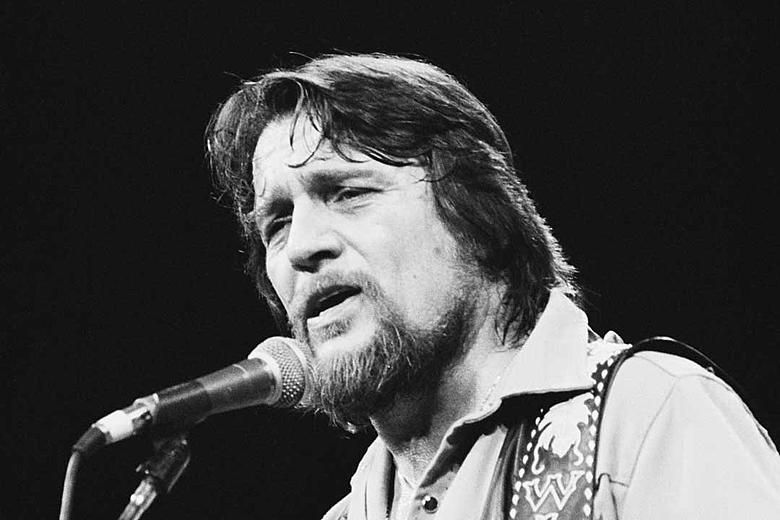
Raw, rebellious, and unmistakably authentic, Waylon Jennings helped redefine country music with a sound that refused to follow the rules. Blending honky-tonk grit with rock-infused attitude, his songs carry stories of independence, heartbreak, and life lived on his own terms. With a voice that could sound both weathered and defiant, Jennings turned every track into a statement. This collection dives into the songs that shaped his outlaw legacy, capturing the spirit of an artist who never backed down and never blended in.
1. Luckenbach, Texas
Luckenbach, Texas is one of Waylon Jennings’ most beloved recordings because it captures the outlaw country dream in its warmest, most inviting form. The song is not about rebellion as noise or posture. It is about stripping life back to something real. Waylon sings it with the weathered ease of a man who has seen the machinery of fame up close and decided that peace might be found somewhere smaller, quieter, and truer. His voice carries both humor and fatigue, which gives the song its unmistakable human glow.
The beauty of Luckenbach, Texas lies in its relaxed confidence. The melody rolls gently, the arrangement breathes, and the performance feels like a porch conversation between old friends. It is a country song about escaping the false shine of success without pretending that simplicity is easy. Waylon does not sound like he is running from responsibility. He sounds like he is remembering what mattered before ambition complicated everything.
Willie Nelson’s presence adds another layer of charm, turning the track into a quiet summit of outlaw country royalty. Yet Waylon remains the emotional center. He gives the song its lived in authority. This is music for people who understand that a good life is not always louder, richer, or more polished. Sometimes it is found in a place with a song, a memory, and enough room to breathe.
2. Good Hearted Woman
Good Hearted Woman is one of Waylon Jennings’ defining songs, a rugged yet affectionate portrait of love surviving beside a restless man. The song has become almost inseparable from the outlaw country movement, not because it shouts rebellion, but because it tells the truth about the cost of living outside neat expectations. Waylon’s voice carries the perfect blend of gratitude, guilt, pride, and rough edged tenderness. He sounds like a man who knows he has been difficult to love, and that knowledge gives the song its emotional weight.
The arrangement is earthy and direct, built around a groove that feels steady without being polished into blandness. What makes Good Hearted Woman endure is its refusal to romanticize recklessness completely. The woman in the song is strong, loyal, and long suffering, but the performance also hints at the imbalance such love can create. Waylon sings with admiration, yet there is a shadow of self awareness in the delivery.
As a duet with Willie Nelson, the song gains a communal outlaw warmth. Their voices do not blend in a sweet traditional sense. Instead, they sound like two road worn men telling a story they understand from experience. The song remains popular because it feels honest. It celebrates devotion, acknowledges imperfection, and moves with the easy confidence of musicians who never needed Nashville gloss to sound legendary.
3. Mammas Don’t Let Your Babies Grow Up to Be Cowboys
Mammas Don’t Let Your Babies Grow Up to Be Cowboys is one of the most recognizable country songs ever associated with Waylon Jennings, and its greatness comes from the way it treats myth with both affection and warning. Cowboys are often presented as romantic figures, free, tough, and independent. This song keeps that romance alive while quietly revealing the loneliness beneath it. Waylon’s vocal has a knowing quality, as though he understands the appeal of that life but also knows the emotional wreckage it can leave behind.
The song moves with an easy swing, warm enough to invite singalongs but sharp enough to leave a mark. Its genius is that it sounds like a friendly piece of advice while carrying a deep understanding of masculine isolation. The cowboy figure here is not a clean hero. He is restless, hard to hold, suspicious of comfort, and often unable to give love in the way others need.
Willie Nelson’s voice adds a softer contrast to Waylon’s tougher tone, and together they create one of country music’s great vocal pairings. The performance feels casual, but the emotional architecture is strong. The song became a classic because it speaks to the gap between image and reality. It lets listeners enjoy the legend of the cowboy while gently reminding them that freedom can come at a high personal cost.
4. Are You Sure Hank Done It This Way
Are You Sure Hank Done It This Way is Waylon Jennings at his most confrontational and self defining. The song is not just a tribute to Hank Williams. It is a challenge to the country music industry, a weary question aimed at the suits, formulas, and shallow rituals that had begun to shape the sound of Nashville. Waylon sings with a mixture of irritation, confidence, and moral authority. He does not sound like an outsider begging for admission. He sounds like a man standing in the middle of the road, daring the system to explain itself.
The track’s groove is lean and insistent, giving the lyric a sense of forward pressure. What makes the song so powerful is that it uses tradition as a weapon against complacency. Waylon is not rejecting country history. He is insisting that the spirit of the music has been betrayed by imitation without soul. The reference to Hank Williams matters because Hank represented directness, pain, and truth. Waylon hears something artificial creeping in and calls it out with unforgettable cool.
The vocal performance is one of his finest because it is understated yet cutting. He does not oversell the anger. He lets the question do the work. That restraint gives the song its bite. Are You Sure Hank Done It This Way remains popular because it still speaks to every moment when music risks becoming costume instead of conviction.
5. I’ve Always Been Crazy
I’ve Always Been Crazy is one of Waylon Jennings’ great self portraits, a song that looks at rebellion not as a costume but as a lifelong condition. Waylon does not sing it like a man bragging about trouble. He sings it like someone taking inventory. There is pride in the performance, but also weariness, humor, and a flicker of regret. That combination is what makes the song so compelling. It captures the outlaw image from the inside, where freedom and consequence are tangled together.
The arrangement is steady and spacious, giving Waylon’s voice room to carry the emotional argument. The song succeeds because it refuses to turn wildness into a simple virtue. Being crazy has brought him excitement, identity, and survival, but it has also brought pain. Waylon understands that contradiction, and he makes it sound deeply human. His phrasing is conversational, almost intimate, as if he is explaining himself to someone who has heard the rumors but not the whole truth.
This is one of those songs where the singer and the subject feel inseparable. Even if another artist performed it well, it would still feel like Waylon’s personal territory. The record endures because it gives listeners a glimpse behind the legend. The outlaw is not just the man who breaks rules. He is the man who has to live with the shape of his own nature.
6. Lonesome, On’ry and Mean
Lonesome, On’ry and Mean is one of the purest expressions of Waylon Jennings’ outlaw persona, built from grit, motion, and hard earned defiance. The title alone sounds like a biography carved into a barroom table. Yet the song is not merely an attitude piece. Beneath its toughness is a portrait of a man shaped by travel, disappointment, and survival. Waylon’s voice is perfectly suited to this world. It is low, firm, and full of road dust, carrying authority without needing to raise itself too high.
The arrangement has a muscular simplicity that gives the song its force. The rhythm pushes forward like a truck on a long stretch of highway, while the guitars add bite without clutter. What makes Lonesome, On’ry and Mean so effective is its emotional economy. It does not explain too much. It gives you the essential facts of a life and lets the listener feel the rest.
Waylon’s delivery suggests a man who has accepted his reputation but is not necessarily comforted by it. The loneliness matters as much as the meanness. The song’s popularity comes from that balance. It gives fans the rugged outlaw energy they love, but it also carries a deeper ache. This is not rebellion from a distance. It is rebellion lived day after day, with all the pride and bruises that come with it.
7. Amanda
Amanda reveals the tender side of Waylon Jennings in a way that feels completely natural rather than sentimental. The song is a love ballad, but it carries the emotional gravity of a man looking honestly at himself in relation to someone who has given him grace. Waylon’s vocal is gentle, reflective, and deeply sincere. He does not decorate the melody with unnecessary flourishes. Instead, he lets the plainspoken beauty of the lyric sit in the center of the performance.
What makes Amanda so moving is the sense of humility beneath it. This is a song about love, but it is also about unworthiness, gratitude, and the surprise of being accepted. Waylon sounds like someone who knows he has not always been easy to stand beside. That awareness gives the tenderness more depth. He is not performing romance as fantasy. He is recognizing the woman who has seen him clearly and stayed.
The arrangement is warm and restrained, allowing the vocal to carry the emotional burden. Nothing feels overproduced. The song breathes with the quiet dignity of classic country storytelling. Waylon’s rugged voice makes the softness more powerful because it sounds earned. He was never a singer who needed to prove toughness in every line. On Amanda, he proves that vulnerability can be just as commanding. The song remains popular because it shows how deeply affecting simplicity can be when delivered by an artist with absolute emotional authority.
8. Only Daddy That’ll Walk the Line
Only Daddy That’ll Walk the Line is a prime example of Waylon Jennings before the full outlaw mythology had settled around him, yet the attitude is already unmistakable. The song snaps with restless energy, driven by a rhythm that feels lean, sharp, and ready for trouble. Waylon sings with swagger, but there is also humor in the performance. He sounds like a man who knows exactly how far he can be pushed before he pushes back harder.
The lyric plays with domestic tension, pride, and masculine stubbornness, all delivered with a grin that keeps the song lively rather than heavy. Its power comes from the way Waylon turns frustration into momentum. He does not wallow. He struts through the problem with a voice full of confidence and bite. The result is one of his early signature recordings, a track that helped shape the tougher direction country music would soon follow.
Musically, the record is compact and punchy. The guitar work has a bright edge, the beat keeps moving, and Waylon’s phrasing gives every line personality. Even at this stage, he sounded different from smoother Nashville singers. There was more dust in his tone, more impatience in his rhythm, and more danger in his restraint.
Only Daddy That’ll Walk the Line remains popular because it captures Waylon’s early fire. It is catchy, bold, and full of the uncompromising spirit that would later make him a central figure in outlaw country.
9. Theme from The Dukes of Hazzard
Theme from The Dukes of Hazzard, widely known as Good Ol’ Boys, is one of Waylon Jennings’ most instantly recognizable songs, partly because of its television fame and partly because it sounds so perfectly like him. The track has an easygoing charm that masks how expertly it is constructed. Waylon serves as both singer and storyteller, giving the song a conversational feel that welcomes the listener into a world of back roads, family loyalty, trouble, and mischief.
The performance works because Waylon never treats the material as disposable theme music. He gives it personality. His voice turns the song into a character sketch, full of warmth, amusement, and country wisdom. The lyrics are simple, but they carry the flavor of a particular rural mythology: fast cars, local legends, and people who live by codes not always found in official rule books.
The arrangement is relaxed and memorable, with a groove that fits the song’s playful spirit. It does not try to be profound, and that is part of its appeal. Waylon understood that a good song can be light on its feet and still leave a lasting mark. The tune became a cultural touchstone because it matched its subject perfectly and because Waylon’s presence gave it authenticity.
For many listeners, this was their gateway into his music. It remains popular because it is fun, familiar, and unmistakably stamped with Waylon’s easy outlaw charisma.
10. I’m a Ramblin’ Man
I’m a Ramblin’ Man is Waylon Jennings in motion, a song that turns restlessness into rhythm and identity. It is one of his clearest declarations of the traveling spirit that runs through so much of his best music. The track does not present rambling as a temporary habit. It presents it as a nature, a calling, and perhaps even a curse. Waylon sings with the confidence of someone who has long since stopped apologizing for needing the road.
The groove is tight and propulsive, carrying the feel of highway miles and late night departures. The song’s greatness lies in how completely Waylon embodies the restless man at its center. His voice is calm but charged, as though movement is the only thing keeping him balanced. There is romance in that image, but also loneliness. The ramblin’ man is free, yes, but freedom often means leaving someone behind.
The arrangement keeps the focus on momentum. The guitars, rhythm, and vocal phrasing all work together to create a sense of forward motion. Nothing lingers too long. That musical design perfectly supports the lyric. Waylon does not need to explain the psychology of the drifter. He lets the beat do much of the talking.
I’m a Ramblin’ Man remains popular because it captures one of country music’s oldest archetypes through one of its most believable voices. With Waylon, the restless traveler does not feel invented. He feels lived in, complicated, and real.

Samuel Moore is a frequent contributor to Singers Room. Since 2005, Singersroom has been the voice of R&B around the world. Connect with us via social media below.