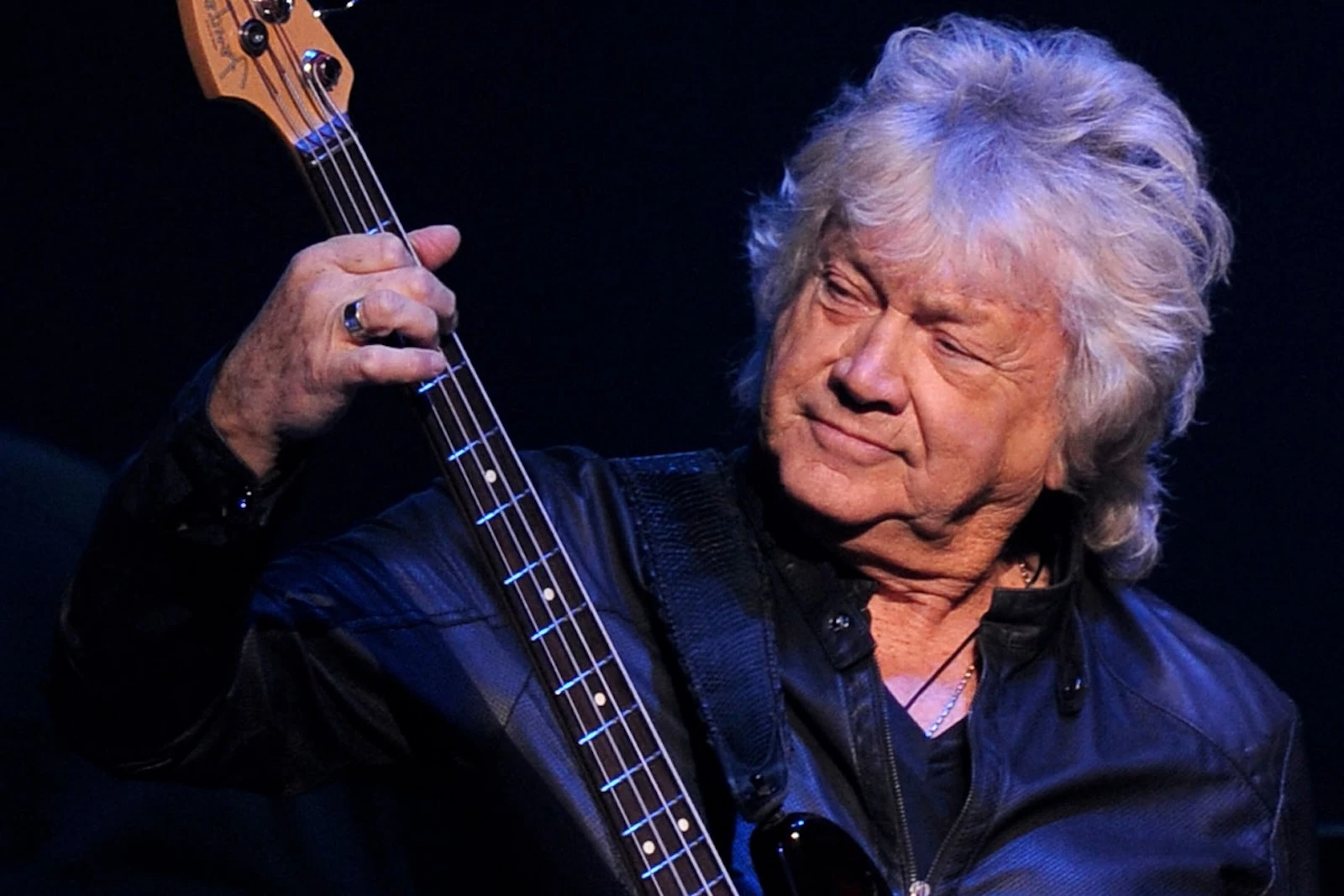
Blending lush orchestration with poetic lyricism, The Moody Blues carved out a sound that felt both timeless and otherworldly. Their music drifts between symphonic rock and introspective storytelling, creating songs that are as much journeys as they are melodies. From sweeping epics to intimate reflections, their catalog captures the spirit of an era while remaining strikingly relevant today. This collection explores the standout tracks that defined their legacy, highlighting the songs that continue to resonate with listeners seeking depth, beauty, and a touch of musical transcendence.
1. Nights in White Satin
Nights in White Satin is the kind of song that seems to exist outside ordinary pop history. It does not simply play. It unfolds like a private dream set to orchestral mist, aching vocal lines, and the unmistakable glow of the Mellotron. Justin Hayward’s voice carries the song with a rare mixture of youth and old soul sorrow, making every phrase feel suspended between romance, regret, and spiritual longing. The melody is simple enough to be instantly remembered, yet the emotional atmosphere around it feels vast.
What makes Nights in White Satin so enduring is its sense of scale. It begins with intimacy, almost like a confession whispered in the dark, then expands into something cinematic and profound. The song captures love not as a tidy sentiment, but as a state of being that overwhelms reason. The orchestral textures give it grandeur, but the human ache in the vocal keeps it grounded. It is this balance between the cosmic and the personal that makes the recording so powerful.
Few songs from the classic rock era feel as timeless. It belongs to progressive rock, symphonic pop, and romantic balladry all at once, yet it is never trapped by any single label. Nights in White Satin remains the signature Moody Blues experience because it invites listeners into a world where longing becomes sound, and sound becomes memory.
2. Tuesday Afternoon
Tuesday Afternoon is one of The Moody Blues’ most radiant songs, a piece that turns an ordinary moment into something almost mystical. The track has a pastoral beauty that feels unmistakably tied to the late 1960s, yet its appeal remains fresh because the feeling behind it is universal. It captures that rare instant when time slows down, the light changes, and the world seems briefly alive with secret meaning. Justin Hayward’s vocal is gentle, clear, and full of wonder, giving the song a sense of discovery rather than performance.
The arrangement is a major part of its magic. The Mellotron colors the background with a soft orchestral shimmer, while the rhythm moves with relaxed grace. Nothing feels forced. The song seems to breathe naturally, opening itself gradually like a landscape after rain. It is music for attention, for noticing, for stepping outside the rush of daily life and allowing beauty to become visible.
What separates Tuesday Afternoon from a simple pretty pop song is its philosophical undercurrent. The lyrics suggest perception changing in real time, as though the singer is not just observing the afternoon, but being transformed by it. That sense of awakening gives the track its emotional depth. It is delicate without being fragile, dreamy without becoming vague. Among The Moody Blues’ most beloved recordings, Tuesday Afternoon stands as a perfect expression of their gift for turning atmosphere into meaning.
3. Question
Question is The Moody Blues at their most urgent, sweeping from acoustic intensity into grand emotional release with breathtaking confidence. The song begins with a rapid strum that feels almost anxious, as if thought itself is racing ahead of the singer. Justin Hayward’s vocal enters with searching force, asking not only personal questions but existential ones. Love, conflict, identity, and uncertainty all seem to collide inside the performance. It is one of the band’s great statements because it refuses to separate the private heart from the troubled world around it.
The structure is unusually dramatic. The opening section has a restless folk rock charge, then the song opens into a slower, more expansive passage of aching beauty. That contrast gives Question its emotional architecture. It sounds like a mind moving from panic toward reflection, then back toward conviction. The transitions are bold, but they feel completely natural because the feeling never breaks. Every section belongs to the same inner struggle.
What makes the song so memorable is its combination of directness and grandeur. The melody is strong, the message is sincere, and the performance has a burning clarity. The Moody Blues were often associated with dreamlike textures, but Question proves they could also be forceful and immediate. It remains popular because its uncertainty still feels human. The song asks what many people ask in moments of crisis: where is peace, where is truth, and how does love survive in a world that seems determined to test it?
4. Your Wildest Dreams
Your Wildest Dreams is one of The Moody Blues’ most successful later period songs, and its strength lies in how gracefully it transforms nostalgia into pop elegance. Rather than trying to recreate the band’s 1960s sound, the track embraces a polished 1980s atmosphere while preserving the emotional DNA that made the group distinctive. Justin Hayward sings with a reflective tenderness that gives the song its center. His voice sounds less like someone chasing the past and more like someone quietly revisiting it, aware of both its sweetness and its distance.
The production is smooth, bright, and carefully layered. Synthesizers replace some of the earlier orchestral textures, but the Moodies’ gift for romantic atmosphere remains intact. The song understands memory as both comfort and ache. Its melody is accessible and warm, yet there is a melancholy current beneath the surface, especially in the way the chorus reaches upward as if trying to touch something no longer fully available.
What makes Your Wildest Dreams special is its emotional maturity. It is not only about youthful romance. It is about remembering who you were when love first seemed limitless. The music video deepened that theme, but the song itself carries the feeling beautifully on its own. It remains beloved because it bridges eras without sounding confused. The Moody Blues proved here that their central concerns, memory, longing, time, and emotional wonder, could survive changing production styles and still feel deeply sincere.
5. Go Now
Go Now captures The Moody Blues before their full transformation into symphonic rock pioneers, yet it remains essential because it shows the group’s earliest command of emotional drama. Led by Denny Laine’s impassioned vocal, the song is rooted in rhythm and blues feeling, with a rawness that differs sharply from the later cosmic sweep of the band’s classic albums. That contrast is part of its fascination. Before the Mellotron landscapes and philosophical suites, The Moody Blues could deliver a heartbreak song with direct, soulful force.
The piano figure gives the recording its pulse, steady and insistent, while the vocal brings the ache. Laine sounds wounded but not passive. There is urgency in the performance, as if the decision to leave must be made before emotion weakens resolve. The song is powerful because it treats farewell as both command and collapse. The words are simple, but the delivery makes them feel heavy with consequence.
What makes Go Now endure is its lack of ornament. It does not need elaborate imagery or grand arrangement. Its appeal comes from the timeless drama of a relationship reaching the point where staying would hurt more than leaving. The recording has the emotional immediacy of a live confession, and that quality still cuts through. For listeners who know The Moody Blues primarily through their later progressive sound, Go Now is a revealing reminder that the band’s roots were grounded in soul, melody, and heartfelt performance from the very beginning.
6. The Story in Your Eyes
The Story in Your Eyes is one of The Moody Blues’ most energetic and guitar driven classics, a song that moves with urgency while still carrying the band’s signature sense of emotional depth. Justin Hayward’s guitar gives the track a bright, ringing force, and the vocal rides that momentum with both conviction and vulnerability. The song feels like a message delivered in the middle of emotional turbulence, where love, fear, and change are all pressing in at once.
Unlike some of the band’s more spacious meditations, this track is compact and immediate. The arrangement has a muscular quality, yet it remains melodic and richly textured. It is progressive rock with pop instincts, thoughtful but never sluggish. The chorus opens beautifully, turning the central image into something memorable and almost cinematic. To read a story in someone’s eyes is to recognize history, pain, hope, and truth without needing explanation. That idea gives the song its lasting resonance.
The performance also shows how effective The Moody Blues could be when they tightened their sound. There is no loss of sophistication, but the emotional impact comes quickly. The harmonies add lift, the rhythm section keeps the song driving, and the guitar work gives it edge. The Story in Your Eyes remains popular because it captures the band at a perfect intersection of rock energy and lyrical sensitivity. It has enough force to satisfy classic rock listeners and enough emotional color to satisfy those drawn to the Moodies’ more reflective side.
7. I’m Just a Singer in a Rock and Roll Band
I’m Just a Singer in a Rock and Roll Band is one of The Moody Blues’ sharpest and most self aware songs, a track that pushes back against the idea of rock musicians as prophets. John Lodge’s composition carries a refreshing directness, both musically and lyrically. The song has a driving rhythm, punchy vocal energy, and a chorus that lands with memorable force. Yet beneath its infectious surface is a pointed message about fame, expectation, and the limits of artistic authority.
The Moody Blues were often associated with philosophical themes, spiritual searching, and grand conceptual statements, which makes this song especially interesting. It reminds listeners that musicians can illuminate questions without pretending to possess all the answers. The performance has a lively, almost defiant character, as if the band is both embracing and questioning its public role. The horns and rhythm give the track a muscular brightness, setting it apart from the more dream soaked textures of earlier work.
Vocally, the song thrives on communal energy. It feels like a band statement rather than a solitary confession. The arrangement keeps moving forward with purpose, creating a sense of public address. There is wit in the title, but also humility. The singer stands on stage, visible to thousands, while admitting his humanity.
I’m Just a Singer in a Rock and Roll Band remains popular because it is catchy, intelligent, and unusually honest. It captures The Moody Blues stepping outside mystique to speak plainly, without sacrificing musical excitement.
8. Ride My See Saw
Ride My See Saw is The Moody Blues in full psychedelic motion, a song that surges with restless energy and youthful philosophical fire. It opens with a sense of momentum that feels almost impatient, as if the band is eager to break free from old assumptions and leap into a wider consciousness. John Lodge’s writing gives the track a driving backbone, while the group performance turns it into one of the Moodies’ most exhilarating rock statements.
The song’s title image is playful, but the feeling underneath is serious. A see saw suggests movement between extremes, between certainty and doubt, childhood and adulthood, earthbound life and spiritual curiosity. The Moody Blues use that image as a vehicle for transformation. The rhythm pushes hard, the harmonies rise with conviction, and the arrangement carries the listener forward with a sense of discovery.
What makes Ride My See Saw so effective is its balance of accessibility and ambition. It has the punch of a classic rock single, but its worldview belongs to the exploratory spirit of the late 1960s. The band sounds energized rather than dreamy, proving that their psychedelic and progressive leanings could produce music with real physical drive.
The song remains a fan favorite because it captures release. It feels like breaking out of a room into open air. The vocals, guitars, and rhythm section all contribute to that sensation of forward motion. Ride My See Saw is one of the band’s great invitations to move, think, and awaken all at once.
9. The Voice
The Voice is a standout from The Moody Blues’ 1980s renaissance, a song that updates their classic sense of mystery with sleek modern production. The track has a smooth, atmospheric quality that fits its title perfectly. It feels like a message arriving from somewhere just beyond ordinary perception, carried by rhythm, melody, and Hayward’s unmistakably searching vocal tone. The song is polished, but it never feels empty. Under the surface is the same Moodies fascination with guidance, intuition, and the unseen forces that shape human choice.
The arrangement blends synthesizer textures with a firm rock pulse, giving the song both motion and shimmer. It is one of the best examples of how The Moody Blues adapted to a new decade without abandoning their inner world. The production is cleaner and more contemporary than their 1960s and 1970s recordings, but the emotional and philosophical character remains unmistakable.
Justin Hayward’s vocal gives the song its elegance. He does not overstate the mystery. Instead, he sings with calm conviction, allowing the listener to feel the pull of the unknown. The chorus is memorable and uplifting, but not simplistic. It suggests that the voice being heard may be conscience, memory, destiny, or love.
The Voice remains popular because it captures transition gracefully. It shows The Moody Blues aging into a different sound while keeping their poetic instincts alive. The result is sophisticated, melodic, and quietly haunting, a song that rewards both casual listening and deeper reflection.
10. I Know You’re Out There Somewhere
I Know You’re Out There Somewhere is one of The Moody Blues’ most moving later songs, a romantic search set against a bright and expansive 1980s pop rock backdrop. The song continues the emotional world of lost love and memory that the band explored so beautifully in their later period, but it carries a stronger sense of pursuit. This is not only nostalgia. It is hope in motion. Justin Hayward sings with a tenderness that feels both wistful and determined, giving the song its emotional lift.
The production is polished and radio friendly, yet the heart of the track is unmistakably Moody Blues. The melody reaches outward, the lyrics circle around absence and belief, and the atmosphere suggests that love can remain present even across time and distance. The song works because it treats longing not as weakness, but as devotion. There is a sincerity in the performance that keeps the glossy arrangement from feeling superficial.
What makes I Know You’re Out There Somewhere especially appealing is the way it combines mature reflection with melodic optimism. The singer is aware of loss, but not defeated by it. The chorus opens like a horizon, giving the listener the feeling that reunion, or at least emotional resolution, might still be possible.
The song remains popular because it speaks to anyone who has carried a memory of someone through the years. It is graceful, heartfelt, and beautifully crafted, proving that The Moody Blues could still create emotionally resonant music long after their first wave of classics.

Samuel Moore is a frequent contributor to Singers Room. Since 2005, Singersroom has been the voice of R&B around the world. Connect with us via social media below.