
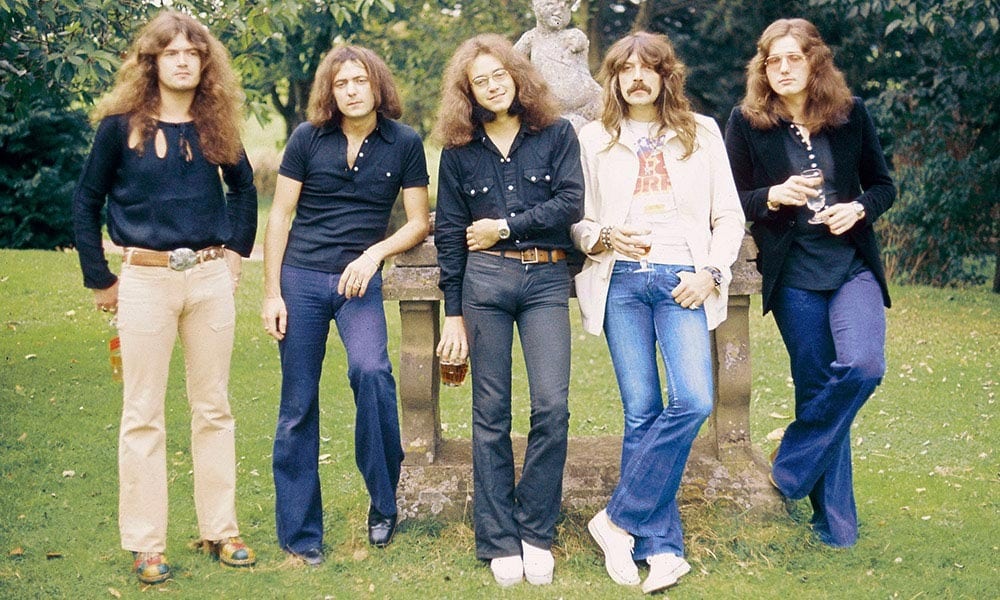
Deep Purple sound like electricity learning human speech. A Hammond organ growls like a big cat. A Stratocaster spits sparks. A rhythm section hammers iron into a race car. Then a tenor steps forward and pours fire into vowels. Across decades and lineups they have kept one idea sacred. Music should move the body first and then leave the head buzzing. These ten essentials capture invention and swagger, ensemble telepathy and showman nerve. Hear riffs that built a thousand garages. Hear solos that argue and then hug. Hear songs that turned studio accidents and tour nights into living folklore.
1. Smoke on the Water
A riff as simple as a hand signal and as permanent as stone. Smoke on the Water begins with those four notes stepping forward like a story that will be told for the rest of time. Ritchie Blackmore plays them with dry bite. No fuss. No ornament. That leaves room for Jon Lord’s organ to growl underneath like a second guitar made of electricity and wood. Ian Paice and Roger Glover lock a square shouldered march that turns the whole band into a moving wall. Ian Gillan sings the Montreux casino fire like a traveler’s tale. You can feel the cold lake air and smell the burned gear. The secret is contrast. Verses sit low and conversational while the chorus lifts without strain. The solo is a tour of tone, Blackmore bending phrases as if trying to argue with fate, then snapping back to the immortal figure that refuses to move. The production is all muscle and space. Nothing clutters the middle. You hear pick against string and the organ’s tubes heating the room. It is hard rock made with the discipline of a classical study. It still makes new players learn and old fans grin. That is forever utility.
2. Highway Star
Speed feels easy when five players breathe as one animal. Highway Star opens with a bass and drum surge, then guitar and organ begin a game of tag that never quite ends. The lyric is a love letter to motion, sung by Ian Gillan with grinning bravado and a touch of theater. Ritchie Blackmore’s solo is a blueprint for rock virtuosity that respects melody. He builds in sections, climbing toward a peak with ideas you can sing back. Jon Lord answers with his own turn that fuses church, barroom, and racetrack. The two lines together feel like rivals who keep trying to outshine each other and end up making the night brighter. Ian Paice’s cymbal work is its own solo, riding and splashing while never losing the pocket. Roger Glover pulls tension like a bow string, pushing the track forward by micro degrees. The structure matters. Verses as ignition. Pre choruses as the rev counter. Choruses as the open road. The live version from Tokyo makes it even clearer. This is a band that can go very fast and still make every detail read. A hard rock master class in control that feels like abandon.
3. Child in Time
A ballad that grows into a storm, Child in Time puts the whole range of Mark II on display. Jon Lord’s intro sets a solemn mood, chords ringing like a chapel where something unsettled waits at the door. Ian Gillan starts with a gentle tone, then climbs through his register until the voice sounds like a siren heard across a valley. Ritchie Blackmore answers with lines that flicker between blues pain and baroque poise. The band understands patience. They let the energy gather like weather rather than throwing sparks at every bar. When the first climax breaks, it feels earned. Paice drives the kit like a racing driver who knows every inch of the road. Glover keeps the ground firm while slips of organ and guitar keep the air tense. Lyrically it is an anti war meditation, but the words are spare on purpose. The music carries the plea. The return to hush after the first onslaught is the key. It tells you the fury is not a stunt. It is a human response. Few rock recordings move from whisper to wail and back again with such graceful ferocity.
4. Black Night
This single strides like a street corner hit. Black Night rides a bass figure that hooks the ear before the vocal even enters. Roger Glover’s line is the song’s spine, and everything else snaps to it. Ritchie Blackmore jabs chords and sprints into quick fills that tease the chorus. Jon Lord’s organ thickens the sound without ever hiding the guitar. Ian Paice keeps a taut bounce on the snare that makes the track feel like the best kind of trouble. Ian Gillan brings sly bite, shaping the title phrase with a smile that also shows teeth. The instrumental break is a miniature story. Blackmore takes a short, stylish run, Lord answers with a bar of gleam, then they circle back to the main chant. There is no bloat. Just a band that knows the value of a direct line played with character. The production leaves air in the middle so the groove breathes. It is easy to understand why this was a huge early hit. It is lean, catchy, and built for loud rooms. If you want the sound of Deep Purple compressing their power into three minutes of swagger, you are home.
5. Hush
Long before stadium legend arrived, this cover made radio lean closer. Hush takes Joe South’s tune and turns it into a keyboard and guitar chase. Jon Lord’s organ is the star engine, churning a percussive pattern that makes the verses hop. Ritchie Blackmore threads bright replies through the gaps, then steps forward for a solo that mixes twang and bite. The rhythm section plays with dance floor instinct. Roger Glover pumps a buoyant line while Ian Paice sprinkles rolls that feel like winks. Rod Evans on lead vocal gives the lyric a sly croon, emphasizing the hook until the word hush becomes both command and invitation. Deep Purple were not yet the heavy unit that would make Machine Head, but you can hear the future in the interplay. They love a groove that allows quick drama, and they already understand how to make an arrangement unfold in reveals. The hand clap feel near the bridge is pure pop sense. The last chorus stacks energy without adding clutter. This performance remains a template for how a rock band can be crisp and playful while keeping the musicianship front and center. It is youthful cunning that still works on new ears.
6. Perfect Strangers
Reunion as ritual. Perfect Strangers walks in with a keyboard line that sounds like a torch procession in a dark hall. The drum pattern is deliberate. The bass steps with sovereign calm. Then Gillan enters with a lyric that reads like a mystical diary, filled with images of time and bonds that refuse to break. The hook is not a shout. It is a decree. Ritchie Blackmore keeps the guitar mostly in the edges at first, coloring the scene with harmonics and short gestures, then raises a hard beam of tone when the chorus arrives. Jon Lord’s sound is immense yet focused, like cathedral pipes aimed straight at your chest. The solo is an atmosphere more than a race, an extension of the main theme that keeps the dignity intact. This song matters because it proved the old chemistry had matured rather than calcified. The group found a way to be large without rushing, heavy without bloat. Production gives the track cinematic size while preserving human touch. You can hear skin on drums and fingers on strings. The result feels ceremonial and intimate at once. A signature of late era authority.
7. Burn
A new lineup and a new flame. Burn announces itself with a riff that leaps like a stage curtain opening. David Coverdale and Glenn Hughes trade and stack vocals with a swagger that suits the lyric’s heat. Blackmore is in fencing mode, darting and thrusting through the main figure and then slicing open space for Jon Lord to pour lava through the Hammond. The rhythm section is a thunder engine. Ian Paice throws crisp accents and double time shivers. The bass holds the line and then surges forward at key moments to push the chorus over the top. The song’s structure is clever. Verse as accelerant. Chorus as blaze. Instrumental middle as a spiral of sparks. Jon Lord’s classically inflected solo hears equal parts Bach and bar brawl, then Blackmore responds with lines that skim the rails. The two sounds together light up the center of the track like old friends finishing each other’s jokes at high speed. Burn showed that Deep Purple could shape shift and still sound unmistakably themselves. It is a racing lesson in arrangement, tone, and ensemble drama that continues to feel immediate.
8. Woman from Tokyo
Travel becomes myth in this bright rocker. Woman from Tokyo starts with a confident strut, guitar and organ strumming the same sun lit pattern while the rhythm section grins underneath. Ian Gillan paints snapshots of the road with affectionate detail. You can see airports and neon and a magical face that becomes a symbol for wanderlust. The chorus opens like a postcard written in large letters, then the band slides into that dreamy middle section where the groove thins to a pulse and Jon Lord’s keys tint the air. It is an inspired pause, like a memory surfacing before the next burst of motion. Blackmore’s tone is all sparkle and bite, never overplaying his hand, saving the fireworks for a few quick arcs. Paice’s ride cymbal gives everything a breeze that keeps the verses moving. Glover shapes a counterline that feels like a second melody. This track captures Purple’s lighter touch without losing heft. It bounces, it smiles, and then it leans back into the riff with renewed authority. A perfect balance of road song and stadium rocker, and a reminder that they could be playful as well as grand.
9. Space Truckin’
Science fiction as barroom boast. Space Truckin’ takes a pounding groove and turns it into a cosmic tall tale, with Ian Gillan playing the ringmaster who swears the party went interstellar. The main riff is all shoulders and grin, a unison punch from Blackmore and Lord that invites the crowd to bark along. Roger Glover’s bass walks with a cheerful menace, and Ian Paice drives his kick drum like a launch countdown. The chorus is a chant that begs for a thousand voices, and live it becomes a ritual. The song’s charm comes from its refusal to choose between muscle and mischief. Blackmore peppers the verses with quick stings, then lets loose with a solo that slides from bent notes to metallic runs. Jon Lord’s organ answers with overdriven roars that sound like solar wind trapped in wood and wire. The bridge pulls the harmony sideways for a moment and the band toys with the time feel, then slams back into the main stomp. It is pure hard rock theater with a wink, executed by players who can turn a joke into a juggernaut. That blend is Deep Purple DNA.
10. Lazy
A jam that reveals discipline behind the looseness. Lazy begins with Jon Lord stretching out, a bluesy meditation that shifts from smoky to volcanic. Ritchie Blackmore slides in with bright replies, trading phrases until the two voices become one conversation. Then the band hits the main riff and the room lifts. The groove is swagger with swing, driven by Ian Paice’s sly snare ghosts and Roger Glover’s springy bass line. Ian Gillan sings with playful bite, selling the character in the lyric while leaving space for the instruments to strut. The heart of Lazy is arrangement. It breathes like a live set piece while still moving through clearly drawn sections. Solo spots feel like parts of a story, not separate showpieces. Lord’s Hammond is a lesson in touch and overdrive, making chords bark and single notes sting. Blackmore answers with runs that tilt between blues and classical shapes, a signature language that no one else quite has. The final laps feel like a victory parade, each player finding new small angles on the riff until the band slams the door together. It is joyous proof that virtuosity can be friendly, and that groove is the best teacher.

David Morrison is a frequent contributor to Singers Room. Since 2005, Singersroom has been the voice of R&B around the world. Connect with us via social media below.









