
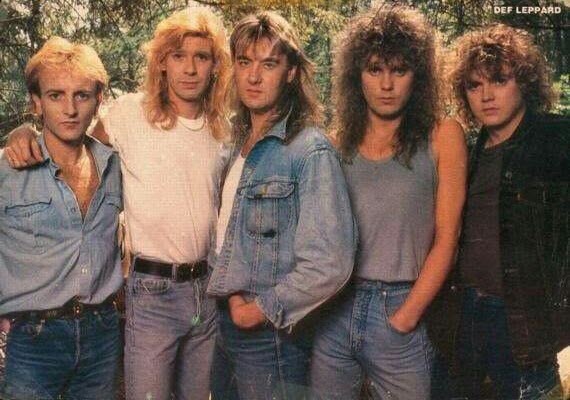
Def Leppard made hard rock feel like neon poured over steel. The riffs hit with steel toed precision, the drums aim for the hips, and the choruses take you by the collar then lift. Producer craft sharpened every edge while the band’s instinct for hooks kept the songs easy to shout at full volume. There is swagger here, but there is also discipline. Stacked harmonies are tuned like engines. Guitars carve bright lines. Bass and kick keep the floor sturdy while Joe Elliott turns sharp phrasing into street wide anthems. These ten essentials show how big rooms and smart writing can live in the same song.
1. Pour Some Sugar on Me
The opening guitar stutter feels like a fuse catching, then the groove drops and everything locks. This is industrial candy, built from call and response, chant ready vowels, and a rhythm bed that makes even empty rooms feel like arenas. Joe Elliott rides the verses with a grin you can hear, snapping consonants so each image lands while leaving air for the beat to breathe. The chorus works because it is both invitation and command. Try not to join in after one pass. Under the hood you can hear producer detail everywhere. Guitars are layered in distinct colors that never smear. Rick Savage’s bass tracks the kick with just enough movement to keep the whole engine playful. Rick Allen’s snare sits like a metronome that knows how to smile. The bridge feels like a quick montage, raising temperature without losing clarity, then the hook returns even larger. The secret is space. Riffs punch, then step back. Vocals shout, then hand the line to the drums. The result is a song that turns volume into architecture, pleasure into design, and a simple slogan into a communal rite.
2. Photograph
A chiming guitar sets the lens, and a snare crack snaps the picture into motion. Photograph is obsession dressed as pop craft. The verses sprint on bright eighth notes while the pre chorus tightens the coil, and then the chorus opens like stadium lights at dusk. Joe Elliott sings like a fan who learned to narrate his own movie, all emphasis in the right places and vowels shaped for distance. Steve Clark and Phil Collen split duties with complementary tones, one glassy, one with a bit more bite, and their parts interlock the way only patient rehearsal allows. Producer discipline shows up in the background vocals which are stacked to feel huge but never blur the lead. Rick Allen and Rick Savage keep the pocket clean so all the sparkle still feels muscular. The bridge offers a brief change of scenery before the final sprint, and the last chorus lands with just a touch more weight because the arrangement has earned it. At heart this is a song about wanting a person you can only hold as an image, and the band makes that yearning feel victorious. Urgency and polish shake hands, which is why it still jumps from radios like it was made today.
3. Hysteria
Hysteria is the sound of patience turning into lift. The tempo never hurries. Guitars shimmer like heat above a road, bass writes long curves, and Rick Allen’s timekeeping is a lesson in economy. Joe Elliott sings low and close at first, confiding rather than shouting, which lets the lyric lean romantic without losing its edge. Then the chorus arrives and the melody rises a clean step, not a leap, and that restraint makes the hook sound inevitable. Production decisions are elegant. Clean arpeggios keep the verse light, crunchy doubles add width to the chorus, and the backing vocals are tuned to halo rather than overwhelm. The middle section widens the frame, giving Phil Collen room to sing through his guitar, melodic before athletic, then delivers you back to the theme with more air under the melody. This track proves how heavy a band can feel while playing soft. Everything is engineered for glide. It is a love song that respects detail, a rock single that trusts slow burn, and a reminder that confidence often arrives as control rather than volume.
4. Love Bites
Here is the power ballad as cathedral. The intro is all hush and shimmer, a patient guitar figure under glass and a vocal that enters like a vow. What separates Love Bites from imitators is its command of dynamics. Each section climbs a measured stair. Joe Elliott starts in conversational tone, then opens the vowels into a plea that never loses pitch. Background harmonies arrive in sculpted stacks that make the chorus feel like stained glass coming alive. The rhythm section keeps the heartbeat steady, refusing to crowd, which lets every cymbal bloom matter. Guitars are voices, not just volume, slipping small melodies between lines and then stepping back. The bridge tilts the harmony darker for a moment, sharpening the return when the main theme blooms again. There is polish everywhere, yet the emotional center stays human. You can hear the air in the room, the breath before the high note, the small grit that makes honesty believable. This recording understands that tension can be tender and that the heaviest feeling sometimes arrives in a whisper. By the fade, longing has become architecture you can stand inside.
5. Rock of Ages
A spoken count sets a grin across the front rows and then that riff drops like a gate. Rock of Ages is defiance shaped into pure forward motion. The groove struts, built from palm muted push and wide open chord payoffs, with the rhythm section walking like a single animal. Joe Elliott plays the street corner preacher, tossing lines that mix bravado and invitation, and he lands each rhyme with a boxer’s neat footwork. The secret weapon is the chorus which is a model of crowd engineering. Long vowels for distance, easy contours for the lungs, and just enough backing lift to turn individuals into one noise. Guitar tones are perfectly sorted so the crunch never muddies the hook. Short lead flashes are timed like camera bulbs. The middle break gives a quick look at the machinery then the chant returns and the song moves from performance to ritual. This is where Def Leppard’s gift for precision meets their love of participation. Everything is simple to hear and complicated to execute. That balance is why it still makes rooms taller.
6. Animal
Animal is pop instinct taught to snarl politely. The verse progression rides a bright pattern while the drums tuck small syncopations around the vocal, keeping the floor lively without crowding it. Joe Elliott’s phrasing is a study in teasing cadence. He leans forward on certain syllables, pulls back on others, and turns the pre chorus into a springboard. When the hook arrives it does not smash the door. It widens it, letting stacked harmonies float above a riff that keeps dancing. Guitars here are about texture as much as muscle. Clean figures twine with crunchy accents, and the stereo image is carefully drawn so every layer can breathe. Rick Savage’s bass sings counterlines that keep your ear engaged between choruses. Phil Collen’s solo speaks melodically before it ever sprints. The lyric keeps the temperature up while the band’s control keeps everything elegant. It is a master class in how to make radio friendly rock that still feels like a living, sweating band. Put it on in a car and every traffic light feels like a chorus cue.
7. Foolin’
Acoustic sparkle, then a turn of the wrist and the electric engine rumbles awake. Foolin’ is drama achieved through staging rather than sheer volume. The verses lean on acoustic color and mid gain detail, which lets Joe Elliott’s storytelling sit forward. He sings the title with a measured ache that sets up the heavier entries perfectly. When the chorus lands the guitars thicken, toms enter like footsteps, and the backing shouts give the line its spine. The arrangement is a set of well timed reveals. Each return adds a bit more light, a bit more grit, and by the final pass the song feels larger without ever losing clarity. Collen and Clark trade parts like craftsmen finishing each other’s sentences, and the solo narrates rather than merely flashes, weaving the tune through bends and quick runs that mirror the vocal shape. Producer attention to contrast is the reason it endures. Soft to loud, clean to dirty, tight to open. Every pivot is musical, not just theatrical, so the single reads as a story with chapters that turn exactly when your ear wants them to.
8. Armageddon It
This track is swing inside armor. The groove has roll as well as stomp, with Rick Savage’s bass taking a slightly looser walk that keeps the verses buoyant. Joe Elliott delivers the lines with a half smile, leaning into call and response shapes that prime the chant ready hook. The chorus is built like a billboard. Big, clear letters, bright outlines, and a tune that anyone can carry two blocks. Guitars carve complementary pockets, one pushing the rhythm, the other adding quick harmonics and glinting fills. The middle section is built like a catwalk. Phil Collen steps out for a solo that sings before it sprints, keeps the melody in view, then the band struts back into the refrain with more shine. Background vocals are stacked for punch rather than haze, and the drums place small accents at line ends that make everything feel charged without turning busy. It is unabashed arena music executed with clean lines, the sound of a group that knows exactly how to turn a hook into civic property while keeping the musicianship crisp.
9. Bringin’ On the Heartbreak
Before the diamond pop of later years, Def Leppard could already sculpt melancholy into something huge. Bringin’ On the Heartbreak drapes aching melody over a slow march that never loses patience. Joe Elliott’s delivery is restrained which makes the emotion read as adult rather than theatrical. The verses sit on tasteful arpeggios and a rhythm section that favors sustain over punctuation. Then the chorus opens and the harmonies rise like a flare. Guitars thicken but remain articulate, and the line sings long enough to feel like a decision rather than a complaint. The bridge offers a platform for a lyrical lead break, more conversation than solo, with bends that echo the voice. Production keeps the edges soft while preserving detail. You can hear pick noise, cymbal bloom, and the quiet push of the bass under each chord. The track’s endurance comes from proportion. Pain is present, craft is present, and neither overpowers the other. It is the template for countless power ballads that followed yet it still feels singular because the band lets the song breathe as a lived moment, not a pose.
10. Let’s Get Rocked
A cartoon wink and a heavy groove meet in the middle of the street. Let’s Get Rocked is a return to the charts that kept the Leppard DNA intact while giving the rhythm section a bit of modern strut. The riff is simple and sticky, built to bounce crowds in unison, and the drum sound is big without turning blurry. Joe Elliott sings as ringmaster and neighbor, tossing call and reply phrases that turn quickly into a chant. The pre chorus tightens focus and the hook kicks the doors open with a smile you can hear from the parking lot. Guitars are dialed for punch and clarity, the mix leaving room for small ear candy details that reveal themselves on repeat listens. The middle features a compact solo that quotes the tune then adds a little swagger before handing the wheel back to the chorus. What makes it work is humor tied to craft. The band embraces fun without getting sloppy and the production keeps the edges clean so the single can live on radio, at games, and in garages with equal ease. It is proof that maturity and mischief can share a chorus when the pocket is this sure.

David Morrison is a frequent contributor to Singers Room. Since 2005, Singersroom has been the voice of R&B around the world. Connect with us via social media below.









