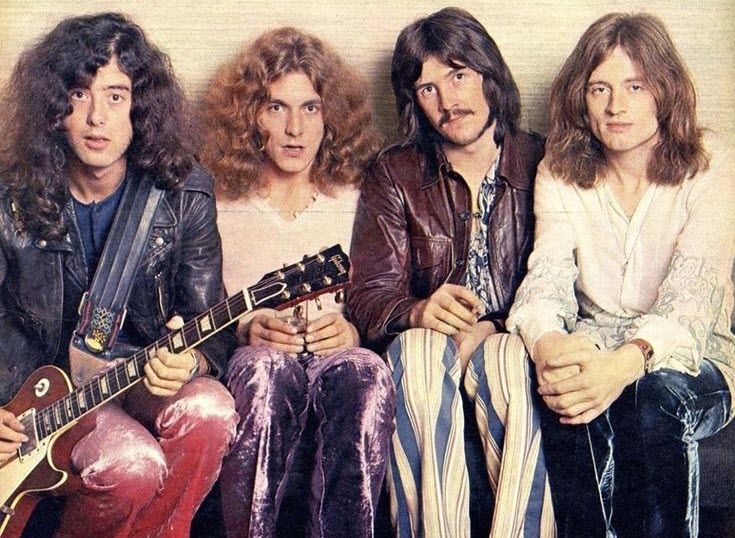
Led Zeppelin turned electricity into landscape. Jimmy Page’s guitar could whisper like a sitar or roar like an avalanche, John Paul Jones built cathedrals out of bass and keys, John Bonham made drums feel like weather, and Robert Plant sang with the lift of a kite and the ache of old blues. Their studio wizardry never dulled the live spark; it simply framed it in gold leaf. From folk twilight to thunderous riff storms, these songs sketch a map of rock that many still travel. Pour something strong, dim the lamps, and let these ten epics shake the walls and light the corners.
1. Stairway to Heaven
Listen to the way this begins as a solitary path and ends as a wide road filled with torches. Page’s fingerpicked acoustic lines move with patient clarity, each chord change opening a window a little wider. John Paul Jones shades the edges with recorder and later with keys that glow like candlelight in stone. Plant sings as if he is telling a parable rather than delivering a lyric, elongating vowels so the imagery has time to bloom. Midway through, the dynamic tide rises. Bass steps in with firm stride, Bonham’s entrance lands like a door swinging open, and the electric guitar gathers bite without losing definition. The famous solo is not a contest of speed; it is a narrative in bends and ascents, a carefully drawn arc that lands exactly where the final verse needs it. By the climax, the band plays with a shared sense of lift that feels earned rather than forced. Each return of the refrain arrives brighter, and the last line falls away like embers after a bonfire. The magic is proportion. Nothing is rushed. Nothing is wasted. The track rewards headphones and open rooms alike, and it still sounds like a promise kept every time that first chord rings.
2. Whole Lotta Love
A single riff strides into the room and suddenly the room belongs to it. Page’s guitar speaks in a simple figure that grows larger with every repetition, while Jones glues the floor with a bass tone that feels both rubbery and iron. Bonham’s snare snaps like a handclap magnified, and Plant’s voice rides the groove with yelps and murmurs that treat phrasing as percussion. The midsection turns the studio into an instrument. Pans, echoes, breaths, and bursts of guitar create a sonic corridor that feels unmoored yet perfectly timed. When the riff returns, it is like surf crashing back after a strange moonlit calm. What keeps this from blunt force is the discipline under the heat. The rhythm remains springy, the guitars never smear into mush, and the vocal ad libs dance around the beat rather than simply sitting on it. That final sprint locks into a pocket that feels both heavy and agile, the rare combination that still sends rooms upward. This is not only a landmark of volume; it is a study in tension and release, recorded with ears as sharp as the teeth on that opening figure. Put it on and the air in front of the speakers seems to lean forward.
3. Kashmir
Here is Zeppelin as desert architecture. The drum pattern is a stately march that never rushes, cymbals shimmering like heat. Jones builds an orchestral lattice that moves in slow waves, and Page writes a riff that steps with ceremonial gravity, the kind of figure that feels older than the band playing it. Plant takes on the role of traveler and witness, his melody riding long notes that let the arrangement breathe. The fascination lives in the cross rhythm. The band plays with meter so the parts seem to turn past one another like gears, always meshing, never grinding. Strings and brass arrive not as decoration but as second and third pillars, widening the temple without crowding the altar. Page’s guitar lines wind upward like carved patterns on stone, and Bonham keeps the whole edifice grounded with kicks that land like measured footfalls. The lyric speaks of distance and hunger for wonder, and the music makes that longing tangible. The final ascent does not explode; it levitates. Few rock recordings feel this vast without turning pompous. The secret is patience and a pulse that never lies. This is journey music and monument music at once, a slow burn that refuses to fade.
4. Black Dog
A call rises from the throat of the singer and the band answers with a knot of rhythm that seems to bend time. The central riff is all teeth and curl, a line that toys with the downbeat in a way that made generations of cover bands sweat. Bonham holds the center with kicks that plant flags, while Jones makes the bass line swagger and sing. Plant’s vocal is a master class in controlled abandon, full of blue notes and playful menace, and his phrasing darts in and out of the pocket with catlike assurance. Between verses, the band turns the groove into a trampoline, bouncing on the figure until it snaps back with delicious force. The arrangement rejects clutter. Guitar tone stays wiry and focused, bass stays fat but articulate, drums remain crisp enough to carve initials in the air. The effect is a riff storm that never loses sight of the song. This is not just heavy; it is precise, like a dancer in steel boots landing each step exactly where it needs to go. By the last refrain the tension has become a grin. The kind of grin that belongs to players who know exactly how hard they just made that sound.
5. Immigrant Song
No preface, only charge. Bonham slams a beat that feels like an oar hitting water at sprint pace, Jones doubles the motion with a bass figure that hums like a turbine, and Page stacks staccato chords into a cliff face. Plant answers with that famous battle cry, a piercing vowel that announces the scale of the journey. The music is relentless yet tidy. There is air around the parts, which is why the aggression reads as athletic rather than muddy. The lyric is myth and geography in a few clean strokes, and the melody rides the consonants like a chariot, clipping along with fierce momentum. A short guitar break cuts at right angles, slicing rather than soaring, which fits the song’s compact architecture. This is a master class in how a band can say a lot with a little. Two minutes and change, almost no fat, all character. It is also a reminder that heaviness can feel like flight when the tempo and articulation line up just right. By the closing shout the message is simple. Forward. Always forward. The track still sounds like a door kicked open on a bright cold morning.
6. When the Levee Breaks
A drum sound like storm gods in a stairwell. That is the signature that enters first and never leaves. Bonham’s kit is recorded with a sense of space that turns each hit into landscape, and the groove lopes with the inevitability of floodwater. Jones’s bass rolls and swells, adding undertow, while Page’s guitar and harmonica smear textures across the sky like streaks of dark cloud. Plant sings with haunted distance, lines carried on the wind rather than shouted over the waves. The production is its own instrument, full of tape treatments that stretch time and pitch until the music feels slightly unreal. Yet the heart is pure blues lament, a portrait of pressure and motion that cannot be argued with. The slide guitar moans, the harp wails, and the beat keeps walking, head down, all the way to the horizon. Many have sampled this drum pattern, and it is easy to hear why. It is a pocket and a place, a room you can stand inside. The band respects that gravity. They add color and heat and never once try to move the mountain. This is weather on vinyl, and it still shakes windows.
7. Ramble On
Springy acoustic guitar and a lithe bass line sketch a road before the first word is sung. Plant enters with a traveler’s voice, half smile, half yearning, pointing to taverns and stars and stories tucked into backpacks. Page’s arrangement is a lesson in light and shade. Verses breathe with folk gentleness, then electric crunch arrives like a hearty laugh, and the two moods trade places without ever jarring the ear. Jones plays melodic bass that acts like a second guitar, weaving counterlines that give the song a feeling of forward motion even in its quietest passages. Bonham knows exactly when to sit back and when to pitch the tent and kick the fire. The bridge coils energy for the final run and the last chorus lands with extra lift. This is not only a road song; it is a study in proportion. Every part listens to the others, which is why the groove feels conversational. The lyric blends inward musing with wide world imagery and the music carries both with equal kindness. A perfect demonstration of how this band could be gentle without losing muscle and how they could swing without losing mystery.
8. Since Ive Been Loving You
Slow blues, expanded and lit from within. Page bends notes until they feel like breathing, and his vibrato reads like handwriting on the edge of a letter you were not supposed to see. Jones places Hammond chords that smolder, then steps into quick walks that tug the harmony forward. Bonham turns the backbeat into heartbeat, adding ghost notes and cymbal swells that make the quiet corners glow. Plant, for his part, delivers a performance that moves from confessional murmur to open throated ache with seamless control. The dynamic plan is everything. Phrases rise and fall like a tide that refuses to leave its shore, and each solo section grows not by volume but by urgency. The recording is intimate enough to hear feet, fingers, air. You are in the room, one table over, watching four musicians carve sculpture out of time. This is the side of Zeppelin that sometimes gets overshadowed by the thunder. The side that can hold a note so still it seems to tilt the light. The side that understands patience as a kind of power. When the last chord dissolves, silence feels fuller than it did before.
9. The Rain Song
String tuned guitars billow like curtains in a soft wind and a piano walks into the frame with courtly grace. The Rain Song is the band at its most tender, a harmonic garden that trades drama for slow blooming color. Page’s chord voicings stretch like stained glass, Jones supports with keys that glow rather than glare, and Bonham plays with brushes and soft mallets that turn the kit into a set of breaths. Plant writes and sings in the language of seasons, but the emotion is human scale, a quiet gratitude that the year turns and so does the heart. The arrangement is long yet never drifts. Themes return like friendly birds, and climaxes arrive not with brute force but with a patient rise of shared tone. Listen for the tiny glissandos on strings, the small pushes of piano that nudge the phrase into place, the restraint in the last swell as the sky clears. This piece proves that the band’s weight was not only in decibels but also in nuance. A love song that refuses to hurry, it has the courage to be beautiful without armor, and it remains a comfort every time the first measures unfold.
10. Dazed and Confused
A bowed guitar moans like a foghorn across a harbor, then the riff steps out of the mist with menace and swing. Early Zeppelin wore this one like a calling card, a blues shape pulled through strange corridors and lit with psychedelic lamps. Page is both sculptor and sorcerer here, bowing and bending, turning the instrument into a set of voices that answer one another. Jones moves with prowling certainty, filling spaces with lines that feel conversational. Bonham drops anchors and throws sparks, playing time and color at once. Plant chooses a narrator stance, mixing accusation with wonder, leaning into the grain when the lyric needs a bruise. The arrangement is a drama in scenes. Grooves tighten, then dissolve into free sound, then reconstitute with a grin you can hear. Live versions stretched this architecture into epic length, but even in studio it feels dangerous in the best way. The interest lives not in speed but in the sense that the song can tilt at any moment and the band will surf whatever wave rises. That is the thrill. Controlled vertigo. The last chords do not resolve so much as hover, like a question you are happy to keep asking.

David Morrison is a frequent contributor to Singers Room. Since 2005, Singersroom has been the voice of R&B around the world. Connect with us via social media below.