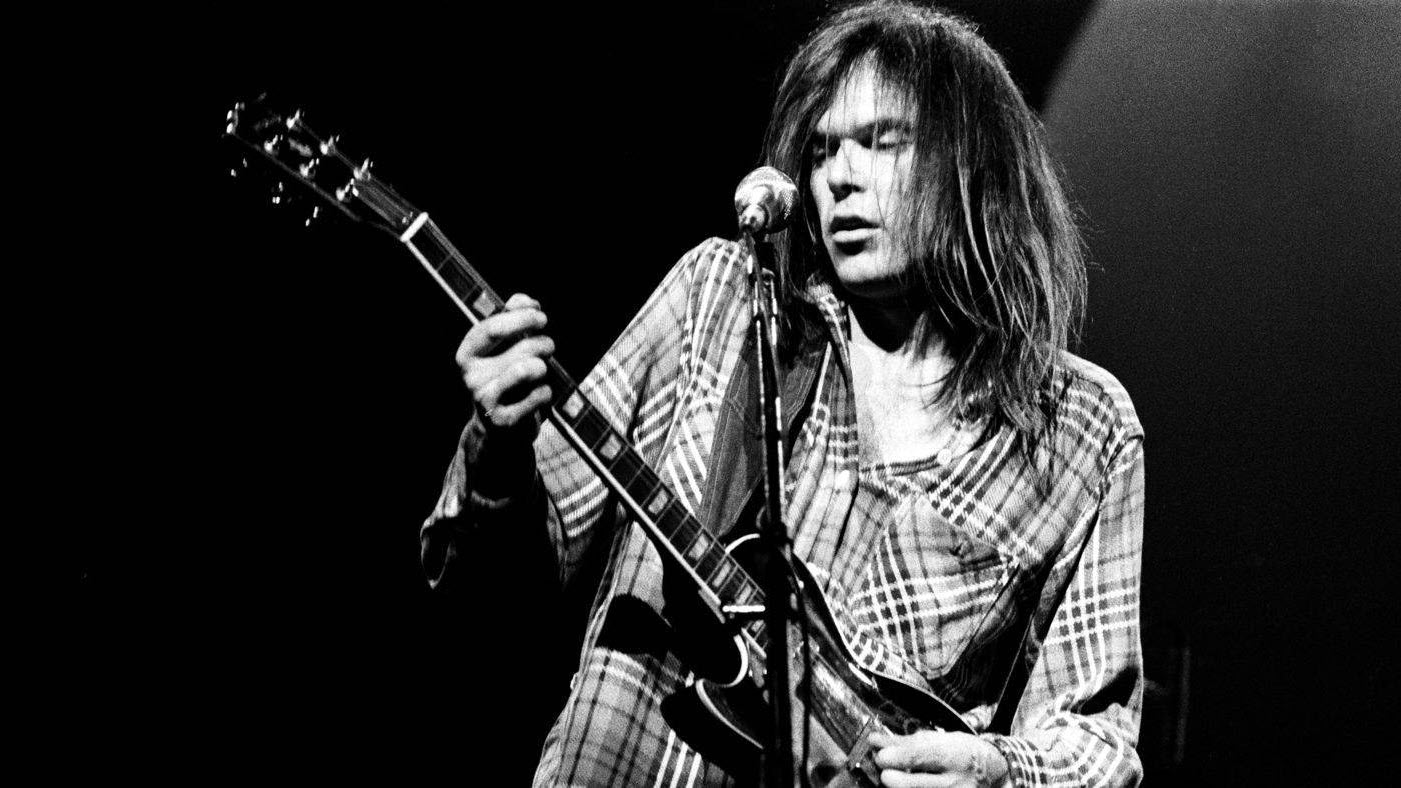
Few artists have left a mark on rock and folk music quite like Neil Young. With a career spanning over five decades, Young has crafted an extraordinary legacy built on raw emotion, fearless experimentation, and a voice that cuts straight to the soul. Whether it’s the haunting cry of a harmonica, a thunderous guitar solo, or a quiet acoustic lament, his music has always carried a sense of authenticity that resonates deeply across generations. From intimate ballads to explosive protest anthems, Young’s songs are more than just tracks — they’re moments in time, reflections of personal struggle, political unrest, and the search for truth in a complicated world.
In this list, we dive into the top 10 most popular Neil Young songs of all time — not just the biggest hits, but the tracks that have defined his career and continue to inspire musicians and fans alike. These are the songs that shaped rock history, broke hearts, stirred minds, and stood the test of time. Whether you’re a lifelong fan or just discovering his work, this countdown is a journey through the raw, electric, and poetic world of a true musical legend. Strap in — it’s time to ride through the genius of Neil Young.
1. Heart of Gold (1972)
Neil Young’s “Heart of Gold” is one of those rare songs that seems to strike a universal chord the moment you hear it. Released in 1972 as the centerpiece of his breakthrough album Harvest, the track became Young’s first and only No. 1 hit in the United States — a testament to its poignant simplicity and emotional resonance. Built around a warm acoustic guitar riff and elevated by Young’s yearning harmonica, the song is a gentle plea for a genuine, lasting connection in a world that often feels hollow. It’s a love song, yes, but one wrapped in introspection and longing, delivered in Young’s signature wavering voice that somehow makes vulnerability feel like strength. The presence of James Taylor on banjo and Linda Ronstadt on harmony vocals adds a rich, soothing layer to an already heartfelt arrangement. Though Young later expressed discomfort with how polished and mainstream the track felt, famously calling it “middle of the road,” he also acknowledged that it pushed him to veer off onto “the ditch” — artistically riskier terrain. Still, “Heart of Gold” remains a timeless classic, a song that beautifully captures the tender side of a restless and uncompromising artist.
2. Rockin’ in the Free World (1989)
“Rockin’ in the Free World” roared into the late ’80s like a punch to the gut — a scathing, electric protest anthem that announced Neil Young was still a force to be reckoned with. Released in 1989 on the Freedom album, this track reignited Young’s career with raw fury and righteous indignation. The song is driven by snarling guitar riffs and a pounding rhythm that matches the intensity of Young’s biting lyrics. He takes sharp aim at American politics, homelessness, addiction, and the empty slogans of consumer culture — painting a bleak picture that’s still disturbingly relevant. The juxtaposition of its upbeat, arena-ready chorus with the grim verses is part of what makes it so powerful; it’s a rebel yell wrapped in a deceptively catchy package. The song exists in both acoustic and electric forms on the album, each bringing a different texture — but it’s the electric version that became a fiery anthem in live shows. “Rockin’ in the Free World” didn’t just mark a comeback; it became a rallying cry. It solidified Young’s reputation as a musical conscience — a voice of dissent willing to hold a mirror to the darker corners of society.
3. Old Man (1972)
“Old Man,” from Neil Young’s landmark Harvest album, is a beautifully understated meditation on aging, connection, and shared humanity. Inspired by the caretaker of Young’s Broken Arrow Ranch in California, the song begins with a personal anecdote but quickly unfolds into something far more universal. Built around a gentle acoustic guitar and accented by James Taylor’s banjo and Linda Ronstadt’s angelic harmonies, “Old Man” exudes warmth and quiet reflection. Young’s lyrics draw a subtle but profound comparison between himself — then a young, rising musician — and the old man who lives a much simpler life. Despite the differences in age and experience, Young finds a mirror in the caretaker’s life, realizing they both seek love, purpose, and understanding. His fragile voice and delicate phrasing give the song an emotional transparency that few artists can match. There’s no judgment or pity here — only empathy and respect. Over the decades, “Old Man” has become one of Young’s most cherished songs, often cited for its emotional honesty and melodic grace. It’s a timeless piece that speaks quietly but deeply about the human condition, resonating with listeners across generations.
4. Cinnamon Girl (1969)
With its gritty guitar crunch and irresistibly raw charm, “Cinnamon Girl” arrived in 1969 as a bold declaration of Neil Young’s rock credentials. Released on the Everybody Knows This Is Nowhere album, the song features his newly formed band Crazy Horse and showcases a tighter, more aggressive sound than much of his earlier work. The famous one-note guitar solo — an audacious move that somehow works brilliantly — is a defining moment in rock history, illustrating Young’s ability to say more with less. Lyrically, “Cinnamon Girl” is cryptic but emotionally charged, a love song filled with youthful energy and longing. Its verses hint at a romantic muse who lives somewhere between fantasy and reality, lending the track an elusive mystique. The combination of rough-edged instrumentation and melodic sweetness creates a compelling contrast that would influence generations of rock and grunge musicians. It’s loud, loose, and full of swagger, yet underneath the fuzz is genuine heart. “Cinnamon Girl” not only helped cement Young’s reputation as a fearless musical experimenter but also laid the groundwork for the raw, unfiltered sound that bands like Nirvana and Pearl Jam would later carry forward.
5. Down by the River (1969)
“Down by the River” is one of Neil Young’s most enigmatic and expansive songs — a slow-burning epic that sprawls across nearly nine minutes of haunting melody and stark storytelling. Released in 1969 on Everybody Knows This Is Nowhere, the track captures the chemistry between Young and Crazy Horse in full force. The song’s narrative, about a man who commits a tragic act — possibly metaphorical, possibly literal — is chilling in its ambiguity. Sung in Young’s plaintive, fragile voice, the lyrics are sparse but emotionally loaded: “I shot my baby… down by the river.” What unfolds musically is a series of searing guitar exchanges between Young and Danny Whitten, creating a hypnotic ebb and flow that mirrors the song’s psychological descent. It’s not flashy; it’s raw, repetitive, and emotionally relentless. Each guitar break feels like an open wound, allowing the track to simmer with restrained fury. “Down by the River” is more than just a song — it’s an experience, a journey into the darker corners of love, guilt, and self-destruction. It remains a staple in Young’s live performances and one of the finest examples of storytelling through extended jam-driven rock.
6. The Needle and the Damage Done (1972)
“The Needle and the Damage Done” is a short but soul-crushing acoustic track that stands among Neil Young’s most intimate and heartbreaking songs. Released on the Harvest album in 1972, it clocks in at just over two minutes, yet it delivers an emotional impact that lasts far longer. Recorded live at UCLA in 1971, the rawness of the performance only deepens its gravity. Young wrote the song as a tribute — and a lament — for friends lost to heroin addiction, most notably Crazy Horse guitarist Danny Whitten. There’s no glamour or metaphor here; the lyrics are plainspoken, mournful, and brutally honest: “I’ve seen the needle and the damage done / A little part of it in everyone.” Accompanied only by his acoustic guitar, Young’s trembling voice underscores the fragility of life and the devastating cost of addiction. What makes the song so enduring is its stark simplicity — no dramatic crescendo or elaborate production, just an artist speaking truth with a heavy heart. Over the decades, it has become one of the definitive anti-drug songs in rock history, not because it preaches, but because it grieves. It remains one of Young’s most powerful and personal musical statements.
7. Southern Man (1970)
“Southern Man” isn’t just a song — it’s a challenge, a provocation, and a protest wrapped in fiery guitar licks and searing social commentary. Released in 1970 on After the Gold Rush, Neil Young uses this track to confront the racism and injustice rooted in the American South. He doesn’t pull any punches, calling out the enduring scars of slavery, systemic oppression, and the silence that allows it to continue. The song’s urgency is echoed in its blistering guitar work and anguished vocals, which feel less like performance and more like a cry for accountability. Young’s lyrics are bold and uncompromising: “Southern man, better keep your head / Don’t forget what your good book said.” It sparked controversy — most famously, a musical rebuttal from Lynyrd Skynyrd in “Sweet Home Alabama” — but the dialogue it initiated became one of the most enduring in rock history. “Southern Man” stands as a brave and confrontational track in Young’s catalog, proof that he never shied away from using his platform for justice. More than fifty years later, its message remains relevant, and its fire still burns, making it a cornerstone of politically charged rock music.
8. After the Gold Rush (1970)
“After the Gold Rush” is one of Neil Young’s most haunting and poetic compositions — a song that defies easy interpretation and lingers in the mind long after it ends. Released in 1970 as the title track of After the Gold Rush, the song weaves together vivid imagery, environmental concern, and existential reflection in just under four minutes. Accompanied by a simple piano melody and a mournful French horn, Young delivers cryptic verses about knights, spaceships, and Mother Nature “on the run.” The lyrics are dreamlike and surreal, yet the emotional undercurrent feels unmistakably human. Is it a prophecy? A farewell to innocence? A lament for a decaying world? Perhaps all of the above. The sparse instrumentation and Young’s fragile falsetto add to the song’s otherworldly beauty, making it feel both intimate and epic. Over the years, “After the Gold Rush” has become one of Young’s most beloved songs and a frequent subject of covers, reinterpretations, and analysis. Its ability to remain fresh and open to new meaning is a testament to Young’s artistry. Few songs capture a sense of mystical melancholy as effectively — it’s a masterpiece of mood, mystery, and melody.
9. Hey Hey, My My (Into the Black) (1979)
“Hey Hey, My My (Into the Black)” hit like a lightning bolt in 1979 — loud, distorted, and brimming with existential angst. Appearing on Rust Never Sleeps, the track is the electrified counterpart to its acoustic twin, “My My, Hey Hey (Out of the Blue),” and the two together form a powerful meditation on artistic relevance, mortality, and the state of rock music. Fueled by grungy guitar riffs and a relentless beat, “Into the Black” feels like a final stand — Neil Young’s defiant statement that rock and roll isn’t going quietly. The infamous lyric “It’s better to burn out than to fade away” became a cultural flashpoint, later quoted by Kurt Cobain and etched into the legacy of rock rebellion. The song’s grinding heaviness and apocalyptic tone reflect Young’s anxieties about growing older and becoming obsolete, but also his refusal to give in. It’s a track that inspired generations of musicians, particularly those in the emerging punk and grunge scenes, who found solace in its raw honesty. “Hey Hey, My My” isn’t just a song — it’s a manifesto. And decades later, it still sounds like a warning shot echoing through rock history.
10. Like a Hurricane (1977)
“Like a Hurricane” is a towering display of Neil Young’s electric prowess — a swirling, emotional tempest that builds with relentless intensity. Released in 1977 on American Stars ’n Bars, the song is a nine-minute journey through longing, obsession, and emotional chaos. From the very first note, Young’s guitar takes center stage, wailing with distortion and feedback that seems to mimic a storm’s howl. The lyrics, though few, cut deep: a meditation on love’s overwhelming power and unpredictability. “You are like a hurricane / There’s calm in your eye,” Young sings, drawing a vivid picture of being caught in a relationship that’s both mesmerizing and destructive. Crazy Horse provides the perfect foil — solid, steady, and willing to stretch the song’s emotion to its outer limits. The solos aren’t just embellishments; they’re integral to the story, wordless expressions of heartbreak and awe. In concert, “Like a Hurricane” often extends beyond the ten-minute mark, and it never feels too long — it feels like you’ve been swept away. It remains one of Young’s most electrifying songs and a showcase of his ability to turn raw feeling into sonic thunder. A true epic in the classic rock canon.

Samuel Moore is a frequent contributor to Singers Room. Since 2005, Singersroom has been the voice of R&B around the world. Connect with us via social media below.









