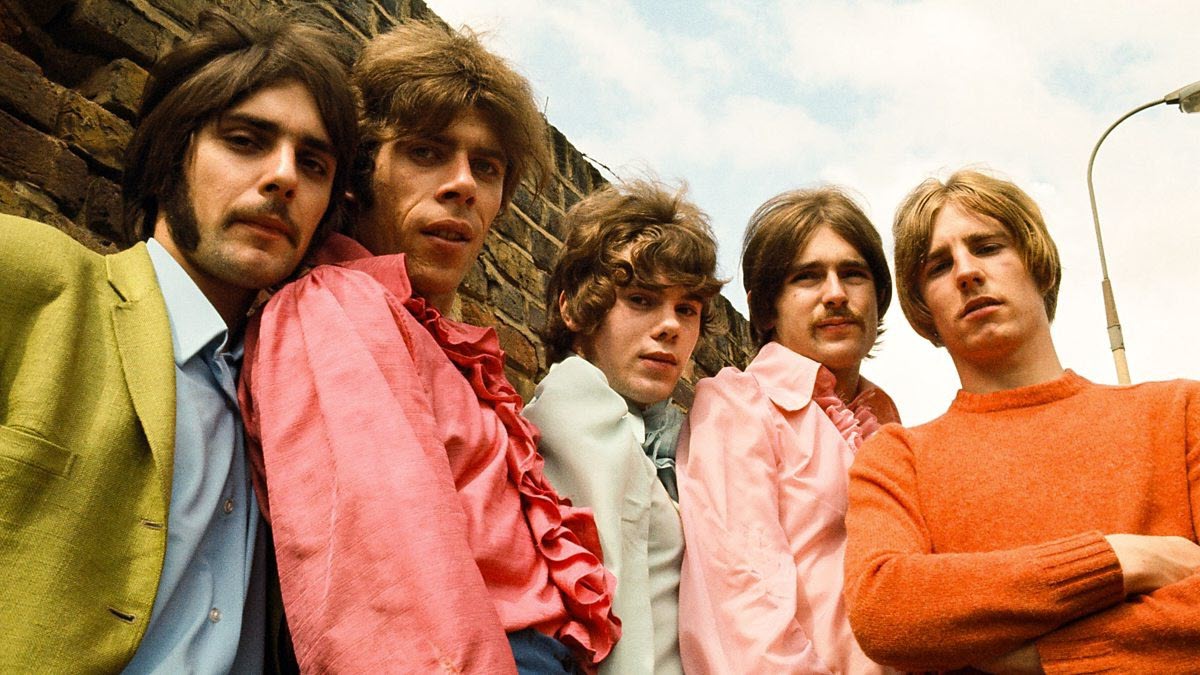
Step into a swirling kaleidoscope of sound, where music bends reality and lyrics open portals to unknown realms. Psychedelic rock isn’t just a genre—it’s a mind-expanding journey that defined a generation, challenged convention, and forever altered the soundscape of modern music. Born in the mid-1960s during a time of cultural revolution, this genre fused distorted guitars, experimental studio techniques, and surreal poetry to create sonic experiences that felt like dreams—or acid trips set to music.
From the mystical incantations of The Beatles to the cosmic guitar wizardry of Jimi Hendrix, psychedelic rock pushed boundaries and invited listeners to explore new dimensions. These songs weren’t made just to be heard—they were meant to be felt, to transport you, to ignite your imagination. Whether it’s the hypnotic pulse of “In-A-Gadda-Da-Vida” or the haunting elegance of “A Whiter Shade of Pale,” each track on this list captures the spirit of an era that dared to look inward and outward at once.
So light some incense, dim the lights, and prepare to dive deep into the technicolor vortex. Here are the 15 most popular and influential psychedelic rock songs of all time—tracks that blew minds then, and still resonate powerfully today.
1. “Tomorrow Never Knows” – The Beatles (1966)
When The Beatles released “Tomorrow Never Knows” as the closing track on Revolver in 1966, they shattered all expectations of what pop music could be. Built around a single, looping drum groove from Ringo Starr, the song plunges the listener into a swirling vortex of reversed guitar sounds, tape loops, seagull-like effects, and John Lennon’s otherworldly vocals run through a Leslie speaker. Inspired by The Psychedelic Experience and the Tibetan Book of the Dead, Lennon crafted lyrics that urged listeners to surrender their ego and dissolve into the infinite. George Martin’s pioneering studio production turned the track into a sonic kaleidoscope, decades ahead of its time. With no traditional chorus or chord changes, it was radical even by Beatles standards. “Tomorrow Never Knows” wasn’t just experimental—it was a visionary statement that blurred the line between rock, electronic, and avant-garde music. As the album’s finale, it signaled the band’s break from conventional songwriting and marked a pivotal moment in the evolution of psychedelic rock. Today, it’s recognized as a spiritual ancestor of modern electronic and ambient music—a track that didn’t just predict the future of sound, but dragged it into the present with fearless innovation.
2. “Purple Haze” – The Jimi Hendrix Experience (1967)
With the release of “Purple Haze” in 1967, Jimi Hendrix exploded into the rock world like a lightning bolt. Opening with one of the most iconic guitar riffs in history—a tritone interval known as the “devil’s interval”—the song immediately signaled a radical new direction in sound. Hendrix’s lyrics, full of surreal, dreamlike imagery, added to the track’s mystique. While often linked to LSD and psychedelic experiences, Hendrix himself claimed the song was inspired by a vivid dream rather than drugs. Regardless, its fuzz-drenched guitar tone, use of feedback, and stereo panning created an auditory experience unlike anything listeners had heard before. Hendrix treated the guitar not just as an instrument but as a voice of its own, twisting and bending notes into psychedelic shapes. “Purple Haze” wasn’t just a song—it was a statement of liberation, rebellion, and creative expression. It captured the spirit of the 1960s counterculture, embodying the boundary-breaking ethos of the time. More than 50 years later, it remains a cornerstone of psychedelic rock and a testament to Hendrix’s unparalleled impact on the evolution of electric guitar and rock music as a whole.
3. “White Rabbit” – Jefferson Airplane (1967)
“White Rabbit” is one of the most hauntingly memorable songs to emerge from the psychedelic era, and it owes much of its power to Grace Slick’s mesmerizing performance. Released in 1967 on Jefferson Airplane’s breakthrough album Surrealistic Pillow, the song draws heavily from the imagery of Alice in Wonderland, using Lewis Carroll’s fantastical characters as metaphors for altered states of consciousness. Built around a bolero-inspired Spanish march rhythm, the track slowly crescendos in intensity, mirroring the psychological build-up of a psychedelic experience. Slick’s commanding voice rises with the instrumentation until she unleashes the unforgettable climax: “Feed your head.” At a time when music was becoming a vehicle for cultural revolution, “White Rabbit” offered more than just escapism—it was a bold challenge to societal norms, urging listeners to explore inner realities and question authority. Its compact structure and literary references gave it an intellectual edge that set it apart from other psychedelic tracks. Though clocking in at under three minutes, its impact was massive. “White Rabbit” endures as both a surreal trip and a political statement, encapsulating the fearless creativity and cultural upheaval that defined 1967’s Summer of Love.
4. “See Emily Play” – Pink Floyd (1967)
“See Emily Play,” released in 1967, captures the early, whimsical essence of Pink Floyd before they ventured into darker, more cosmic territory. Written by the band’s original frontman Syd Barrett, the track is a kaleidoscopic swirl of childlike wonder, surreal storytelling, and experimental sound techniques. From its jangly guitar tones and reverse tape effects to Barrett’s playful vocals, the song feels like a technicolor dream seen through the lens of the British underground scene. Inspired by an actual fan Barrett once met, “Emily” becomes a mysterious figure—an embodiment of innocence, fantasy, and perhaps madness. The song’s catchy melody makes it deceptively accessible, but its layered production hints at deeper psychedelia just beneath the surface. “See Emily Play” was one of Pink Floyd’s first major hits and helped them break into the UK pop charts, bringing their unique brand of sonic experimentation to a wider audience. It remains a beloved relic of Barrett’s brief but brilliant contribution to music—a glimpse into a mind that danced on the edge of genius and chaos. As an early cornerstone of British psychedelic rock, the track is both nostalgic and visionary, bridging the playful and the profound.
5. “Strawberry Fields Forever” – The Beatles (1967)
“Strawberry Fields Forever,” released in early 1967 as a double A-side with “Penny Lane,” marked a transformative moment for The Beatles—and for rock music as a whole. Penned by John Lennon, the song draws on memories of his childhood visits to a Salvation Army home in Liverpool, but filters them through a deeply introspective and surreal lens. The result is a haunting meditation on memory, identity, and perception. Musically, the track is a masterpiece of studio innovation. George Martin famously fused two different takes—each in a different key and tempo—into one seamless performance using tape manipulation, a feat that pushed the boundaries of recording technology. Mellotron flutes, backwards effects, and a disorienting fade-out/fade-back-in ending all contribute to its dreamlike atmosphere. Lennon’s wistful vocals and enigmatic lyrics invite listeners to question what’s real and what’s imagined. “Strawberry Fields Forever” wasn’t just a song—it was a signal that The Beatles had moved far beyond conventional pop. It defined the burgeoning psychedelic sound and introduced a more emotionally complex and experimental phase in their work. Even decades later, it stands as one of the most emotionally resonant and sonically adventurous songs in the Beatles’ catalog.
6. “Time” – Pink Floyd (1973)
Though released in 1973, after the peak of the psychedelic movement, Pink Floyd’s “Time” captures the genre’s core ethos—both musically and philosophically. Featured on The Dark Side of the Moon, one of rock’s most iconic albums, “Time” opens with a cacophony of chiming clocks and ticking sounds, immersing listeners in a soundscape that’s equal parts hypnotic and unsettling. What follows is a slow, powerful groove, driven by Nick Mason’s precise drumming and David Gilmour’s soulful guitar work and vocals. The lyrics—co-written by Roger Waters—serve as a stark wake-up call, warning against the dangers of apathy and the realization that time has slipped away. “You run and you run to catch up with the sun but it’s sinking” captures the existential dread that underpins much of Floyd’s work. The song shifts dynamically between quiet introspection and soaring guitar solos, giving it a spacious, cinematic feel. With its lush production, philosophical depth, and emotional weight, “Time” extends the psychedelic tradition into a new, more mature phase—blending sensory exploration with sobering reflection. It remains one of Pink Floyd’s most enduring tracks and a powerful reminder of the fleeting nature of life.
7. “Light My Fire” – The Doors (1967)
“Light My Fire,” released in 1967, became The Doors’ breakthrough hit and a defining anthem of the psychedelic rock era. Originally written by guitarist Robby Krieger and expanded by the band as a group effort, the song blends bluesy sensuality with jazz-inflected instrumental sections and Latin-inspired rhythms. Jim Morrison’s deep, commanding voice delivers poetic lyrics filled with desire and mystical overtones, while Ray Manzarek’s swirling organ solo takes listeners on a cosmic journey. The original album version, stretching over seven minutes, showcases the group’s improvisational prowess and musical chemistry. The edited single brought them radio success, but it’s the full version that captures the track’s true essence—introspective, hypnotic, and explosive. The song’s sensual undercurrent and mind-expanding solos made it a perfect soundtrack for a generation exploring freedom, rebellion, and altered consciousness. “Light My Fire” isn’t just a love song—it’s a slow burn of existential yearning and liberation. It announced The Doors as one of the most provocative and boundary-pushing acts of their time, and it remains a staple of classic rock radio and countercultural history alike.
8. “Eight Miles High” – The Byrds (1966)
Released in 1966, “Eight Miles High” by The Byrds is often considered one of the earliest and most influential psychedelic rock songs. Breaking away from the band’s folk-rock roots, the track introduced a bold new sound that fused Indian raga-inspired melodies with jazz improvisation—specifically drawing from John Coltrane’s avant-garde saxophone work. Roger McGuinn’s 12-string Rickenbacker guitar mimics the free-flowing structure of modal jazz, creating an eerie, spacey texture that was unlike anything on the radio at the time. The lyrics—rooted in the band’s experiences during a trip to London—are cloaked in ambiguity and metaphor, often interpreted as an allusion to drug use, though the band denied any overt references. Still, the song’s sonic disorientation and elevated imagery resonated deeply with the counterculture. Despite being banned by several radio stations, “Eight Miles High” became a cult classic and a bold declaration of rock’s new experimental possibilities. It marked a pivotal turning point not just for The Byrds, but for the genre as a whole, ushering in a wave of exploratory, boundary-pushing music that would come to define the psychedelic era.
9. “In-A-Gadda-Da-Vida” – Iron Butterfly (1968)
Released in 1968, “In-A-Gadda-Da-Vida” by Iron Butterfly stands as a towering monument to psychedelic rock excess—and innovation. Clocking in at over 17 minutes, the song pushed the boundaries of what a rock track could be. Its heavy, droning organ riff, primal guitar work, and haunting vocals create a hypnotic atmosphere that pulls listeners into a trance-like state. At the heart of the track is one of the most iconic drum solos in rock history, performed by Ron Bushy, whose tribal rhythms turn the song into a near-mystical ritual. The title, famously a drunken mispronunciation of “In the Garden of Eden,” only adds to its mystique. While the shorter radio edit became a hit, it was the full-length version—played in its entirety on late-night FM radio—that turned the track into a cult phenomenon. “In-A-Gadda-Da-Vida” helped lay the foundation for both progressive rock and heavy metal, influencing generations of bands who embraced extended jams and experimental structures. Iron Butterfly may have never topped this success, but with this one sprawling, thunderous epic, they carved their name into the history of psychedelic rock forever.
10. “I Had Too Much to Dream (Last Night)” – The Electric Prunes (1966)
Few songs capture the eerie collision of garage rock grit and psychedelic experimentation quite like The Electric Prunes’ 1966 single “I Had Too Much to Dream (Last Night).” Opening with an unsettling, reversed guitar drone, the track immediately sets a surreal, dreamlike tone. As the instrumentation swells, the band plunges into a fuzzy, reverb-heavy soundscape that feels like slipping through the veil between waking and sleeping. Lyrically, the song explores the emotional aftermath of a dream so vivid it feels real—a vision of lost love that haunts the narrator even after waking. The raw vocal delivery and ghostly harmonies add a layer of unease, turning what could have been a simple breakup song into something stranger and more disorienting. Produced by David Hassinger and featuring pioneering effects, the track became one of the standout entries on the Nuggets compilation, a cornerstone of psychedelic and garage rock. “I Had Too Much to Dream” endures not just for its catchy chorus, but for the way it blurs the line between pop song and nightmare. It’s a short, strange trip that left a lasting mark on the psychedelic underground.
11. “Sunshine of Your Love” – Cream (1967)
“Sunshine of Your Love” isn’t just one of Cream’s most recognizable tracks—it’s one of the defining songs of 1967, where blues, psychedelia, and hard rock collided with electrifying results. Built around Jack Bruce’s unforgettable descending bass riff, the track grooves with a slow-burning intensity that demands attention. Eric Clapton’s searing guitar tone—created using his famous “woman tone” through a Marshall amp—injects the song with raw, expressive power. Lyrically, it’s a celebration of desire and passion, stripped down to its elemental core. Ginger Baker’s thunderous drumming adds a tribal energy that roots the song in something deeper and more primal. Co-written by Bruce, Clapton, and lyricist Pete Brown, “Sunshine of Your Love” marked a moment when British blues musicians fully embraced the psychedelic spirit. Its blend of distortion, hypnotic repetition, and improvisational solos helped bridge the gap between traditional blues and the heavier sounds that would follow in the ’70s. The song became a staple of FM radio and live shows, inspiring countless guitarists and solidifying Cream’s legacy as one of the most powerful trios in rock history. It’s a gritty, groovy anthem that still burns bright more than five decades later.
12. “The End” – The Doors (1967)
Few songs are as unsettling, poetic, and transformative as “The End” by The Doors. Released on their 1967 self-titled debut, this nearly 12-minute opus begins as a slow, meditative ballad before unraveling into an epic spiral of psychedelic dread and catharsis. Jim Morrison’s deep, hypnotic voice guides listeners through a dreamlike landscape of personal loss, existential reflection, and symbolic rebirth. As the song progresses, it becomes more theatrical and intense, culminating in a controversial, spoken-word passage steeped in Oedipal overtones. The rest of the band—Robby Krieger on guitar, Ray Manzarek on keys, and John Densmore on drums—creates a moody, serpentine atmosphere with shimmering instrumentation and unpredictable rhythms. Originally written as a breakup song, “The End” evolved in the studio into something far more profound: a psychological journey into Morrison’s own inner darkness. Its cinematic scope and emotional weight helped redefine what a rock song could be. Both terrifying and transcendent, “The End” became a quintessential track of the psychedelic era and a template for future art rock epics. Even today, it remains a raw, unflinching piece of musical storytelling that haunts, provokes, and mesmerizes.
13. “Lucifer Sam” – Pink Floyd (1967)
“Lucifer Sam,” from Pink Floyd’s 1967 debut The Piper at the Gates of Dawn, is a perfect example of Syd Barrett’s whimsical yet eerie songwriting. On the surface, it’s a quirky ode to a Siamese cat, complete with a groovy, surf rock-inspired guitar riff that slinks like the feline it describes. But underneath the playful exterior lies a sense of lurking paranoia and coded allusions—possibly to espionage, identity, or Barrett’s own unraveling mind. Musically, the song blends British pop sensibilities with experimental flourishes: reverb-soaked vocals, haunting keyboard textures, and abrupt shifts in tone. Barrett’s lyrics, full of strange juxtapositions and deadpan humor, contribute to the track’s surreal atmosphere. As part of the broader psychedelic explosion of 1967, “Lucifer Sam” stood out for its tight structure and garage rock energy while still embracing the far-out stylings of the era. It captures the innocence and weirdness of Pink Floyd’s early sound, before the band moved into more expansive, conceptual territory. For fans of Barrett-era Floyd, it’s a cult favorite that exemplifies his creative genius—eccentric, enigmatic, and unforgettable.
14. “Are You Experienced?” – The Jimi Hendrix Experience (1967)
Closing Jimi Hendrix’s 1967 debut album of the same name, “Are You Experienced?” is a bold declaration of altered perception and musical innovation. From the opening moments, the song breaks convention—not through flashy solos, but through dense, backward tape effects, haunting tones, and a slow, deliberate groove that feels like it’s pulling you into another dimension. Hendrix’s lyrics are cryptic yet inviting, challenging listeners to leave the ordinary world behind and enter a new realm of consciousness. “Not necessarily stoned, but beautiful,” he sings, offering a glimpse into a mindset shaped by exploration, not escapism. What truly makes “Are You Experienced?” a standout is its use of studio technology as a creative tool. Rather than showcasing Hendrix’s guitar virtuosity in the traditional sense, the track layers sonic textures that bend time and space. Mitch Mitchell’s restrained drumming and Noel Redding’s grounding bass line keep the groove steady while the sound around it swirls and dissolves. The result is a track that feels meditative and mystical—an invitation to an inner journey as much as an auditory one. It’s not just a psychedelic song—it’s a psychedelic experience.
15. “A Whiter Shade of Pale” – Procol Harum (1967)
When Procol Harum released “A Whiter Shade of Pale” in 1967, it instantly stood apart from the psychedelic crowd with its haunting elegance and classical flourishes. The song’s opening Hammond organ line—heavily inspired by J.S. Bach—sets a solemn, otherworldly tone that continues throughout. Gary Brooker’s soulful vocals deliver surreal, poetic lyrics co-written with Keith Reid, filled with mysterious imagery that seems to hover between melancholy, memory, and dream. While the meaning remains famously ambiguous, its emotional weight is unmistakable. The fusion of baroque composition with bluesy phrasing gave the track a timeless, genre-defying quality. It quickly became a massive hit, resonating with both mainstream audiences and the more experimental listeners of the psychedelic era. Unlike many of its contemporaries, “A Whiter Shade of Pale” doesn’t rely on heavy guitars or trippy effects—instead, it achieves its psychedelic atmosphere through mood, metaphor, and melody. It’s introspective and stately, evoking a sense of longing and faded grandeur. The song became an emblem of 1967’s Summer of Love, not for its flash, but for its haunting beauty. Decades later, it remains one of the most covered and enduring songs of the era—a truly ghostly masterpiece.

Samuel Moore is a frequent contributor to Singers Room. Since 2005, Singersroom has been the voice of R&B around the world. Connect with us via social media below.









