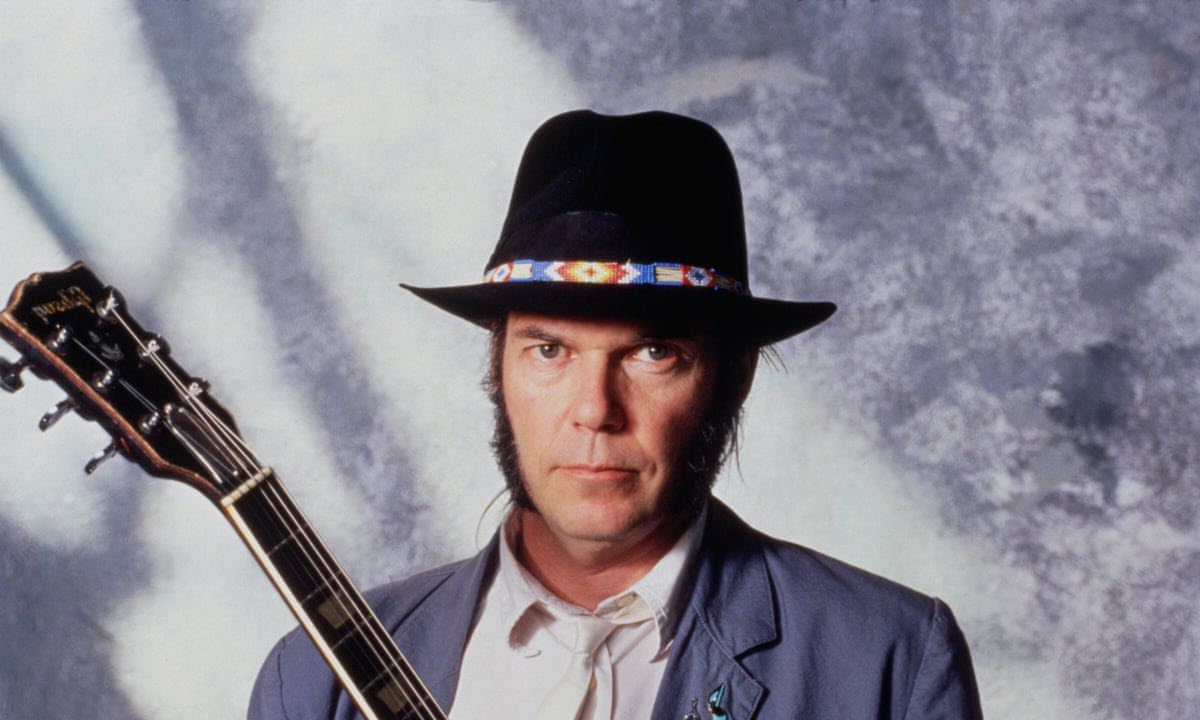
Few artists have carved a musical legacy as rich, raw, and enduring as Neil Young. With a career spanning over five decades, Young has defied genre boundaries—seamlessly blending folk, rock, country, and grunge—while always staying true to his restless artistic spirit. He’s a protest singer, a poetic storyteller, and a guitar-slinging force of nature whose songs have become anthems for generations in search of truth, love, and rebellion. From his haunting ballads to his electrified manifestos, Neil Young’s music resonates with emotional honesty and fearless conviction.
In this list, we dive into the top 10 most popular Neil Young songs of all time—the timeless tracks that captured hearts, stirred minds, and etched themselves into the soul of rock history. These aren’t just hits—they’re moments of brilliance that defined eras, inspired movements, and proved that music can be both deeply personal and powerfully political. Whether you’re a longtime fan or just discovering his genius, this list is your essential guide to the songs that made Neil Young a legend. So grab your headphones, crank up the volume, and take a journey through the unforgettable soundscape of one of music’s most influential voices.
1. Heart of Gold (1972)
Released in 1972 on Harvest, “Heart of Gold” became Neil Young’s only No. 1 hit on the Billboard Hot 100—and it’s easy to understand why. The song is a tender, introspective folk ballad that strips everything down to its emotional core. Accompanied by acoustic guitar and harmonica, Young delivers a vulnerable performance that speaks to the universal longing for genuine love and a meaningful life. His voice—fragile, searching, and sincere—makes the lyrics feel deeply personal, as though he’s letting listeners peek into his soul. What elevates the track even further is the presence of James Taylor and Linda Ronstadt on backing vocals, whose subtle harmonies lend a gentle warmth without overpowering the simplicity of the arrangement. “Heart of Gold” is the perfect encapsulation of Young’s artistry—honest, melancholic, and profoundly human. Its success also marked a turning point, bringing Young mainstream attention while staying true to his folk-rock roots. Though it’s been covered countless times, there’s something in the original that remains timeless: a quiet yearning that resonates as strongly today as it did over fifty years ago. For many fans, it’s the quintessential Neil Young track—soulful, understated, and unforgettable.
2. Old Man (1972)
“Old Man,” another standout from Neil Young’s 1972 classic Harvest, is a reflective meditation on life, identity, and the threads that connect us across generations. Inspired by the caretaker of Young’s Broken Arrow Ranch, the song draws a poignant parallel between a younger man and the older figure who came before him. What begins as a simple story unfolds into something deeper—an emotional exploration of how age may separate people on the surface but leave their hearts beating to similar rhythms. The lyrics are delivered with honesty and grace, and Young’s plaintive vocals are underscored by an understated but beautiful arrangement. James Taylor’s banjo and Linda Ronstadt’s harmonies add just the right texture, bringing a warm, rustic tone to the song without distracting from its message. Musically, it blends folk and country in a way that feels organic and timeless. “Old Man” continues to resonate with audiences because it captures a very human feeling: that deep, quiet realization that we’re not so different from those who came before us. It’s a song about seeing yourself in others, aging, and the simple truths that often take a lifetime to fully understand.
3. Rockin’ in the Free World (1989)
By 1989, Neil Young was decades into his career, but Freedom proved he wasn’t slowing down—in fact, he was getting louder. “Rockin’ in the Free World” exploded onto the scene as both a defiant anthem and a razor-sharp critique of the political and social climate of late-’80s America. With its distorted guitars and gritty, garage-rock energy, the song feels urgent, raw, and unfiltered. The lyrics—pointed and unflinching—call out poverty, drug addiction, war, and apathy, using the ironically optimistic chorus as a bitter refrain. It’s Neil Young in full protest mode, balancing fury with frustration. The track’s punk-like intensity helped reestablish Young’s relevance in an era leaning toward grunge and alternative rock; in fact, many credit him as a godfather of the grunge movement. Pearl Jam, Nirvana, and others would later cite this song and Young’s work as crucial influences. “Rockin’ in the Free World” became more than a political statement—it turned into a cultural touchstone. Whether blasted at rallies or covered by younger bands, the song remains one of the most enduring and powerful protest tracks in rock history. It’s Neil Young at his most electrifying, shouting truth to power with no apologies.
4. Cinnamon Girl (1969)
Released in 1969 on Everybody Knows This Is Nowhere, “Cinnamon Girl” is one of the defining songs of Neil Young’s early career—and a perfect introduction to his raw chemistry with Crazy Horse. From the very first crunchy riff, the song bursts with garage rock intensity, driven by fuzzed-out guitar and a hypnotic rhythm. Lyrically, it’s a daydream of longing—an ode to a mysterious muse who offers solace and sweetness. But it’s the music that steals the spotlight. Young’s famous one-note guitar solo may seem minimal on paper, but in execution, it’s explosively effective, emphasizing tone and feel over technical flash. His high, wavering tenor floats above the distortion with a romantic edge, adding a unique sweetness to the track’s otherwise gritty sound. Clocking in at under three minutes, “Cinnamon Girl” is concise yet unforgettable—a compact blast of rock ’n’ roll energy wrapped in melodic hooks. The song laid the groundwork for grunge and alternative rock decades later, but at its core, it’s just a damn good rock song—simple, loud, and straight from the heart.
5. Down by the River (1969)
“Down by the River,” also from Everybody Knows This Is Nowhere, is a haunting nine-minute epic that showcases Neil Young’s ability to stretch a simple idea into a sprawling emotional experience. The song opens with a slow-burning groove, gradually evolving into a moody soundscape defined by hypnotic guitar interplay between Young and Crazy Horse. The lyrics are chillingly sparse, telling the cryptic tale of a man who may or may not have committed a crime of passion. But rather than focusing on narrative clarity, the song channels emotion through its instrumental build-up. The guitar solos don’t just fill space—they speak, scream, weep. Each note feels deliberately placed, yet spontaneous, as if dredged from some hidden reservoir of turmoil. It’s not just a performance—it’s an atmosphere, a descent into inner chaos. “Down by the River” remains one of Young’s most powerful artistic statements, marrying the loose, jam-band spirit of Crazy Horse with the aching lyricism of a storyteller in pain. Its length and repetition only add to its hypnotic pull, making it a cornerstone of psychedelic folk-rock and a fan favorite at live shows. This song isn’t just heard—it’s felt.
6. After the Gold Rush (1970)
“After the Gold Rush,” the title track from Neil Young’s 1970 album, is one of his most mysterious and enduring works. Set to delicate piano chords and adorned with a melancholic flugelhorn solo, the song feels like a dream—strange, beautiful, and just out of reach. Its surreal imagery—silver spaceships, knights in armor, and crying mothers—paints a dystopian picture that resists literal interpretation. Instead, it evokes a mood: a sense of loss, environmental decay, and existential uncertainty. Young’s high, ghostly falsetto only enhances that feeling, drifting through the song like a voice from another world. Though the lyrics are cryptic, they’ve invited endless interpretation—from nuclear apocalypse to ecological warning to spiritual awakening. And yet, despite its vagueness, the emotional clarity is unmistakable. “After the Gold Rush” captures the disillusionment of a generation in transition, watching the idealism of the ’60s fade into the harsher realities of the ’70s. Its minimalist arrangement is deceptively powerful, allowing the listener to sit with the unease, the sadness, and the quiet hope buried underneath. Over fifty years later, it remains one of Young’s most haunting and poetic achievements—a song that lingers like a fading echo of a beautiful, broken dream.
7. The Needle and the Damage Done (1972)
“The Needle and the Damage Done” is Neil Young at his most raw and emotionally exposed. Recorded live and released in 1972 on Harvest, this acoustic lament delivers a devastating punch in just under two minutes. The song was written as a direct response to the rising tide of heroin addiction among musicians, particularly Young’s friend and Crazy Horse bandmate Danny Whitten, who would later die of a drug overdose. Stripped of any studio gloss, the live recording feels like an open wound—just Young, a guitar, and the truth. His voice is weary and trembling, conveying not just sadness, but helplessness and frustration. The lyrics are simple but piercing: “I’ve seen the needle and the damage done / A little part of it in everyone.” It’s a chilling reminder of how addiction doesn’t just destroy lives—it leaves emotional wreckage in its wake. The song’s haunting honesty and stark minimalism have made it a powerful anti-drug statement, far more personal than preachy. It’s not just a warning—it’s a requiem. In its brevity and stillness, “The Needle and the Damage Done” achieves what few songs can: it memorializes loss in real time.
8. Hey Hey, My My (Into the Black) (1979)
Released in 1979 on Rust Never Sleeps, “Hey Hey, My My (Into the Black)” is one of Neil Young’s most iconic and incendiary statements on fame, artistry, and the future of rock and roll. Paired with its acoustic counterpart “My My, Hey Hey (Out of the Blue),” the electric version hits like a thunderclap. With its searing guitars, thick distortion, and dark, ominous tone, the song signals a dramatic departure from Young’s folk-rock roots. The infamous lyric “It’s better to burn out than to fade away” sparked debate and controversy—especially after it was quoted in Kurt Cobain’s suicide note—but the line encapsulates the track’s desperate energy and meditation on artistic relevance. Young seems to grapple with his own place in the changing musical landscape, especially as punk and new wave surged onto the scene. The song’s roaring riff, snarling vocals, and feedback-drenched climax cement it as a powerful anthem of defiance. More than just a rock song, “Hey Hey, My My” became a manifesto for staying true to one’s vision, no matter the cost. It’s Neil Young reminding us that rock isn’t dead—it just needs to be kept alive by those willing to go all in.
9. Southern Man (1970)
“Southern Man,” released in 1970 on After the Gold Rush, is one of Neil Young’s boldest and most confrontational songs. Fueled by righteous anger and searing guitar riffs, the track directly addresses racism and systemic injustice in the American South. Young pulls no punches in his lyrics, calling out white supremacy, hypocrisy, and the enduring scars of slavery. “Southern man better keep your head,” he warns, turning his music into a call to conscience. The song’s incendiary tone and provocative message sparked a now-legendary feud with Lynyrd Skynyrd, who responded with “Sweet Home Alabama.” But Young never backed down, and over time, “Southern Man” has been recognized for its fearless stance in a time when such statements were far from safe. Musically, it’s as intense as its message—driven by blistering guitar solos and a powerful vocal performance that blends fury with sorrow. The track remains a lightning rod in discussions about protest music, race, and the role of artists in political discourse. Decades later, its message is sadly still relevant, and its urgency undiminished. “Southern Man” endures as a fiery protest anthem that refuses to look away from uncomfortable truths.
10. Harvest Moon (1992)
“Harvest Moon,” released in 1992, is a gently luminous return to the pastoral beauty of Neil Young’s Harvest era, but this time seasoned with age and reflection. More than two decades after “Heart of Gold,” Young revisits themes of love, nature, and time—not from the vantage point of a young man searching, but from someone who’s lived, loved, and stayed the course. The song is a romantic ode to enduring love, set to a tender waltz rhythm and adorned with soft acoustic guitars, pedal steel, and brushed percussion. His voice, more weathered than in his earlier years, carries a new kind of vulnerability—one born of experience, not innocence. The harmonies, especially by longtime collaborators like Linda Ronstadt, add a glow of warmth and intimacy. There’s something deeply reassuring in the song’s quiet celebration of companionship—the kind that lasts long past the first spark. “Harvest Moon” isn’t flashy, but it doesn’t need to be. Its grace lies in its simplicity and emotional honesty. Whether played at weddings or under actual moonlight, it continues to resonate as one of Young’s most beloved ballads—a timeless tribute to the beauty of growing old together.

Samuel Moore is a frequent contributor to Singers Room. Since 2005, Singersroom has been the voice of R&B around the world. Connect with us via social media below.









