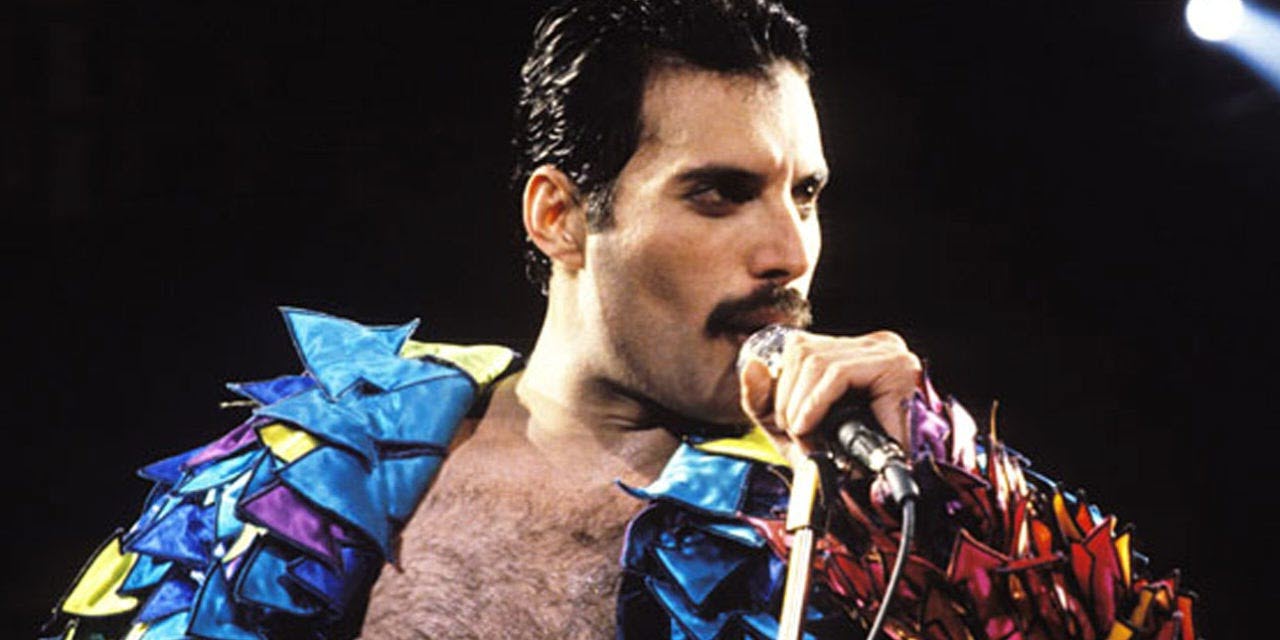
Few voices in music history have left as indelible a mark as Freddie Mercury. With his four-octave range, electrifying stage presence, and fearless creativity, Mercury didn’t just front Queen—he transformed rock music. Whether belting out operatic anthems or crafting intimate ballads, he brought drama, passion, and authenticity to every note. Decades after his passing, his influence still resonates across generations, genres, and cultures. Fans continue to celebrate his legacy not just for his unmatched vocal prowess, but for the emotional power he injected into every lyric.
In this article, we count down the Top 10 Most Popular Freddie Mercury Songs of All Time—a curated list of the tracks that defined his career and shaped modern music. From groundbreaking hits that redefined what a rock song could be, to sweeping solos that showcased his versatility, each entry is a testament to Mercury’s genius. Whether you’re a lifelong fan or just discovering the magic of Freddie for the first time, these songs represent the very best of a legend who lived—and performed—like no one else. Turn up the volume, brace for goosebumps, and let’s dive into the unforgettable soundscape of Freddie Mercury’s greatest hits.
1. Bohemian Rhapsody (1975)
Released in 1975 as part of Queen’s landmark album A Night at the Opera, “Bohemian Rhapsody” defied every rule in the book—and rewrote them all. Written by Freddie Mercury, the six-minute epic blends balladry, opera, and hard rock into a singular masterpiece that has become one of the most iconic songs in music history. The song opens with a haunting a cappella vocal before unfolding into a sorrowful piano ballad, bursting into an operatic fantasia, and culminating in a thunderous rock finale. Initially viewed as too long and unconventional for radio, it became a surprise hit, topping charts worldwide. Mercury’s theatrical vocal delivery, Brian May’s soaring guitar solo, and the band’s stacked harmonies all contributed to its enduring appeal. “Bohemian Rhapsody” wasn’t just a song—it was an event. Its music video helped define the MTV generation before MTV even existed. Decades later, it remains a cultural phenomenon, re-entering charts thanks to its use in films, commercials, and tributes. More than a rock song, “Bohemian Rhapsody” is a dramatic, emotional journey that showcases Mercury’s genius and Queen’s fearless creativity. It didn’t just change the band’s trajectory—it changed rock music forever.
2. Somebody to Love (1976)
With “Somebody to Love,” Queen took a passionate dive into gospel-inspired rock, creating one of their most soulful and emotionally resonant tracks. Released in 1976 on A Day at the Races, the song showcases Freddie Mercury’s admiration for gospel music and Aretha Franklin in particular. Built on a foundation of lush, multi-tracked harmonies sung by Mercury, Brian May, and Roger Taylor, the vocals mimic the grandeur of a full gospel choir. The lyrics reflect a deep, personal longing for love and spiritual connection, capturing universal feelings of loneliness and hope. Mercury’s vocal performance is especially stunning—simultaneously raw, powerful, and full of vulnerability. His piano work drives the song’s rhythm, creating a pulsing urgency that builds to a climactic chorus of emotional release. “Somebody to Love” became a fan favorite and a live staple, particularly when later performed with guest singers like George Michael. It’s not just a showcase of Queen’s unmatched vocal harmonies—it’s one of Mercury’s most heartfelt and enduring compositions, affirming his status as one of rock’s most emotionally expressive frontmen.
3. We Are the Champions (1977)
“We Are the Champions,” released in 1977 alongside “We Will Rock You” on Queen’s News of the World, is the quintessential anthem of triumph. Written by Freddie Mercury, the song was crafted as a power ballad that would resonate with fans everywhere—from sports stadiums to personal moments of victory. It begins with Mercury’s elegant piano intro and gradually builds toward a rousing, defiant chorus that’s impossible not to sing along with. His voice soars with pride, pain, and perseverance, making the song both personal and universally relatable. Over the years, it has become the unofficial soundtrack for winners, underdogs, and dreamers alike. The track’s simplicity is deceptive; its emotional arc and carefully constructed dynamics make it a masterclass in anthemic songwriting. Whether echoing through arenas or blasting from headphones after a hard-fought win, “We Are the Champions” continues to inspire. More than just a song, it’s a cultural touchstone—a moment of shared celebration wrapped in Mercury’s unmistakable brilliance.
4. Don’t Stop Me Now (1979)
A rush of adrenaline captured in musical form, “Don’t Stop Me Now” is Queen at their most joyful and carefree. Featured on their 1978 album Jazz and released as a single in 1979, the song is a high-energy celebration of freedom, fun, and the thrill of living in the moment. Freddie Mercury leads the charge with unbridled enthusiasm, singing lyrics that read like a personal manifesto: “I’m a shooting star leaping through the sky.” From the bouncy piano intro to Brian May’s explosive guitar solo, the track moves with a momentum that feels unstoppable. Interestingly, the song wasn’t a massive commercial success when first released. But over time, its feel-good energy and Mercury’s electric delivery turned it into a fan favorite and a fixture in pop culture—featured in films, commercials, and countless playlists. “Don’t Stop Me Now” captures Mercury at his most exuberant, embodying the pure, unapologetic joy of being alive. It’s more than just a party song—it’s an infectious reminder of what it means to seize life by the moment and ride the high of self-expression.
5. Radio Ga Ga (1984)
“Radio Ga Ga,” released in 1984 on The Works, is Queen’s love letter to the golden era of radio—and a commentary on its fading influence in the age of television and video. Written by drummer Roger Taylor, the track stands out for its synth-heavy production and futuristic feel, reflecting the band’s evolution into new sonic territory during the 1980s. Freddie Mercury’s impassioned vocals give the song its emotional weight, turning nostalgia into a powerful anthem for change. The chorus is instantly memorable, and the accompanying hand-clap sequence became iconic, especially during Queen’s unforgettable 1985 Live Aid performance. While it critiques the rise of image-driven media, the song ultimately celebrates music’s ability to connect people across generations. “Radio Ga Ga” is both retro and forward-thinking, a perfect example of how Queen balanced artistry with accessibility. With Mercury front and center, the track became a rallying cry for preserving the soul of music in a rapidly evolving world. It’s a poignant reminder of how deeply sound—and song—can resonate, even as the mediums shift.
6. Under Pressure (1981)
Born from an impromptu jam session in Montreux, Switzerland, “Under Pressure” is the extraordinary result of two musical powerhouses—Queen and David Bowie—colliding in creative harmony. Released in 1981, the song fuses Queen’s dynamic instrumentation with Bowie’s introspective lyrical style to produce one of rock’s most iconic collaborations. Anchored by John Deacon’s unforgettable bassline, the track builds tension through layered vocals, alternating between Mercury’s soaring emotion and Bowie’s cool introspection. The lyrics reflect the anxieties of modern life—stress, compassion, love, and the pressure of daily existence—all delivered with raw vulnerability. Though the collaboration was spontaneous, the chemistry between Mercury and Bowie feels electric and deliberate. Their vocal interplay elevates the song from duet to dramatic dialogue. “Under Pressure” not only became a major hit, but it also remains a deeply human anthem that resonates just as strongly today. More than a duet, it’s a conversation—between two icons, between conflicting emotions, and between generations of listeners searching for meaning in a chaotic world.
7. Barcelona (1987)
“Barcelona” is perhaps Freddie Mercury’s most ambitious project—a sweeping fusion of pop and opera that defied all expectations. Released in 1987 as a collaboration with celebrated Spanish soprano Montserrat Caballé, the song was conceived as a tribute to the city of Barcelona and later became an unofficial anthem for the 1992 Summer Olympics held there. Unlike Mercury’s usual rock fare, “Barcelona” features classical orchestration, operatic vocals, and dramatic flair that showcase his deep love for musical theater and the operatic tradition. Mercury rises to the challenge with astonishing power and finesse, matching Caballé note for note in a soaring duet that feels both majestic and deeply heartfelt. Their chemistry is palpable, transforming the song into a celebration of unity, artistry, and boundless ambition. “Barcelona” proved that Mercury was more than a rock frontman—he was a boundary-pushing visionary who embraced the full spectrum of music. The song stands today as a dazzling testament to his versatility, courage, and deep passion for performance.
8. Love of My Life (1975)
Tender and deeply personal, “Love of My Life” stands apart as one of Queen’s most intimate ballads. Written by Freddie Mercury and released on A Night at the Opera in 1975, the song is a heartfelt ode to Mary Austin, his longtime companion and confidante. Stripped of Queen’s usual grandeur, the studio version features Mercury’s delicate piano and a vulnerable vocal performance that radiates sincerity. Later arranged with harp and acoustic guitar in live versions, the track took on a new life in concert, often transforming into a poignant singalong led by the audience. Mercury would step back from the microphone, allowing fans to echo the lyrics back in a moment of shared emotion. This connection made “Love of My Life” not just a song, but a ritual. Its enduring beauty lies in its simplicity and emotional honesty, offering a glimpse into Mercury’s softer, more reflective side. Even decades later, it continues to move listeners with its bittersweet charm, reminding us that behind the showmanship was a soul capable of breathtaking tenderness.
9. I Want to Break Free (1984)
“I Want to Break Free,” from Queen’s 1984 album The Works, is a spirited anthem of liberation, self-expression, and defiance. Written by bassist John Deacon, the song gained worldwide attention not just for its catchy synth-driven arrangement, but for its iconic music video—in which the band dressed in drag to parody British soap operas. Freddie Mercury’s playful yet commanding performance turned the satire into a bold statement, sparking controversy in some places while becoming a symbol of empowerment in others. Beneath the cheeky exterior lies a deeper message about personal freedom and the human desire to escape societal constraints. Mercury’s vocals are smooth, assured, and emotionally charged, embodying both strength and vulnerability. The track became especially resonant with LGBTQ+ communities and others seeking to break from convention. “I Want to Break Free” may have begun as a tongue-in-cheek project, but it evolved into something far more meaningful—a celebration of identity, courage, and living life on your own terms.
10. Living on My Own (1985)
“Living on My Own,” released in 1985 on Freddie Mercury’s solo album Mr. Bad Guy, is a vibrant, danceable track that captures the artist’s fierce independence and flamboyant personality. Infused with disco beats, jazzy piano, and a cheeky vocal delivery, the song celebrates the joy—and occasional loneliness—of solitude. Mercury sings with playful swagger, delivering lines like “I don’t have no time for no monkey business” with the kind of flair only he could pull off. While the song didn’t make a huge impact at first, a 1993 remix released after Mercury’s death shot to No. 1 across several European charts, cementing its legacy. It became a late-career anthem that posthumously showcased his ability to blend pop, dance, and wit into something infectious and uniquely his. “Living on My Own” is more than a fun club hit—it’s a snapshot of Mercury’s life outside Queen, marked by personal freedom, loneliness, and his unshakable spirit. It’s a celebration of doing things your own way, even when the world doesn’t quite understand you.

Samuel Moore is a frequent contributor to Singers Room. Since 2005, Singersroom has been the voice of R&B around the world. Connect with us via social media below.









