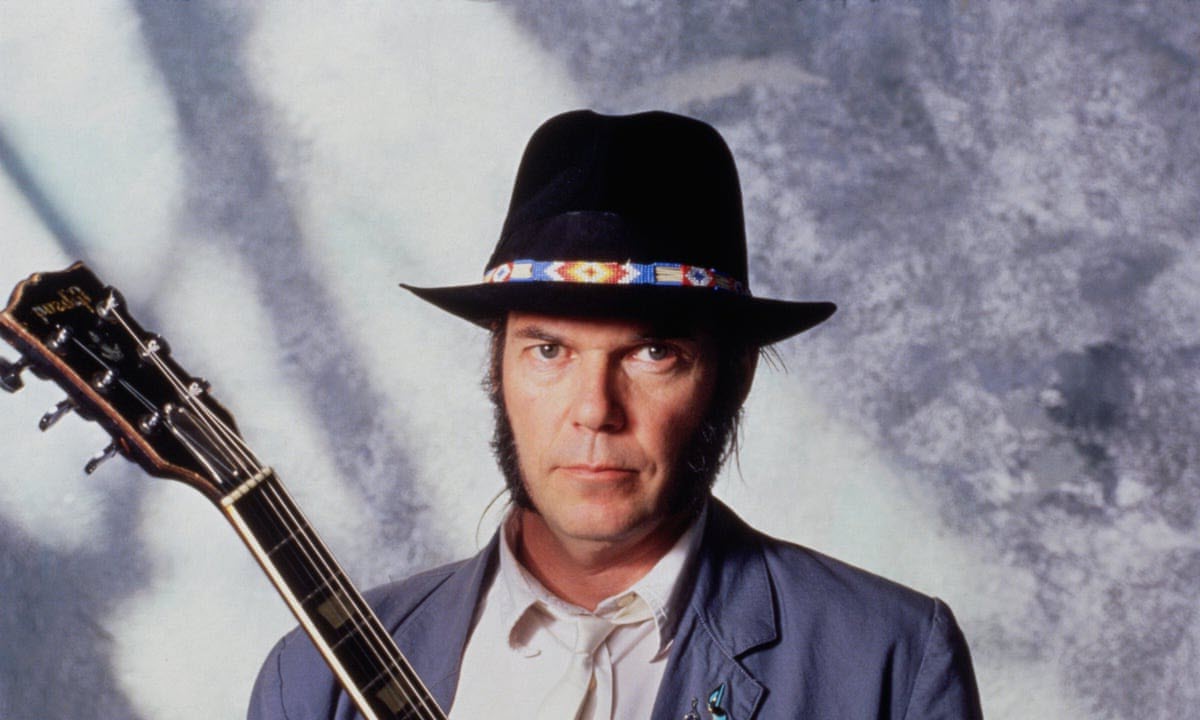
Few artists have etched their name into the soul of rock and folk music quite like Neil Young. With a career spanning over five decades, Young has crafted a catalog that is not only vast but emotionally and politically charged, deeply personal, and wildly influential. From tender acoustic ballads to roaring electric anthems, his songs have soundtracked generations, capturing moments of heartbreak, rebellion, and reflection with an honesty few can match. Whether he’s strumming a gentle melody under the harvest moon or tearing through a grungy solo with Crazy Horse at his back, Neil Young doesn’t just write songs—he creates experiences. In this countdown, we’re diving into the top 10 most popular Neil Young songs of all time—the tracks that have defined his legacy, topped charts, sparked controversy, and inspired countless artists across genres. These aren’t just hits—they’re milestones in the story of modern music. Whether you’re a lifelong fan or just discovering the magic of Neil’s songwriting, this list is your gateway into one of the most compelling voices in rock history. So crank up the volume, grab your harmonica, and let’s explore the unforgettable songs that made Neil Young a legend.
1. “Heart of Gold” (1972)
“Heart of Gold” is perhaps Neil Young’s most iconic and widely beloved track, a song that struck a chord with millions when it topped the Billboard Hot 100 in 1972. Featured on the landmark album Harvest, it marked a rare moment when Young’s introspective style found massive mainstream success. Built on gentle acoustic guitar, plaintive harmonica, and an understated rhythm, the song’s beauty lies in its simplicity. The lyrics—particularly the haunting line “I’ve been a miner for a heart of gold”—speak to a deep yearning for authenticity and emotional truth. There’s a vulnerable honesty in Young’s delivery that makes the track feel both intimate and universal. Recorded in Nashville, the song features the subtle harmonies of James Taylor and Linda Ronstadt, adding a soft glow without ever overshadowing Young’s voice. Despite its quiet nature, the song carries a powerful emotional punch and perfectly encapsulates the spirit of early ’70s folk-rock. It remains Young’s only number-one single in the U.S., yet its legacy far surpasses the charts. “Heart of Gold” endures not just as a hit, but as a timeless meditation on the human search for love, purpose, and sincerity.
2. “Old Man” (1972)
“Old Man” is one of Neil Young’s most tender and reflective songs, capturing the unexpected parallels between youth and age. Released in 1972 on Harvest, the song was inspired by the caretaker of Young’s Northern California ranch, whom Young affectionately referred to as the “old man.” With its heartfelt lyricism and sparse, organic instrumentation—featuring James Taylor on banjo and backing vocals—it tells a story of generational kinship and the timeless nature of human needs. The lyric “Old man, look at my life, I’m a lot like you were” hits with quiet force, drawing attention to how little really changes as we age. Young doesn’t just observe the old man—he sees himself in him, creating a kind of mirror across time. The arrangement is soft but emotionally resonant, with a melody that lingers long after the last note fades. “Old Man” has remained a staple in Young’s discography and is often cited as one of his most moving compositions. It’s a gentle reminder that beneath the surface of age and experience, we’re all looking for connection, meaning, and someone to understand us. A classic in every sense, it’s a song that only grows richer with time.
3. “Rockin’ in the Free World” (1989)
“Rockin’ in the Free World” is Neil Young’s searing indictment of late-20th-century America—a song that crackles with rage, irony, and raw energy. Released in 1989 on Freedom, it found Young reemerging as a vital political voice during a time of cultural and economic disillusionment. The lyrics tackle issues like poverty, environmental neglect, and superficial patriotism with biting clarity. Backed by roaring electric guitar and a relentless rhythm section, Young spits out lines like “We got a thousand points of light for the homeless man,” mocking hollow political slogans with sharp sarcasm. But what sets this song apart is its two distinct versions on the album—an acoustic opener and a thunderous electric closer—offering both a somber meditation and a rebellious outcry. The refrain, “Keep on rockin’ in the free world,” can be read as either defiant or despairing, adding complexity to the song’s message. Over time, it has become an anthem for resistance, frequently played at protests and political rallies. More than three decades later, “Rockin’ in the Free World” still feels urgent, proving that rock and roll can be both a weapon and a warning. It’s Neil Young at his fiercest.
4. “Cinnamon Girl” (1969)
Released on the 1969 album Everybody Knows This Is Nowhere, “Cinnamon Girl” is an early showcase of Neil Young’s raw, unfiltered sound. The song bursts out of the speakers with the crunch of a fuzzed-out guitar and a punchy, no-frills beat courtesy of Crazy Horse. Built around one of the most iconic one-note guitar solos in rock history, “Cinnamon Girl” is deceptively simple but endlessly effective. Young wrote it as a tribute to a dream girl—part muse, part fantasy, part partner in creativity. The lyrics are vivid and casual, hinting at both love and longing: “I want to live with a cinnamon girl, I could be happy the rest of my life.” There’s a garage-band immediacy in the recording, a lo-fi charm that captures the energy of a jam session turned magical. The harmonies, layered and slightly off-kilter, add to its warm, slightly psychedelic atmosphere. More than just a love song, “Cinnamon Girl” helped define the grungy, unpolished edge that would become a cornerstone of alternative rock decades later. It’s a track that manages to sound innocent and rebellious all at once—a perfect distillation of Neil Young’s unique alchemy.
5. “Down by the River” (1969)
Clocking in at nearly ten minutes, “Down by the River” is Neil Young at his most brooding and hypnotic. Released on Everybody Knows This Is Nowhere in 1969, the track tells a chilling, ambiguous story wrapped in layers of haunting guitar. The cryptic lyric—“I shot my baby down by the river”—leaves much to interpretation: is it literal, metaphorical, or a dreamlike descent into guilt and madness? Rather than spell things out, Young lets the music do the talking. The song unfolds like a slow-burning fire, with long, winding guitar solos that shimmer with tension and melancholy. Crazy Horse’s minimalist backing provides the perfect canvas for Young’s emotive lead work, which ranges from whispery to wailing. Each note feels deliberate yet raw, capturing a mood that’s as unsettling as it is entrancing. “Down by the River” isn’t about flashy technique—it’s about emotional immersion. You don’t just listen to it; you get pulled into its murky current. Often cited as one of the greatest guitar songs ever recorded, it remains a high watermark in Young’s catalog—a sprawling, dark, and unforgettable masterpiece.
6. “Southern Man” (1970)
“Southern Man,” released in 1970 on After the Gold Rush, is one of Neil Young’s most direct and confrontational songs. Fueled by righteous anger and searing guitar work, the track confronts the legacy of racism, slavery, and inequality in the American South. Young’s lyrics are unflinching, calling out centuries of oppression and questioning whether progress has truly been made: “I saw cotton and I saw black, tall white mansions and little shacks.” His voice—haunted, urgent—cuts through the electrified blues-rock arrangement like a blade. The song’s dynamic shifts between soulful verses and blistering instrumental breaks mirror its emotional intensity. “Southern Man” wasn’t without controversy. It drew a famous rebuttal from Lynyrd Skynyrd in “Sweet Home Alabama,” yet Young later acknowledged their right to respond and even expressed admiration for the band. Still, the power of “Southern Man” lies in its willingness to say the unsaid, to confront harsh truths with both art and fury. Musically, it stands as one of Young’s most aggressive compositions, blending rock and soul with social conscience. More than five decades later, it remains a powerful statement on justice, identity, and the role of the artist in times of reckoning.
7. “The Needle and the Damage Done” (1972)
At just under two minutes, “The Needle and the Damage Done” delivers a devastating emotional punch. Released in 1972 on Harvest, the song is Neil Young’s unflinching reflection on heroin addiction and its toll on the music community. Inspired by the death of Crazy Horse guitarist Danny Whitten and others in Young’s orbit, the song feels like an open wound—a lament sung not with judgment but with profound sorrow. Recorded live at UCLA in 1971, the performance is stripped to its bare bones: just Young’s voice, his acoustic guitar, and a truth too heavy to ignore. The line “I sing the song because I love the man” captures the heartbreak at the core of the piece. There’s no production gloss or melodrama—only quiet devastation. It’s this stark honesty that makes the song resonate so deeply. “The Needle and the Damage Done” is not just a cautionary tale; it’s a memorial, a prayer, and a cry for understanding. It’s one of the most affecting songs in Young’s catalog and a timeless reminder of how addiction can steal even the brightest lights.
8. “Hey Hey, My My (Into the Black)” (1979)
“Hey Hey, My My (Into the Black)” is Neil Young’s electric thunderclap of defiance and existentialism. Released in 1979 on Rust Never Sleeps, it marked a bold reinvention for Young, embracing punk’s raw spirit and distorted fury. With Crazy Horse powering the track’s relentless groove, the song feels like a manifesto—gritty, ominous, and unforgettable. The lyric “It’s better to burn out than to fade away” became a cultural touchstone, famously quoted in Kurt Cobain’s suicide note and often misinterpreted as glorifying self-destruction. In truth, it speaks to the artist’s struggle for relevance in a world that constantly reinvents itself. The song is the dark twin to the acoustic “My My, Hey Hey (Out of the Blue),” which opens the album. Together, they explore the cycles of fame, mortality, and creative legacy. The guitar work is jagged and unforgiving, the mood apocalyptic. But beneath the distortion lies clarity: Young is declaring that art, like life, must keep evolving or risk dying on the vine. “Hey Hey, My My” endures as one of rock’s great statements on purpose, perseverance, and the price of staying true to yourself.
9. “Like a Hurricane” (1977)
“Like a Hurricane” is a tempest of emotion and electric guitar, a track that showcases Neil Young’s ability to turn longing into sonic chaos. Released in 1977 on American Stars ‘n Bars, the song is one of his most intense and iconic performances. Written during a period when Young had lost his singing voice due to vocal cord strain, the song channels all its feeling into its instrumental force. The opening riff alone is unforgettable—sweeping and dramatic, like the calm before a storm. The lyrics describe a powerful, fleeting love: “You are like a hurricane, there’s calm in your eye.” It’s a relationship that feels overwhelming, almost destructive, and the music mirrors that emotional turbulence. The extended solos—drenched in reverb, full of screaming bends and sustained notes—don’t just decorate the song; they are the song. “Like a Hurricane” has become a staple of Young’s live shows, often stretched even longer in concert to heighten its hypnotic effect. It stands as a towering achievement in Young’s electric catalog, a swirling blend of romance, chaos, and pure rock catharsis.
10. “Harvest Moon” (1992)
“Harvest Moon,” the title track of Neil Young’s 1992 album, is a graceful meditation on enduring love and the quiet beauty of growing old with someone. A spiritual companion to his 1972 masterpiece Harvest, this song feels like coming full circle—revisiting the warmth of country-tinged folk with the added wisdom of age. From the first gentle guitar strum to the soft sway of brushed drums, the track exudes serenity. Linda Ronstadt’s delicate harmonies give it a nostalgic glow, echoing the feeling of a love that’s deepened over time. The lyrics are simple, yet profoundly moving: “Because I’m still in love with you, I want to see you dance again.” It’s a reminder that romance doesn’t fade; it matures, strengthens, and finds joy in the small things. There’s no cynicism here—just gratitude and affection. “Harvest Moon” has since become one of Young’s most beloved songs, often played at weddings and anniversaries for its tender celebration of lasting commitment. It proves that love songs don’t always have to be about heartbreak or passion—they can also be about quiet nights, shared memories, and dancing under the stars.

Samuel Moore is a frequent contributor to Singers Room. Since 2005, Singersroom has been the voice of R&B around the world. Connect with us via social media below.









