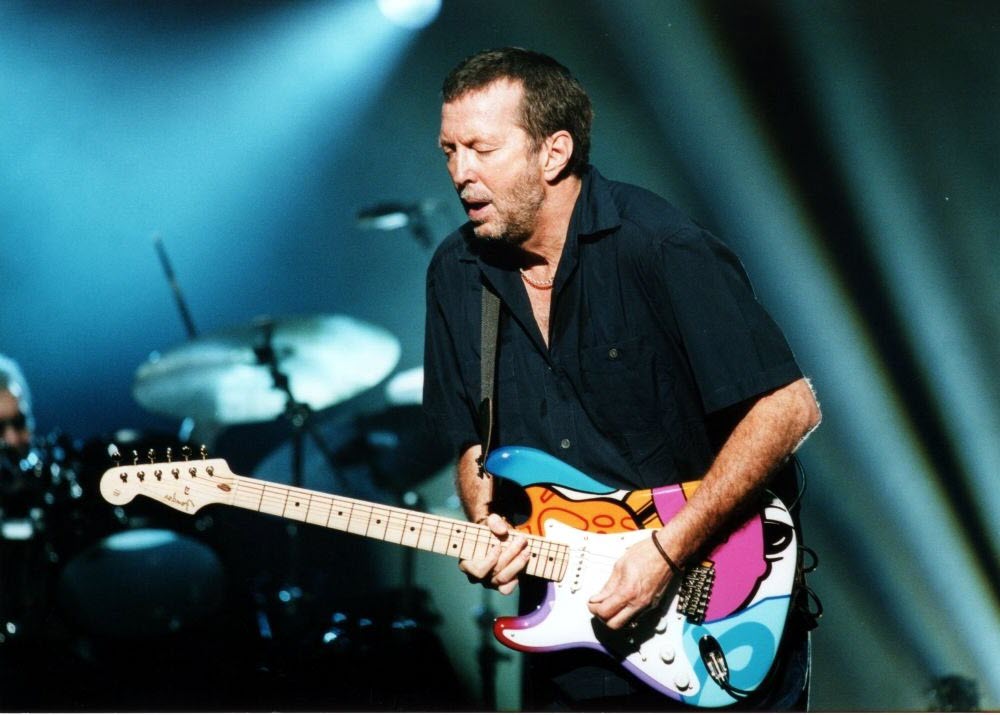
Eric Clapton, a towering figure in the world of music, has captivated audiences for decades with his soulful guitar riffs and heartfelt lyrics. Often referred to as “Slowhand,” Clapton’s journey through blues, rock, and pop has produced a remarkable catalog that resonates with fans across generations. From his early days with The Yardbirds and Cream to his prolific solo career, Clapton’s influence is undeniable. His ability to blend genres and evoke deep emotions has earned him numerous accolades, including multiple Grammy Awards and induction into the Rock and Roll Hall of Fame three times.
In this article, we dive into the top 10 most popular Eric Clapton songs of all time. Each track not only showcases his extraordinary talent as a guitarist and songwriter but also highlights the diverse influences that have shaped his distinctive sound. Whether you’re a lifelong fan or a newcomer to his music, prepare to explore the timeless classics that have defined Clapton’s legacy. Get ready to relive the magic of his most iconic hits, each one a testament to his extraordinary artistry and enduring impact on the music world.
1. “Tears in Heaven” (1991)
Eric Clapton’s “Tears in Heaven” is a hauntingly beautiful ballad born out of personal heartbreak. Written after the tragic loss of his four-year-old son, Conor, in 1991, the song captures the raw, aching pain of a grieving father. Clapton pours his soul into every line, asking questions that many who have experienced loss can relate to: “Would you know my name if I saw you in heaven?” The delicate fingerpicking on the acoustic guitar and the gentle instrumentation create a soft, tender backdrop for the emotional weight of the lyrics. Rather than a cry for pity, the song serves as a quiet reflection on love, loss, and the hope of reunion beyond this life. It resonated deeply with listeners worldwide, becoming one of Clapton’s most recognized and acclaimed works. It won several Grammy Awards, including Record of the Year and Song of the Year. More than just a hit, “Tears in Heaven” became a healing anthem for anyone navigating grief, proving that music can be both deeply personal and universally understood. It remains a powerful testament to Clapton’s artistry and his ability to transform pain into something profoundly moving.
2. “Layla” (1970)
“Layla” is one of Eric Clapton’s most iconic songs, known for its blistering guitar riffs and its emotionally charged story. Released in 1970 under the band Derek and the Dominos, the track was inspired by Clapton’s unrequited love for Pattie Boyd, who was married to his close friend George Harrison at the time. The passion and desperation in the lyrics, “You’ve got me on my knees, Layla,” mirror Clapton’s inner turmoil, making the song resonate with anyone who’s experienced heartbreak. The first half is a hard-hitting rock anthem, driven by Clapton’s searing guitar work and impassioned vocals. Then, the song transitions into a surprising, beautiful piano coda composed by Jim Gordon. This softer section, often overlooked in favor of the main riff, adds a sense of wistful resignation to the longing already expressed. The blend of anguish and beauty has made “Layla” a timeless classic. Over the years, the song has been reinterpreted, most notably in Clapton’s unplugged version, which softened its edges while preserving its emotional core. Regardless of the arrangement, “Layla” continues to stand as a bold expression of love, longing, and musical brilliance.
3. “Wonderful Tonight” (1976)
“Wonderful Tonight” stands as one of Eric Clapton’s most tender and beloved ballads. Written in 1976 for Pattie Boyd, the song paints a simple yet heartfelt picture of love, admiration, and everyday intimacy. It describes a moment that many couples can relate to—getting ready for a night out, noticing the beauty of your partner, and feeling grateful for their presence. The lyrics, “You look wonderful tonight,” repeat with gentle sincerity, making it one of the most romantic lines in popular music. The melody is soft and unhurried, matched by Clapton’s laid-back guitar playing and warm vocal tone. There’s no showboating here—just pure emotion wrapped in a soothing melody. It’s this simplicity that gives the song its enduring power. “Wonderful Tonight” has become a staple at weddings and romantic events, a quiet anthem for love that endures through the ordinary moments. It showcases a different side of Clapton—not the guitar god, but the man in love, content and present. The song continues to resonate decades after its release, proving that sometimes, the most powerful love songs are the ones that say the simplest things.
4. “Cocaine” (1977)
Eric Clapton’s 1977 rendition of “Cocaine,” originally written by J.J. Cale, became one of his most recognizable and controversial tracks. At first listen, the song’s catchy guitar riff and steady rhythm might seem to glorify drug use, but Clapton has repeatedly clarified that it’s an anti-drug song—“Cocaine” was meant as a warning. The repetitive, almost hypnotic groove mirrors the cyclical nature of addiction, while the stark lyrics, “She don’t lie, she don’t lie, cocaine,” leave interpretation open to the listener. Musically, Clapton’s version packs a punch, with tight instrumentation and standout guitar solos that give the song its edge. It’s a bluesy, no-nonsense track that has become a live staple for him. Though the subject matter stirred debate, the song remains a powerful example of how rock music can address darker topics while remaining accessible. Over time, “Cocaine” has come to symbolize Clapton’s raw honesty about his own struggles, reflecting the grit and grit-and-grace duality that defines much of his music. Whether taken as a critique or a confession, the song captures a moment in rock history that’s as musically compelling as it is thematically challenging.
5. “Change the World” (1996)
Released in 1996, “Change the World” revealed Eric Clapton’s ability to seamlessly blend his blues roots with mainstream pop sensibilities. The song was written by Tommy Sims, Gordon Kennedy, and Wayne Kirkpatrick, but it was Clapton’s soulful interpretation that brought it to life. With its breezy acoustic guitar work, smooth production, and uplifting lyrics, the song carries a hopeful message: that love has the power to transform lives. “If I could change the world, I would be the sunlight in your universe,” Clapton sings with warmth and humility, offering listeners a beautiful vision of selfless devotion. The production, courtesy of Kenneth “Babyface” Edmonds, added a lush, polished feel that complemented Clapton’s understated delivery. “Change the World” became a massive hit, earning three Grammy Awards, including Record of the Year and Song of the Year. Unlike many of Clapton’s emotionally heavy tracks, this one shines with optimism and possibility. It’s proof that Clapton doesn’t need screaming guitar solos to move an audience—sometimes, a gentle touch and a heartfelt lyric are enough. “Change the World” remains a highlight of Clapton’s later career, treasured for its sincerity, warmth, and universal appeal.
6. “I Shot the Sheriff” (1974)
Eric Clapton’s 1974 version of “I Shot the Sheriff” brought reggae into the mainstream rock world. Originally written and recorded by Bob Marley, the song carried strong social commentary rooted in Jamaican culture. Clapton’s take doesn’t dilute the message, but he infuses it with a blues-rock flavor that made it palatable for a broader audience. His smooth, expressive vocals glide over a groove that mixes reggae’s laid-back rhythm with Clapton’s signature guitar stylings. The track became Clapton’s first number-one hit on the Billboard Hot 100, helping to introduce Marley’s work to listeners outside of the reggae scene. While Clapton didn’t claim to improve on Marley’s version, his rendition did help bridge the gap between genres, showing his deep respect for diverse musical traditions. The lyrics, “I shot the sheriff, but I did not shoot the deputy,” spark intrigue and reflection, leaving the interpretation open-ended. With its catchy rhythm and socially charged undertones, “I Shot the Sheriff” remains one of Clapton’s most intriguing and genre-blending songs. It’s a reminder that music can be both infectious and meaningful, and that Clapton’s versatility as a musician extends far beyond the blues.
7. “Sunshine of Your Love” (1967)
“Sunshine of Your Love,” released in 1967 by the supergroup Cream, is arguably one of the most defining tracks of the late 1960s—and a high point in Eric Clapton’s early career. Built on a driving, blues-influenced riff played by Clapton, the song instantly commands attention with its gritty tone and hypnotic groove. Written by Clapton, Jack Bruce, and lyricist Pete Brown, it mixes raw passion with psychedelic elements, capturing the era’s spirit of exploration and rebellion. The lyrics are simple yet powerful, describing an intense longing for a lover’s presence. Clapton’s solo, delivered with a thick, creamy guitar tone and meticulous phrasing, helped solidify his reputation as one of rock’s premier guitarists. The song’s distinctive riff has become a rite of passage for aspiring guitarists and a staple of classic rock radio. “Sunshine of Your Love” is more than just a hit—it’s a cultural touchstone, representing the synergy between blues and rock at a time when music was rapidly evolving. For Clapton, it marked a moment of creative triumph and influence, and it continues to be one of his most celebrated performances, both in studio and on stage.
8. “Bell Bottom Blues” (1970)
“Bell Bottom Blues,” released in 1970 under Derek and the Dominos, is a deeply emotional track that showcases Eric Clapton’s vulnerability and musical sensitivity. Inspired by his tumultuous relationship with Pattie Boyd, the song is filled with yearning and heartbreak. The title refers to a pair of bell-bottom jeans Boyd had requested from the U.S., but the lyrics delve much deeper, expressing the pain of unreciprocated love and emotional dependency. Lines like “Do you want to see me crawl across the floor to you?” are raw, almost desperate, yet wrapped in a melody that is soft, melancholic, and beautiful. Clapton’s voice trembles with sincerity, and his guitar solos are restrained yet filled with feeling, each note echoing the song’s emotional weight. Unlike some of his more fiery performances, “Bell Bottom Blues” draws power from its restraint, making it one of the most emotionally potent songs in his catalog. It didn’t achieve massive chart success upon release, but over time, it has become a fan favorite. The song reveals the tortured soul behind the rock star persona, offering a glimpse into the personal struggles that shaped much of Clapton’s greatest work.
9. “Got You on My Mind” (1989)
“Got You on My Mind,” released in 1989, finds Eric Clapton returning to his blues roots with a soulful, introspective twist. The track feels both timeless and personal, delivering a smooth blend of blues guitar, heartfelt lyrics, and Clapton’s seasoned vocal style. The song explores the aching sense of longing and obsession that comes with lost love. While not one of his most commercially famous works, it holds a unique charm for fans who appreciate his subtler, more contemplative side. The arrangement is relatively sparse, allowing Clapton’s expressive guitar phrasing to shine through with clarity and emotion. His voice carries a quiet sadness, tinged with reflection rather than anguish, making the song feel like a late-night confessional. The groove is easygoing but tinged with melancholy, offering a soothing backdrop for the heartache it conveys. “Got You on My Mind” may not command the spotlight like some of his bigger hits, but it stands as a quietly powerful entry in his discography. It’s a reminder of Clapton’s gift for channeling deep emotion through his instrument and voice, creating music that feels both intimate and universally relatable.
10. “My Father’s Eyes” (1998)
“My Father’s Eyes,” released in 1998, is a deeply personal and reflective track where Eric Clapton grapples with the absence of his father, whom he never met, and the loss of his young son. It’s a song about searching for identity, connection, and healing. The lyrics touch on the idea of seeing oneself in another—specifically, recognizing parts of his father in his own eyes and his son’s. The line “How could I say goodbye to my child that I never seen?” is one of the song’s emotional anchors, revealing the depth of Clapton’s grief and introspection. Musically, the song pairs a gentle, mid-tempo groove with atmospheric guitar lines and tasteful keyboard textures, giving it a serene but emotionally charged sound. Clapton’s voice is steady yet filled with quiet sorrow, making the song feel like both a lament and a prayer. “My Father’s Eyes” received critical acclaim and won the Grammy Award for Best Male Pop Vocal Performance. It’s not just a song about personal loss—it’s about the universal longing for connection and understanding across generations. In this piece, Clapton’s songwriting reaches a spiritual depth that continues to resonate with listeners.

Edward Tomlin is a frequent contributor to Singers Room. Since 2005, Singersroom has been the voice of R&B around the world. Connect with us via social media below.









