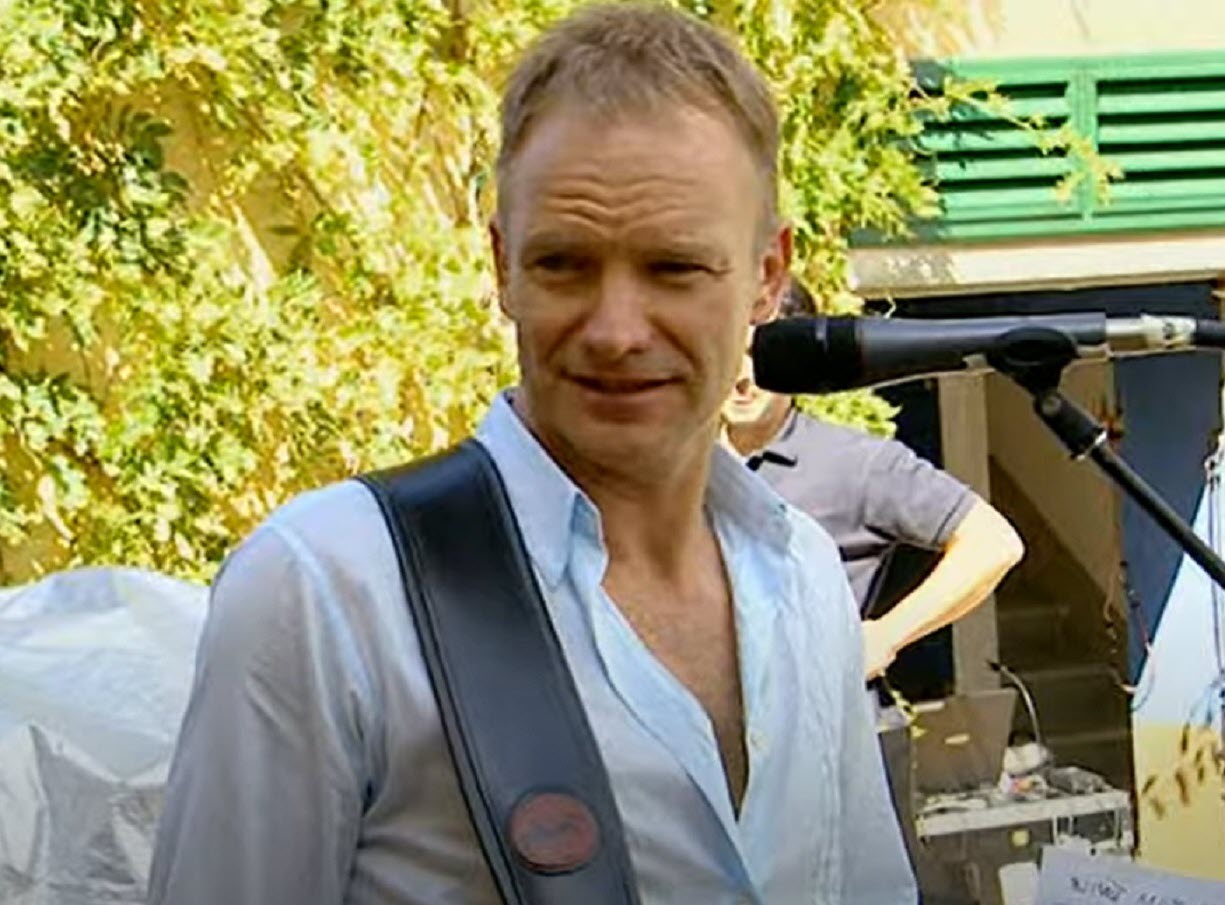
Sting, the enigmatic frontman of The Police, has captivated audiences for decades with his distinctive voice and evocative songwriting. From his early days belting out reggae-infused rock anthems to his evolution as a solo artist, Sting has consistently pushed musical boundaries, blending genres and exploring profound themes. His ability to weave intricate narratives into his lyrics has not only earned him critical acclaim but also a devoted fanbase that spans generations.
In this article, we’ll delve into the top 10 most popular Sting songs of all time, each a testament to his artistry and versatility. Whether you’re a lifelong fan or a newcomer to his music, prepare to be enthralled by the stories behind these unforgettable tracks. From soulful ballads to upbeat tunes that make you want to dance, Sting’s repertoire is a rich tapestry of emotion, experience, and exploration. Join us as we celebrate the songs that have defined an era and continue to resonate today, showcasing why Sting remains a timeless icon in the world of music. Get ready to rediscover the magic of Sting, one unforgettable song at a time!
1. “Every Breath You Take” (1983)
“Every Breath You Take” is often mistaken for a romantic ballad, but there’s something darker simmering beneath its smooth surface. Released in 1983 on Synchronicity, the final studio album by The Police, the song became a massive hit thanks to its hypnotic guitar riff and Sting’s haunting, emotionally restrained vocals. At first glance, it sounds like a love song, but a closer listen reveals it’s actually about obsession, control, and the inability to let go. Sting wrote it during a painful divorce, which adds an unsettling edge to the lyrics—lines like “Every move you make, I’ll be watching you” suddenly take on a more possessive tone. That contrast between beautiful melody and disturbing meaning is what gives the song its staying power. It’s smooth and easy on the ears, but emotionally complex underneath. Its simplicity—both lyrically and musically—makes it instantly memorable, and yet the more you listen, the more layers you uncover. It became one of the most played songs in radio history, not because it’s just catchy, but because it taps into something deeply human: how love can blur into fixation. It remains Sting’s most iconic track and a fascinating portrait of emotional turmoil.
2. “Fields of Gold” (1993)
“Fields of Gold” is one of those songs that feels like a gentle breeze—soft, warm, and comforting. Released in 1993 on Ten Summoner’s Tales, this ballad finds Sting reflecting on love, memory, and the passing of time. With its delicate acoustic guitar and subtle folk influences, the song creates a vivid image of golden barley fields, where love once bloomed. The lyrics are simple yet evocative: “You’ll remember me when the west wind moves / Upon the fields of barley.” It’s not a grand declaration of love, but rather a quiet, tender remembrance of shared moments. Sting’s voice carries a wistful quality, as if he’s looking back on something beautiful that can never quite be recaptured. The melody glides effortlessly, giving the song a timeless quality that continues to resonate decades later. “Fields of Gold” is often chosen for weddings and memorials alike, because it speaks so gently to both love and loss. It’s a song about promises, about the small moments that make up a lifetime, and the lasting imprint they leave. Sting’s ability to express such deep emotion with grace and restraint is what makes this track so beloved.
3. “Shape of My Heart” (1993)
“Shape of My Heart” is a reflective and emotionally rich ballad that dives deep into the inner world of a man who hides his feelings behind logic and mystery. Featured on Ten Summoner’s Tales, the song stands out with its haunting acoustic guitar riff—masterfully played by Dominic Miller—and Sting’s introspective lyrics. The narrator isn’t your typical romantic hero; he’s a man who deals cards not for greed but for insight, someone trying to understand fate, love, and himself. Lines like “He deals the cards to find the answer / The sacred geometry of chance” are philosophical and poetic, giving the song a quiet complexity. Sting’s voice is gentle and thoughtful, perfectly suited to the track’s introspective mood. The production is minimal, letting the words and melodies breathe, which draws listeners into a contemplative space. Though it wasn’t a massive commercial hit upon release, “Shape of My Heart” has grown into one of Sting’s most enduring songs, used in films and covered by countless artists. It resonates with anyone who’s wrestled with love, identity, or the desire to be understood. It’s a song that reveals more of itself every time you hear it.
4. “Desert Rose” (1999)
“Desert Rose” is an intoxicating blend of East and West, fusing Arabic melodies with Western pop in a way that was groundbreaking at the time of its release. Featured on Sting’s 1999 album Brand New Day, the track showcases a mesmerizing duet between Sting and Algerian singer Cheb Mami. Their voices, though stylistically different, intertwine beautifully—Sting’s smooth tenor meeting Mami’s passionate Arabic vocals to create a sound that feels both ancient and modern. The song’s lyrics are filled with longing, desire, and a sense of mystery, mirroring the desert imagery that runs throughout the music. Pulsing rhythms and lush instrumentation give the track a cinematic quality, transporting listeners to far-off places. It’s sensual without being overt, haunting without being heavy. What really stands out is how naturally the cultures blend—this wasn’t a gimmick, but a sincere artistic collaboration. “Desert Rose” introduced many Western audiences to Arabic music, opening doors for future cross-cultural projects in pop. It became a worldwide hit and a club favorite, thanks to its hypnotic energy. Even today, it holds a unique place in Sting’s discography as a bold, beautiful experiment that paid off both musically and emotionally.
5. “Englishman in New York” (1987)
“Englishman in New York” is both a celebration of individuality and a clever social commentary, delivered with charm and jazzy flair. Released in 1987 on …Nothing Like the Sun, the song is inspired by the eccentric British author and icon Quentin Crisp, who lived as an openly gay man in conservative mid-century England before moving to New York. Sting uses Crisp’s story as a launching point to explore themes of identity, alienation, and dignity. With its jaunty rhythm, smooth bassline, and iconic saxophone solo by Branford Marsalis, the track has an unmistakable swagger—refined, quirky, and completely self-assured. Lyrics like “It takes a man to suffer ignorance and smile” and “Be yourself, no matter what they say” feel both personal and universal. Sting’s vocals are relaxed but purposeful, making the message go down easy while still packing a punch. The song’s jazz-influenced arrangement adds an urban sophistication, reflecting the cultural mash-up that is New York City itself. “Englishman in New York” remains a fan favorite not just for its catchy tune, but for its embrace of authenticity in a world that often demands conformity. It’s witty, wise, and unmistakably Sting.
6. “Roxanne” (1978)
“Roxanne” marked a defining moment for The Police, setting the tone for their unique blend of punk, reggae, and rock. Released in 1978 on the album Outlandos d’Amour, the song tells the story of a man pleading with a woman—presumably a sex worker—to leave behind her dangerous life. What makes “Roxanne” stand out is its raw emotional intensity. Sting’s voice quivers with urgency and passion as he sings, “You don’t have to put on the red light,” making the plea feel personal and sincere. The track opens with a striking piano chord, then slips into a reggae-inspired rhythm that contrasts beautifully with the tension in the lyrics. At the time, its subject matter was provocative, but it was handled with empathy and drama, rather than judgment. Sting reportedly got the idea while staying in a red-light district in Paris, and that vivid setting bleeds through the entire performance. “Roxanne” quickly became a breakout hit for the band and remains one of their most iconic songs. It’s gritty, heartfelt, and timeless—a perfect example of how vulnerability and bold songwriting can come together to create something unforgettable.
7. “If I Ever Lose My Faith in You” (1993)
“If I Ever Lose My Faith in You” is a rich, reflective song that captures Sting’s philosophical side at its best. Released in 1993 on Ten Summoner’s Tales, the track deals with the loss of trust in institutions—politics, science, religion—but clings tightly to personal faith in love and human connection. The song opens with an intriguing synth flourish and a lilting melody that feels both hopeful and introspective. As the lyrics unfold, Sting sings about disillusionment with the world’s big systems, but reaffirms belief in something smaller and more intimate: “If I ever lose my faith in you, there’d be nothing left for me to do.” It’s a powerful declaration that love, or perhaps trust in one person, can be the last thing holding us together in a chaotic world. The musical arrangement is subtle yet effective, blending rock with hints of jazz and pop. Sting’s delivery is sincere and soulful, making each line resonate with emotional weight. The song won a Grammy for Best Male Pop Vocal Performance and has remained one of his most beloved solo works. It’s an anthem for anyone who has ever felt let down by the world but found hope in someone close.
8. “Message in a Bottle” (1979)
“Message in a Bottle” is a song that perfectly captures the emotional contradiction of being surrounded by people yet feeling completely alone. Released in 1979 as part of The Police’s Reggatta de Blanc album, it’s a pulsating rock anthem built around a simple but powerful idea: sending out a message in search of understanding. The lyrics start with the image of a castaway stranded on an island, using a bottle as his only means of communication. That metaphor deepens as Sting sings about his isolation and longing, but the twist comes when he discovers “a hundred billion bottles” washed ashore, showing that he’s not alone after all. The song’s punchy guitar riff and urgent rhythm drive home the message with infectious energy. It’s a rock song, yes, but it carries a deep emotional core—one that resonates with anyone who’s ever felt unseen or unheard. Musically, it’s tight and electrifying, a showcase for The Police’s chemistry. Lyrically, it’s poetic without being pretentious. “Message in a Bottle” remains one of their most enduring hits, reminding listeners that even in our loneliest moments, others are searching for connection too.
9. “Fragile” (1987)
“Fragile” is one of Sting’s most moving and beautifully understated songs, offering a meditation on violence, loss, and the delicate nature of life. Released in 1987 on the album …Nothing Like the Sun, the track was written in memory of Ben Linder, an American engineer killed during the Nicaraguan conflict. With its gentle Latin-inspired guitar and minimal percussion, the song creates a quiet, intimate atmosphere that allows the message to shine through. Sting’s voice is soft and sorrowful, delivering lines like “Nothing comes from violence, and nothing ever could” with aching sincerity. The song’s lyrics speak to the universal truth that life is fleeting and fragile, and that peace is far more powerful than revenge. “Fragile” transcends political commentary—it’s a call to empathy and human connection in the face of tragedy. Its timeless message has made it a favorite at concerts and memorials alike. Sting has performed it around the world in honor of victims of violence, making it a symbol of mourning and hope. With its emotional depth and elegant simplicity, “Fragile” continues to resonate as one of the most heartfelt and enduring pieces in Sting’s repertoire.
10. “Brand New Day” (1999)
“Brand New Day” bursts with optimism and the promise of fresh beginnings. As the title track of Sting’s 1999 album, it’s a joyful, jazz-infused celebration of hope, renewal, and the beauty of starting over. Featuring Stevie Wonder on harmonica, the song kicks off with a funky groove that immediately lifts your spirits. Sting sings with a sense of liberation, urging listeners to shake off yesterday’s worries and embrace the future with open arms. The lyrics are filled with playful metaphors and heartfelt encouragement: “Turn the clock to zero, honey / I’ll sell the stock, we’ll spend all the money.” It’s about not letting fear or regret hold you back. Musically, it’s rich and layered—combining pop, soul, and a bit of gospel flare. The track’s arrangement is bright and expansive, with Wonder’s harmonica adding a touch of magic. The song feels like a sunrise—gradually growing in warmth and light. “Brand New Day” won a Grammy and marked a triumphant moment in Sting’s solo career. It’s not just a feel-good tune; it’s a reminder that every day brings a chance to begin again. That message of resilience and joy never goes out of style.

Edward Tomlin is a frequent contributor to Singers Room. Since 2005, Singersroom has been the voice of R&B around the world. Connect with us via social media below.









