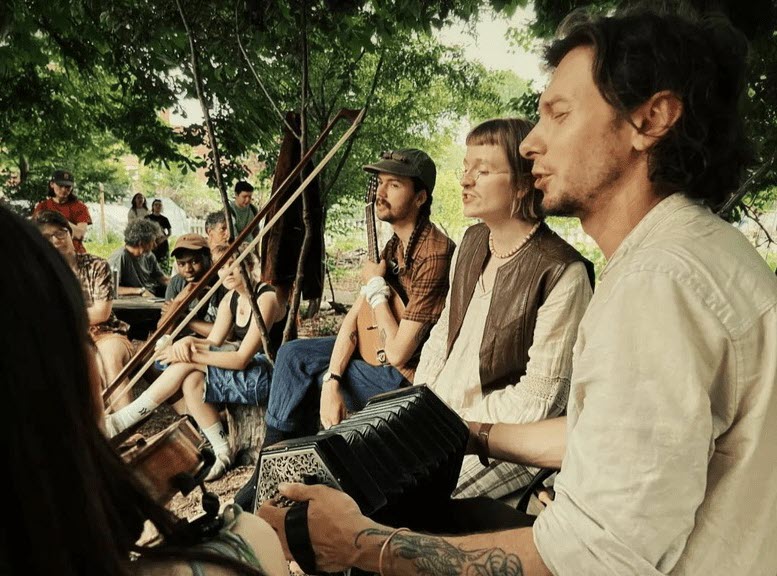
Folk music is the beating heart of storytelling, a genre rooted in tradition yet alive with boundless creativity. It’s where acoustic melodies meet poetic lyrics, weaving tales of love, loss, rebellion, and hope. Over decades, folk bands have carried the torch of this deeply emotional and transformative art form, captivating audiences with their raw authenticity and timeless sound. Whether it’s the haunting harmonies of vocal duos, the foot-stomping energy of folk collectives, or the delicate pluck of an acoustic guitar, each band brings its own unique voice to the genre.
In this article, we celebrate the 15 best folk bands of all time—groups that redefined music and inspired generations. From the trailblazing legends who gave folk its golden age to modern innovators blending folk with rock, pop, and world music, these bands have left an indelible mark on music history. Prepare to embark on a journey through harmonious vocals, soul-stirring lyrics, and unforgettable melodies. Whether you’re a lifelong fan or a curious newcomer, this list is your gateway to the rich, vibrant world of folk music.
Grab your favorite flannel, pour a cup of tea, and let’s dive into the spellbinding stories and sounds of folk’s greatest bands!
1. Simon & Garfunkel
Simon & Garfunkel, the iconic duo of Paul Simon and Art Garfunkel, left an indelible mark on the folk music scene of the 1960s. Their partnership produced a catalog of songs that combined poetic lyricism with beautifully interwoven harmonies, creating a sound that felt both intimate and expansive. With tracks like “The Sound of Silence,” they captured the quiet introspection and cultural tension of a generation wrestling with change. “Bridge Over Troubled Water,” with its soaring vocals and gospel-inspired arrangement, became an anthem of comfort and resilience that still resonates today.
What set them apart was not just their vocal chemistry, but also the depth and thoughtfulness of their songwriting. Paul Simon’s lyrical brilliance, paired with Garfunkel’s ethereal voice, made for a hauntingly beautiful combination that elevated folk music into something timeless and transcendent. Their music explored love, alienation, politics, and personal identity—all with a poetic grace that few artists could match. Even after their split, the legacy of Simon & Garfunkel continues to influence countless musicians. They didn’t just define an era; they helped shape the very essence of modern folk music. Their songs remain touchstones of reflection, emotion, and storytelling excellence.
2. The Kingston Trio
The Kingston Trio were pivotal in launching the American folk revival of the late 1950s, bringing traditional folk music into the living rooms of mainstream audiences. With their clean-cut image, tight harmonies, and accessible arrangements, they introduced a new generation to songs rooted in American history and folklore. Their breakout hit, “Tom Dooley,” turned a somber Appalachian ballad into a nationwide phenomenon, topping the charts and earning them a Grammy Award in 1959.
What made The Kingston Trio stand out was their ability to bridge the gap between tradition and popular appeal. Their polished performances and engaging stage presence helped make folk music less niche and more radio-friendly, paving the way for future acts like Bob Dylan and Peter, Paul and Mary. The trio—originally composed of Dave Guard, Bob Shane, and Nick Reynolds—brought an upbeat energy to songs that often carried heavy or historic themes. Whether singing about love, loss, or social issues, their delivery was always warm and engaging.
More than just entertainers, The Kingston Trio were cultural trailblazers. They sparked a nationwide interest in acoustic music and storytelling, leaving behind a legacy that continues to influence folk and Americana artists to this day.
3. Peter, Paul and Mary
Peter, Paul and Mary were more than just a folk trio—they were a voice for justice, peace, and compassion during some of America’s most turbulent decades. Comprised of Peter Yarrow, Paul Stookey, and Mary Travers, their harmonies blended seamlessly, delivering powerful messages with a gentle, melodic touch. Their version of “Blowin’ in the Wind,” penned by Bob Dylan, became an anthem of the civil rights movement, while “If I Had a Hammer” and “Where Have All the Flowers Gone?” echoed calls for equality and peace.
But their music wasn’t all protest and politics. Songs like “Puff, the Magic Dragon” spoke to innocence, imagination, and the bittersweet passage of time—making them beloved by families as well as activists. Their ability to connect deeply with listeners of all ages gave them a rare staying power. They weren’t afraid to use their platform for change, performing at the 1963 March on Washington and remaining vocal advocates for causes they believed in throughout their careers.
Peter, Paul and Mary helped folk music grow beyond tradition, becoming a vital force for social consciousness and human connection. Their music continues to inspire with its earnestness, warmth, and unwavering hope.
4. Fleet Foxes
Fleet Foxes brought a breath of fresh air to the indie and folk scene when they emerged in the late 2000s. With their rich vocal harmonies, intricate acoustic arrangements, and poetic lyrics, they managed to sound both ancient and modern at the same time. Fronted by Robin Pecknold, the band crafts songs that feel like they were carved out of nature itself—evoking forests, mountains, and timeless truths. Albums like “Fleet Foxes” and “Helplessness Blues” are filled with sweeping soundscapes and introspective musings that reward repeated listening.
Their music taps into a kind of pastoral beauty that’s rarely heard in contemporary music. Songs like “White Winter Hymnal” and “Montezuma” shimmer with layered vocals and enigmatic storytelling, while exploring themes of identity, purpose, and the human condition. There’s a philosophical weight to their work, yet it’s delivered with such melodic grace that it feels light and meditative.
Fleet Foxes stand apart in the modern folk landscape for their artistry and depth. They create immersive, almost spiritual listening experiences that speak to the soul. With each release, they continue to redefine what folk music can be in the 21st century—ethereal, literate, and deeply emotional.
5. The Lumineers
The Lumineers burst onto the folk scene in the early 2010s with a sound that was both familiar and refreshingly new. Their breakout single, “Ho Hey,” became a runaway hit thanks to its catchy chant-along chorus and rustic charm, but it was just the beginning of a career rooted in emotional honesty and stripped-down storytelling. Frontman Wesley Schultz and drummer Jeremiah Fraites brought an intimate, confessional energy to their music that resonated with listeners across generations.
What sets The Lumineers apart is their ability to blend simplicity with emotional depth. Songs like “Ophelia” and “Cleopatra” explore themes of love, loss, regret, and resilience, often backed by sparse instrumentation that puts the focus squarely on the lyrics. Their music has a raw, organic feel—no-frills folk that speaks from the heart and invites you into its story.
They’ve managed to keep their authenticity even as their popularity has grown, performing in massive arenas while maintaining the intimacy of a back-porch jam session. The Lumineers are proof that folk music still has a vital place in today’s world—where heartfelt lyrics, handclaps, and acoustic guitars can still spark joy, reflection, and connection.
6. Mumford & Sons
Mumford & Sons exploded onto the global music scene with a sound that married the rustic soul of folk with the driving intensity of rock. Their energetic performances, emotional lyricism, and prominent use of the banjo made them stand out in the 2010s folk-rock revival. Songs like “I Will Wait” and “Little Lion Man” brought banjo and upright bass back into the pop spotlight, while also showcasing lead singer Marcus Mumford’s impassioned vocals and poetic storytelling.
Their 2012 album “Babel” won the Grammy Award for Album of the Year and solidified the band’s place in the folk-rock pantheon. What’s compelling about Mumford & Sons is their ability to balance grand, arena-sized anthems with introspective moments of vulnerability. Their music often wrestles with spiritual questions, personal struggles, and the search for meaning—all wrapped in thunderous choruses and anthemic instrumentation.
Though their later albums shifted toward a more electric and experimental sound, they never lost the emotional weight and lyrical richness that made them beloved in the first place. Mumford & Sons brought folk music roaring back into the mainstream and proved that heart and honesty can still fill stadiums.
7. The Carter Family
The Carter Family is often regarded as the bedrock of American folk and country music. Formed in the late 1920s, the original trio—A.P. Carter, his wife Sara Carter, and his sister-in-law Maybelle Carter—captured the spirit of rural America in a way no one else had before. With songs like “Wildwood Flower” and “Can the Circle Be Unbroken,” they preserved the musical traditions of the Appalachian South while shaping the sound of future generations.
Their recordings, made during the Great Depression, offered comfort, moral strength, and spiritual reflection to a struggling nation. Maybelle’s innovative “Carter scratch” guitar technique influenced countless musicians, from Johnny Cash to folk revivalists of the 1960s. The trio’s harmonies were pure and unpretentious, and their lyrics often dealt with themes of faith, family, hardship, and hope.
The Carter Family’s legacy is enormous. They didn’t just sing songs—they built a cultural archive of American life through music. Their work laid the foundation for country, bluegrass, and folk traditions that are still alive today. Listening to The Carter Family is like stepping into a time capsule, where authenticity and simplicity speak louder than any modern production ever could.
8. Crosby, Stills, Nash & Young
Crosby, Stills, Nash & Young were a supergroup in every sense of the word, blending folk, rock, and politically charged songwriting into some of the most memorable music of the late ’60s and early ’70s. With their unmistakable harmonies and distinct songwriting voices—David Crosby’s introspection, Stephen Stills’ musicianship, Graham Nash’s pop sensibility, and Neil Young’s raw intensity—they created a sound that was both refined and radical.
Their songs were deeply rooted in the spirit of the times. “Teach Your Children” and “Suite: Judy Blue Eyes” became emblematic of the counterculture, blending personal reflection with larger calls for peace and understanding. Neil Young’s contributions added grit and urgency, particularly in songs like “Ohio,” which directly confronted the Kent State shootings.
Beyond their individual talents, it was the alchemy of their voices and perspectives that made CSNY extraordinary. They could be delicate or defiant, hopeful or mournful, often within the same album. Their influence on folk-rock and activism through music can’t be overstated. Whether singing about love, war, or the shifting tides of society, Crosby, Stills, Nash & Young made music that mattered—and still does.
9. The Weavers
The Weavers were trailblazers who brought folk music out of the coffeehouses and into mainstream American consciousness in the 1950s. Formed by Pete Seeger, Lee Hays, Ronnie Gilbert, and Fred Hellerman, they combined traditional songs with left-leaning social messages and lush vocal harmonies. Their version of “Goodnight, Irene” became a No. 1 hit, introducing audiences to the power of folk songs as both entertainment and cultural commentary.
Their music drew from a wide range of sources—American ballads, gospel, labor songs, and international folk traditions—and often carried messages of unity, justice, and peace. Songs like “If I Had a Hammer” and “Kisses Sweeter Than Wine” resonated with people seeking change, and their influence was profound despite facing political blacklisting during the Red Scare.
Though their mainstream success was cut short by McCarthy-era politics, The Weavers’ impact endured. They inspired the 1960s folk revival and laid the groundwork for artists like Bob Dylan and Joan Baez. The Weavers weren’t just performers—they were pioneers who used music to bridge divides and speak truth. Their legacy reminds us of folk music’s potential to challenge, comfort, and connect.
10. Bob Dylan
Bob Dylan isn’t just a folk singer—he’s a cultural icon whose songwriting reshaped American music. Emerging from the Greenwich Village folk scene in the early 1960s, Dylan wrote songs that became the soundtrack of protest, change, and personal reflection. Tracks like “Blowin’ in the Wind” and “The Times They Are A-Changin’” became anthems of the civil rights and anti-war movements, resonating with a generation hungry for truth.
What makes Dylan extraordinary is his ability to blend poetic lyricism with biting social commentary. His songs read like literature—dense with imagery, metaphor, and symbolism—and yet they feel deeply human and immediate. He didn’t just reflect the world; he challenged it, often evolving faster than his audiences could keep up.
Though he famously “went electric” in 1965, upsetting some purists, his impact on folk music never diminished. Dylan’s restlessness and refusal to be boxed in helped expand the possibilities of what folk—and all music—could express. He won the Nobel Prize in Literature in 2016, a testament to the power and depth of his songwriting. Dylan’s voice may be unconventional, but his words carry weight, and his influence is immeasurable.
11. Simon & Garfunkel
Simon & Garfunkel created some of the most timeless and introspective folk music of the 1960s. With Paul Simon’s poetic songwriting and Art Garfunkel’s angelic tenor, the duo forged a sound that was delicate, intelligent, and deeply emotional. Their music explored solitude, alienation, love, and the changing world around them—always with lyrical grace and lush harmony.
Songs like “The Sound of Silence,” “Scarborough Fair,” and “Bridge Over Troubled Water” revealed a deep sensitivity and craftsmanship. They could be minimal, like the hushed eeriness of “The Boxer,” or expansive, like the sweeping emotion of “America.” Simon’s words captured personal and social turmoil, while Garfunkel’s voice gave those emotions wings.
What made them unique was the seamless blend of folk tradition with baroque and pop influences. Their arrangements were often simple, but every note and lyric was meticulously placed. Though they disbanded in 1970 at the height of their fame, their music has endured for generations.
Simon & Garfunkel weren’t just voices of their time—they’re voices for all time. Their songs speak to anyone who’s ever felt misunderstood, in search of meaning, or simply in need of something beautiful.
12. The Avett Brothers
The Avett Brothers mix the raw heart of folk with the energy of punk and the soul of Americana. Founded by brothers Scott and Seth Avett, the North Carolina-based group has built a passionate following with songs that are emotionally direct and musically adventurous. Whether it’s a stripped-down ballad or a foot-stomping anthem, their music always feels personal and alive.
What sets them apart is their vulnerability. Songs like “I and Love and You” and “Murder in the City” deal with love, family, forgiveness, and faith—with lyrics that are confessional without being self-indulgent. They’re not afraid to show their flaws or wrestle with hard truths. Their music sounds like it’s written in the pages of a diary and then sung on a front porch.
Over the years, The Avett Brothers have expanded their sound while staying true to their roots. Their blend of banjo, cello, piano, and acoustic guitar forms a foundation for deeply felt storytelling. They’ve become one of modern folk’s most heartfelt voices, drawing on traditional influences without ever sounding old-fashioned. The Avett Brothers remind us that it’s okay to be honest, vulnerable, and searching—and that sometimes, that’s where the best songs live.
13. Gillian Welch
Gillian Welch is a master of quiet intensity. With her longtime musical partner David Rawlings, she has crafted a haunting brand of folk music steeped in Appalachian tradition and Southern gothic imagery. Her songs are sparse and slow-burning, filled with longing, loss, and a deep reverence for the old-time sound. But make no mistake—there’s nothing dated about her artistry.
Welch’s voice, plain and poignant, draws you in like a campfire tale. Songs like “Everything Is Free” and “Look at Miss Ohio” are deceptively simple, but each line is rich with emotional weight. She doesn’t rely on flashy arrangements; instead, she uses space, silence, and nuance to make her music resonate. Every note feels intentional.
Her 2001 album “Time (The Revelator)” is considered a modern folk masterpiece, exploring themes of tradition, authenticity, and disillusionment in a rapidly changing world. Welch’s work often blurs the lines between past and present, sounding timeless and timely at once.
Gillian Welch proves that folk music doesn’t need to shout to be powerful. Her songs whisper truths that linger long after the music ends. In a noisy world, her quiet strength is a rare and beautiful gift.
14. Iron & Wine
Iron & Wine is the stage name of Sam Beam, a singer-songwriter known for crafting gentle, intimate songs that feel like whispered secrets. Emerging in the early 2000s, Beam quickly became a standout figure in the indie-folk scene thanks to his hushed vocals, acoustic melodies, and poetic lyrics. His early recordings, like “The Creek Drank the Cradle,” were lo-fi masterpieces—fragile and raw in all the right ways.
Over time, Iron & Wine’s sound has evolved to include fuller instrumentation and lusher arrangements, but Beam’s lyrical sensitivity remains the constant thread. Songs like “Naked as We Came” and “Flightless Bird, American Mouth” are emotional snapshots, capturing love, mortality, and memory with quiet elegance. His music invites you to slow down and listen closely.
There’s a cinematic quality to Iron & Wine’s storytelling—soft-spoken, yet vivid. Beam has a gift for finding beauty in everyday moments, turning them into something sacred through melody and metaphor. Whether he’s playing with just a guitar or backed by an orchestra, his songs always feel deeply personal.
Iron & Wine shows that folk music can be both introspective and expansive, grounding listeners in the small moments that define a life.
15. The Punch Brothers
The Punch Brothers are not your typical folk band—they’re virtuosic, genre-defying, and intellectually daring. Led by mandolinist Chris Thile (of Nickel Creek fame), this group blends bluegrass instrumentation with classical complexity and folk sensibilities. Think of it as chamber-folk: intricate, refined, and surprisingly emotional.
Each member of the band is a master of their instrument, and together they create rich, dynamic arrangements that challenge traditional genre boundaries. Songs like “Julep” and “Movement and Location” showcase their technical brilliance and deep musicality. But it’s not just about showing off chops—the Punch Brothers also have a strong emotional core. Their music speaks of love, loss, time, and transformation, with lyrics that are smart and poetic.
They’re just as likely to cover Radiohead as they are traditional folk tunes, and that adventurous spirit is part of what makes them so exciting. At their heart, the Punch Brothers are about pushing the boundaries of what folk music can be without losing its soul.
They prove that folk is not just for storytelling—it can also be for exploration, innovation, and deep artistry. Listening to them is like hearing tradition and modernity shake hands in perfect harmony.

Edward Tomlin is a frequent contributor to Singers Room. Since 2005, Singersroom has been the voice of R&B around the world. Connect with us via social media below.