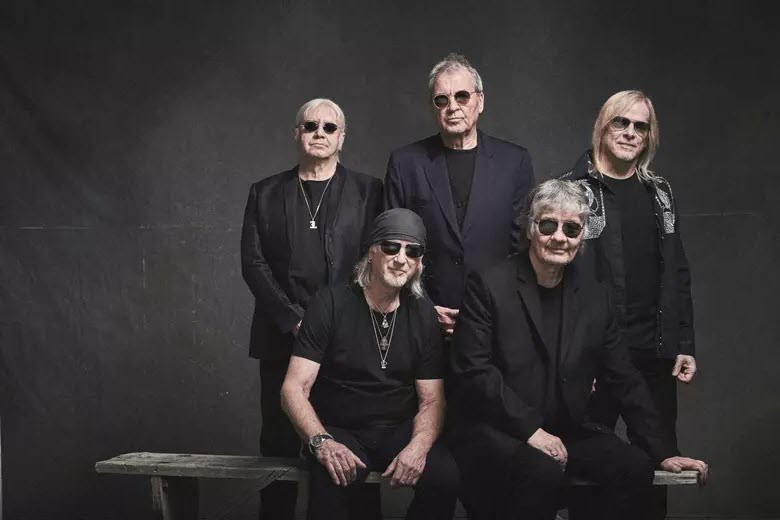
Few bands have left a legacy as powerful and enduring as Deep Purple. Born in the late 1960s, this iconic group helped shape the hard rock and heavy metal genres, delivering electrifying riffs, thunderous rhythms, and unforgettable melodies that have stood the test of time. With their explosive energy and unmatched musicianship, Deep Purple has influenced countless artists and carved their name into the annals of rock history.
From the jaw-dropping guitar solos of Ritchie Blackmore to Ian Gillan’s soaring vocals, the band has crafted a catalog of timeless classics that continue to ignite the hearts of fans worldwide. Whether you’re a lifelong fan of their groundbreaking sound or a newcomer looking to explore their legendary discography, this list will take you on a thrilling journey through the songs that defined an era.
Get ready to crank up the volume as we count down the top 10 most popular Deep Purple songs of all time! From the iconic opening riff of “Smoke on the Water” to the hard-hitting energy of “Highway Star,” these tracks are a testament to the band’s genius and their ability to create music that transcends generations. Let the rock ‘n’ roll adventure begin!
1. Smoke on the Water (1972)
“Smoke on the Water” is undoubtedly Deep Purple’s most iconic song, and it remains one of rock music’s most instantly recognizable tracks. Released in 1972 on the album Machine Head, this legendary song is propelled by a riff that has become synonymous with rock guitar. The story behind the track is just as compelling as its musical legacy—it’s inspired by a real-life fire that broke out during a Frank Zappa concert in Montreux, Switzerland. The fire destroyed the casino where the concert was taking place, and the band had to find another location to record their album. The lyrics capture the chaos of the night, with lines like “Smoke on the water, fire in the sky” painting a vivid picture of the events. Musically, the song is built around Ritchie Blackmore’s unforgettable guitar riff, which has been emulated by guitarists for decades. With its raw energy and compelling storytelling, “Smoke on the Water” has transcended generations, becoming one of the greatest anthems in rock history. Even after over four decades, the track continues to hold a special place in the hearts of fans worldwide.
2. Highway Star (1972)
Another standout from Deep Purple’s 1972 album Machine Head, “Highway Star” is a high-octane anthem that encapsulates the feeling of freedom and speed. This fast-paced track is a perfect example of the band’s instrumental prowess, featuring jaw-dropping solos and incredible musicianship. Right from the opening moments, Ian Gillan’s soaring vocals take the spotlight, as he sings about the thrill of driving, racing down the highway with the wind in your hair. The song’s blend of hard rock, heavy metal, and blues elements makes it feel like a powerful, unstoppable force. The way Jon Lord’s electrifying organ work weaves in and out of Ritchie Blackmore’s blistering guitar riffs creates an intricate yet hard-hitting sound. The song’s energy is infectious, and it’s easy to imagine how it became a fan favorite at live shows. Over the years, “Highway Star” has maintained its status as one of Deep Purple’s greatest tracks, consistently showing up in their setlists and never failing to get the crowd energized. It’s the quintessential driving song, capturing the very essence of rock and roll’s rebellious spirit and high-speed exhilaration.
3. Child in Time (1970)
“Child in Time” is a monumental track from Deep Purple’s 1970 album Deep Purple in Rock. It’s not only one of the band’s most haunting and emotional songs, but also a landmark in progressive rock. At over 10 minutes long, the song builds slowly from a soft, almost somber intro into a powerful crescendo of guitar, organ, and drums. Lyrically, it is a commentary on the turbulence of the times, written in response to the global tensions of the Cold War. Ian Gillan’s voice here is nothing short of extraordinary—he effortlessly moves from soft, almost whispering vocals to earth-shattering screams, making the song one of the most technically challenging and emotionally intense of his career. The dramatic build-up creates a feeling of impending doom, which culminates in Ritchie Blackmore’s searing guitar solo, a moment of catharsis that feels like an explosion of raw emotion. “Child in Time” is more than just a song; it’s an experience, a piece of art that transcends time and place. It’s often regarded as one of Deep Purple’s finest moments and a perfect example of their ability to blend musicianship with deep emotional resonance.
4. Space Truckin’ (1972)
“Space Truckin’,” another classic from Machine Head, is a song that perfectly balances Deep Purple’s hard rock energy with an imaginative, sci-fi twist. The track is an upbeat, groovy ride, filled with infectious rhythms and bold instrumentation. The song’s lyrics tell the story of a cosmic journey, with the band adopting the persona of space travelers. The catchy chorus, with its chorus of “Space truckin’, space truckin’,” adds an element of fun and adventure, while the hard-hitting riffs and solid rhythm section give the track its driving energy. Musically, “Space Truckin’” stands out for its extended instrumental section, which frequently morphs into an epic jam during live performances. Jon Lord’s impressive organ work adds a distinct flavor to the song, while Ritchie Blackmore’s guitar solos are as scorching as ever. The track’s sense of fun and creativity, combined with its musical complexity, makes it a fan favorite at live shows, where it often morphs into a wild, extended jam session. “Space Truckin’” embodies the band’s musical versatility, moving effortlessly between hard rock, blues, and progressive rock influences, all while maintaining an infectious energy that has made it a rock anthem for generations.
5. Black Night (1970)
Released in 1970 as a standalone single, “Black Night” is one of Deep Purple’s most enduring and beloved songs. Built on a bluesy riff and a solid, driving beat, the track captures the raw, unfiltered energy of the band at their peak. The song features powerful, straightforward rock instrumentation, but what really sets it apart is its simplicity and catchiness. The catchy chorus and Ian Gillan’s soulful vocals made it an instant classic, with the song climbing the charts and becoming one of Deep Purple’s biggest hits. Lyrically, the song speaks to themes of loneliness and longing, with lines like “Black night is not right, I don’t feel so bright” conveying a sense of emotional turmoil. Despite being relatively straightforward compared to some of the band’s more complex tracks, “Black Night” captures the heart of Deep Purple’s early sound—energetic, raw, and full of emotion. It’s a timeless rock anthem that resonates with fans to this day, proving that sometimes, simplicity is all you need to create a classic.
6. Lazy (1972)
“Lazy,” from Machine Head, is a seven-minute journey through bluesy rock brilliance that showcases Deep Purple’s remarkable improvisational skills and chemistry. The song kicks off with a long instrumental intro, driven by Jon Lord’s intricate organ playing that immediately draws you in with its laid-back groove. Ritchie Blackmore’s guitar work complements Lord’s organ, providing a sizzling, almost hypnotic layer of sound that perfectly sets the mood. As the song progresses, Ian Gillan’s vocals add a playful, almost sarcastic tone to the lyrics, which describe the carefree, easygoing life of someone who doesn’t want to do anything. The song’s extended instrumental sections highlight the band’s technical prowess, with each member getting a chance to shine—Lord’s organ solos are particularly notable, weaving in and out of the track with precision and flair. “Lazy” is a prime example of Deep Purple’s versatility, blending blues, rock, and jazz influences into one seamless track. It’s a slower, more relaxed number compared to some of the band’s other hits, but it still carries a heavy dose of energy and complexity. A true showcase of the band’s chemistry and musical talent, “Lazy” has remained a fan favorite over the years.
7. Woman from Tokyo (1973)
“Woman from Tokyo” is a melodic and sophisticated track from Deep Purple’s 1973 album Who Do We Think We Are. The song is a celebration of the beauty and allure of a woman from Japan, but it also captures a sense of longing and mystery. The track is a blend of hard rock and melodic elegance, with a catchy riff and a smooth, almost jazzy feel in the verses. The song’s production is polished, and it features one of Ritchie Blackmore’s most memorable guitar solos, which complements the dreamy atmosphere of the song. Lyrically, the song is a mixture of admiration and fascination, with lines like “I took a little bit of a long time to get used to her ways” suggesting both the excitement and challenges of falling for someone from a different culture. “Woman from Tokyo” is also one of Deep Purple’s more radio-friendly songs, yet it retains enough of the band’s hard rock edge to make it distinctively their own. Its polished production, catchy chorus, and ability to seamlessly blend rock with a touch of elegance make it a standout hit in the band’s catalog, and it remains a classic in their live shows.
8. Hush (1968)
Deep Purple’s first major hit, “Hush,” was released in 1968 on their debut album Shades of Deep Purple. Originally written by Joe South, the band’s energetic cover transformed it into a psychedelic rock sensation. The song’s infectious groove, driven by Ian Paice’s dynamic drumming and Ritchie Blackmore’s electric guitar riff, gives it an almost hypnotic quality. Lyrically, “Hush” has an element of urgency and mystery, with the repeated plea to “hush” creating an air of intrigue. The band’s arrangement adds layers of intensity to the original, with Jon Lord’s organ playing adding a distinctive psychedelic flavor. This track not only marked the beginning of Deep Purple’s successful career but also announced their arrival on the rock scene with an energetic force that made an immediate impact. “Hush” went on to chart in both the U.S. and U.K., helping to establish Deep Purple as a major force in the world of rock music. It remains a fan favorite and a prime example of the band’s early blend of blues, rock, and psychedelic influences.
9. Burn (1974)
The title track from Deep Purple’s 1974 album Burn marked the beginning of a new era for the band. With David Coverdale and Glenn Hughes joining the lineup, the song heralded a new sound for Deep Purple, one that blended their classic hard rock roots with the soulful vocals of Coverdale and Hughes. “Burn” is a fiery anthem, driven by powerful riffs, a relentless rhythm section, and a sense of urgency that makes it a standout track. The song’s explosive energy is complemented by its technical brilliance, with Ritchie Blackmore’s guitar solos burning through the track with precision and intensity. Coverdale and Hughes’ vocal interplay adds a rich layer to the song, with their contrasting voices creating an intriguing dynamic. “Burn” is a hard rock masterpiece that not only reflects Deep Purple’s ability to evolve but also stays true to their roots. The track became an instant classic and remains a staple of the band’s live performances. Its fiery energy, technical excellence, and powerful vocals make it a perfect example of what Deep Purple was able to achieve in their ever-evolving lineup.
10. Perfect Strangers (1984)
“Perfect Strangers,” the title track from Deep Purple’s 1984 reunion album, represents a triumphant return for the band after an eight-year hiatus. The song features a dramatic, atmospheric introduction that builds up to a majestic melody, giving it a sense of grandeur and mystery. Lyrically, the song speaks to the feelings of confusion and uncertainty that often accompany new beginnings. It’s a reflection on reconnecting after time apart, and the poignant lyrics “Perfect strangers, perfect strangers” suggest both a sense of wonder and a slight sense of distance. Musically, the track is a powerful mix of hard rock, with Ritchie Blackmore’s guitar work and Jon Lord’s organ playing providing the backbone of the song. The haunting melody and soaring vocals from Ian Gillan add to the track’s atmospheric qualities, giving it a timeless feel. “Perfect Strangers” stands as one of Deep Purple’s finest moments from the 1980s, bridging the gap between their classic and modern rock eras. It’s a stunning example of how the band was able to recapture the magic that made them legendary while embracing a more contemporary sound.

Edward Tomlin is a frequent contributor to Singers Room. Since 2005, Singersroom has been the voice of R&B around the world. Connect with us via social media below.









