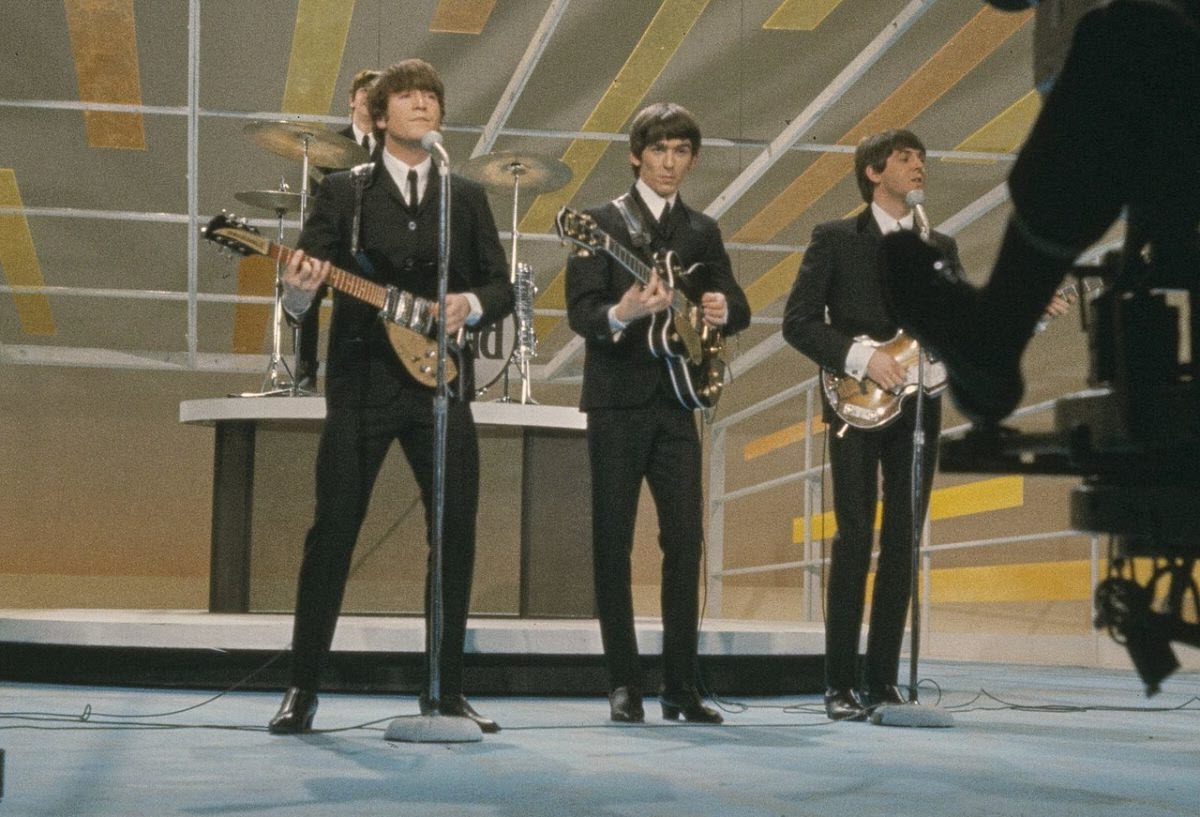
Few bands in history have left an indelible mark on music like The Beatles. Hailing from Liverpool, England, this iconic quartet redefined the soundscape of the 20th century, shaping not just rock and roll but the very essence of popular music. With John Lennon’s introspection, Paul McCartney’s melodic genius, George Harrison’s spiritual depth, and Ringo Starr’s rhythmic charm, The Beatles created a symphony of creativity that transcends generations.
But what makes their music so unforgettable? From heartwarming ballads to revolutionary rock anthems, The Beatles’ catalogue is a treasure trove of hits that continue to inspire and delight fans around the globe. Whether it’s their early infectious pop melodies or their later experimental masterpieces, their songs resonate with universal themes of love, longing, and hope.
In this article, we’ll take a deep dive into the top 10 most popular Beatles songs of all time. These tracks aren’t just highlights of their career—they’re cultural milestones, each with its own story, impact, and legacy. So, get ready to embark on a magical mystery tour through the greatest hits of the Fab Four. Let’s celebrate the timeless magic of The Beatles!
1. “Hey Jude” (1968)
Few songs in rock history have the universal appeal and emotional power of Hey Jude. Released in 1968 as a single, this Paul McCartney-penned anthem was originally written to comfort John Lennon’s son, Julian, during his parents’ divorce. However, its message of encouragement, resilience, and hope soon transcended its personal origins, turning it into one of The Beatles’ most cherished songs.
Built on a warm, piano-driven melody, Hey Jude begins as an intimate ballad before evolving into an anthemic sing-along. The uplifting lyrics urge the listener to “take a sad song and make it better,” making the track a source of comfort during difficult times. But what truly cements Hey Jude as legendary is its extended coda—over four minutes of “na-na-na” chants that invite unity and participation.
At over seven minutes long, Hey Jude was groundbreaking for its time, proving that a hit single didn’t need to fit radio-friendly constraints. Its universal message, timeless melody, and communal spirit have made it a staple at concerts, gatherings, and emotional moments worldwide. Decades later, the song remains a testament to The Beatles’ ability to craft music that speaks directly to the heart.
2. “Yesterday” (1965)
One of the most recorded songs in history, Yesterday is a timeless ballad that distills heartbreak and nostalgia into a simple yet profoundly moving melody. Released in 1965 on Help!, this Paul McCartney composition stands apart from the band’s usual rock and roll sound, featuring only McCartney’s voice accompanied by a delicate string quartet.
The lyrics reflect on lost love and the passage of time, with McCartney lamenting, “Yesterday, all my troubles seemed so far away.” This universal theme of longing and regret has made Yesterday resonate with listeners across generations. The song’s stripped-down arrangement allows its emotional depth to take center stage, making it one of the most poignant moments in The Beatles’ catalog.
Despite its departure from the band’s usual style, Yesterday was an instant success, topping charts and earning widespread critical acclaim. Its simplicity and elegance have led to over 2,000 cover versions, performed by artists across every genre imaginable. Even today, Yesterday remains a testament to the power of melody and emotion, proving that sometimes, the simplest songs leave the deepest impact.
3. “Let It Be” (1970)
Few songs offer as much comfort and reassurance as Let It Be. Released in 1970 as the title track of The Beatles’ final studio album, this piano-driven anthem was inspired by a dream Paul McCartney had of his late mother, Mary. In the dream, she offered him the words “Let it be,” providing a message of peace and acceptance during the band’s turbulent final years.
With its gospel-tinged melody and uplifting lyrics, Let It Be serves as an emotional anchor in times of uncertainty. McCartney’s gentle yet powerful delivery, combined with soaring harmonies and a stirring guitar solo by George Harrison, creates a sense of serenity and hope. The song’s universal appeal has made it a staple at weddings, funerals, and moments of reflection, proving its enduring impact.
Despite being released during The Beatles’ breakup, Let It Be carries a sense of closure rather than sorrow. It encourages listeners to embrace life’s uncertainties with faith and patience, a message that remains just as relevant today. As one of the band’s most enduring classics, Let It Be continues to inspire and console audiences around the world.
4. “A Day in the Life” (1967)
Few songs capture The Beatles’ creative genius as profoundly as A Day in the Life. Released in 1967 as the closing track of Sgt. Pepper’s Lonely Hearts Club Band, this masterpiece blends John Lennon’s dreamy introspection with Paul McCartney’s everyday observations, resulting in a surreal, thought-provoking experience.
Lennon’s opening verses paint a haunting picture, inspired by newspaper headlines and personal musings. His ethereal vocals, backed by a sparse yet eerie arrangement, create an almost hypnotic atmosphere. Then, without warning, the song takes a sharp turn—McCartney’s upbeat interlude injects an entirely different energy, mimicking the routine of waking up, catching the bus, and getting through the day. This sudden contrast adds to the song’s mystique, making it feel like two worlds colliding.
Perhaps the most famous aspect of A Day in the Life is its orchestral crescendo. The chaotic build-up of instruments, culminating in a thunderous final piano chord that lingers for nearly a minute, leaves a lasting impression. It was unlike anything heard in pop music at the time, cementing the song as one of the boldest and most experimental pieces The Beatles ever recorded.
Decades later, A Day in the Life remains a landmark of musical storytelling, pushing the boundaries of what a song could be. Its blend of melancholy, surrealism, and orchestral grandeur makes it not just a highlight of Sgt. Pepper, but one of the most influential songs in rock history.
5. “I Want to Hold Your Hand” (1963)
If there’s one song that truly launched Beatlemania, it’s I Want to Hold Your Hand. Released in 1963, this infectious hit was The Beatles’ first No. 1 single in the United States, catapulting them to global superstardom and setting the stage for the British Invasion.
From the moment the opening guitar riff kicks in, the song radiates energy and excitement. John Lennon and Paul McCartney’s harmonized vocals perfectly capture the thrill of young love, making it impossible not to sing along. The lyrics may be simple—expressing the eagerness of a new romance—but they carry an undeniable charm that resonated deeply with audiences at the time.
Musically, I Want to Hold Your Hand showcases The Beatles’ early knack for crafting irresistibly catchy melodies. The driving rhythm, handclaps, and enthusiastic delivery make the song feel like a celebration—one that listeners couldn’t help but join in on. It’s the sound of pure joy, encapsulating the youthful spirit of the early ‘60s.
With I Want to Hold Your Hand, The Beatles didn’t just create a hit—they created a cultural phenomenon. The song’s impact was so massive that it helped pave the way for rock and pop music as we know it today. More than half a century later, its timeless energy still has the power to make people smile.
6. “Something” (1969)
Often regarded as George Harrison’s finest composition, Something is one of The Beatles’ most beautiful and heartfelt love songs. Released in 1969 on Abbey Road, this soulful ballad stands as a testament to Harrison’s songwriting brilliance, proving he was just as capable of crafting timeless classics as Lennon and McCartney.
From the gentle opening guitar riff to the soaring orchestral arrangement, Something exudes warmth and emotion. Harrison’s lyrics, though simple, carry a deep sense of admiration and devotion—so much so that Frank Sinatra famously called it “the greatest love song ever written.” The sincerity in Harrison’s vocals only amplifies the song’s power, making it a deeply moving experience for listeners.
Adding to its magic is the exquisite guitar solo, one of the most lyrical and expressive in The Beatles’ catalog. Every note feels like an extension of the song’s emotion, blending seamlessly into the lush instrumentation. The result is a track that feels both intimate and grand—a perfect balance of tenderness and musical sophistication.
Over the years, Something has been covered by countless artists, further solidifying its place as one of the greatest love songs of all time. It remains a highlight of Abbey Road, a shining example of Harrison’s immense talent, and a song that continues to touch hearts across generations.
7. “Come Together” (1969)
With its hypnotic groove, cryptic lyrics, and bluesy swagger, Come Together stands as one of The Beatles’ most distinctive and enduring tracks. Released in 1969 as the opening song on Abbey Road, the song immediately sets the tone for the album, pulling listeners in with its slinky bassline and laid-back, almost menacing vibe.
Written primarily by John Lennon, Come Together was originally conceived as a campaign song for Timothy Leary’s bid for governor of California. However, the lyrics quickly evolved into something far more abstract, filled with bizarre imagery and playful wordplay. Lines like “He got juju eyeball, he one holy roller” add to the song’s air of mystery, leaving fans debating their meanings for decades.
Musically, Come Together thrives on simplicity and mood. Paul McCartney’s rolling bassline serves as the song’s foundation, while Ringo Starr’s steady drumming adds a sense of cool detachment. Lennon’s vocal delivery is half-sung, half-whispered, oozing with attitude and effortless cool. The result is a song that feels almost hypnotic—one that doesn’t need to explode with energy to be completely captivating.
Over the years, Come Together has been covered by artists across genres, from Aerosmith’s rock-infused version to Michael Jackson’s smooth interpretation. Yet, no rendition quite captures the raw essence of the original. As the opening track of Abbey Road, it’s a reminder of The Beatles’ ability to evolve, experiment, and still create timeless music that resonates across generations.
8. “All You Need Is Love” (1967)
Few songs capture the spirit of the 1960s quite like All You Need Is Love. Released in 1967 at the height of the “Summer of Love,” this anthem of peace and unity became an instant classic, carrying a message that still rings true today.
John Lennon penned the song as a response to a special request: The Beatles had been asked to perform a track that could be broadcast globally as part of Our World, the first-ever live international television event. With its simple yet profound lyrics—”All you need is love”—the song was designed to be universally understood, transcending language and cultural barriers.
Musically, All You Need Is Love is a rich tapestry of sounds. Its waltz-like verses give way to a soaring, anthemic chorus, while the orchestral arrangement adds grandeur to the track. The song also features playful nods to other musical pieces, including snippets of La Marseillaise (the French national anthem) and Glenn Miller’s In the Mood, reflecting The Beatles’ love for musical experimentation.
More than just a song, All You Need Is Love became a movement. It captured the idealism of an era, providing a hopeful anthem for those who believed in love, peace, and harmony. Decades later, its message remains as powerful as ever, reminding us that, in the end, love is all we truly need.
9. “Eleanor Rigby” (1966)
Dark, poetic, and deeply introspective, Eleanor Rigby stands as one of The Beatles’ most haunting and thought-provoking songs. Released in 1966 as part of Revolver, the track broke away from traditional rock conventions, proving that pop music could be both profound and experimental.
Unlike many Beatles hits, Eleanor Rigby features no guitars or drums. Instead, it’s driven by a dramatic string arrangement, composed by George Martin and inspired by classical and film music. The result is a song that feels cinematic, almost like a short tragic play set to music.
Lyrically, Eleanor Rigby paints a bleak picture of loneliness and isolation. The song follows two figures—Eleanor Rigby, a woman who dies alone, and Father McKenzie, a priest whose sermons go unheard. Their lives, though seemingly separate, intertwine in the end, highlighting the universal theme of human solitude. The imagery is vivid, with lines like “Wiping the dirt from his hands as he walks from the grave” adding a sense of finality and sorrow.
With Eleanor Rigby, The Beatles proved they were more than just a pop band—they were storytellers capable of capturing deep human emotions in just a few verses. The song remains one of their most powerful compositions, a haunting reflection on life’s quiet tragedies that continues to resonate with listeners today.
10. “Strawberry Fields Forever” (1967)
A dreamy, surreal journey into the depths of John Lennon’s mind, Strawberry Fields Forever is one of The Beatles’ most innovative and psychedelic songs. Released in 1967 as a double A-side single with Penny Lane, the track captures the adventurous spirit of the Sgt. Pepper’s era, pushing the boundaries of what rock music could be.
Inspired by Lennon’s childhood memories of playing in the gardens of Strawberry Field, a Salvation Army home in Liverpool, the song is both nostalgic and introspective. Lennon’s lyrics blur the line between reality and fantasy, reflecting his desire to escape into a world of imagination. “Living is easy with eyes closed, misunderstanding all you see” perfectly encapsulates the feeling of detachment and yearning for something beyond the ordinary.
Musically, Strawberry Fields Forever is a masterpiece of studio experimentation. The song was famously pieced together from two different takes, each recorded at different tempos and keys. Producer George Martin and engineer Geoff Emerick used groundbreaking techniques to blend them seamlessly, creating the song’s otherworldly feel. The result is a track filled with swirling Mellotron sounds, backwards cymbals, and a sense of weightless dreaminess.
Over time, Strawberry Fields Forever has become a defining song of The Beatles’ psychedelic period. It’s more than just a song—it’s an experience, a portal into Lennon’s mind, and a testament to The Beatles’ fearless creativity. To this day, it remains one of their most mesmerizing and influential works.

Edward Tomlin is a frequent contributor to Singers Room. Since 2005, Singersroom has been the voice of R&B around the world. Connect with us via social media below.